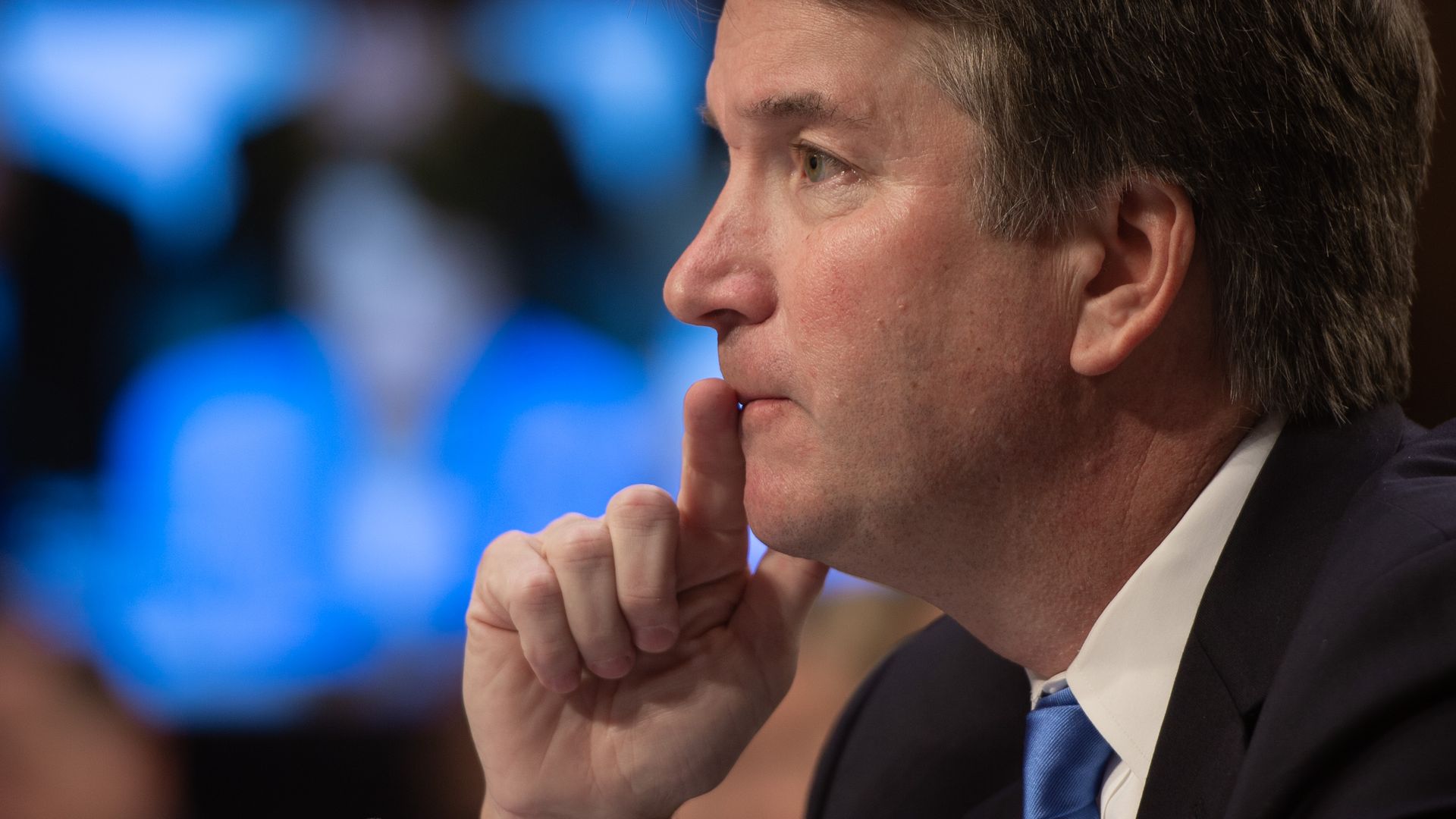
Supreme Court nominee Judge Brett Kavanaugh, sitting beside his wife Ashley, was unyielding in his defense against allegations of sexual assault in an interview with Fox News' Martha MacCallum on Monday.
"I want a fair process where I can defend my integrity. I know I am telling the truth. I know my lifelong record. I am not going to let false accusations drive me out of this process."
— Brett Kavanaugh
The bottom line: Kavanaugh not only used the interview as an opportunity to deny the accusations, but he also pushed back against what he described as mischaracterizations about his behavior in high school. He told MacCallum that he "didn't have anything close to sexual intercourse in high school or for many years thereafter. The girls from the schools I went to and I were friends." (Note that none of the allegations involve intercourse).
Over the past 20 years, companies and governments have been paying their employees more in benefits and less in cash wages and salaries, and that's especially the case among people who work in the highly unionized public sector.
The big picture: Of all the different types of benefits, the cost of health insurance has consumed the most of the average worker's compensation — representing 8.2 cents of a dollar in pay today versus 5.8 cents of a dollar in 1998. That's because the U.S. health care system is very expensive.
Sears CEO Eddie Lampert is suggesting a last-ditch effort to prevent a bankruptcy for the embattled department store chain, according to a proposal by major shareholder ESL Partners, Lampert's hedge fund.
Why it matters: A debt payment is looming, and Sears is tight on cash. Lampert, whose hedge fund also owns Sears's debt, has a lot on the line should Sears go bankrupt.
Satellite radio company SiriusXM Holdings will acquire Pandora in an all-stock deal valued at $3.5 billion.
Why it matters, per Axios' Sara Fischer: In today's mobile-first digital economy, it makes perfect sense for Sirius to acquire Pandora, which is constantly ranked in the top 15 most-trafficked mobile apps in the U.S., per comScore. This deal will improve Sirius' direct-to-consumer relationship and get it out of the car-listening game and into streaming.
Premiering on PBSon Oct. 1 (a week from today) ... "Dark Money" follows Montana journalist John S. Adams as he follows the increasingly murky trail of money influencing the state's elections.
The big picture: Adams, former capital bureau chief for the Great Falls Tribune and creator of the Montana Free Press, says in a release about the film that when campaigns can receive unlimited sums from anonymous donors, "Then it’s not the people controlling the government—it’s the government controlled by a corporation controlling the people, which is like super-crazy Big Brother, but it’s happening."
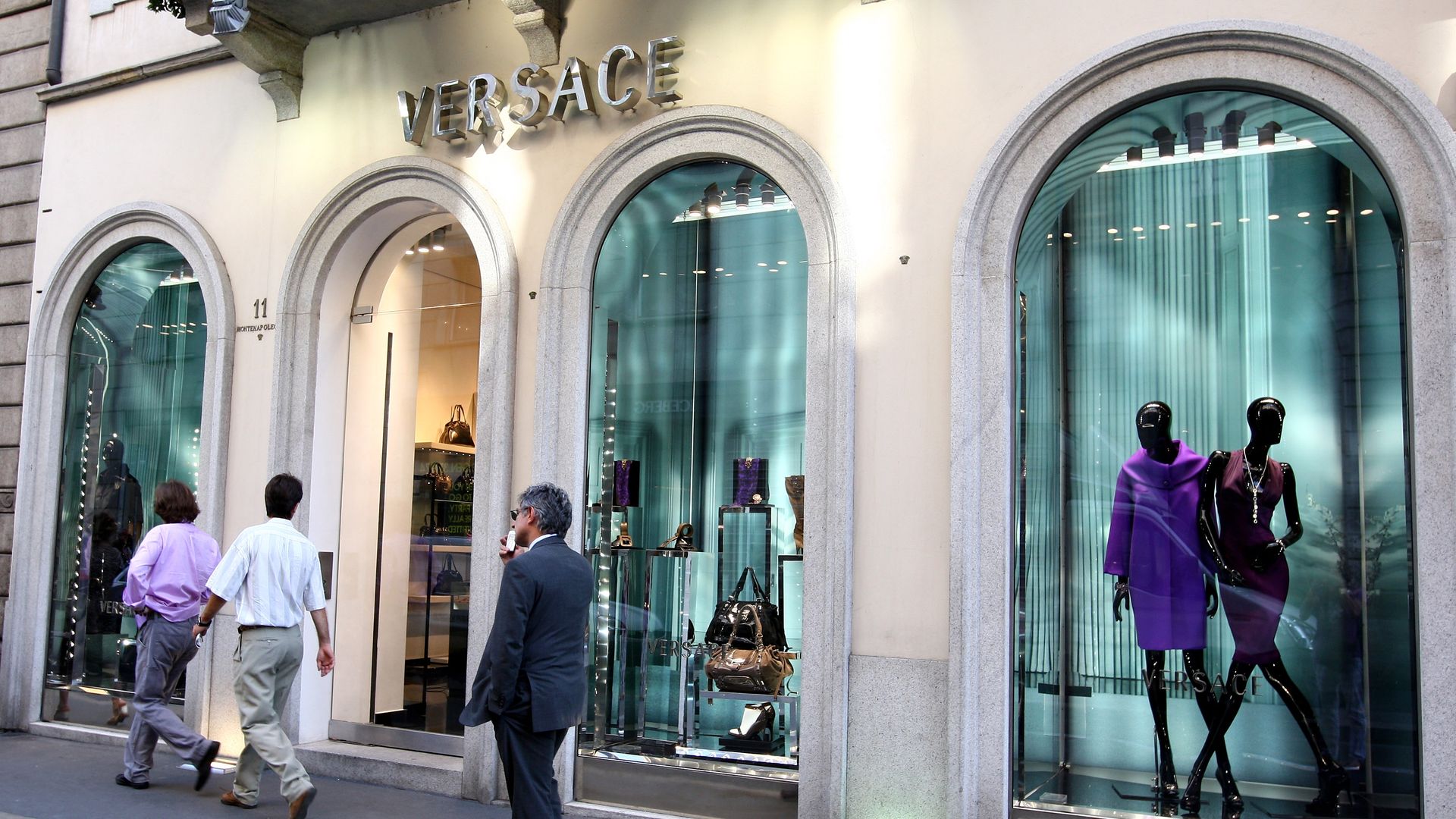
Michael Kors is close to buying Versace in a deal valuing the brand around $2 billion, multiple news outlets report. Blackstone, which has a 20% stake in the company, will reportedly exit, while the Versace family will maintain its role.
Why it matters: After its acquisition of Jimmy Choo last year, Michael Kors made it clear it wants a leg up in the luxury retail world. A Versace takeover would help it compete with the likes of Coach-parent Tapestry, which owns Stuart Weitzman and Kate Spade, and other fashion conglomerates like LVMH.
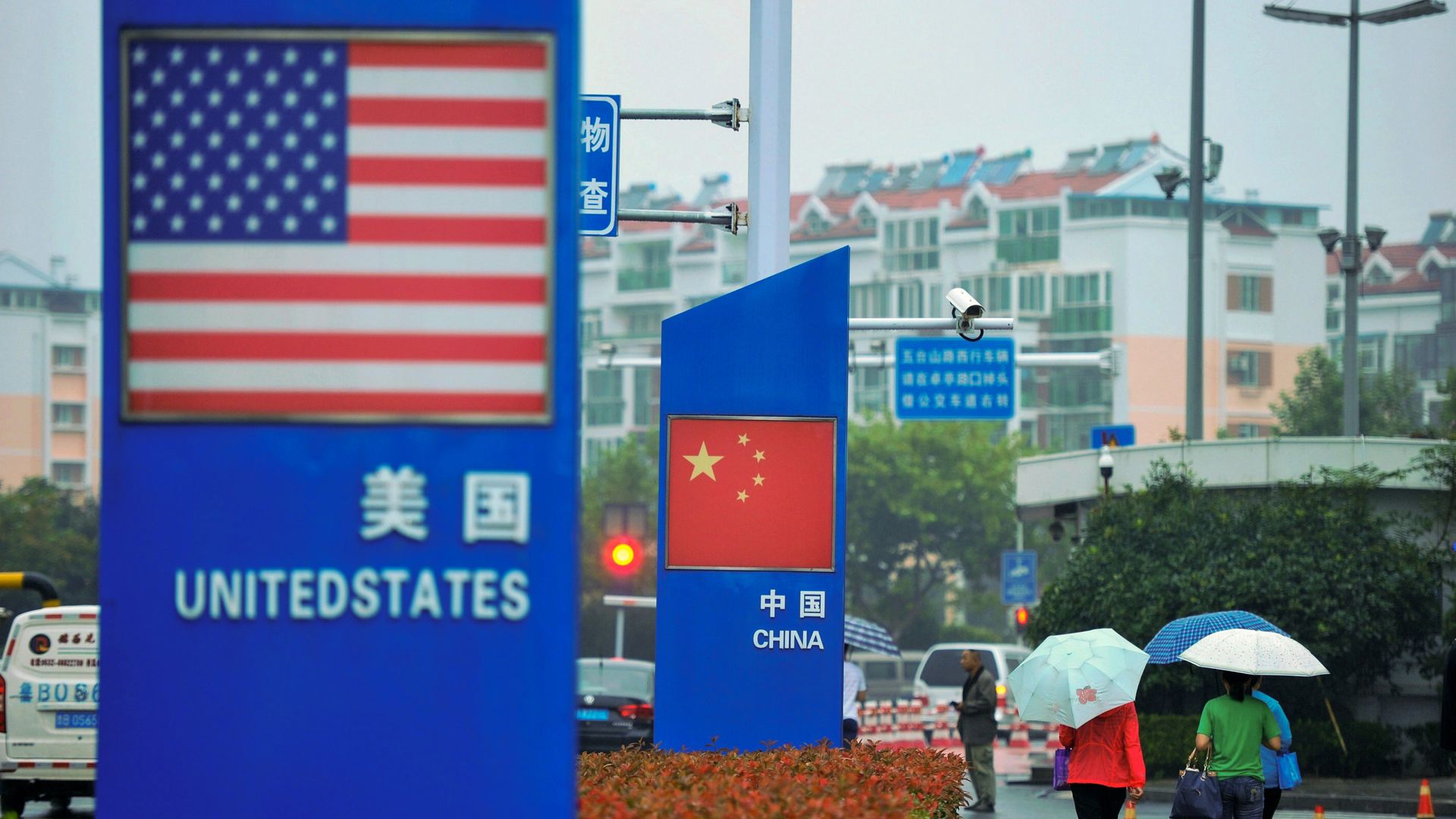
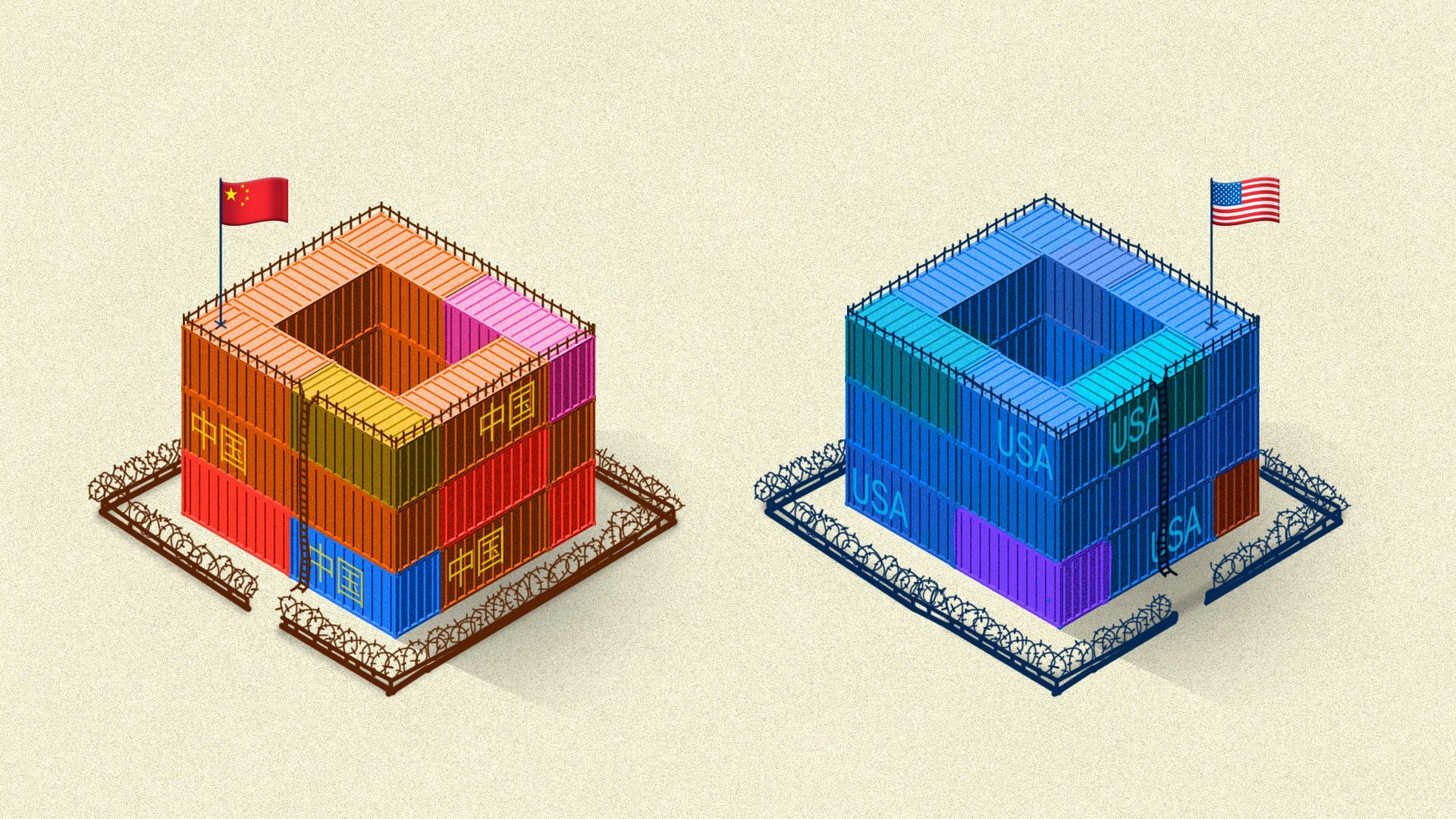
China issued new tariffs of 5% to 10% on $60 billion of U.S. goods on Monday morning, a simultaneous retaliatory response to the latest round of American tariffs, per the AP.
The big picture: China had threatened last month to issue this round of tariffs should the Trump administration decide to launch another round of the trade war. The economic conflict is now officially here — and shows no signs of abating.
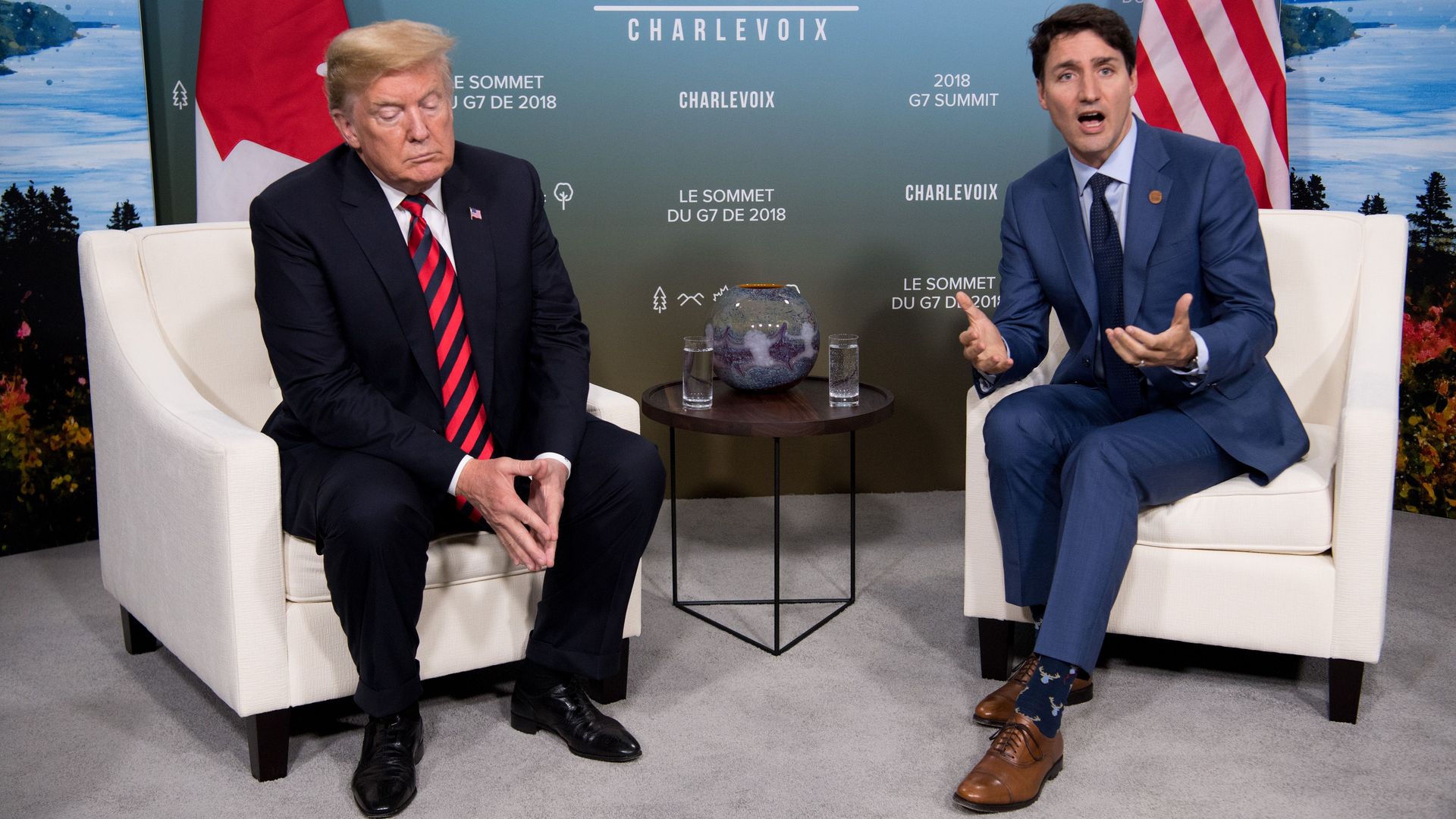
Trade watchers call Sept. 30 the "AMLO deadline" for President Trump's efforts to renegotiate the North American Free Trade Agreement.
The big picture: If the Trump administration can't strike a deal with Canada and Mexico by next Sunday — and the Canadians are showing few signs they'll comply with Trump's demands — it means Mexico's incoming leftist leader Andres Manuel Lopez Obrador (AMLO) would have to sign the final deal.
Now that I'm writing a weekly newsletter, I'm increasingly interested in how weekly news is valued.
The big picture: As media companies decline in profitability, they're increasingly being traded more as trophies than as businesses. Many billionaires expect a financial return on their media investments. But others, including Benioff, Jeff Bezos, Pierre Omidyar and Laurene Powell Jobs, do not.
We are now, officially, in a full-fledged trade war. Effective Monday morning, President Trump will be taxing half of China’s imports into the US, with aggressions set to intensify further in January when the tariff rises from 10% to 25%.
Trump's bigger-picture view is well-known: "TRADE IS BAD." That's all trade, not just trade with China. So be wary of rushing to the conclusion that Vietnam and other southeast Asian countries could end up being the winners in this trade war, as companies move their operations out of China. More realistically, as in most trade wars, there will be no winners at all.
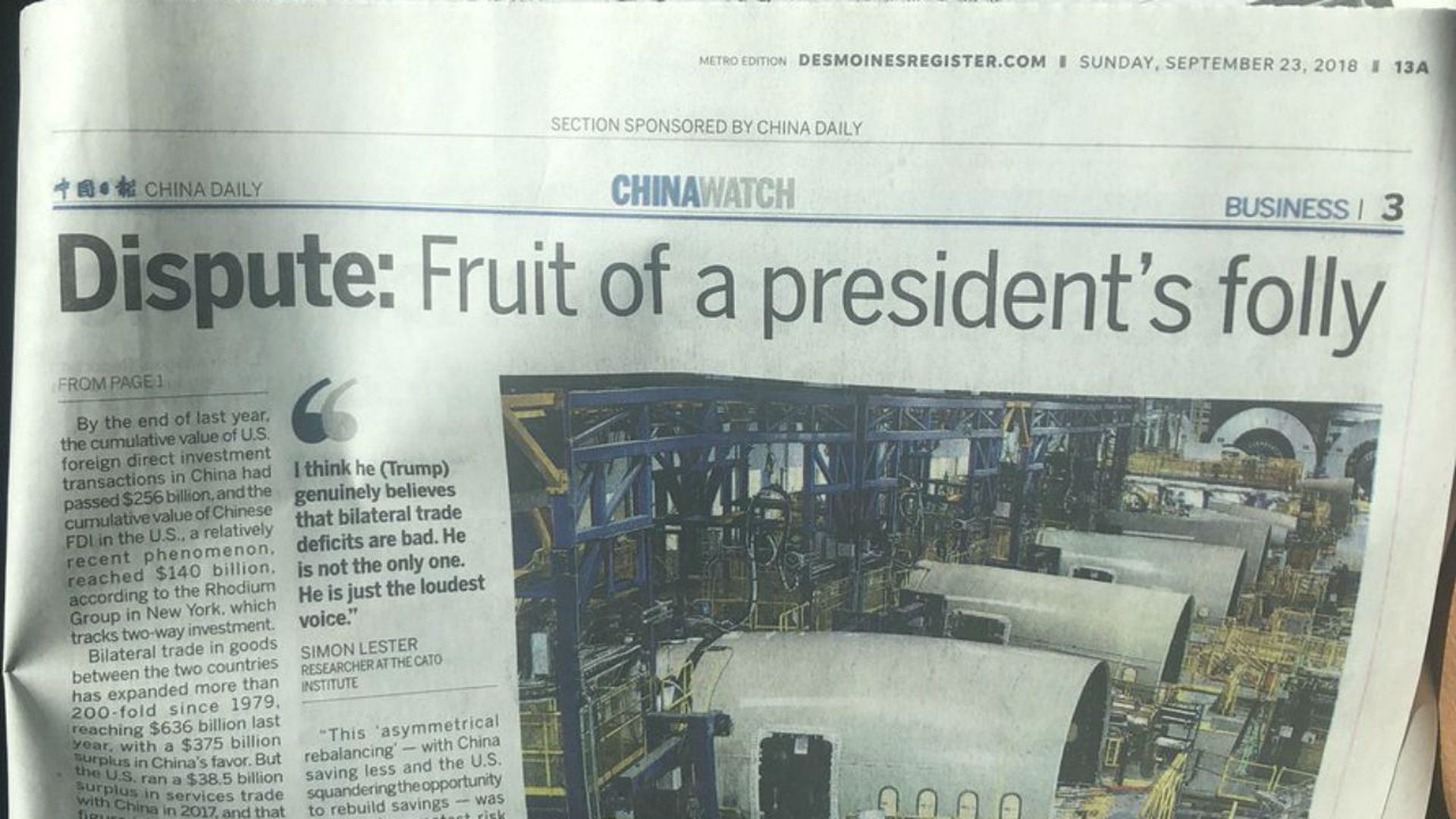
China Daily, an English-language publication owned by the Chinese government, took out four pages of sponsored content in Sunday's Des Moines Register highlighting the negative effects of President Trump's trade war.
The big picture: This isn't the first time the state-owned China Daily has bought ad space in a U.S. publication. It has frequently done so in the New York Times and Washington Post, among others, but its shrewd targeting of the Des Moines Register appeals directly to America's heartland, which data suggests has the most to lose from from an extended trade war.