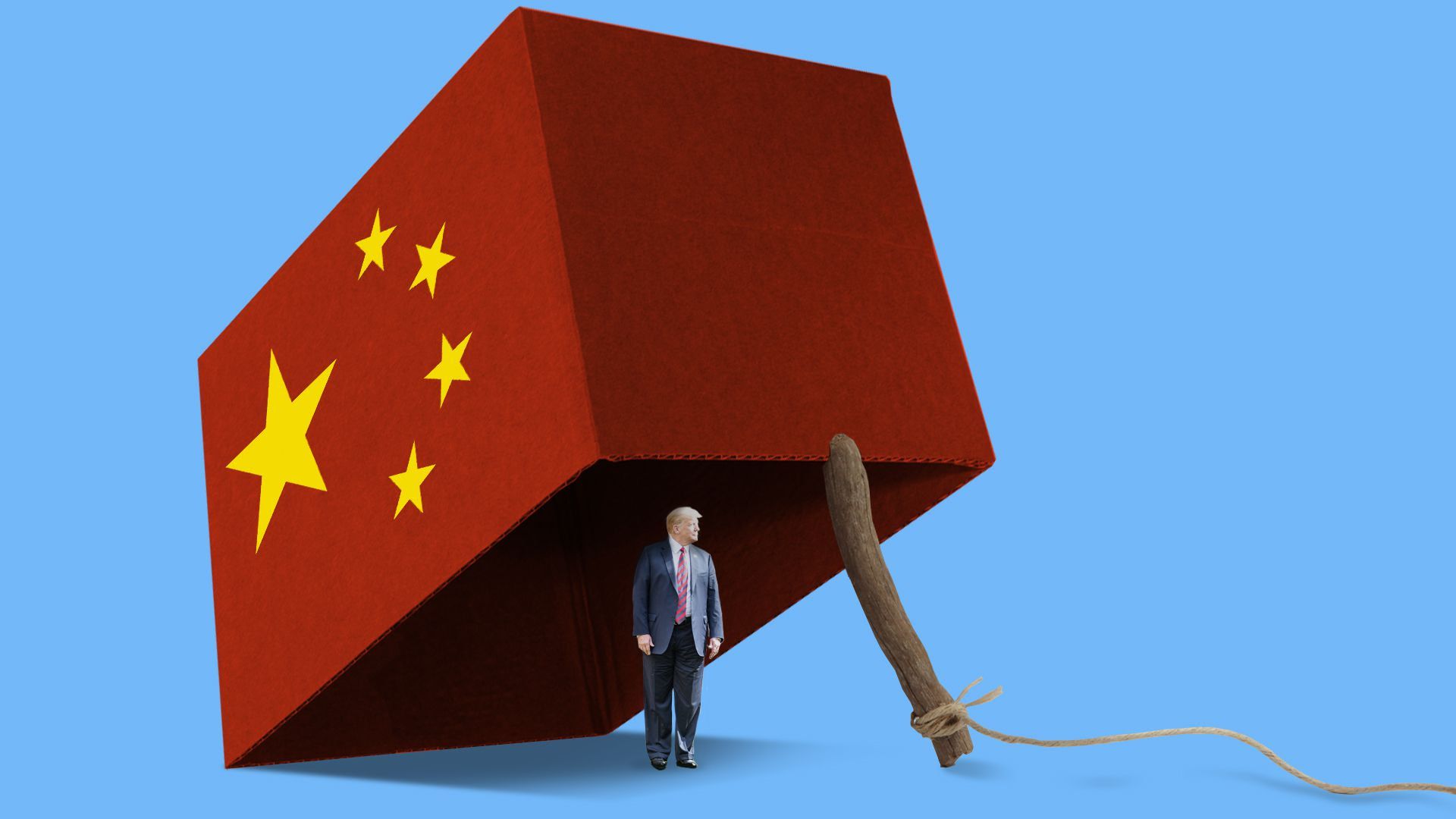
Congress will not push to reinstate a Trump administration ban against Chinese phone maker ZTE, which President Xi Jinping successfully lobbied President Trump to lift, reports Bloomberg, citing sources familiar with the matter.
Why it matters: Lawmakers' initial effort to block Trump's ZTE deal was the last obstacle the Chinese company — a repeat violator of U.S. sanctions and considered a national security threat by the Pentagon — faced before returning to business as usual.
Between 2006 and 2015, terrorist attacks carried out by Muslim extremists received 357% more press attention in the U.S. than those committed by non-Muslims, reports The Guardian.
Why it matters: A study conducted by the University of Alabama found that attacks by Muslims spurred an average of 105 headlines — especially in national news outlets — compared to just 15 headlines for non-Muslims. The gap is especially jarring given right-wing extremists have committed nearly twice as many attacks in the last decade, according to Reveal.
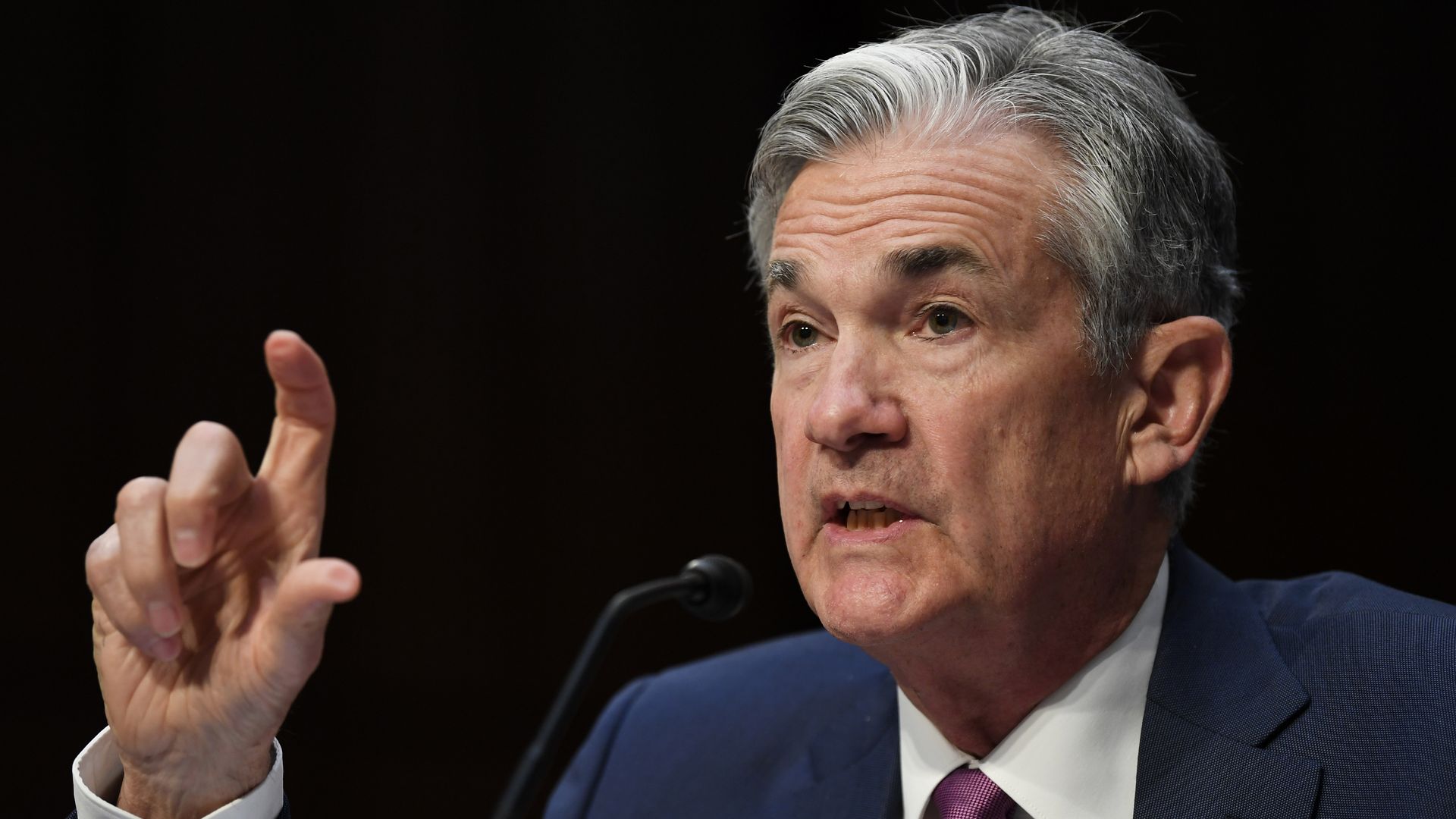
President Trump swiped at the Federal Reserve while criticizing China and the European Union in tweets on Friday, complaining that currency manipulation is "taking away our big competitive edge. ... As usual, not a level playing field."
Why it matters: The trade war between the U.S. and other countries is shifting into a currency war. This is the second time this week Trump has roiled currency markets with comments about Fed policy. The dollar fell shortly after Trump's tweets.
The chances of a longer, wider, more damaging trade war with China are rising, top officials tell us.
Why it matters: President Trump is spoiling for escalation. And China is ready to retaliate and out-wait America. Here’s why it could be even worse than you think.
The big picture: China "won't be able to come close to the U.S. in a tit-for-tat battle," writes CNBC. But, China has an arsenal of trade war weapons aside from tariffs that it's ready to use in the case of an escalated trade war.
President Trump's tariffs are introducing a new, wildly unpredictable issue into the midterm elections, thanks to their heavy impact on states with critical Senate races as well as their likely role in House races across the country.
Data: U.S. Chamber of Commerce. Note: Dollar amounts reference total value of goods in 2017. Cartogram: Lazaro Gamio/Axios
Why it matters: This puts GOP candidates in a weird position: Speaking out against trade policy that's hurting their state or district could turn off voters who would view that as criticizing Trump. But Democrats aren't exactly free traders, and they're not piling on the president's tariffs the way they attack his other policies.
Express Scripts, CVS Health, and UnitedHealth Group lost a combined $5 billion in market cap Thursday after it was revealed the Trump administration is proposing a rule that will alter how drug rebates can legally work in federal health care programs.
Flashback: These pharmacy benefit managers took a similar beating in May when the rebate chatter began.
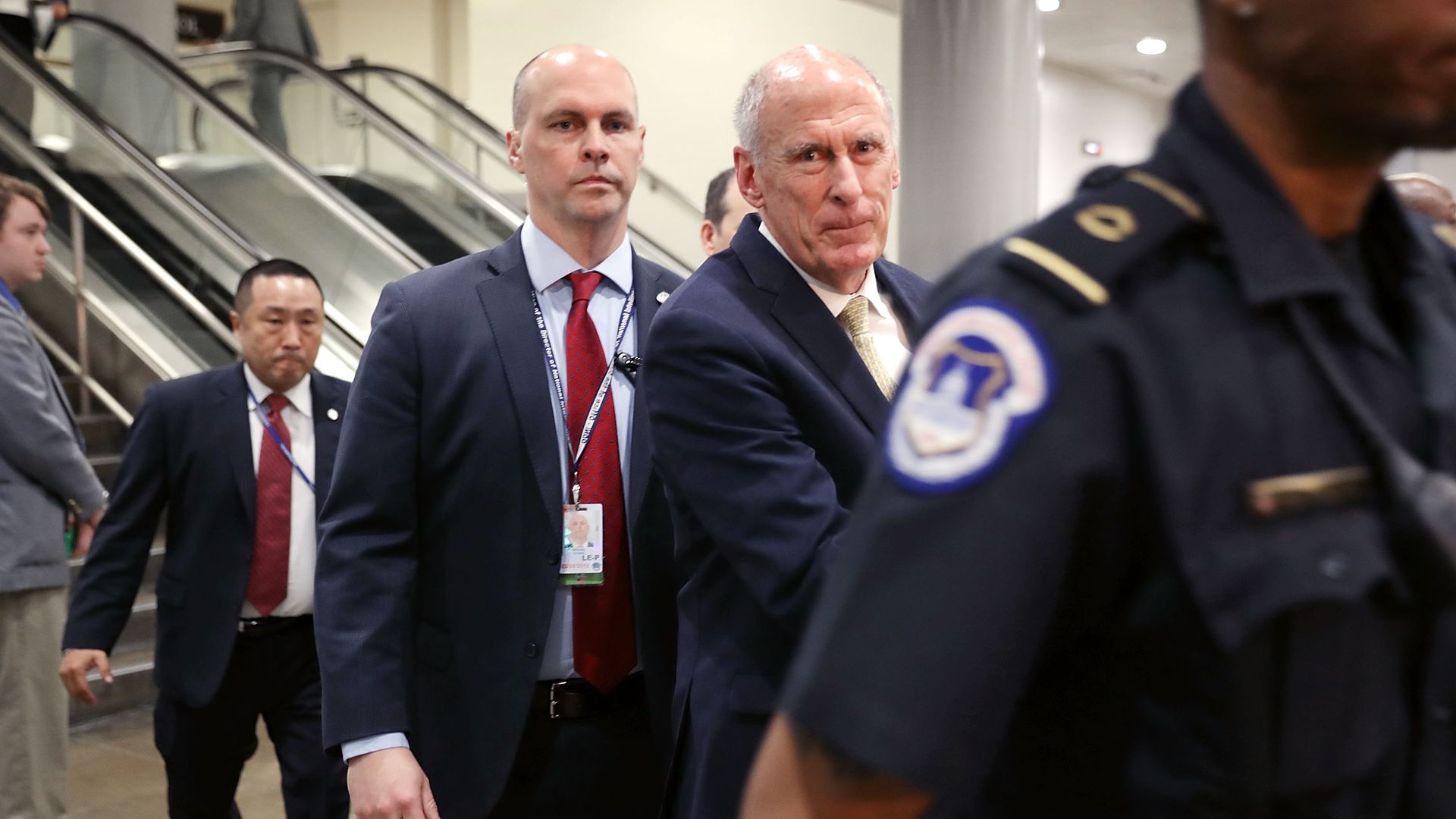
Director of National Intelligence Dan Coats told MSNBC's Andrea Mitchell Thursday that he felt he "needed to correct the record" following President Trump's comments during the Helsinki summit with Russia President Vladimir Putin, adding that he wished Trump had "made a different statement" as it is "undeniable that the Russians are taking a lead on this."
Our thought bubble: It was a STUNNING interview ... and is already catching heat and attention among Trump loyalists. I've already had two phone calls from sources close to Trump expressing their astonishment. The fact that Trump’s own intelligence director is saying these things is extraordinary. A moment of true and startling independence. Reveals how concerned Coats is about what happened with Putin.
President Trump said in an interview with Fox News' Tucker Carlson that he's consistently wondered why the U.S. would be willing to go to war to defend smaller NATO countries like Montenegro or Albania.
Why it matters: The mutual defense pact is the bedrock of NATO, and the only time it has been invoked was after the September 11 attacks.
President Donald Trump told CNBC's Joe Kernen that he's "not thrilled" with the Federal Reserve's decision to raise interest rates, claiming that the timing of the hikes will disrupt the booming economy and put the U.S. at a "disadvantage" compared to countries with loose monetary policy.
Why it matters via Axios' Dan Primack:Presidents are usually loathe to credit or criticize the Fed, believing there should be a separation between monetary and fiscal policy. Trump even acknowledged in the interview that he was setting himself up for criticism, but said that he "couldn't care less" because his views haven't changed from when he was a private citizen.
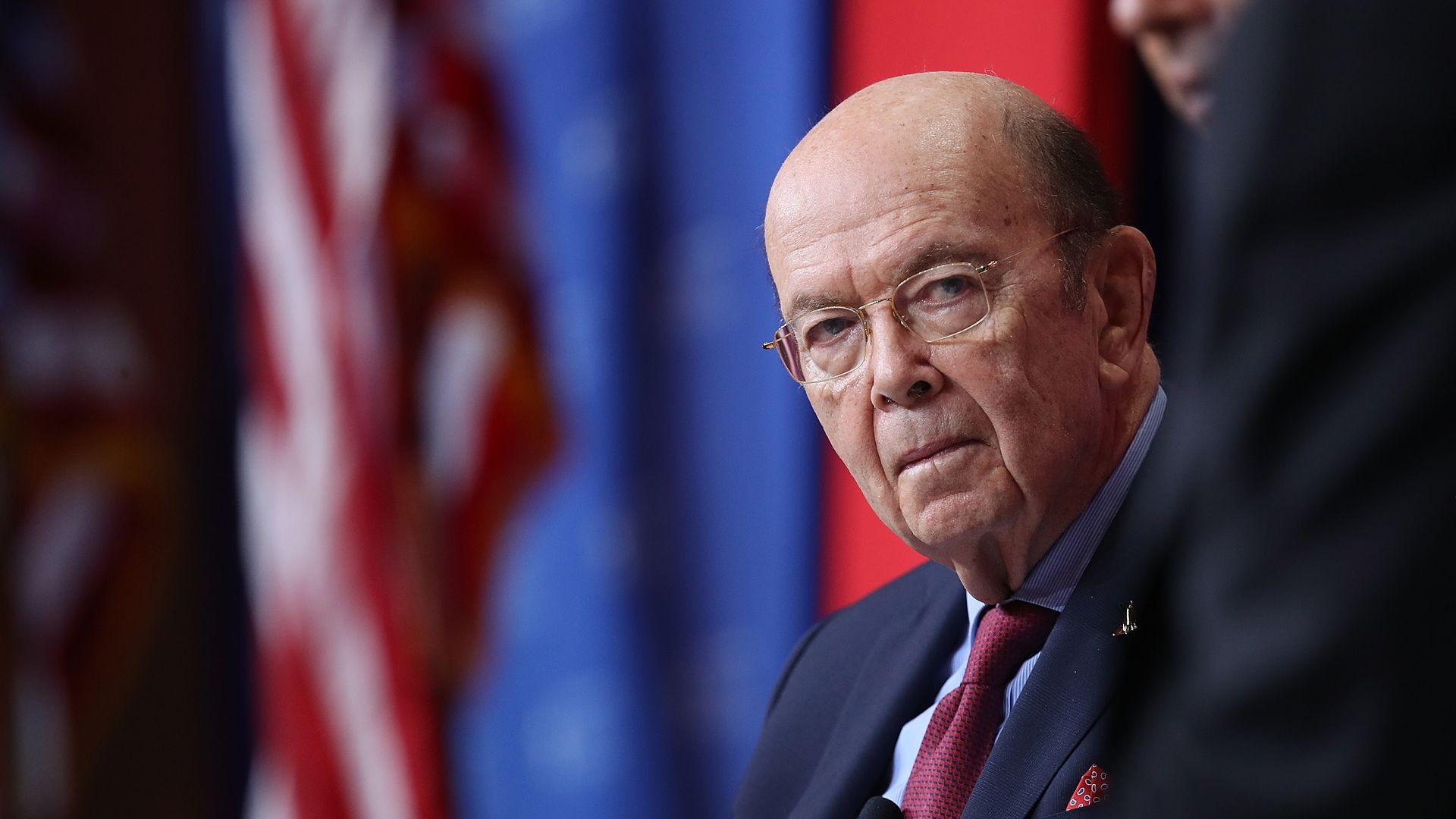
Commerce Secretary Wilbur Ross said in an interview with CNBC on Thursday that he believes Trump's trade war will move toward a resolution "well within a year."
"I think we will have made very substantial progress well within a year. Whether it's gonna be exactly China, whether it'll be EU, whether it'll be NAFTA, I would be very surprised if we were in this exact same situation as we are now."
The details: One reason Ross cites for his optimism is that Beijing is having difficulty sustaining its war against American soybeans. "They're literally having to pay farmers to try to convince them to grow soybeans instead of a more lucrative crop," Ross said.
Unveiling a "Pledge to America's Workers," President Trump today will launch a White House effort to promote high-tech retraining for workers — preparation for a workplace that'll increasingly be dominated by data and automation.
Why it matters: Workers, particularly in parts of the industrial Midwest where Trump is strong, are rightly worried about the threat to jobs from robots and automation.