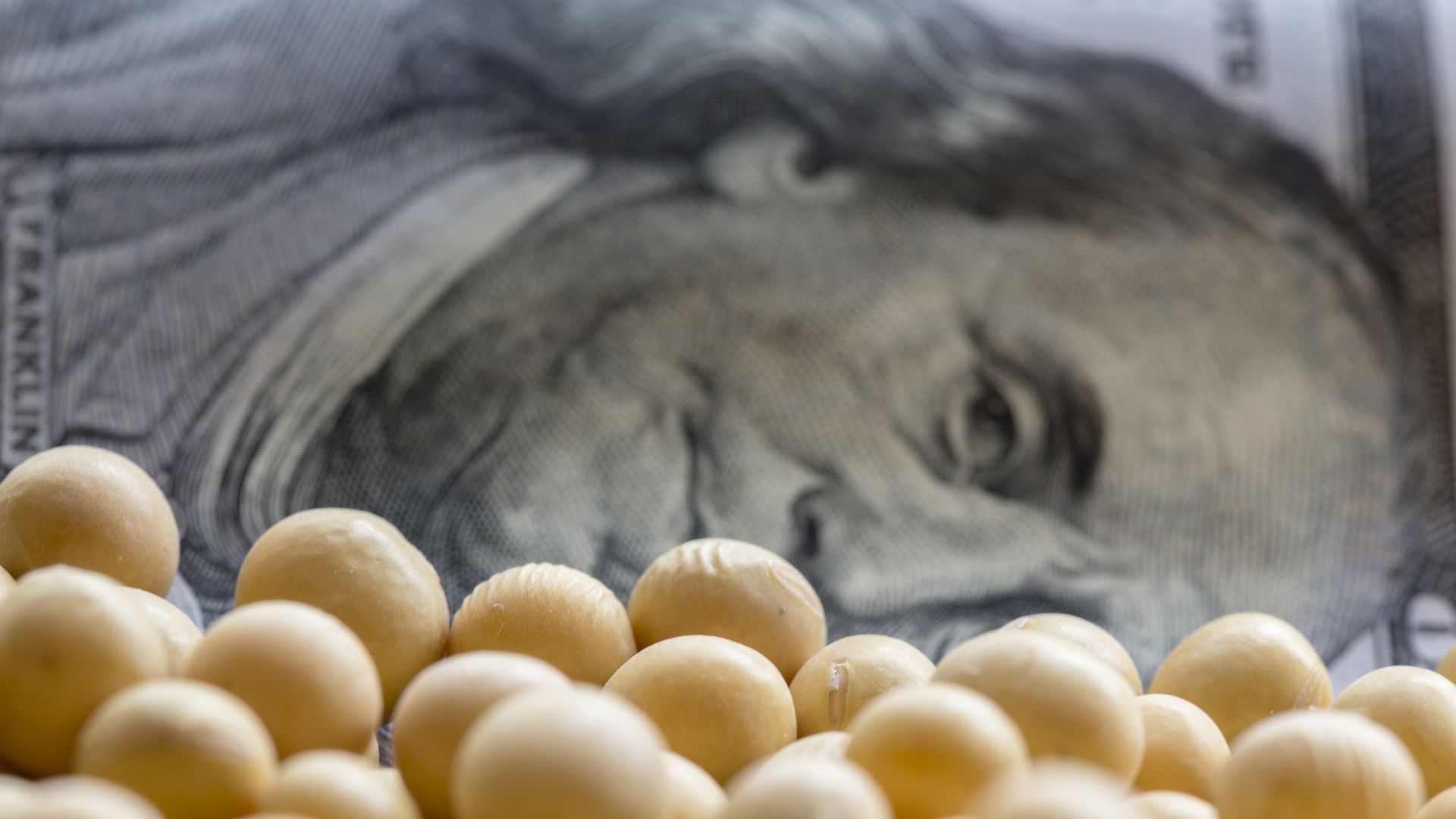
China isn't buying U.S. soybeans, as the country hinges on planned tariffs on soybean shipments announced last month amid the growing U.S.-China trade war, Bloomberg reports.
Why it matters: As Axios' Erica Pandey reported, soybeans are "almost exclusively produced by farmers in the GOP's rural base who voted overwhelmingly for President Trump in the 2016 election." Bunge Ltd. Chief Executive Officer Soren Schroder told Bloomberg: "Whatever they're buying is non-U.S. They're buying beans in Canada, in Brazil, mostly Brazil, but very deliberately not buying anything from the U.S."
Poultry and meat workers quit in numbers rivaling almost any industry. That's because their physically tough work is among the least-pleasant on the planet.
What's new: Tyson Foods — the largest American poultry producer — is getting praised by industry activists for improved conditions, including higher wages and an education program for its largely immigrant work force.
Hulu announced Wednesday that it reached 20 million subscribers and is renewing the dystopian drama Handmaid's Tale that helped it reach its latest heights, per the Hollywood Reporter.
The state of play: Hulu is still a smaller streaming service than its top two competitors, Netflix and Amazon, but Handmaid's Tale has helped it draw a bigger audience. Hulu also benefits from providing more television and advertising opportunities than its competitors.
Viking Global Investors has agreed to acquire a majority stake in Birchbox, via a recap that will effectively wipe out the other venture capitalists that invested over $85 million (including at a valuation just south of $500 million).
Why it's a big deal: Birchbox was the original "stuff in a box" company, kicking off a niche industry that would attract both startups and legacy retailers.
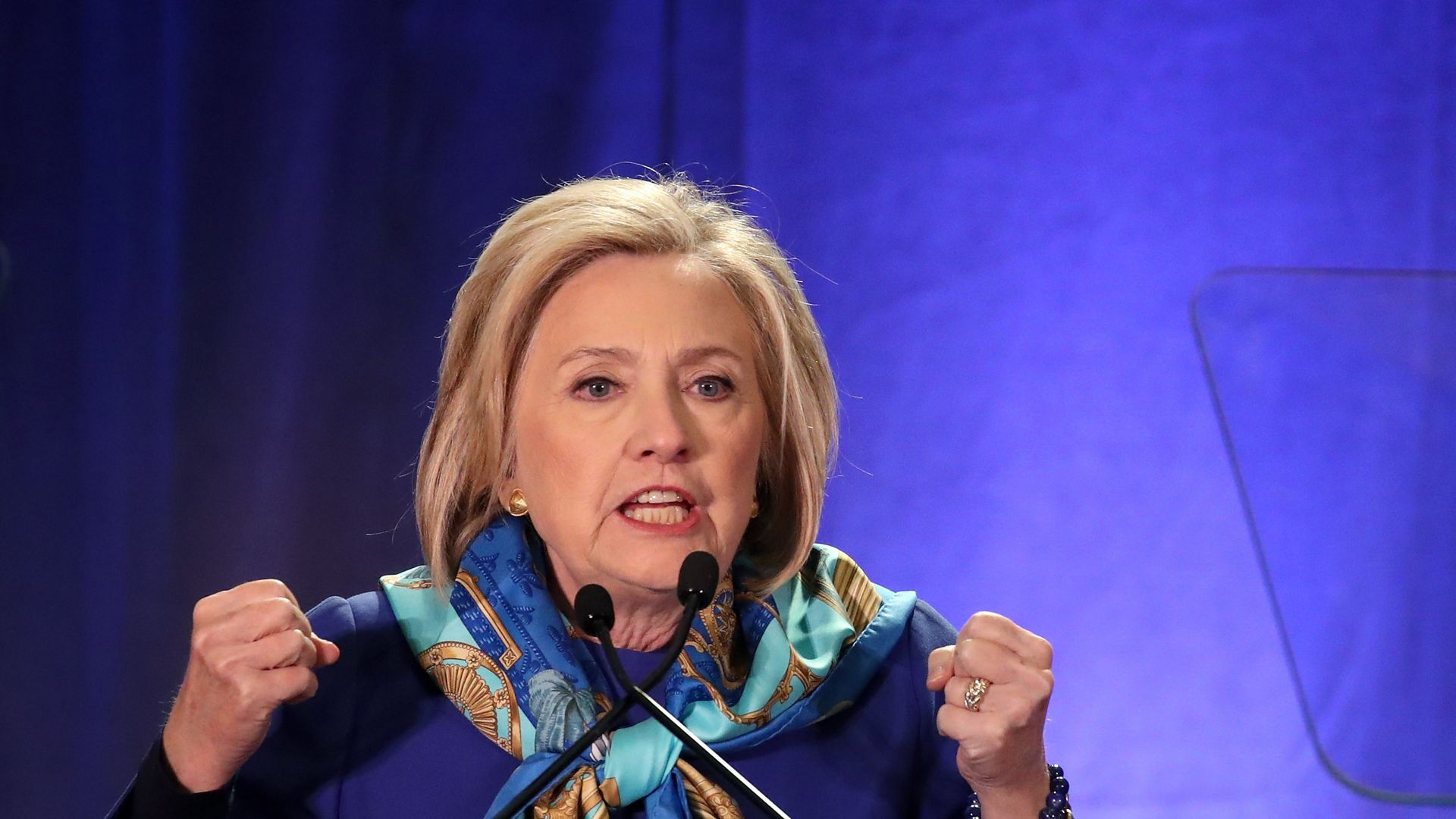
Nearly 13,000 TV commercials from Jan. 1 through April 24 mentioned or showed a photo of Clinton with more than 5,000 coming from Ohio, according to data compiled for USA Today by Kantar Media's Campaign Media Analysis Group.
The state of play: In Ohio, more than 5,000 TV commercials this year have mentioned Clinton, all in the state's GOP primary for governor.
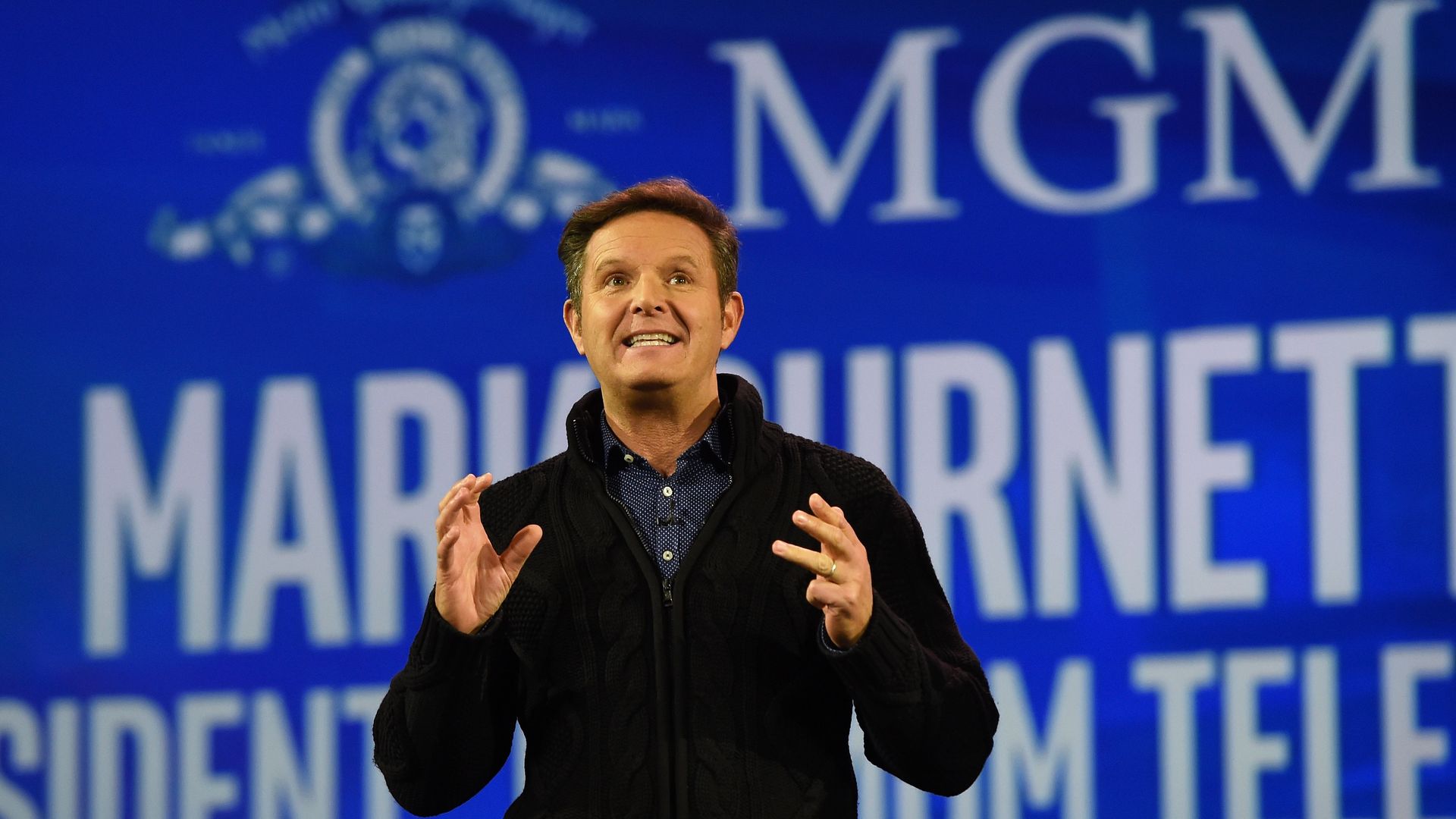
"Entertainment industry heavyweights made an upbeat case for their business at the Milken Institute Global Conference in Beverly Hills, despite fast-growing competition from online video networks such as Netflix and Amazon.com," the L.A. Times' Ryan Faughnder reports.
What they're saying: MGM Television President Mark Burnett, whose company produces "Survivor," "The Voice" and "The Handmaid's Tale," told the conference: "Basically, if you're not a hit maker in what we do, you're in big trouble ... Once you have something that emotionally connects … money is falling from the sky, globally ... That money is falling into our buckets, if we have the most connective content in the world."
Health care companies are rushing to buy or invest in areas that focus on the elderly population, as baby boomers are reaching an age when they require more health care services.
The big picture: More of the nation's health care spending is going toward government programs, especially Medicare and Medicaid, so the industry is naturally running to where the dollars will be. But that doesn't guarantee seniors will get better care.
Privacy scandals, data breaches and safety issues are impacting America's idealistic view of the internet as a force for good, according to a new Pew Research Center survey.
While 96% of U.S. homes have a television, other video devices are slowly reaching ubiquity as well, according to Nielsen.
Reproduced from a Nielsen report; Chart: Axios Visuals
A big trend: Roughly two-thirds of U.S. homes have an internet-enabled connected device that's capable of streaming content to a television set, which includes enabled smart TVs, multimedia devices and video game consoles.
A group of media, journalism and tech companies has joined veteran media executive Merrill Brown to create a full-service publishing platform specifically built for digital news publishers called The News Project (TNP).
Why it matters: Brown says his company is different from other digital publishing platforms, like Maven, Squarespace and Medium, because his focuses solely on news.
Digital publishers are doubling down on new TV-like video programming, specifically with streaming services, like Netflix, as well as with linear TV networks.
Why it matters: Universal device ownership is forcing brands to think about reaching users with compelling stories wherever they are spending time within their media diet, whether that's on a smartphone or a smart TV.
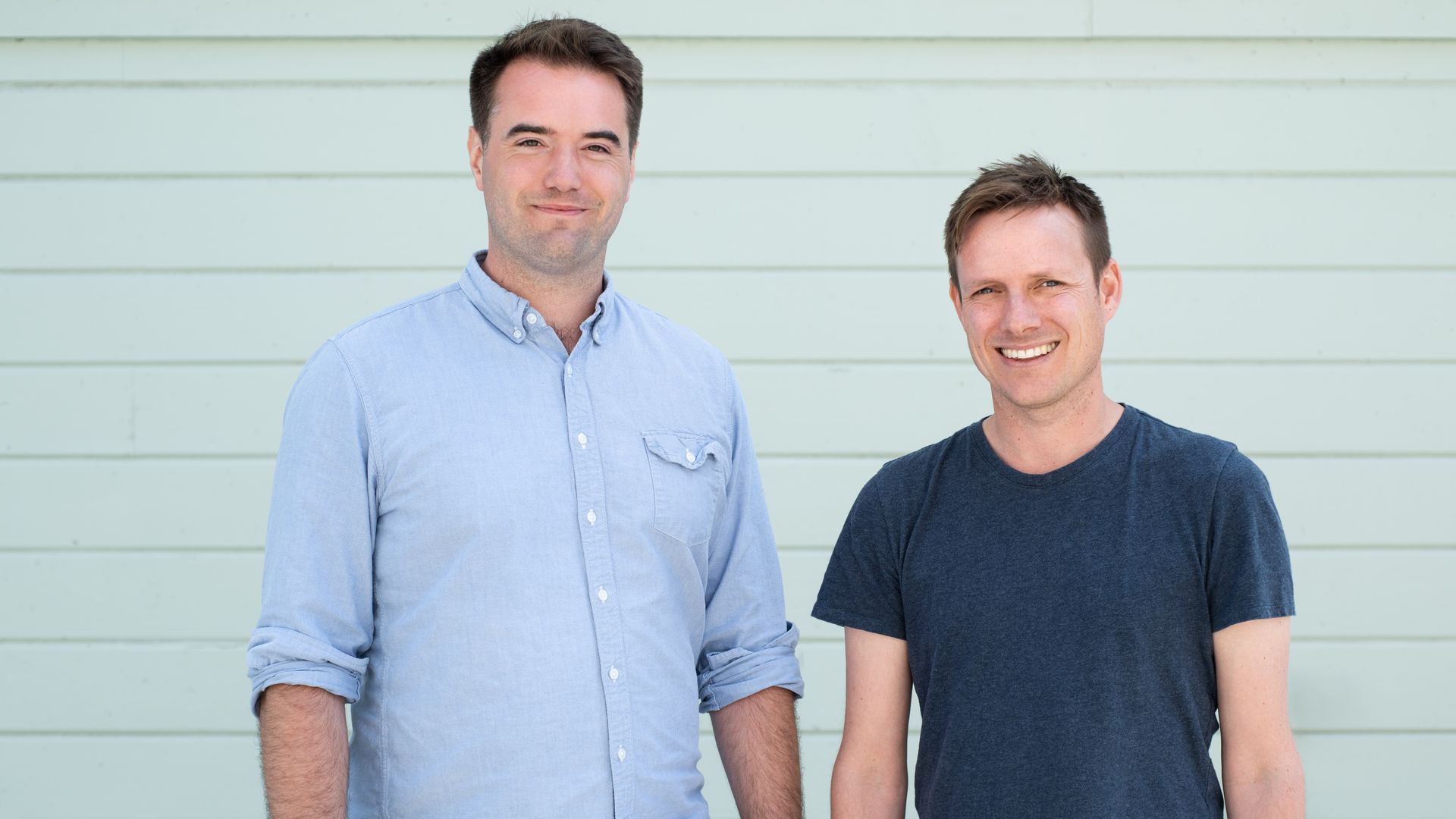
Substack, a San Francisco-based startup that provides users with tools to publish paid (or free) subscription newsletters, has raised $2 million in seed funding.
Why it matters: The media industry has been scrambling to figure out how to pay for journalism and content, and a growing number of organizations believe subscriptions can be a solution.
Special counsel Robert Mueller provided President Trump’s lawyers with a list of dozens of questions on various issues he wants to ask Trump if given the opportunity to interview him as part of his Russia investigation, and The New York Times reportedly obtained that list.
Why it matters: The questions, which reveal that Mueller is interested in learning more about Trump's ties with Russia, his relationship with his advisers and family, and the motivation behind some of his controversial tweets, offer one of the closest looks yet into Mueller's thinking. They also show that the investigation has expanded beyond Russian meddling and potential obstruction of justice to include the president’s conduct in office.