Coinbase COO Emilie Choi says the country's largest crypto exchange by volume doesn't plan to bring its retail trading fees down to zero.
Why it matters: Over the summer, Binance entered the U.S. market with zer0-fee bitcoin trading — flaming speculation that the world's largest crypto exchange could launch a pricing war stateside and eat into Coinbase's market share.
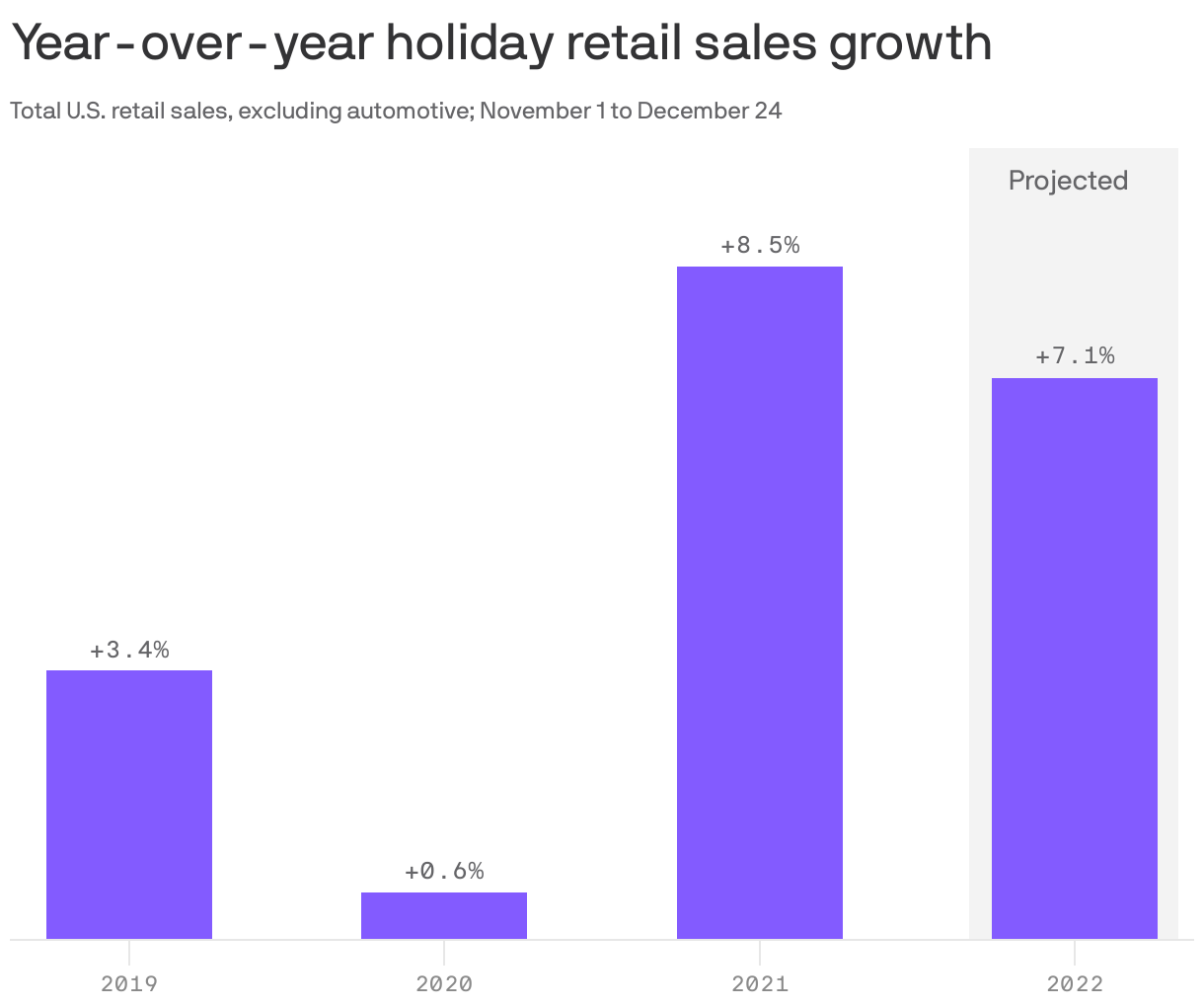
Holiday spending growth is poised to trail last year's big bounce as customers seek out deals, Mastercard SpendingPulse projected Monday.
By the numbers: Holiday shoppers are expected to spend 7.1% more this year than they did in 2021, which would fall short of last year's 8.5% increase. The projection is also not adjusted for the four-decade high in inflation, suggesting that retail spending could suffer a decline in real terms.
Credit card giants Visa, Mastercard and American Express are taking steps to help better track firearm sales in a move hailed by gun control proponents.
Why it matters: Payment processors have been under pressure to help monitor gun purchases amid concerns over mass shootings and other violence.
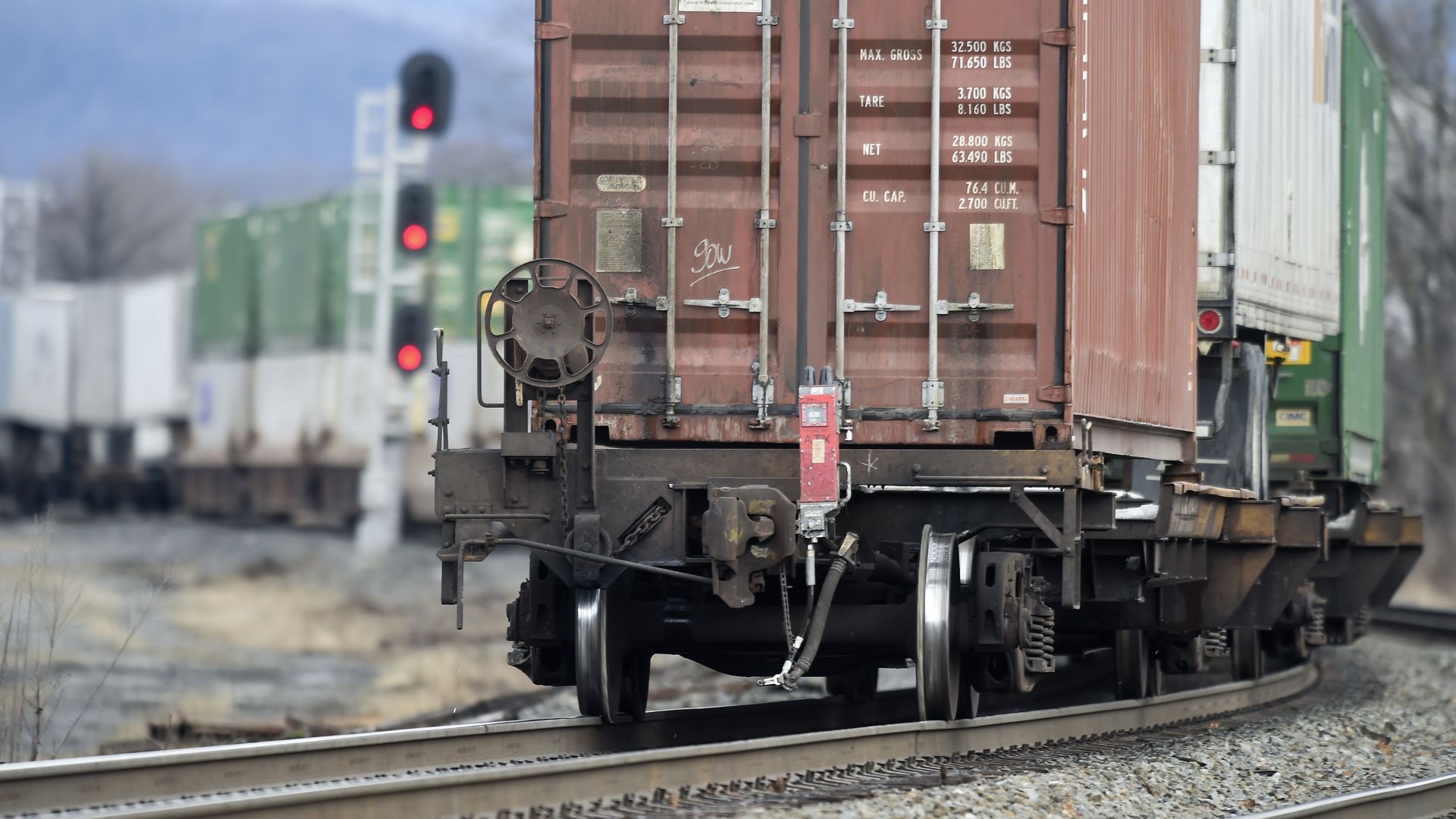
Why it matters: A shutdown of the nation's rail system threatens to re-tangle supply chains in the U.S. and could cost up to $2 billion a day, according to an industry estimate.
A group of Seattle Pacific University (SPU) faculty and students are suing the Christian college after its board of trustees refused to remove a policy barring people in same-sex relationships from working full-time jobs at SPU.
Why it matters: The lawsuit comes on the heels of similar litigation against religious schools across the country. SPU sued Washington Attorney General Bob Ferguson this year after his office launched an investigation into complaints of the hiring practice.
Why it matters: Major social media platforms largely rely on these data centers — facilities that house computers, servers and storage systems — to keep their services running. Another outage may result in Twitter going dark for some of its users.
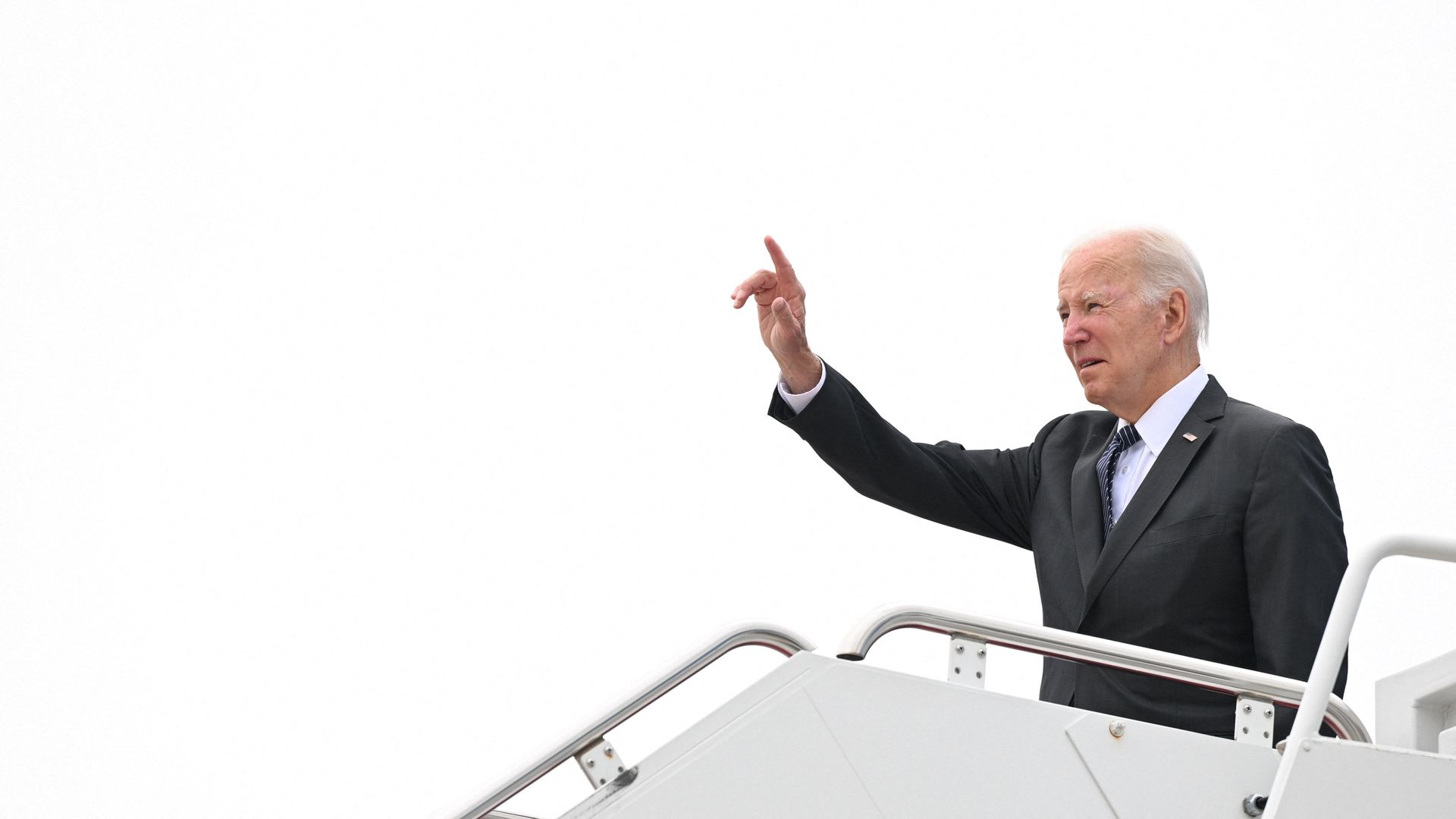
Led by Iowa Gov. Kim Reynolds, 22 GOP governors on Monday sent a letter to President Biden urging him to withdraw his student loan forgiveness plan, citing its negative impact on lower-income families.
High profile hacks and funds being locked up on struggling platforms are nightmare headlines for the crypto industry as it seeks to win new believers, but for some hardware companies like Ledger, they are prime marketing material.
Why it matters: Most blockchain veterans believe that cold storage — holding your crypto offline and off the internet — is the safest way to store digital assets. Self custody, holding those digital assets outright, also shields owners from the fickle policies of [name your exchange].
Twitter on Monday rejected a new argument made in a letter sent by Elon Musk's lawyers to the social giant on Friday that alleged it violated its merger agreement by paying $7.75 million in severance costs to its former security chief.
Why it matters: It's the third argument and counter-argument made by Musk and Twitter over whether Musk legally has the right to terminate his $44 billion deal to buy Twitter.
The New York Times on Monday debuted ads on its subscription sports website, The Athletic.
Why it matters: The Times hopes advertising will help The Athletic become profitable in the three-year time frame it gave investors when it acquired the outlet in January.
Starbucks is going beyond free coffee and deals with its longtime loyalty program: It will soon give members and employees the ability to buy and earn NFTs without using cryptocurrency.
Why it matters: Starbucks isn't the only chain testing NFTs in a push to appeal to younger consumers, but it's one of the first to integrate them into a loyalty program.
A bankruptcy case in Indiana could help upend the mass tort litigation system in the U.S.
Driving the news: 3M, the conglomerate, recently put its Aearo Technologies subsidiary into bankruptcy. It aims to use the bankruptcy process to settle over 230,000 lawsuits from military service members who allege faulty earplugs made by Aearo caused hearing loss — the biggest multi-district litigation (MDL) in history.
Two huge labor disputes, in the railways and at the ports, threaten to re-tangle supply chains in the U.S. And the White House is pushing to avert disaster, engaged at a level not seen in decades.
Why it matters: The stakes are sky-high economically. A shutdown of the nation's rail system could cost $2 billion a day, according to an industry estimate, and we've already seen what backed up ports do to the economy. Politically, any work stoppage would spell disaster for a pro-labor White House determined to keep inflation in check and avert bottlenecks.