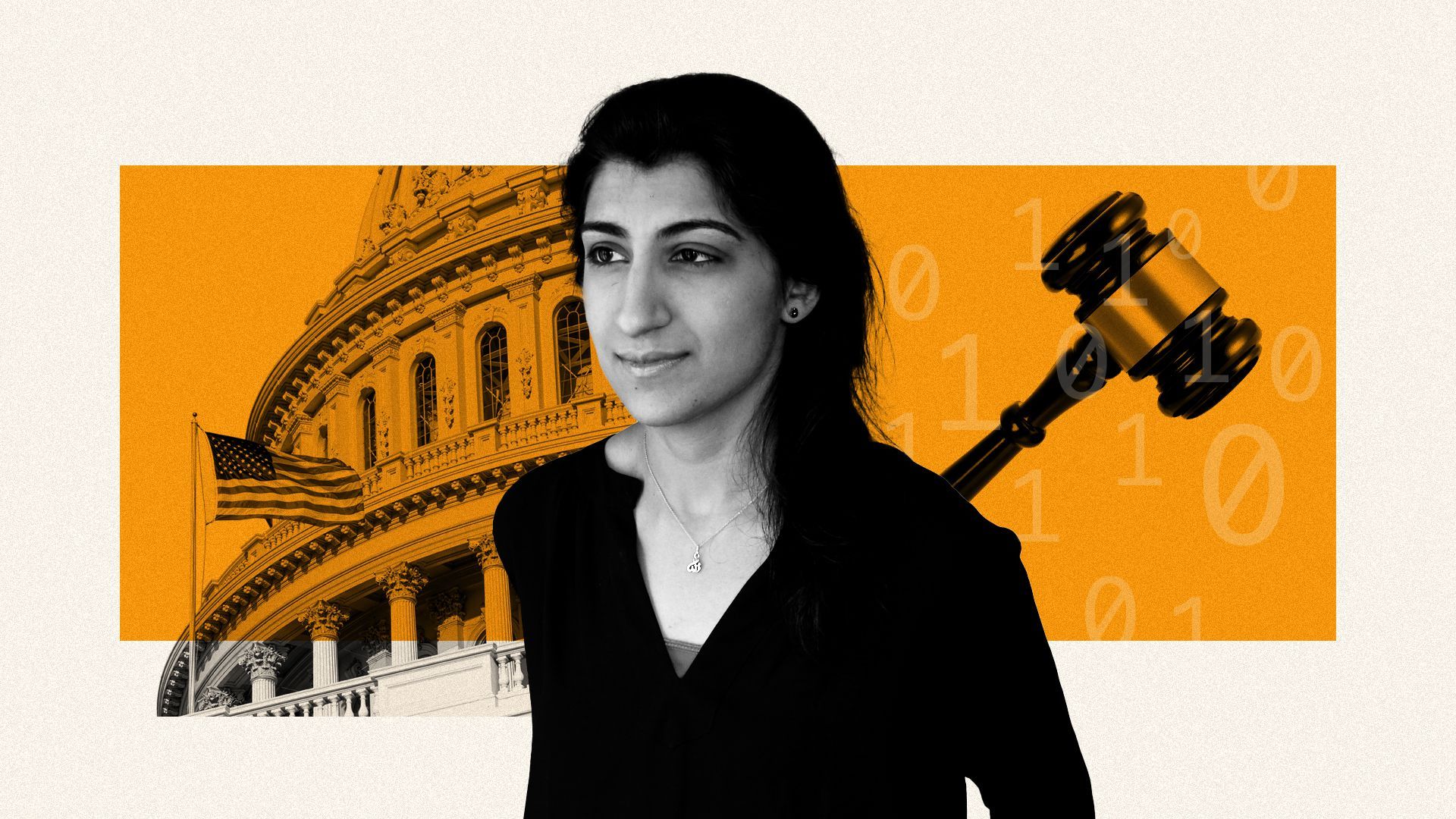
The Federal Trade Commission announced Monday it is launching a study into supply chain disruptions across the country.
Why it matters: AsFTC Chair, Lina M. Khan is fiercely focused on competition issues and how they impact consumers. Issuing this inquiry makes it clear she is seeking to illuminate how competition may factor into the supply chain.
What's happening: The FTC is sending inquiries to Walmart, Kroger, Amazon, C&S Wholesale Grocers, Associated Wholesale Grocers, McLane Co., Procter & Gamble, Tyson Foods and Kraft Heinz.
The inquiries, due 45 days from the date received, ask the companies to give information on factors disrupting the ability to ship products, the impact on prices, which suppliers are most affected, what is being done to alleviate disruptions and other issues.
The FTC is using Section 6(b) of the FTC Act, which allows the agency to conduct studies and gather information about business practices without a specific law enforcement purpose.
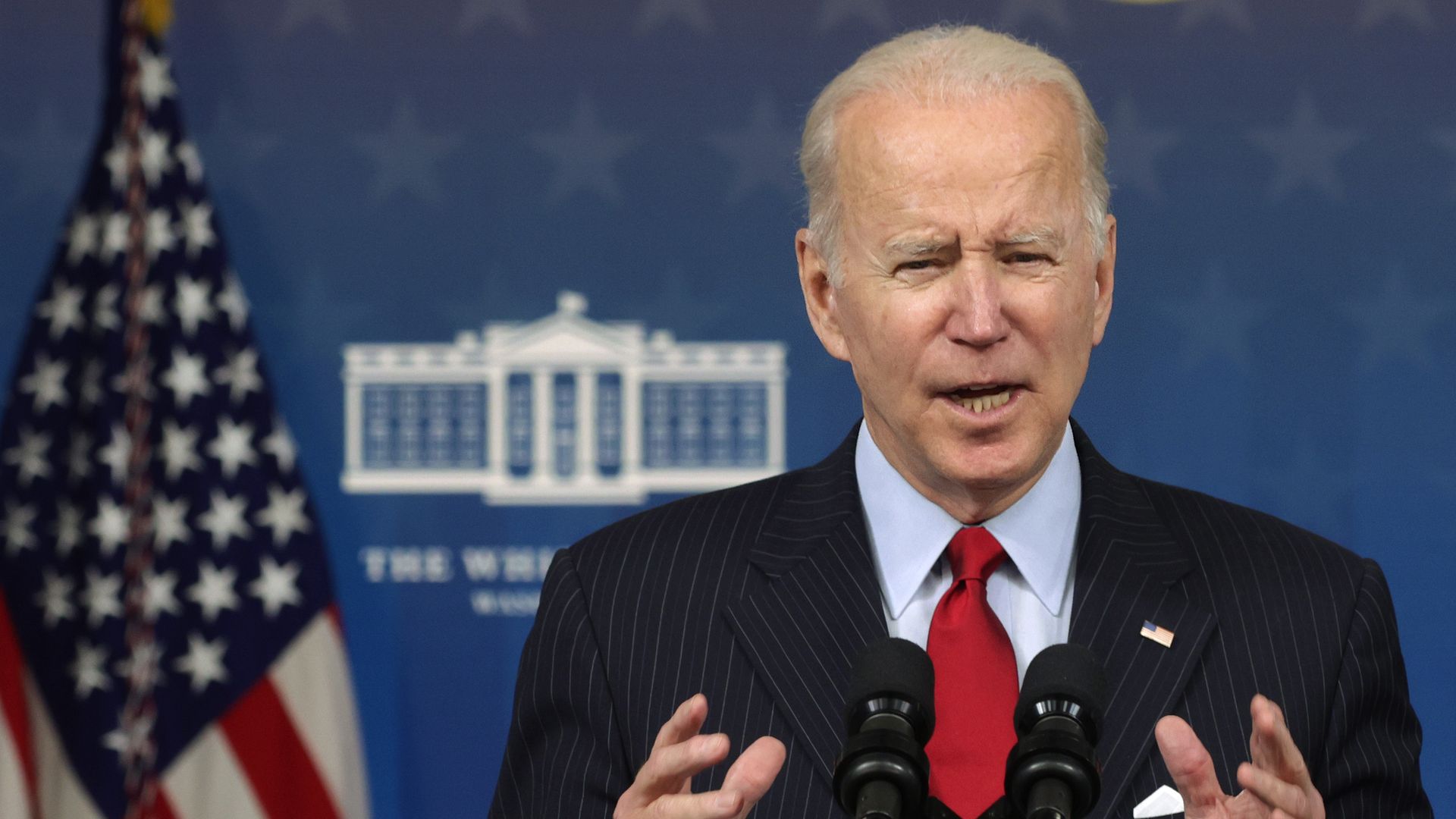
The move comes as supply chain disruptions get attention from the Biden White House and retailers struggle to fulfill orders ahead of the holiday season due to global strains and shortages of workers.
What they're saying: "I am hopeful the FTC’s new 6(b) study will shed light on market conditions and business practices that may have worsened these disruptions or led to asymmetric effects," Khan said in a release.
Jack Dorsey on Monday took aim at Silicon Valley's conventional wisdom that tech companies are best served when their founder retains control while explaining his rationale for resigning as Twitter's CEO:
“There’s a lot of talk about the importance of a company being ‘founder-led.’ Ultimately I believe that’s severely limiting and a single source of failure. I’ve worked hard to ensure this company can break away from its founders and its founding.”
Clearlake Capital Group agreed to buy Quest Software, an Aliso Viejo, Calif.-based provider of enterprise management software, from Francisco Partners for $5.4 billion (including debt).
Why it matters: This reflects ongoing private equity bounty from Dell's 2013 decision to go private, and its subsequent merger with EMC.
Simon Clark is frustrated. The Wall Street Journal reporter is five months removed from the publication of his well-received book on Abraaj Group, a private equity pioneer turned Ponzi scheme, but tells me the industry has turned a blind eye to the cautionary tale he co-authored with Will Louch.
What he's saying: "The book has been widely read. I've been invited by academic institutions to talk about the issues raised, and one of the major limited partners has privately asked for a conversation. But, largely, the private equity and impact investing industries still don't want to even utter the word 'Abraaj,' ... ostriches with their heads in the sand, hoping to whole thing will go away."
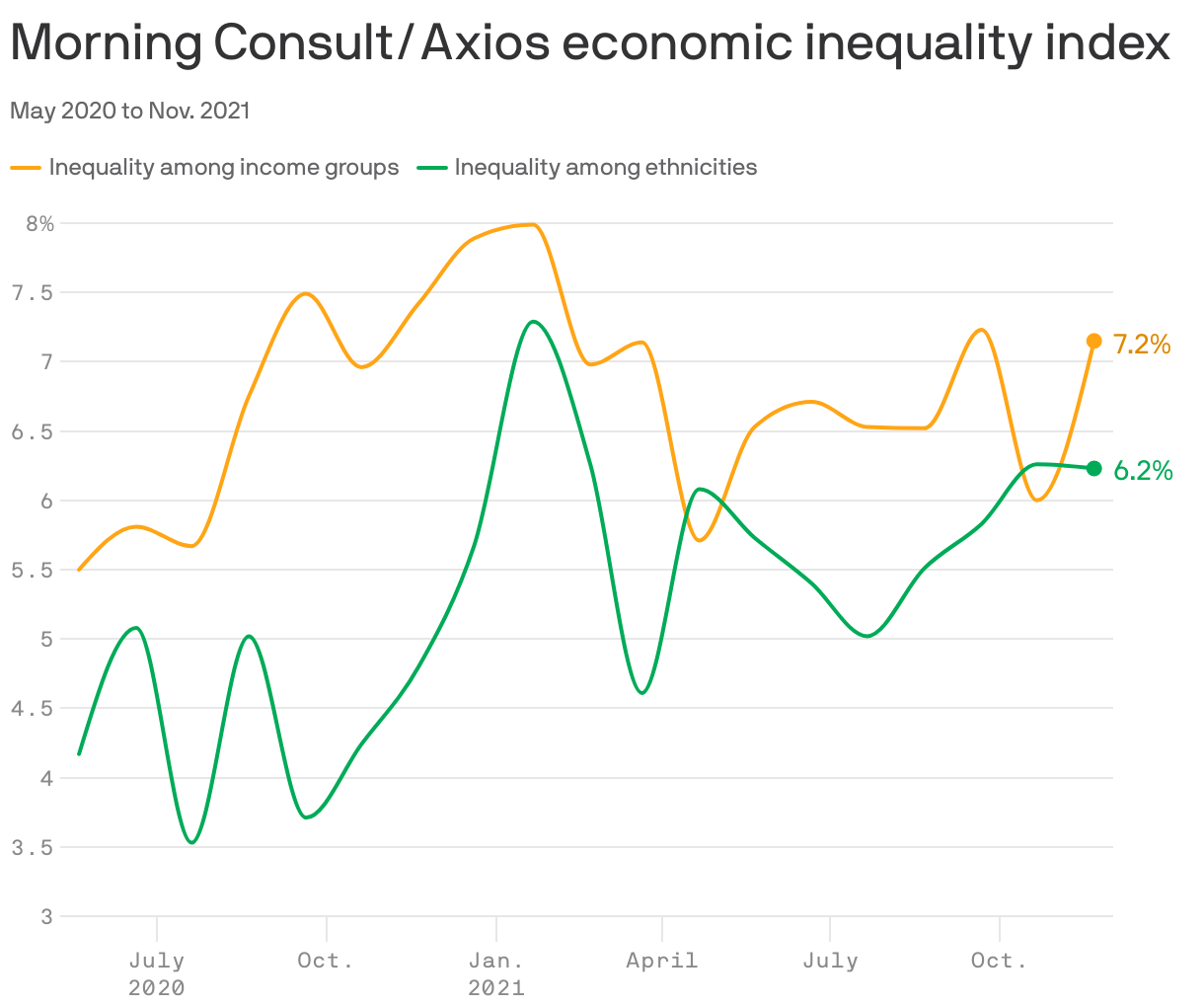
Data: Morning Consult/Axios; Chart: Will Chase/Axios
The pandemic was bound to hit the most economically vulnerable among us the hardest. New polling data from Morning Consult, out this morning, shows the degree to which those difficulties were more concentrated among people of color.
Catch up quick: The Morning Consult/Axios Inequality Index has tracked the economic experience of adults in three wage groups since May 2020. We began publishing the findings in May of this year, and six months in, we’re slicing the data a little differently — and looking at inequality between ethnicities.
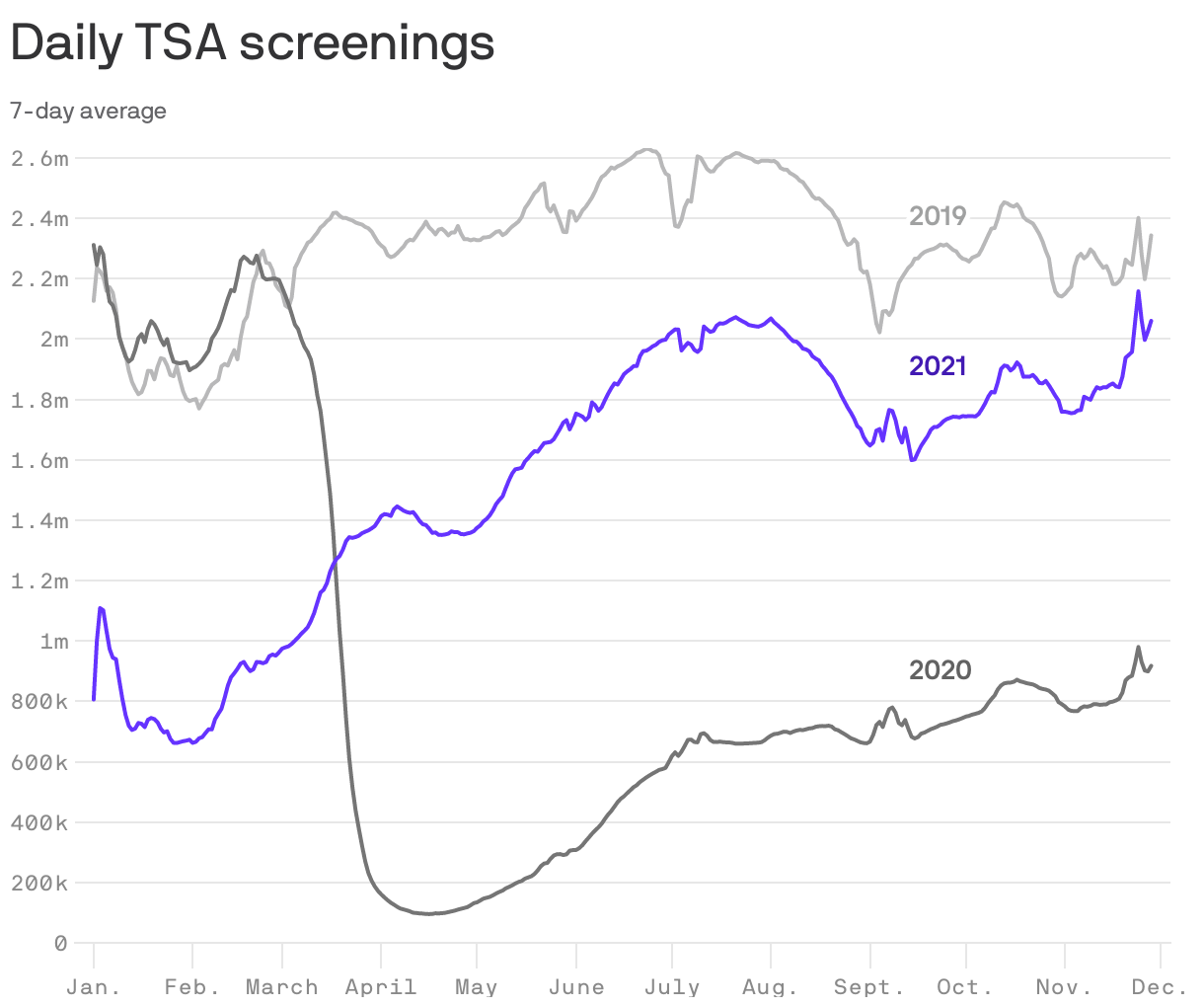
The Transportation Security Administration screened 2,451,300 people at airports across the U.S. on Sunday, making it the busiest day for air travel since the beginning of the pandemic.
Driving the news: Nearly 20.9 million passengers passed through TSA checkpoints from Nov. 19 through Nov. 28, more than double the number of air travelers screened during the same period last year, TSA said.
The Bureau of Economic Analysis released second-quarter GDP statistics just before Thanksgiving. You could be forgiven for having missed it — the report is normally just a minor revision to numbers that have already been released. This report, however, is worth a second look.
Why it matters: The BEA calculates GDP in two different ways — gross domestic product, and gross domestic income, or GDI. Economically speaking, the two are identical. But they're measured in different manners, which means that the numbers reported by the BEA can differ in interesting ways.
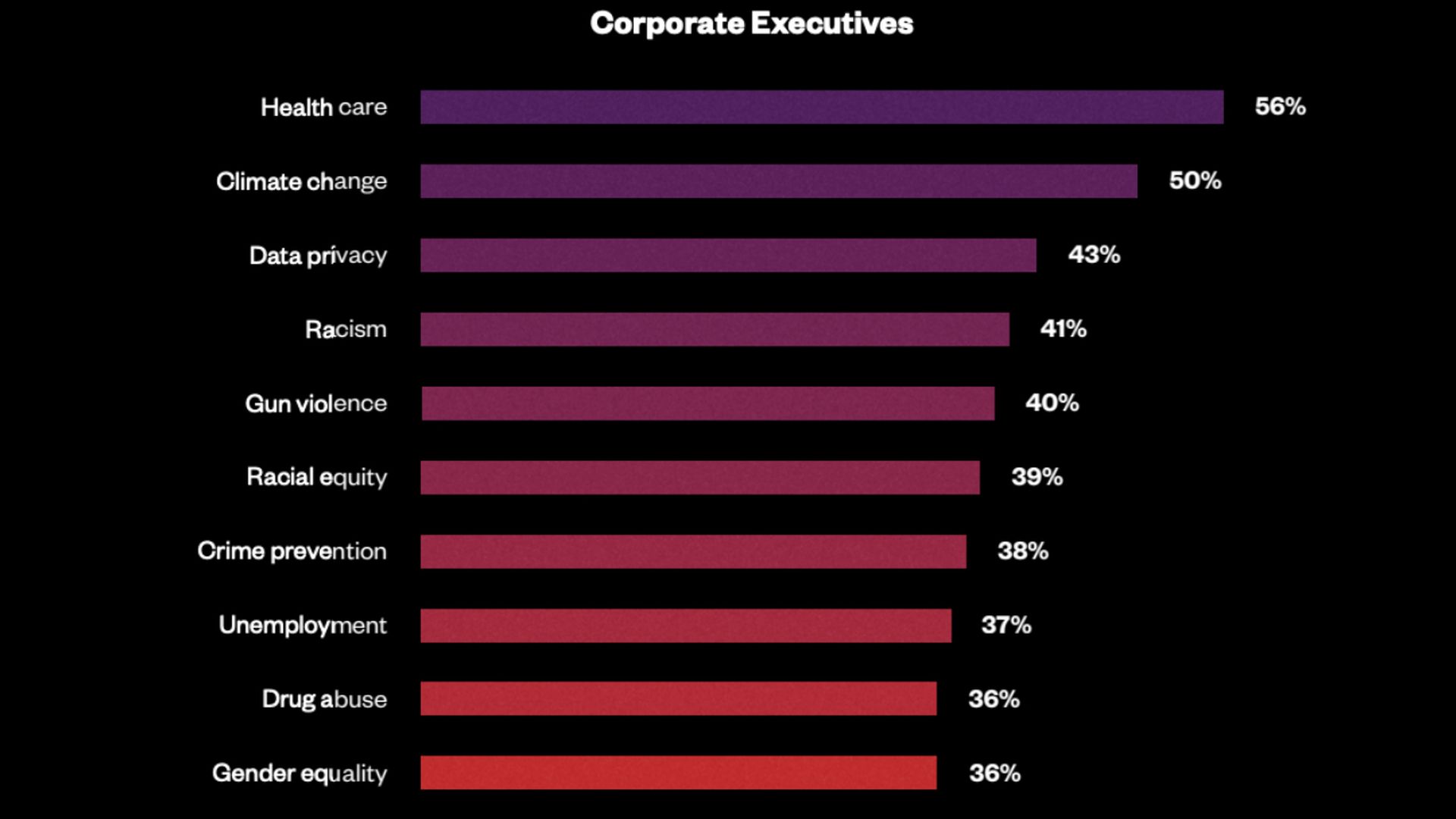
This graphic shows the range of issues U.S. executives are tempted to sound off on. A new report from the advisory firm Brunswick warns about "The Talking Trap" — the danger of speaking out impulsively on issues that aren't core to the business:
What they're saying: "Reflexive messages fall flat. ... If your organization decides to respond to an emerging issue, engage with humility, vulnerability, and enthusiasm on the issues and in ways that are most relevant to your organization."
A well-funded and intensely motivated chunk of tech's hive mind is finding common cause in a vast new project: rebuilding the web on a foundation of cryptocurrency and blockchain tech. They call it "Web3."
The big picture: Developers, investors and early adopters imagine a future in which the technologies that enable Bitcoin and Ethereum will break up the concentrated power today's tech giants wield and usher in a golden age of individual empowerment and entrepreneurial freedom.
President Biden will meet Monday afternoon with CEOs of big retailers, grocers and consumer-products firms to send this message, according to the White House: Products will be on shelvesfor holiday shopping.
Box office ticket sales over the Thanksgiving holiday show that consumer confidence in moviegoing is slowly improving but not enough to bring the struggling theater industry back to pre-pandemic levels anytime soon, if ever.
Why it matters: "We may have to temper expectations a bit" for next year, said Comscore senior media analyst Paul Dergarabedian.
Republican officials around the country are testing a creative mechanism to build loyalty with unvaccinated Americans while undermining Biden administration mandates: unemployment benefits.
Driving the news: Florida, Iowa, Kansas and Tennessee have changed their unemployment insurance rules to allow workers who are fired or quit over vaccine mandates to receive benefits.
U.S. Commerce Secretary Gina Raimondo will call on House lawmakers to pass a bill boosting funding for semiconductor manufacturing during a speech in Detroit on Monday.
Why it matters: A global chip shortage is slowing production of everything from appliances to vehicles. The Senate in June passed a bill that includes $52 billion for domestic semiconductor manufacturing, but the House has yet to act.















/2021/11/28/1638139328917.gif?w=3840)