Venture capitalist Bill Gurley said at an Axios event Wednesday that more companies are starting to go public after staying private longer and seeing capital pile up.
Why it matters: How social media companies choose to handle the Taliban's victory in Afghanistan will impact how effectively the group is able to communicate to the people it will now govern.
Apeel Sciences, a Santa Barbara, Calif.-based developer of rot-reduction coatings for fresh fruits and vegetables, raised $250 million in Series E funding led by Temasek at a valuation north of $2 billion.
Why it matters: We waste upwards of 40% of all produced food, both in the U.S. and globally, and the situation has been exacerbated by a pandemic that's created supply chain disruptions (e.g., border closures, labor disruptions) and grocery demand surges.
Environmental Protection Agency administrator Michael Regan visited the Apple headquarters Tuesday for a conversation with former EPA head Lisa Jackson, who now serves as the tech giant's leader on environment, policy and social initiatives.
The big picture: Apple, considered a leader in procuring renewable energy for its stores, data centers and offices, is in the midst of tackling its toughest environmental challenge yet: greening its vast, global supply chain. The company is aiming to have a carbon neutral supply chain by 2030.
Bad news has been bouncing off the Teflon-like stock market over the past nine months — making selloffs like Tuesday’s appear to more and more investors like buying opportunities.
Why it matters: The S&P 500 closed at 4,479.71 on Monday, marking a 100% gain from its March 23, 2020 closing low of 2,237.40. But at some point, there could be enough bad news about the economic backdrop that stock prices fall sharply.
Driving the news: Crypto adoption by consumers around the world soared by 880% in the last year, according to a new index created by Chainalysis, a blockchain analysis company.
Retail sales fell by a lot more than experts expected in July. However, the shopping trends underlying the data don’t paint a picture of nervous consumers pulling back amid renewed COVID concerns.
Why it matters: The recent spike in COVID cases amid the spread of the Delta variant has taken a toll on consumer sentiment. Should that drop in sentiment translate into a significant downturn in actual spending, the U.S. economic recovery could be thrown off track.
Afghanistan’s financial system was plunged into chaos this week as the Taliban took over the nation’s government.
What happened: The country’s currency, the Afghani, fell to its weakest value on record after numerous government officials — including Ashraf Ghani and central bank governor Ajmal Ahmady — fled the country, Bloomberg reported.
If you haven't bought a new car in a few years, you might be surprised at how many driving tasks are now automated — speed control, braking, lane-keeping and even changing lanes.
Why it matters: Carmakers keep adding more automated features in the name of safety. But now authorities want to find out if assisted-driving technology itself is dangerous by making it too easy for people to misuse.
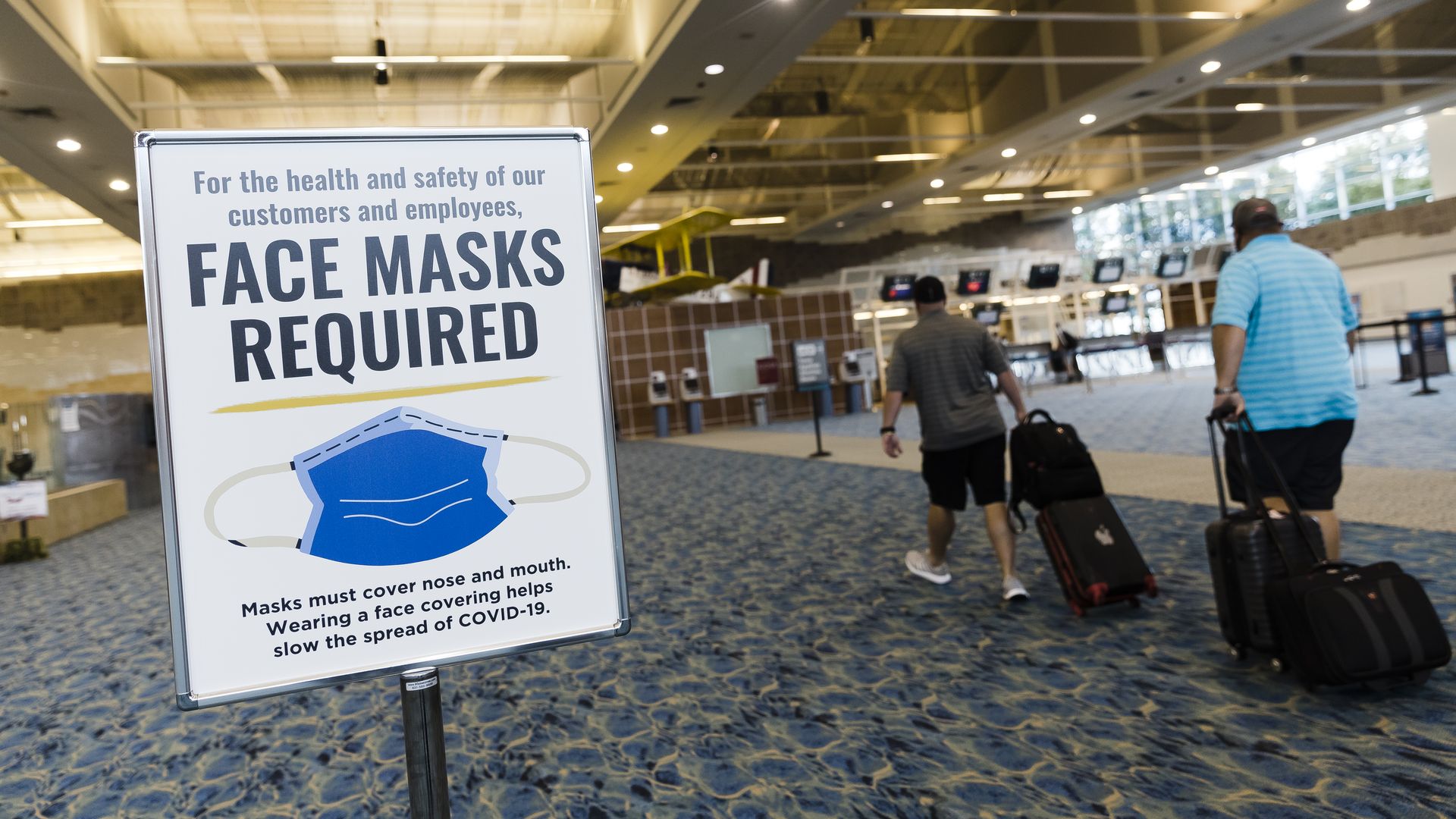
People will now have to wear masks on airplanes, trains, buses and at airports through Jan. 18, the Transportation Security Administration (TSA) told variousmedia outlets in a statement Tuesday.
Why it matters: The mandate was set to expire on Sept. 13, but the highly contagious Delta variant has forced the federal government to change course on mask mandates.