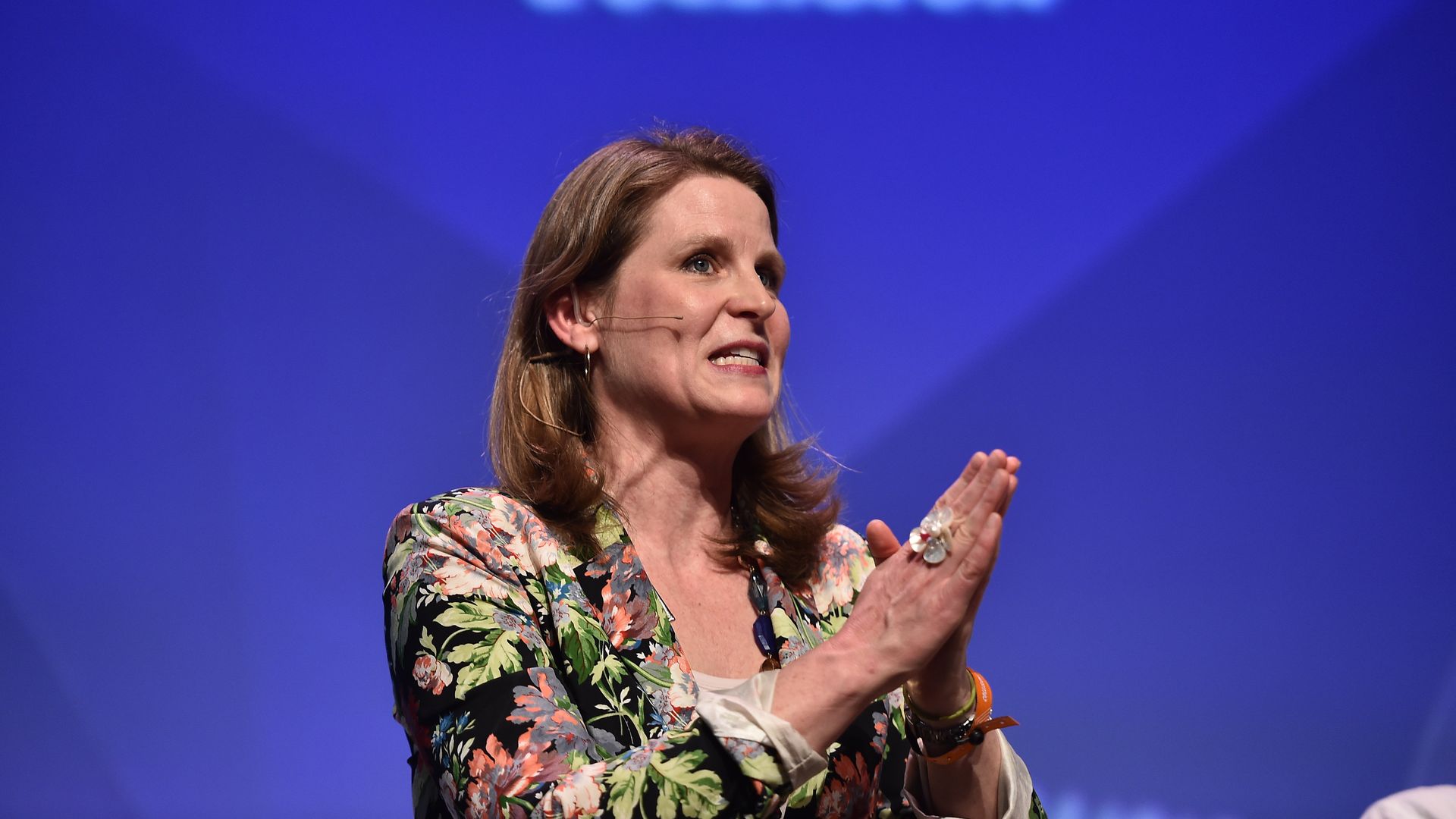
The largest U.S. labor organization on Friday elected Liz Shuler as its first female president.
The big picture: The AFL-CIO also elected Fred Redmond to serve as secretary-treasurer, making him the first Black person to hold the organization's No. 2 post.
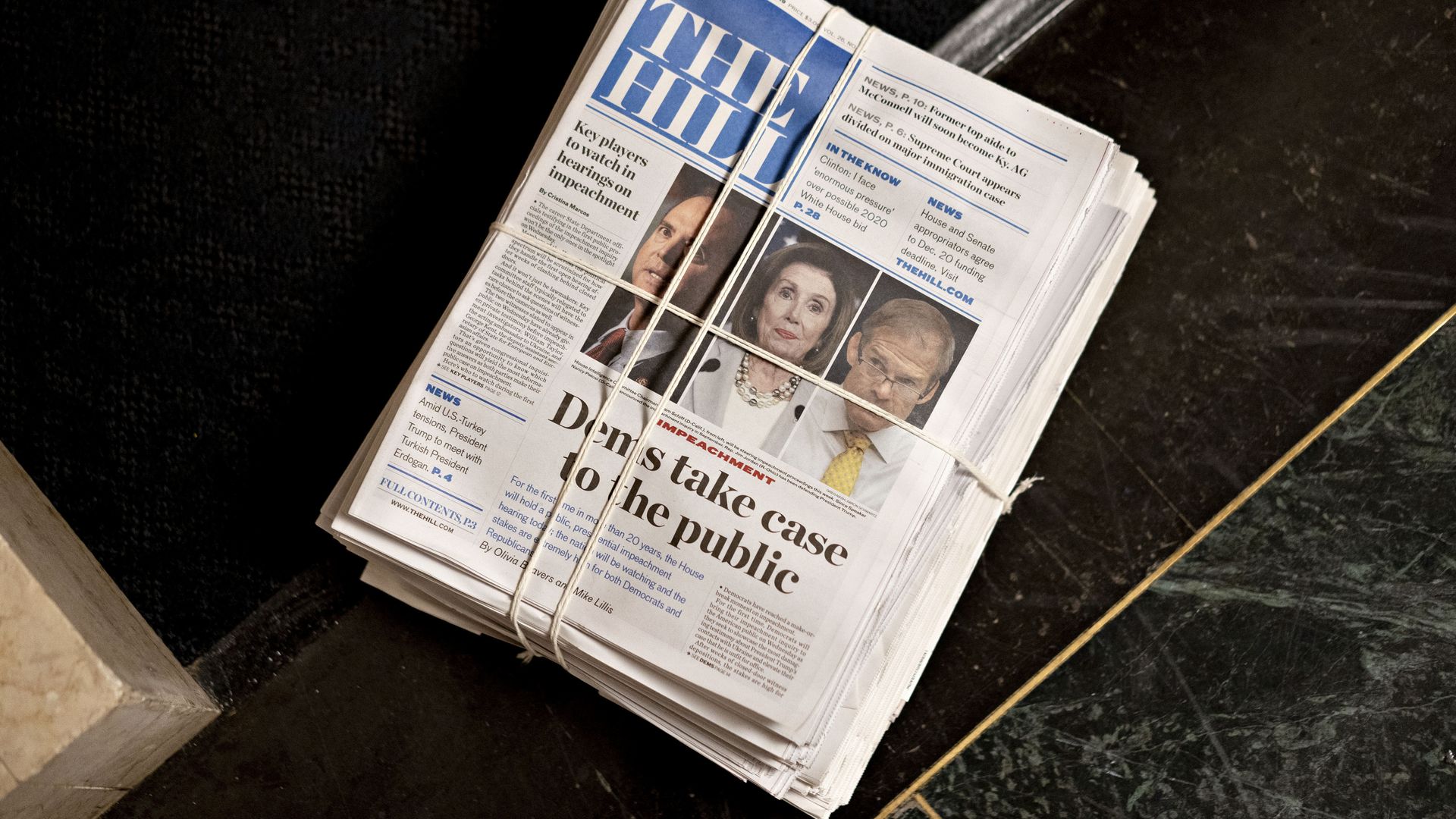
The Hill, a Beltway-based print publication that receives significant national traffic to its digital website, has sold to Nexstar for $130 million, Axios has learned.
Why it matters: The Hill’s owner, Jimmy Finkelstein, has been shopping the outlet around for months. Axios previously reported that it was in talks to sell to Nexstar earlier this summer.
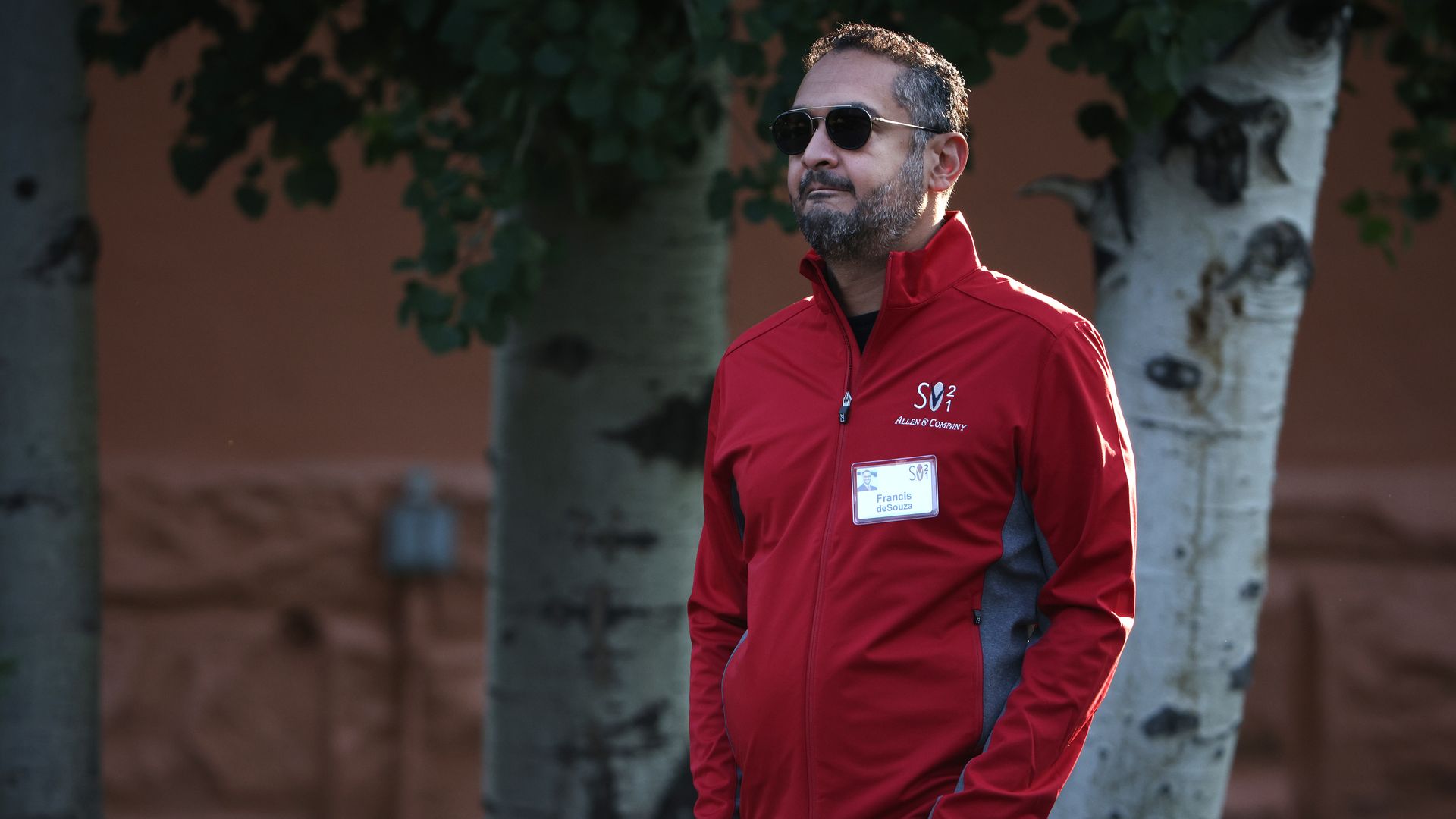
Illumina CEO Francis deSouza tells Axios that his company is not trying to defy U.S. or European regulators by completing its $7.1 billion purchase of cancer testing company Grail, despite doing so amidst ongoing government reviews.
Why it matters: Illumina argues that the merger could make early cancer detection more affordable and widely available, but there are concerns that it could be anticompetitive.
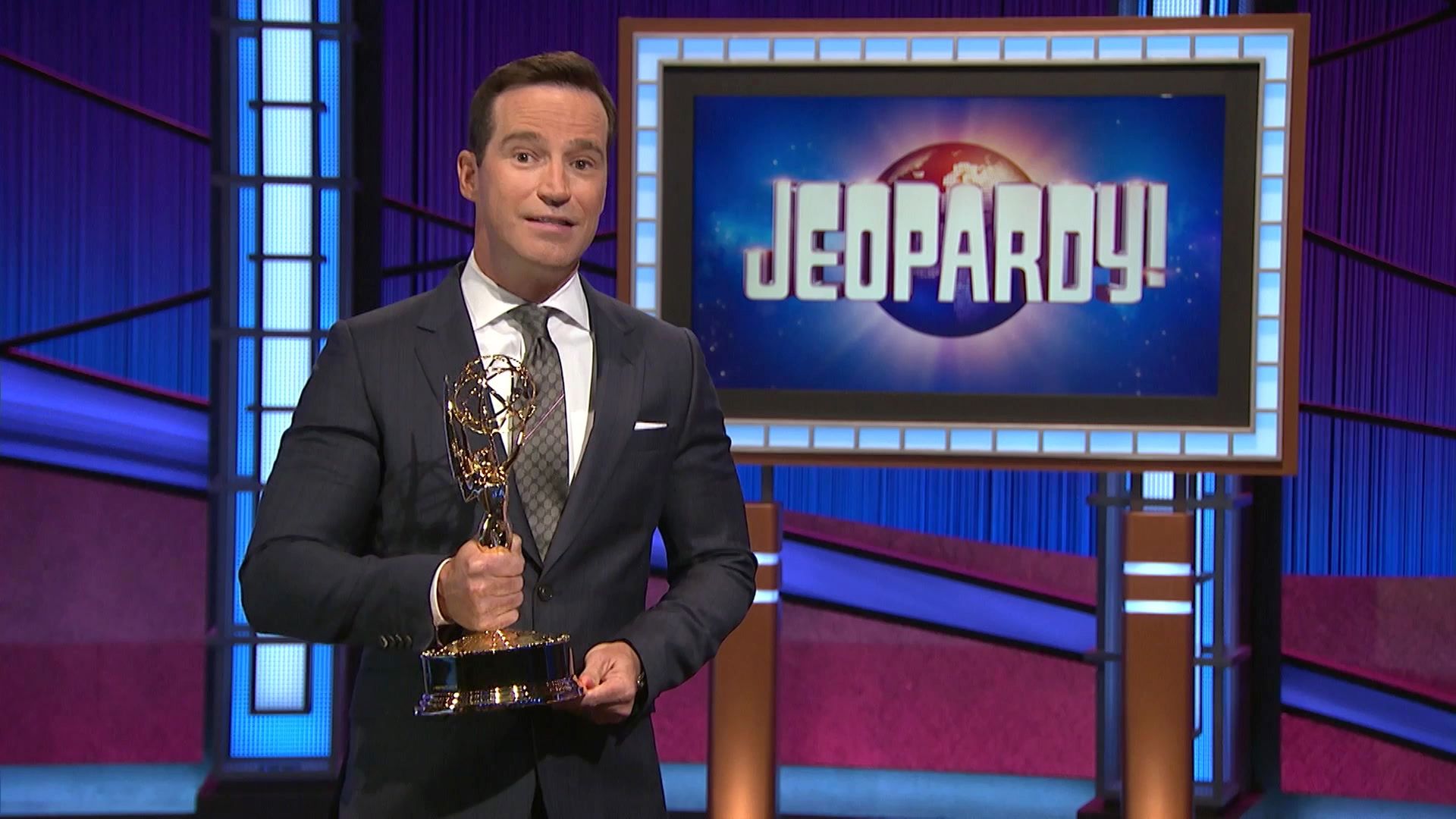
Mike Richards, the new host of "Jeopardy!," announced Friday he's stepping down after derogatory comments he made about women and Jewish people resurfaced in recent weeks.
Driving the news: Richards, an executive producer who was named a co-host nine days ago, made the offensive comments in 2013 and 2014 from now-deleted episodes of his podcast, "The Randumb Show," The Ringer reports. Sony said Richards will remain the show's executive producer.
Topps, the venerable maker of baseball cards and chalky chewing gum, this morning announced the mutual termination of its deal to go public at a $1.3 billion valuation via Mudrick Capital Acquisition Corp. II (Nasdaq: MUDS).
Why it matters: This comes a day after Topps lost its exclusive licensing deal with Major League Baseball and the MLB Players Association to Fanatics.
Shot: On Thursday, we wrote that OnlyFans has a "porn problem," in explaining why a user-generated content platform with epic numbers is struggling to secure outside investment.
Chaser: Several hours later, the London-based company took a machete to its business model, saying it will ban "sexually explicit" material, beginning in October.
We’re just over halfway through Q3, and a handful of Wall Street’s most prominent economists are already hacking their forecasts for economic growth during the period.
Why it matters: The U.S. has been hit with another wave of COVID cases with the spread of the Delta variant. Rising vaccination rates have helped bolster the economy, but there's some early evidence that suggests growth may be cooling.
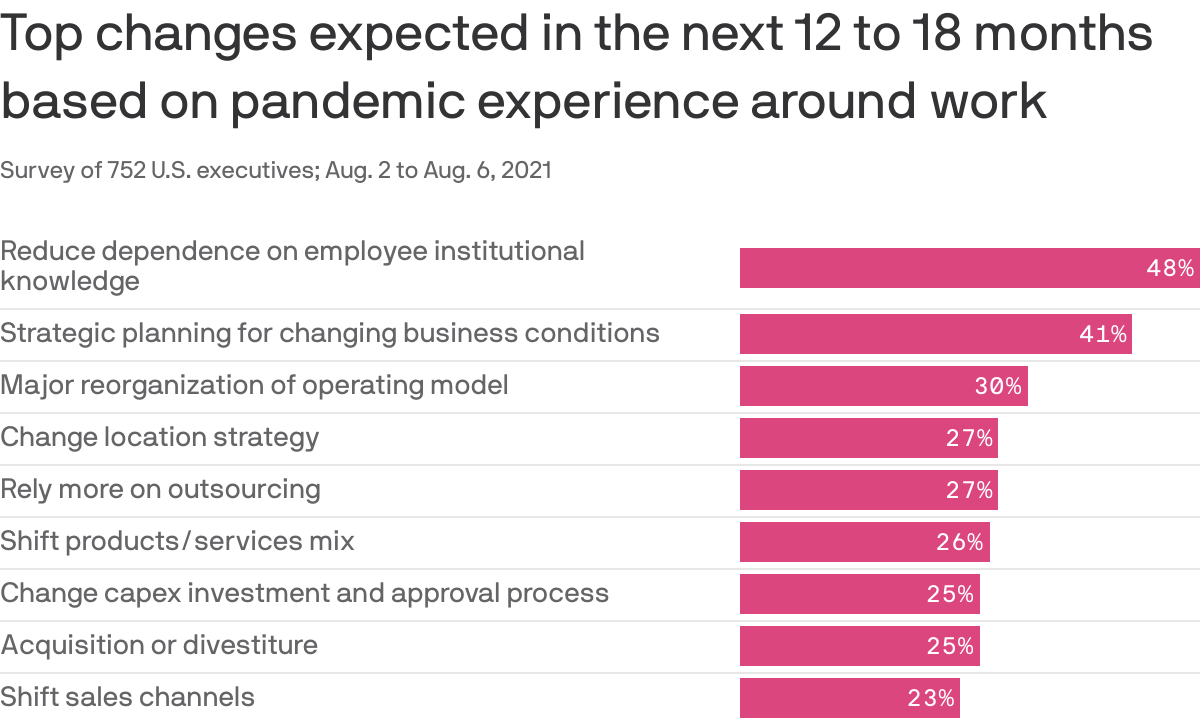
Reproduced from PwC U.S. Pulse Survey Report; Chart: Axios Visuals
Companies want to protect themselves from the impact of employees leaving in droves.
Driving the news: In PwC's latest U.S. Pulse Survey, nearly half of executives said they want to reduce their dependence on employees’ institutional knowledge.
In another sign that growth is cooling, manufacturing activity grew by less than expected in the Pennsylvania, New Jersey and Delaware area.
Why it matters: Economists are getting concerned about how the current wave of COVID infections may be affecting growth — as evidenced by the cuts to GDP estimates.
America’s most iconic retailers offered a nuanced look at how the spread of the Delta variant is affecting the economy.
Why it matters: COVID cases spiked in late July and have been trending higher ever since. It’s too early to draw conclusions about the current wave's impact on the economy. But patterns are emerging from the fresh anecdotes coming from corporate America.
It's reaching the point where you can order almost any product or service online and have it delivered — including car repair.
Why it matters: Nobody wants to sit around a repair shop waiting for their car to be fixed — even more so since the pandemic, as consumers have avoided stores, restaurants and other businesses.
Now, just as the pandemic dragged car-buying into the 21st century, the vehicle maintenance sector is being forced to modernize too.
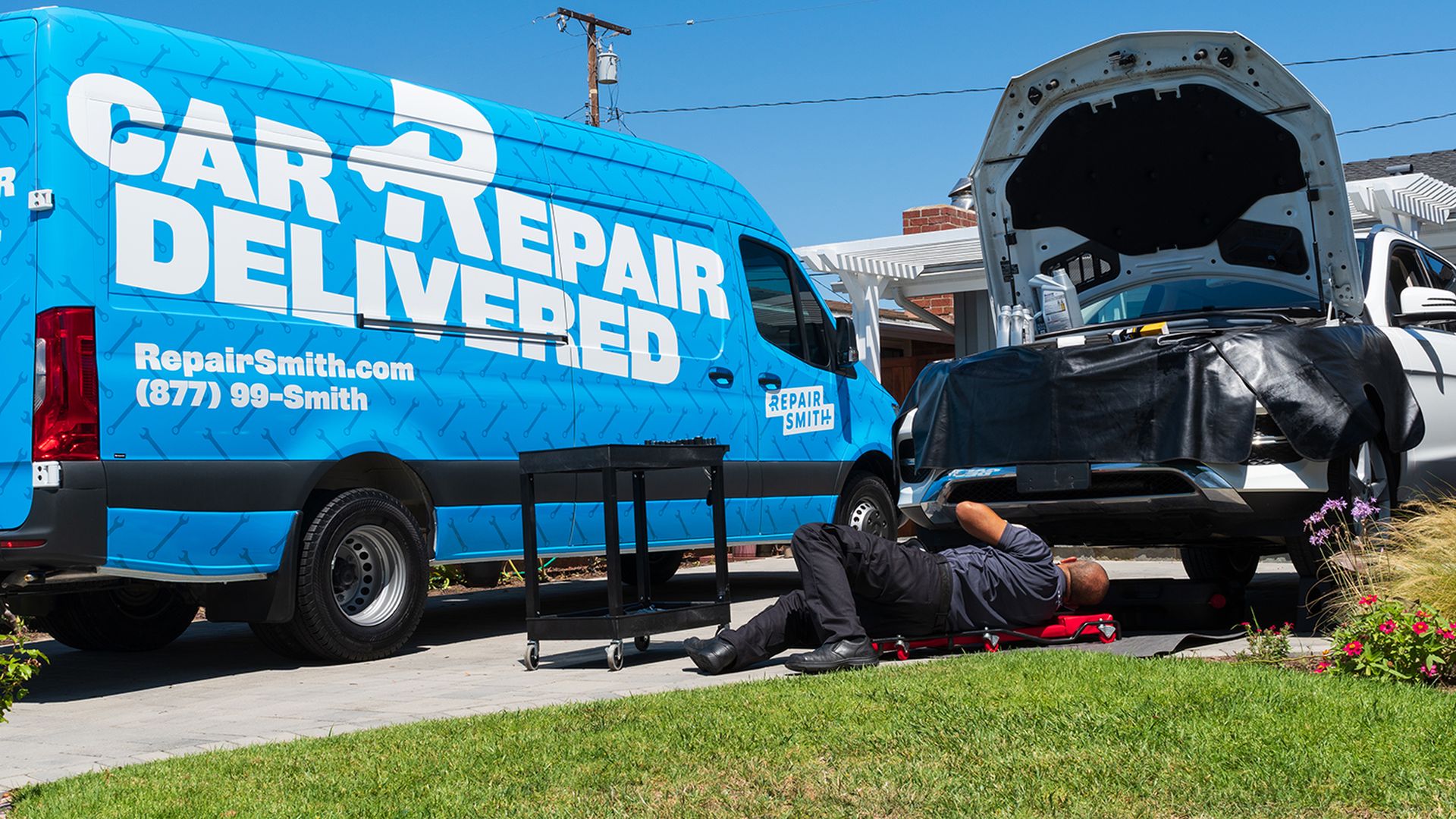
Driving the news: RepairSmith, a startup that lets you book an appointment online and then sends a mechanic to your home, is expanding after raising $42 million in new funding this week.
The Los Angeles-based company, which launched in 2019 out of a Mercedes-Benz incubator program, is now in seven states and plans to expand to every major metropolitan area by the end of 2022. It serves all makes and models.
How it works: Customers enter a few details about their vehicle and can then get a price quote or schedule an appointment online.
For routine maintenance like an oil change or a brake job, the mechanic will show up at the appointed hour in a RepairSmith van with the necessary parts.
If a customer is not sure what's wrong, they can schedule a one-hour diagnostic visit. The mechanic will offer a quote and schedule a follow-up visit. If a job's too big, they'll tow the car to a repair shop.
Mechanics are employed by RepairSmith, not independent contractors.
The big picture: At-home repair is not entirely new.
Tesla and other newcomers offer mobile repair services because they don't have traditional dealerships where customers can bring their cars for maintenance.
Some luxury brands have been experimenting with similar services, and there are other startups in the space too, like YourMechanic.
Be smart: RepairSmith says its prices are competitive with a high-quality, independent shop in your neighborhood.
It's definitely not the cheapest repair service in town: Fast Company did some quick price comparisons in Portland, Ore., and found a driveway oil change was about double the coupon rate offered at Jiffy Lube.
But if I don't have to sit on a sticky chair in a smelly shop while I wait for my car to be ready, maybe it's worth a little extra.
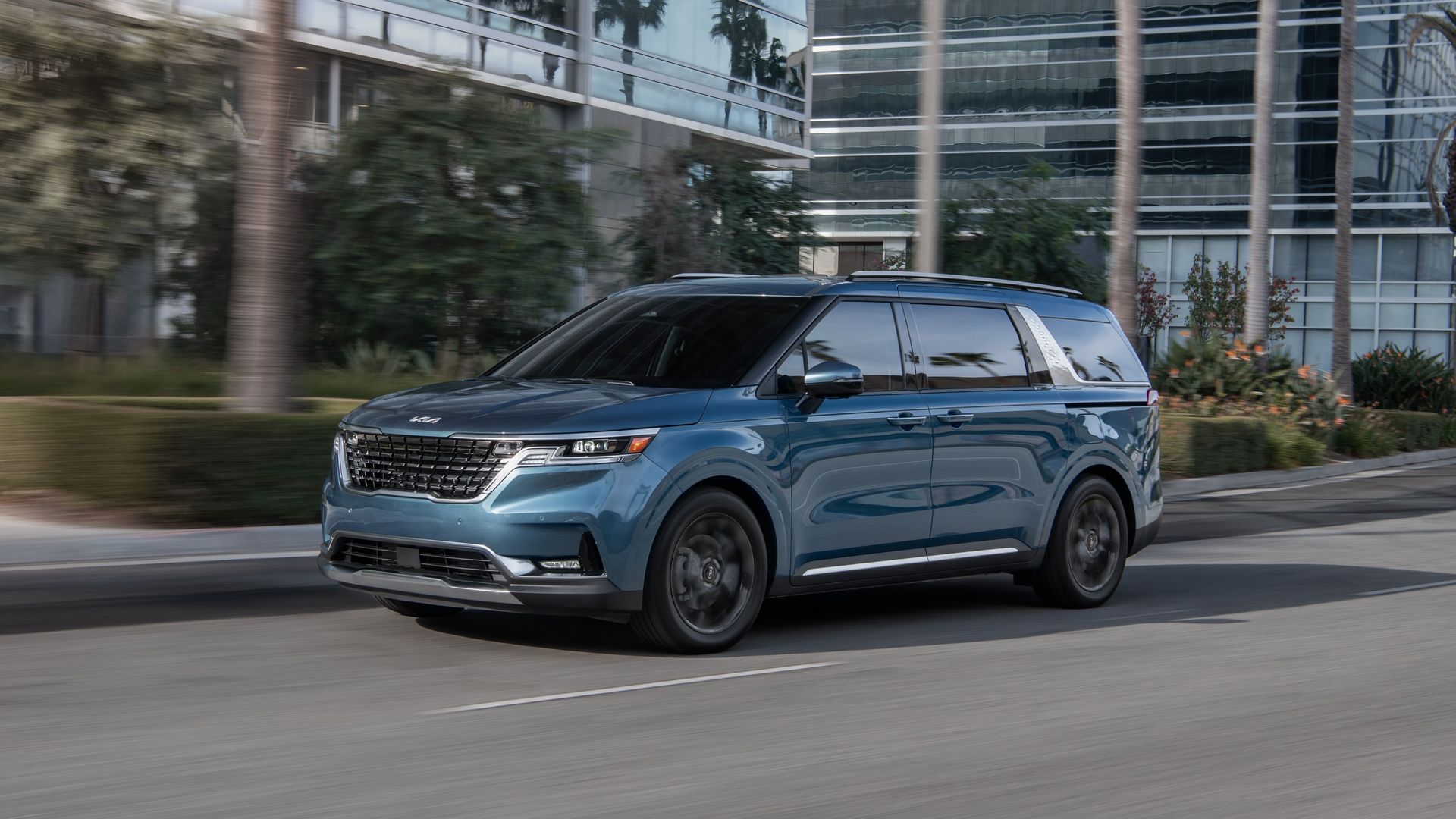
I've been driving the 2022 Kia Carnival, a new minivan that reminds me why minivans are so underrated.
The big picture: Families are taking more road trips during COVID-19, and fuel-efficient minivans offer the perfect combination of cargo and passenger space. But try to find one on your dealer's lot: Only four manufacturers still produce them and dealers can't keep them in stock.
The Toyota Sienna (hybrid-only) and the Chrysler Pacifica (plug-in hybrid or gas) are both newly redesigned, and the Honda Odyssey received some modest updates for 2021 too.
The Carnival has undergone perhaps the biggest transformation. With the boxy looks of an SUV, the Sedona replacement aims for what Kia calls the "unoccupied space between SUV and family hauler."
They don't even call it a minivan. It's an MPV, for multipurpose vehicle. (Maybe that's so minivan haters can drive incognito.)
Details: I drove the midlevel, 8-passenger Carnival EX, with a sticker price of $37,600.
It's powered by a 290-horsepower, 3.5-liter V6 engine, but I wish it came as a hybrid.
I'm a huge fan of Chrysler's plug-in hybrid Pacifica, which lets you drive 32 miles on electricity before the V6 engine kicks in. So you never use a drop of gas running errands, but it's easy to refuel on road trips.
The Kia is loaded with standard driver-assistance technology: collision-avoidance systems on all sides of the vehicle, along with lane-keeping assistance and a warning system for inattentive driving behavior.
Other driver-assistance features are optional, like a highway driving system that automatically slows before upcoming curves and adjusts the speed to stay within the speed limit and maintain distance from the vehicle ahead.
My thought bubble: The Carnival's lane-keeping system could use some fine-tuning. The car's adjustments were too pronounced for my liking. Technology like this should feel like a help, not a competition for control of the car.