Baby boomers and older Americans had accumulated a net worth of around $35 trillion by the end of this year's first quarter, the Wall Street Journal reports.
What's happening: The money is now going to their heirs and others, "unleashing a torrent of economic activity including buying homes, starting businesses and giving to charity," the Journal writes. They are expected to hand down around $70 trillion between 2018 and 2042.
Twitter has used the past year to supercharge new product development ambitions with a slew of acquisitions, while some of its larger rivals have been slowed down by antitrust investigations.
Why it matters: Twitter has been criticized by users for not evolving its product to keep up with new trends and user needs.
Uber has amassed a collection of stakes in other transportation and related companies, such as its piece of newly public Chinese ride-hailing giant Didi.
Why it matters: These investments once were viewed as consolation prizes but now are worth more than $13 billion.
Population growth is continuing to slow in the U.S. and China — the world’s top two economies — but that’s not necessarily a bad thing.
Why it matters: While population trends can be difficult to change, there is unlikely to be a “point of no return" where they can't be reversed — if government leaders proactively address the foundational causes, like the burdens and costs of child care or fears of immigration.
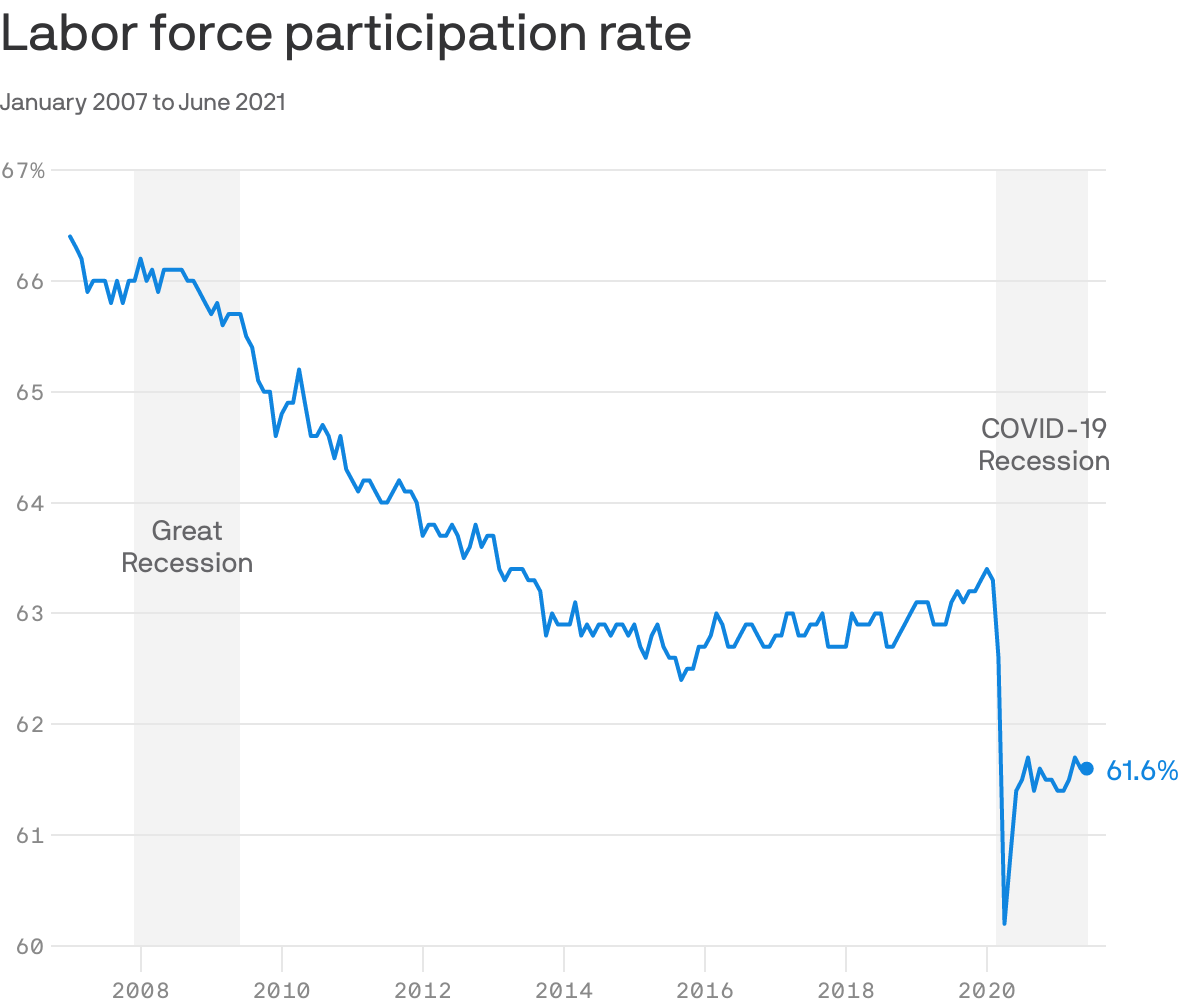
It's a recovery quirk few saw coming: Vaccines are flowing and there’s fresh proof wages are rising — but it’s not enough to entice more sidelined workers back into the labor force.
What’s new: The economy added an impressive 850,000 jobs last month.
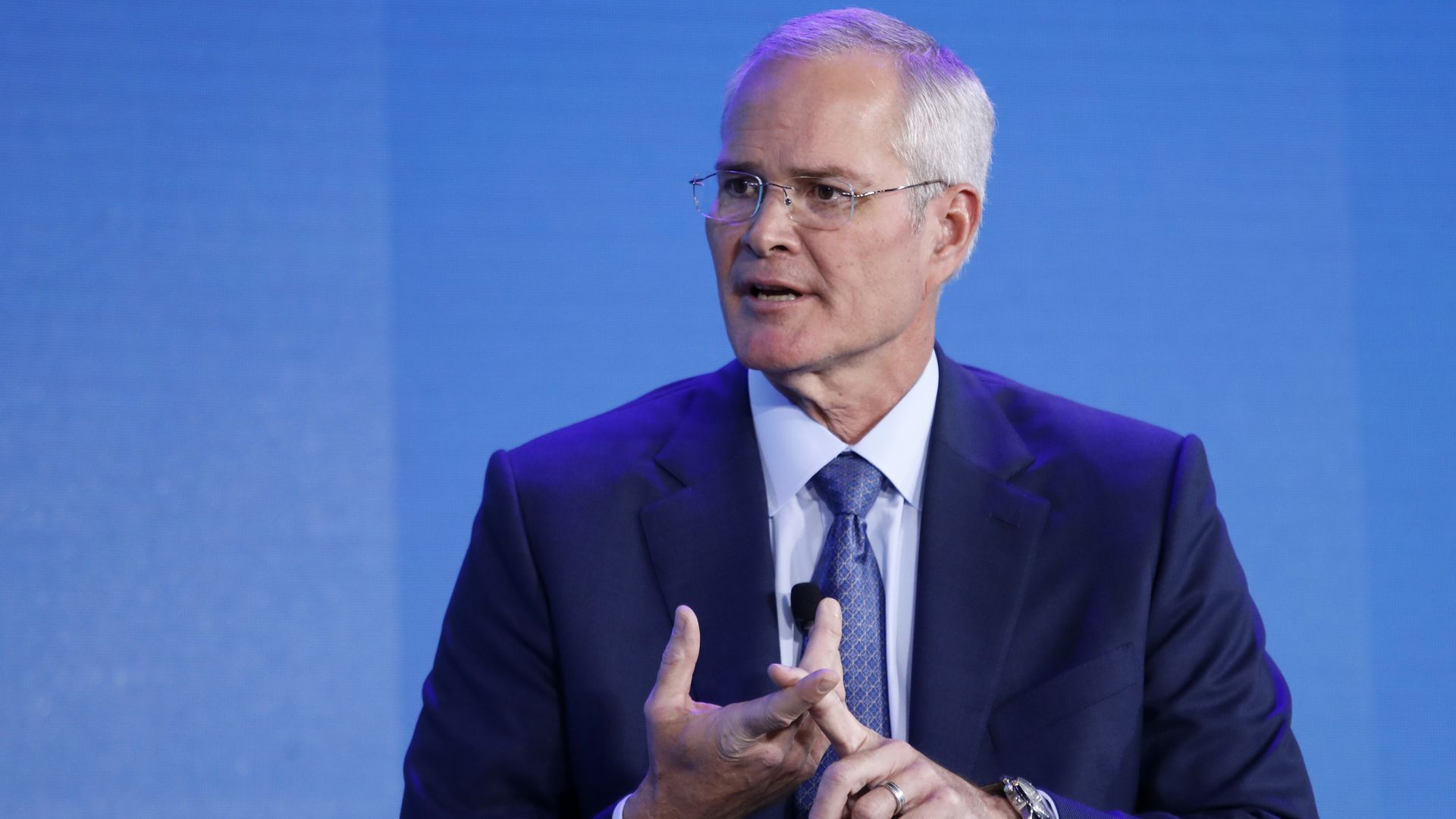
Exxon CEO Darren Woods on Friday released his second statement in three days on two lobbyists' covertly recorded comments, another sign of how concern about them has reached the highest levels of the powerful oil giant.
Driving the news: The statement says Exxon is committed to addressing climate change, citing the recent creation of its “Low Carbon Solutions” unit that’s focused on carbon capture tech and hydrogen.
Karat Financial, a Palo Alto-based provider of corporate credit cards for digital creators, raised $26 million in Series A funding. Union Square Ventures led, and was joined by GGV Capital and SignalFire.
Why it matters: This reflects how traditional financial institutions are failing to keep pace with new labor trends and new industries, ceding some of the future to upstart competition.
Robinhood yesterday filed for what's expected to be one of the largest IPOs of 2021, capping off a stunningly swift corporate comeback.
Why it matters: Five months ago, Robinhood was on the verge of a capital and customer cataclysm, as a run on meme stocks like GameStop had exposed its lack of adequate reserves.
Americans are going back to work at a faster clip — and getting paid more to do so.
Driving the news: The U.S. economy added a better-than-expected 850,000 jobs in June. Average hourly earnings jumped 3.6% from a year ago, in a continuation of the trend seen over the past two months.
The first day of the NIL era got off to rip-roaring start. Deals were made, money was exchanged, and total chaos ensued as a century-old American institution crumbled and began anew.
What's happening: A lot. Here's a sampling of the news from Thursday.
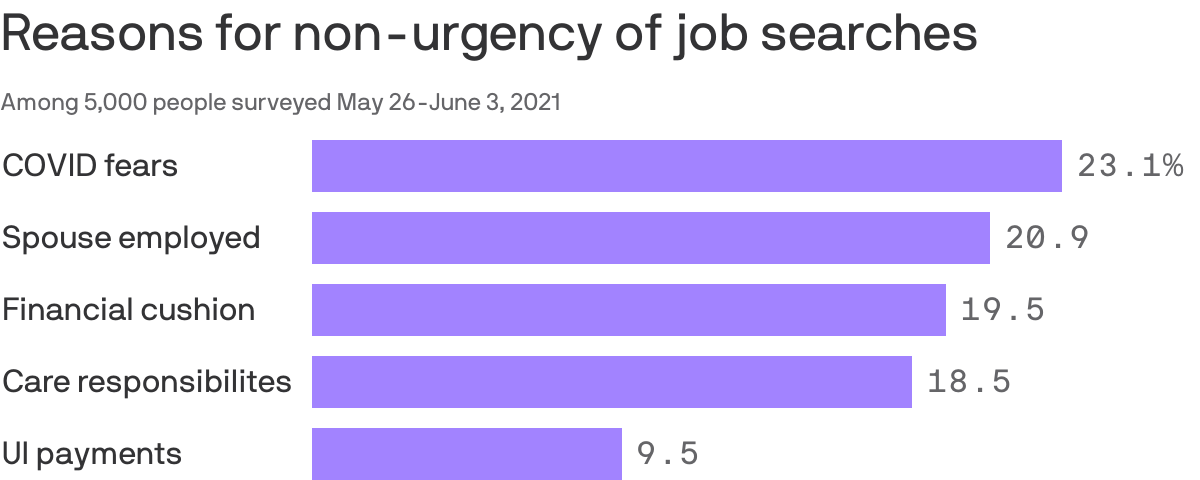
Reproduced from Indeed Hiring Lab; Chart: Axios Visuals
Having a working spouse has kept many unemployed Americans from scrambling to find a job.
Why it matters: U.S. employers continue to struggle with labor shortages despite employment levels being far below where they were before the pandemic.
It's been a banner week for public markets. They're not only hitting new record highs, but they're also successfully allocating billions of dollars of fresh capital to a slew of companies going public in IPOs.
Why it matters: The current market is liquid and predictable enough for the bookrunners to be able to do their job well, allocating shares to institutional investors at a price just below where the market ends up valuing the company.
Oil prices are on the rise, which could mean costs are going up for almost everything. And experts tell Axios that tight capacity means prices have much higher to go.
The 15% minimum corporate tax rate agreed upon Thursday by 130 countries will have a limited impact on big U.S. corporations, analysts say.
Why it matters: Large companies with sophisticated accounting departments exploit generous overseas tax policies in their efforts to minimize taxes and maximize profits.
Vacation rarely feels like vacation if there's extra work to do before and after to make up for the time taken off. That's why startups and Fortune 500 firms alike are rethinking the structure of paid time off, extending company-wide vacations.
Why it matters: The pandemic exacerbated burnout at work, and that's a major contributor to "the great resignation," in which upward of 40% of workers are actively considering leaving their jobs.