Inflation in April, as measured by the core Personal Consumption Expenditures (PCE) index, rose 0.7% over the past month, faster than expected.
Why it matters: Core PCE is the Fed's preferred measure of inflation when determining monetary policy.
When examined over the last two decades, it's clear the past year of change is an anomaly, especially considering that inflation isn't always and necessarily a bad thing.
Most small business stories from the pandemic are about about pivoting or perishing, but there's also been an unexpected surge in new small business creation. One example is Agua Bonita, a canned beverage company that launched last year after both of its co-founders were laid off.
Axios Re:Cap talks with Agua Bonita co-founder Kayla Castañeda and Techstars founder David Cohen about what it was like for startups over the past 14 months, and what recovery means for businesses that didn't exist before COVID-19. Plus, a conversation with Wall Drug proprietor Rick Hustead.
Why it matters: Travel is returning to pre-pandemic levels at a time when the country remains divided on masks and vaccinations — and worker shortages mean reduced service levels, yet higher prices.
The federal government said Friday that it is legal for companies to require workers to get coronavirus vaccines. Companies can also offer unlimited rewards to workers to get vaccinated, as long as the employer doesn’t administer the vaccine.
Why it matters: The Equal Employment Opportunity Commission finally cleared legal questions tied to how employers can increase the country’s vaccination rates.
President Biden has been clear that he wants to raise taxes on capital gains for high earners. But, until a Wall Street Journal scoop published Thursday night, it wasn't known that he wants those taxes raised retroactively.
Full Truck Alliance, a Chinese platform that connects shippers and truckers, filed for an IPO that could raise at least $1.5 billion at a $30 billion valuation.
Why it matters: The company, also known as Manbang Group, claims to be the world's largest digital freight platform by gross transaction value, and reflects how there's still plenty of money to squeeze from the "Uber for everything" trend.
President Biden said Thursday his administration will take action against anti-competitive business practices and ease construction materials shortages and transportation backups in an effort to curb price hikes.
Why it matters: "In recent weeks, the United States has faced shortfalls and bottlenecks from lumber to computer chips to port cargo backlogs. Together with labor shortages, those issues are making homes, cars and consumer goods pricier and harder to get," Reuters reports.
Hedge fund assets passed the $4 trillion mark during Q1 2021, ending the quarter at $4.15 trillion.
Why it matters: As hedge funds have grown in size — almost doubling their $2.3 trillion assets under management in 2012 — so has their power to influence markets.
Elements of the bipartisan U.S. Innovation and Competition Act, a sweeping China-related package that could be approved by the Senate as soon as Friday, could help address the chip shortage in the form of an emergency appropriation.
Why it matters: Production of everything from electronics and appliances to cars has been slowed down because of the shortage, which is expected to last until 2023.
Inflation isn't always and necessarily a bad thing. It's one of many variables in the economy, and its presence helps some groups of people and harms others. But that kind of nuance is getting lost in the present debate.
Why it matters: There are two well-defined inflation camps at this point. Both of them take for granted that inflation is, broadly speaking, a bad thing. But that's never true for everyone, and always depends on how you define it.
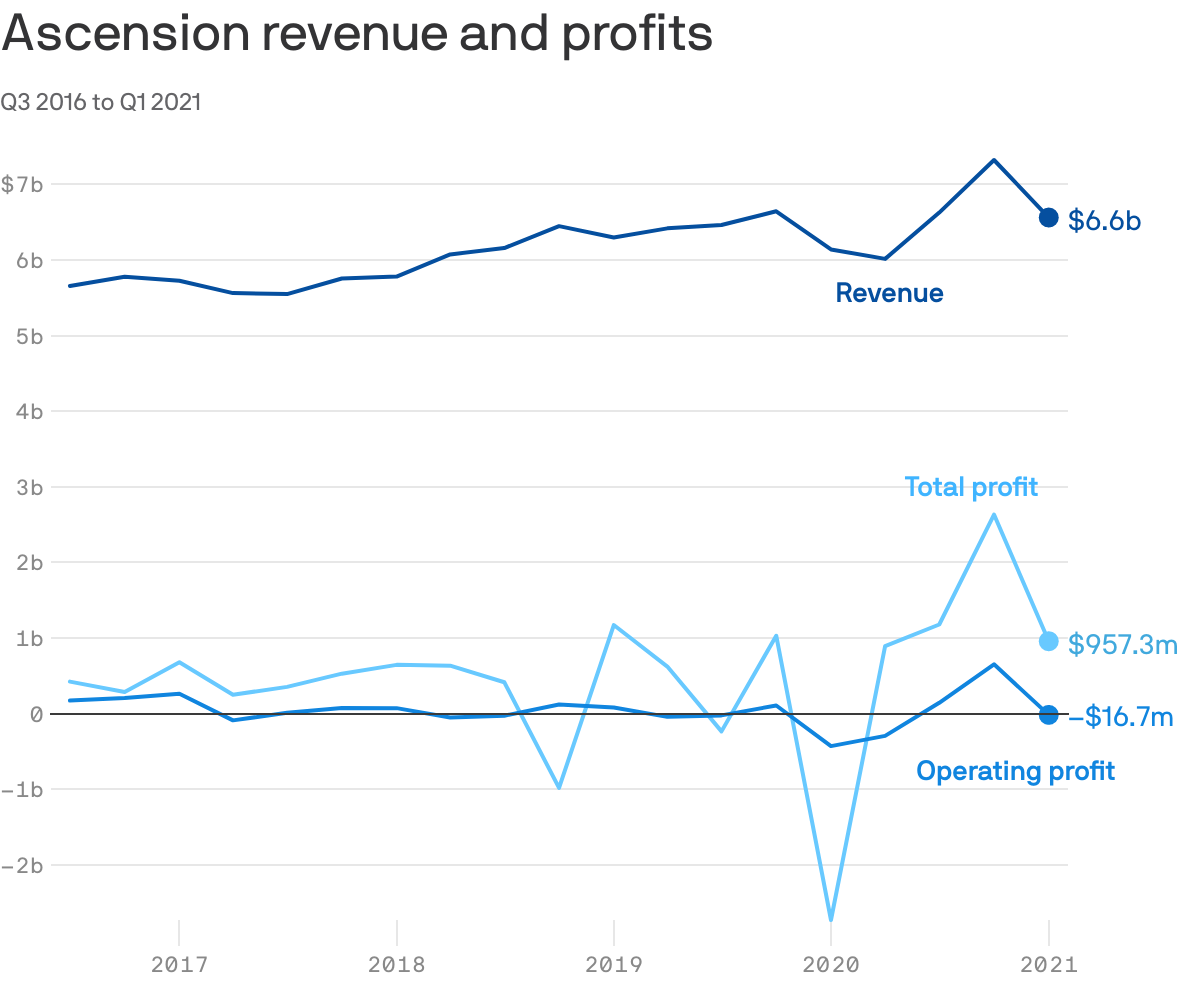
Data: Ascension financial disclosures; Chart: Will Chase/Axios
Taxpayer bailouts and massive gains from Wall Street investments helped Ascension — the largest tax-exempt hospital system in the country — glide through the coronavirus pandemic.
Why it matters: Dominant hospital chains like Ascension really haven't had to worry about their financial status during the pandemic, unlike smaller hospitals and safety-net systems, in part because those chains already accumulated massive rainy day funds over the years.















/2021/05/28/1622201039407.gif?w=3840)



/2021/05/27/1622133453455.gif?w=3840)