Alabama Gov. Kay Ivey (R) on Monday ordered the state to terminate all participation in federally funded pandemic unemployment compensation programs.
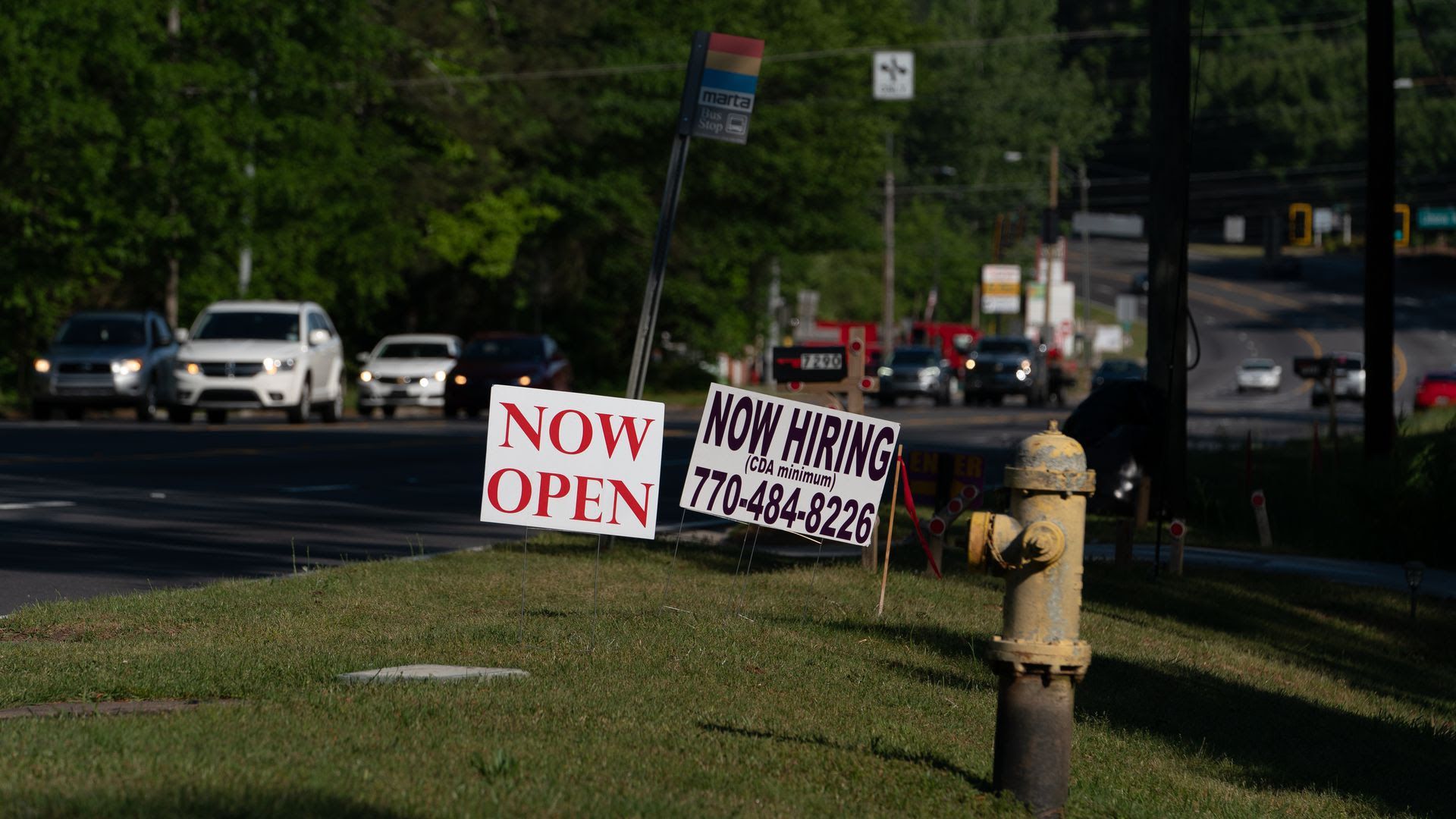
Why it matters: Ivey, like South Carolina Gov. Henry McMaster (R), cited labor shortages, but some experts say it's the job climate and not unemployment benefits that is determining people's return to work.
The latest move to lure would-be employees might be back-to-work cash.
Montanawill no longer offer the extra $300 in unemployment benefits, but it plans to give a one-time $1,200 bonus for workers who accept a job and complete a month of paid work.
The pandemic's biggest job winner is losing steam.
Driving the news: People who deliver packages to businesses and homes — classified as "couriers and messengers" by the Labor Department — saw the industry's biggest monthly job losses in more than 20 years in April.
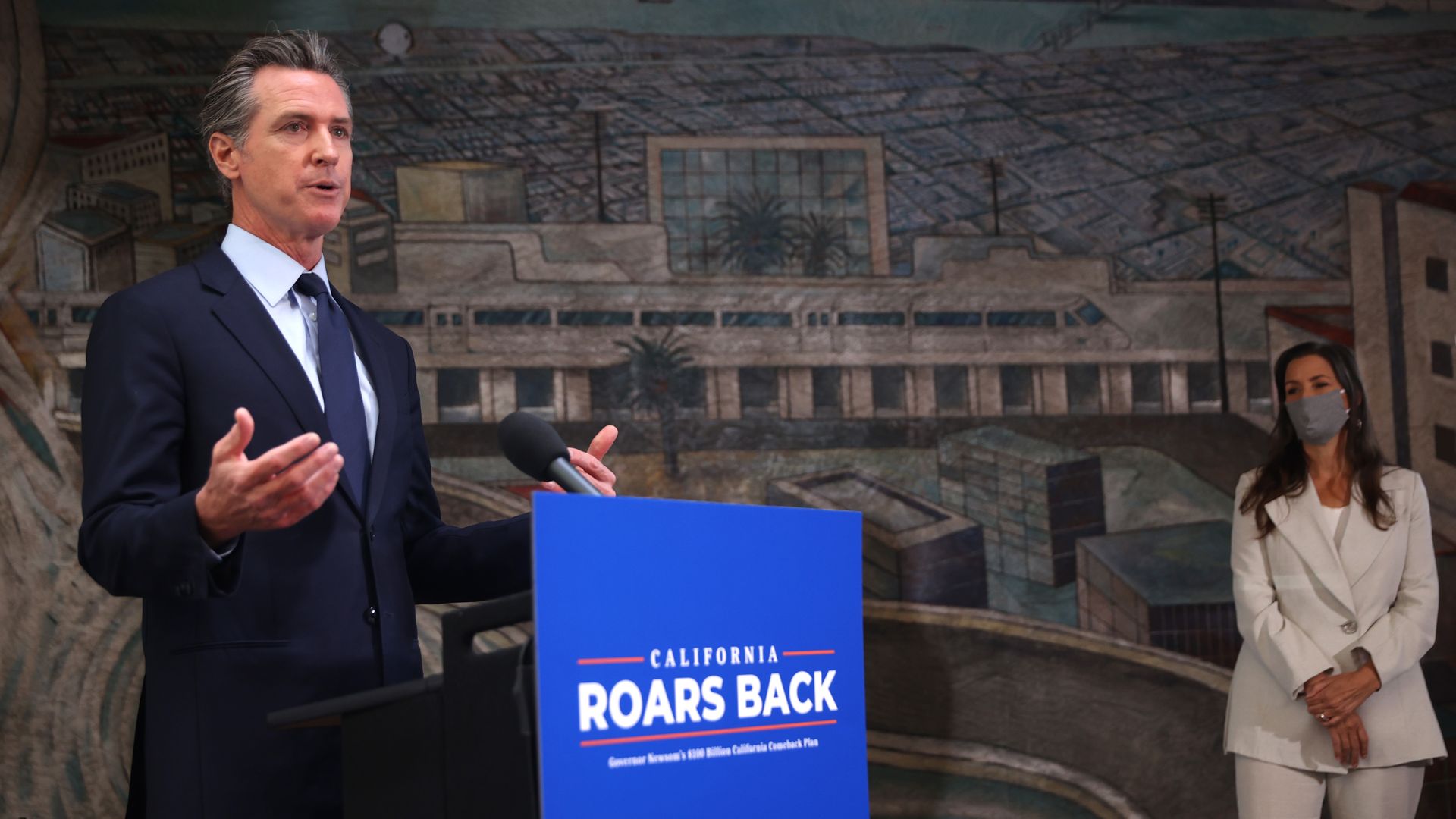
California secured a more than $75 billion budget surplus after boosts from a thriving stock market and tax revenues, Gov. Gavin Newsom (D) said Monday.
Why it matters: Last year, the governor's office projected a budget deficit of up to $54 billion due to the fallout from the COVID-19 pandemic — about a quarter of the entire budget. On Monday, Newsom laid out his plan to use the surprise surplus to fund what he called the biggest economic recovery package in state history.
NBC said Monday it won't air the Golden Globes next year following the fallout around the Hollywood Foreign Press Association, which puts on the show each year and is battling criticism that it's not committed enough to diversity.
Why it matters: The network has been airing the event exclusively for decades. Its decision to pull back speaks to how big the backlash against the group has become.
Developers are sharing their salaries on Twitter under the hashtag #GameDevPaidMe to encourage pay transparency in their industry.
The big picture: The hashtag started circulating last year, but has returned periodically as developers fight for better working conditions. Salary sharing is a way to equalize the field. By removing the secrecy, as well as the stigma, around discussing pay, workers have more power to advocate for themselves when negotiating salaries and raises.
Former Obama speechwriter David Litt confronted Newsmax host Rob Finnerty during an interview — meant to be about Elon Musk's "SNL" appearance — over the network's promotion of baseless conspiracy theories about the 2020 election, prompting Finnerty to end the segment early.
Why it matters: Facing the threat of a defamation lawsuit, Newsmax apologized to a Dominion Voting Systems employee earlier this month for airing false allegations that he manipulated votes in order to rig the election for President Biden.
Activist investor Starboard Value has a message for Box, the cloud content management company in which it's the largest outside shareholder: We're still coming for you.
Why it matters: Prolonged activist campaigns against Silicon Valley companies are still relatively unusual.
The U.S. International Development Finance Corp. (DFC) on Monday announced its first "chief climate officer" and his deputy as the development bank looks to use billions in financing tools to help combat global warming.
Driving the news: The chief climate officer is Jake Levine, an energy and climate expert who arrives via the law firm Covington & Burling.
Friday’s huge miss versus the prediction for April jobs gains sparked a knee-jerk markets reaction as investors struggle with what to make of the historic disappointment.
By the numbers: The S&P 500 ended Friday with a gain of less than 1%, while yields on the 10-year Treasury dipped initially but ended the day nearly even with the open, at 1.56%.
The percentage of global foreign reserves held in U.S. dollars declined to its lowest point in 25 years during the fourth quarter of 2020.
Why it matters: The U.S. dollar is still the dominant international reserve currency. But the downward shift likely reflects central banks' use of other currencies for international transactions — implying a declining role for the dollar in the global economy, according to the International Monetary Fund.
We have a very weak understanding of the state of the labor market. That's the main lesson from the massive gap between expectations and reality in April's jobs report — and points to the need to beef up the Bureau of Labor Statistics (BLS).
Why it matters: Unemployment insurance is administered by the states, and the states don't send that data to BLS. If they did, America would have much better visibility of local labor-market trends — and more accurate monthly job reports.
What does a ticket scalper do when concerts dry up? Enter the sneaker market. Interest in rare sneakers as an investment has catapulted since pandemic lockdowns began.
Why it matters: Similar to the Robinhood effect on stock trading, sneaker apps gamified and streamlined buying, while social media added community. Sneaker trading has long been lucrative, but the pandemic brought more people — with more idle time — into the game.
Young engineers and recent college graduates see Miami, Houston and Philadelphia — not San Francisco, New York or Seattle — as the hot new places to jumpstart a technology or creative economy career.
Why it matters: For some tech CEOs, it's the perfect time to capitalize on being where the new talent wants to go — and also pay lower taxes in the process, which makes Sun Belt cities in Florida and Texas attractive.
The Biden administration said it's "working with" fuel pipeline operator Colonial Pipeline to try and restart operations after a ransomware attack took it offline.
Why it matters: Friday night's cyberattack is "the most significant, successful attack on energy infrastructure" known to have occurred in the U.S., notes energy researcher Amy Myers Jaffe, per Politico.