3 in 4 voters support keeping or expanding the $600 per week of supplemental unemployment benefits that the federal government is providing for those who lost their job during the coronavirus pandemic, according to a Morning Consult poll of 1,987 registered voters.
Why it matters: More than 20 million American workers remain unemployed as the Trump administration pushes for unemployment benefits created through the CARES Act to end in late July, Politico reports.
To understand why Robinhood is so popular, it's best to think in terms of game design.
Why it matters: While other brokerages sell ultra-sophisticated investing tools or boring things like retirement planning, Robinhood makes an addictive mobile-native game.
America's increasing dissatisfaction with capitalism, and its concomitant embrace of socialism, is rooted in the degree to which inequality has increased in recent decades. When all new wealth is retained in the top 1%, the morality of wealth creation switches from good to bad.
Why it matters: Greed — the desire for economic growth — creates perennial wishful thinking with respect to the anticipated consequences of that growth.
Economics is rarely aligned with morality. That's one lesson from the looting example I wrote about last week: Looting is harmful to society, and is criminalized for good reason, even though it can have positive economic consequences.
Why it matters: The disconnect between economic and moral imperatives lies at the heart of the biggest issues facing America today, from the rising appeal of socialism to the question of how to deal with the coronavirus outbreak.
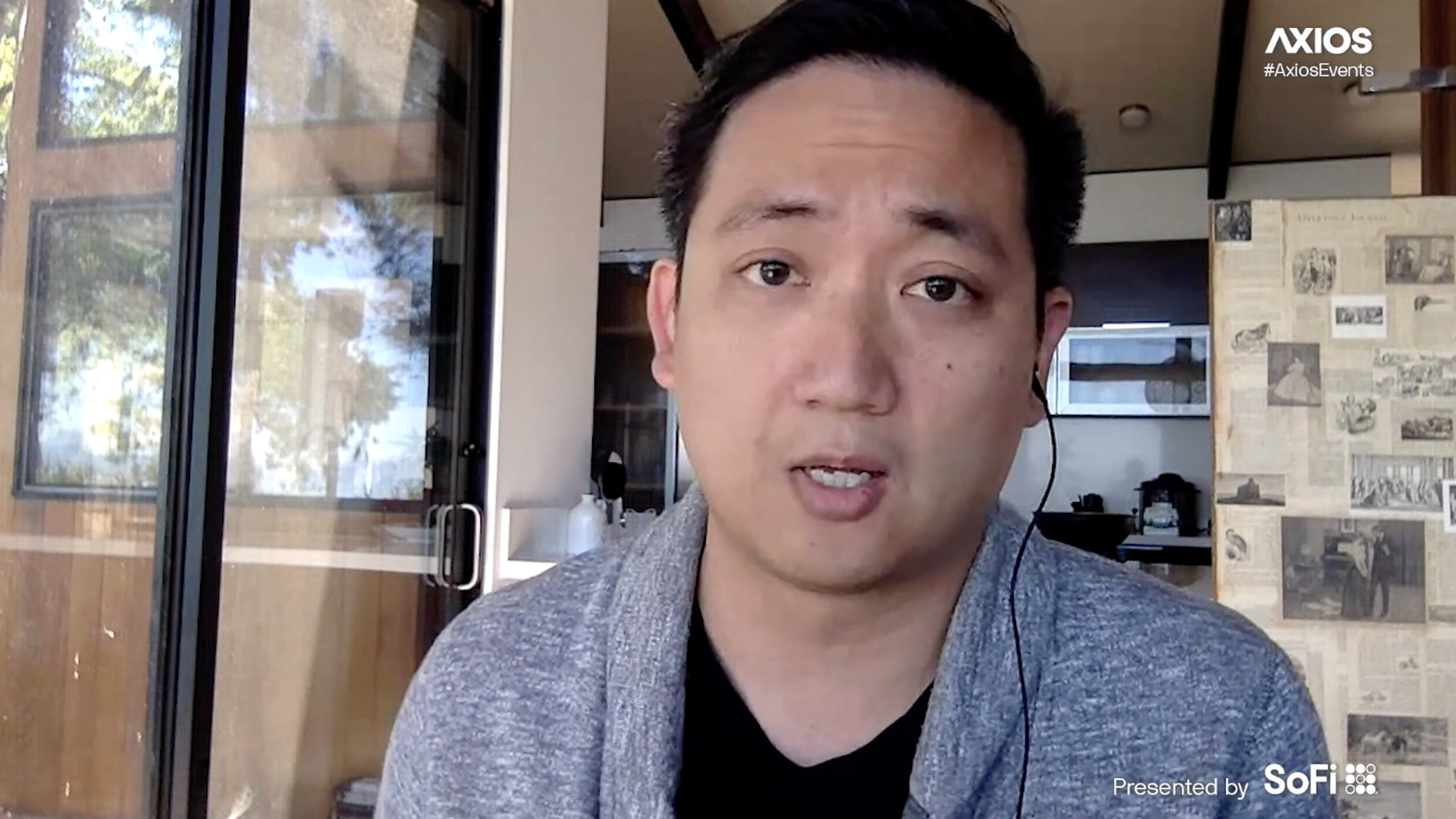
Nerdwallet has seen an increase in interest in unemployment, investing and refinancing on its website, founder and CEO Tim Chen said at an Axios virtual event on Thursday.
The big picture: People are looking to take advantage of stimulus programs, especially now that independent contractors qualify for the benefit, Chen said. Chen also said the site saw more brokerage accounts open in March and April than it expected for the entire year. People are also refinancing to take advantage of better mortgage rates, which have dropped since the pandemic began.
Lauryn Williams, a former Olympian turned financial adviser, said she'd like to see provisions for financial literacy that targets millennials included in Congress' next coronavirus relief package.
The big picture: Williams said guidelines from the government would outweigh the people who give bad advice to millennials to capitalize off of them. Young people should have access to government sources to "optimize" their finances, Williams said, such as guidance on how much to put in an emergency fund and the most effective way to pay down debt.
On Thursday, June 18, Axios business editor Dan Primack and media reporter Sara Fischer hosted a live, virtual conversation on millennials and how they'll shape future financial trends with WeWoreWhat founder Danielle Bernstein, NerdWallet CEO Tim Chen and Olympic medalist and CFP® Lauryn Williams.
Lauryn Williams discussed the long-term impact of the pandemic on millennials and the student debt burden.
On how people are using student loan deferrals: "Most people are stockpiling money to make sure that they have it available, as opposed to paying down debt."
On the importance of emergency funds during economic turbulence: "An emergency fund is three months of take-home pay if you have a stable and regular job. If you have children, you want to extend that out a little bit further, getting closer to six months...That gives you the bare bones minimum."
Danielle Bernstein highlighted millennial spending trends around socially-minded companies.
On being more deliberate with where people spend money: "[Customers] want to support direct to consumer businesses that are tied to amazing companies and organizations that are helping people most right now. If they are going to spend their money, they want to spend it in a way that will also give back."
Tim Chen discussed the rising interest in financing and purchasing new homes, as well as trends in investing.
On the biggest change in millennial behavior with financial services: "We've seen a pickup in three areas: unemployment, investing and refinance."
How coronavirus is impacting trends in home ownership: "I think a big driver of [interest in purchasing new homes] is the lowest interest rates we've seen in a long time. A lot of people are thinking about moving out of the city. And so there are forces that are driving that change."
In a View from the Top segment, Axios CEO and co-founder Jim VandeHei spoke with SoFi CEO Anthony Noto about how people are weathering financial uncertainty.
On these unprecedented times: "High achievers for the first time in their lives are making no money, whether they're doctors or lawyers or beauticians or plumbers or entrepreneurs or small business owners, at no fault of their own. They have no income."
Former NFL player-turned-activist Colin Kaepernick will join the board of the blogging platform Medium and partner with the company to create content focused on race and civil rights, CEO Ev Williams announced Thursday.
Why it matters: Kaepernick sparked years of controversy when he began kneeling during the national anthem to protest racism and oppression in 2016. NFL Commissioner Roger Gooddell recently said the league should have better listened to players who protested.
Salesforce chief Marc Benioff and PayPal Ventures are joining the latest funding round for Oakland-based start-up Even, which aims to provide a better alternative to payday loans.
Why it matters: Historically, those who need an advance on their pay often have few options and pay extremely high fees and interest rates.
Lyft's newly announced plan to go 100% electric by 2030 blends ambition on climate with an admission that making good relies on variables it can perhaps influence but can't control.
Why it matters: The ride-hailing giant is admirably open about something that can get lost in the avalanche of big pledges over the last two years. They need policy changes to make it work.
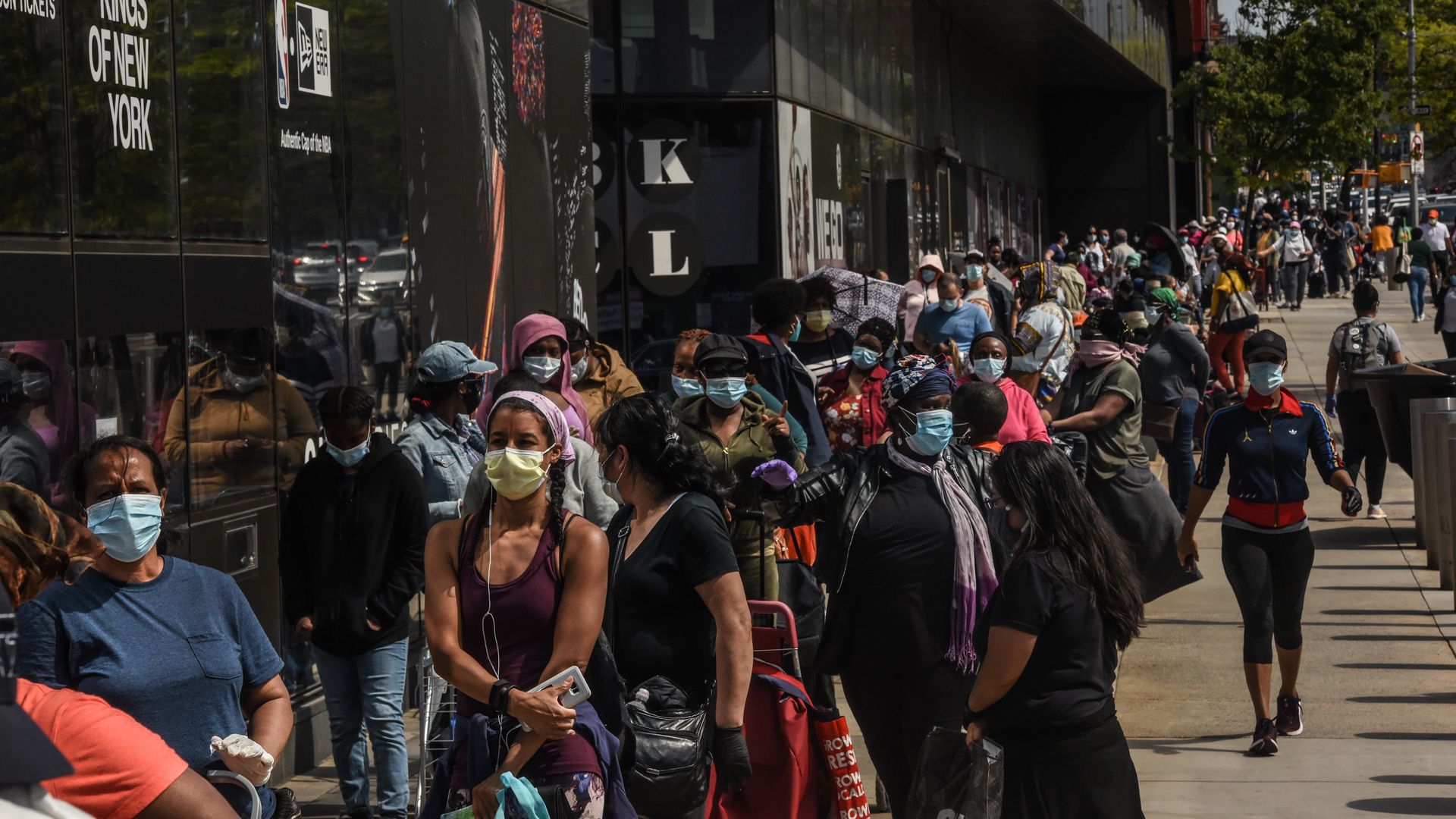
Another 1.5 million Americans filed new applications for jobless benefits last week, the Labor Department said Thursday.
Why it matters: The numberofunemployment applications is still historically high, though they have steadily dropped since peaking at 6.9 million at the start of the coronavirus pandemic.
The newly reissued 20-year U.S. Treasury bond saw strong demand in its second auction of 2020 on Wednesday, selling $17 billion worth of notes for a high yield of 1.31%.
Why it matters: That was around two basis points lower than where they had traded before the auction and yields declined further to 1.24% in overnight trading.
Consumer complaints to the Consumer Financial Protection Bureau rose 31% in the first five months of 2020, compared with the same period last year, with many complaints specifically mentioning the coronavirus pandemic.
The state of play: Through May 31, the CFPB received 142,782 complaints, according to an analysis of the bureau's records by NerdWallet.
These are the hottest stocks on Robinhood, the easy-to-use app that is drawing young users who otherwise would be betting on sports during the shutdown.
The big picture: While stocks favored by institutional investors like Apple, Microsoft and Amazon occupy slots in the top 20, the list is heavily filled by speculative bets like cruise operators and airlines whose share prices are down significantly from their levels at the beginning of the year.
"They walked all the way up to the edge — and stopped." That's the verdict of Thomas Gorman, a partner at the law firm Dorsey Whitney and an expert on SEC enforcement, regarding Hertz's attempted sale of $500 million in new equity.
Driving the news: Hertz issued its prospectus on Monday, and then followed up on Wednesday with an update essentially saying "eh, never mind" after SEC chairman Jay Clayton made some pointed comments about the offering on CNBC.
Spotify announced two mega podcast deals in the past 24 hours: A deal with Warner Bros. and DC Entertainment to produce a slate of original podcasts, and a deal to distribute podcasts exclusively from Kim Kardashian West.
The big picture: The company is doubling down on its commitment to podcasting, a medium it thinks can drive higher profits for the company through advertising. Spotify also aims to use its partnership with Warner Bros. and DC to unlock a new type of podcast storytelling.
Cities and states have spent millions of dollars on police overtime over the past few weeks during the Black Lives Matter protests.
Why it matters: Government budgets already were under severe strain from coronavirus shutdowns, due to steep tax revenue declines, and these extra expenses could make it even more difficult to meet obligations.
Large companies have started pocketing billions of taxpayer dollars thanks to tax breaks tucked into the federal coronavirus stimulus.
Why it matters: Corporations are getting sizable, multiyear cash benefits, while most Americans received one-time, $1,200 checks to offset the economic turmoil and mass unemployment arising from the pandemic.