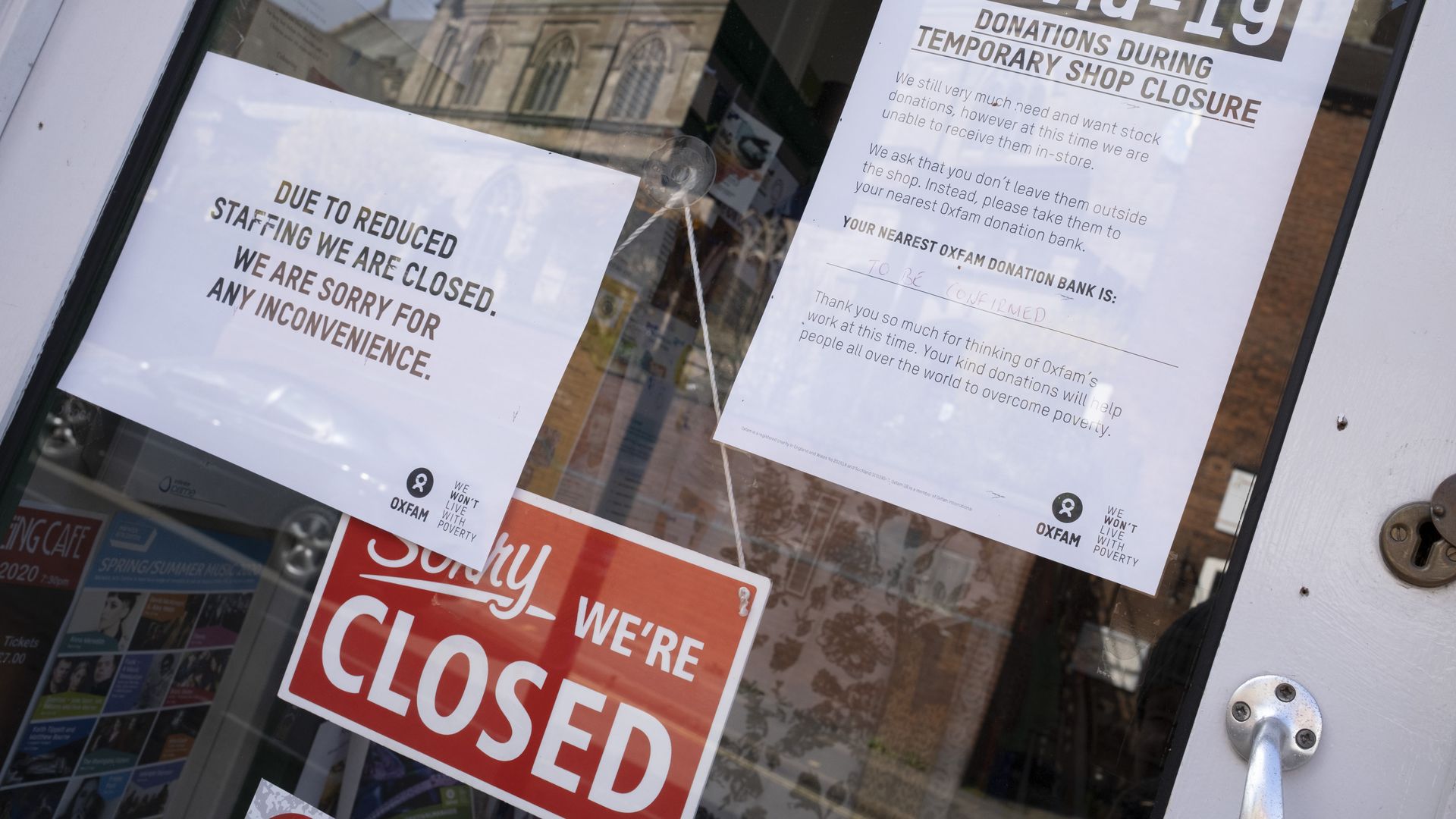
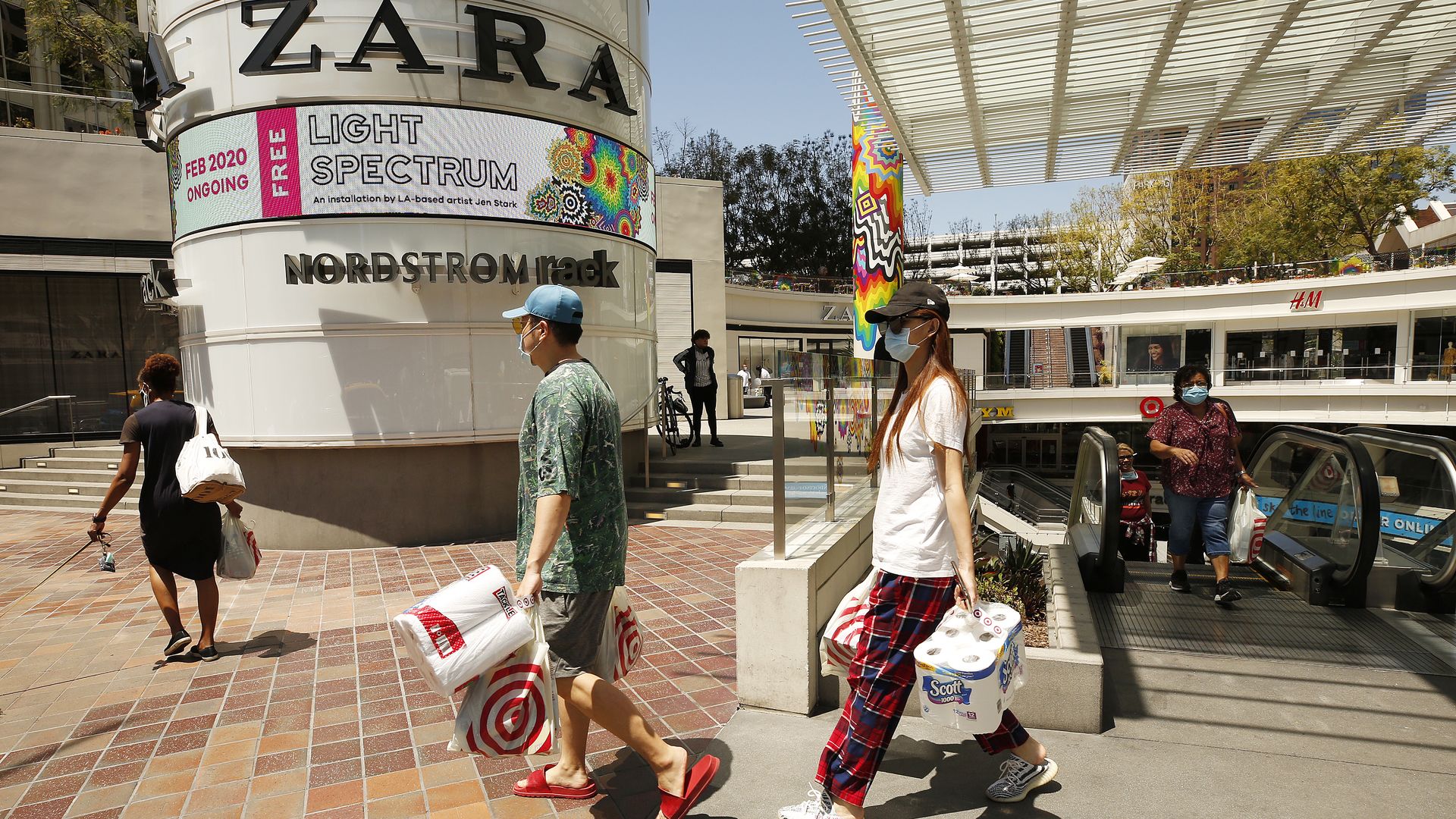
Restaurant and retail workers who can't do their jobs remotely were the first to lose their incomes to the pandemic — and, for many of them, those temporary hardships will turn into lasting ones.
By the numbers: Economists at the University of Chicago project that 42% of the layoffs from the pandemic will be permanent.
A new study by economists at the University of Illinois, Harvard Business School, Harvard University and the University of Chicago projects that more than 100,000 small businesses have permanently closed since the coronavirus pandemic was declared in March, the Washington Post reports.
Why it matters: The mass devastation to small businesses comes despite efforts by the federal government to keep them afloat as large swathes of the economy have been forced to close as a result of the pandemic.
As every sector sheds jobs, grocery chains and delivery companies are bucking the trend and hiring by the hundreds of thousands.
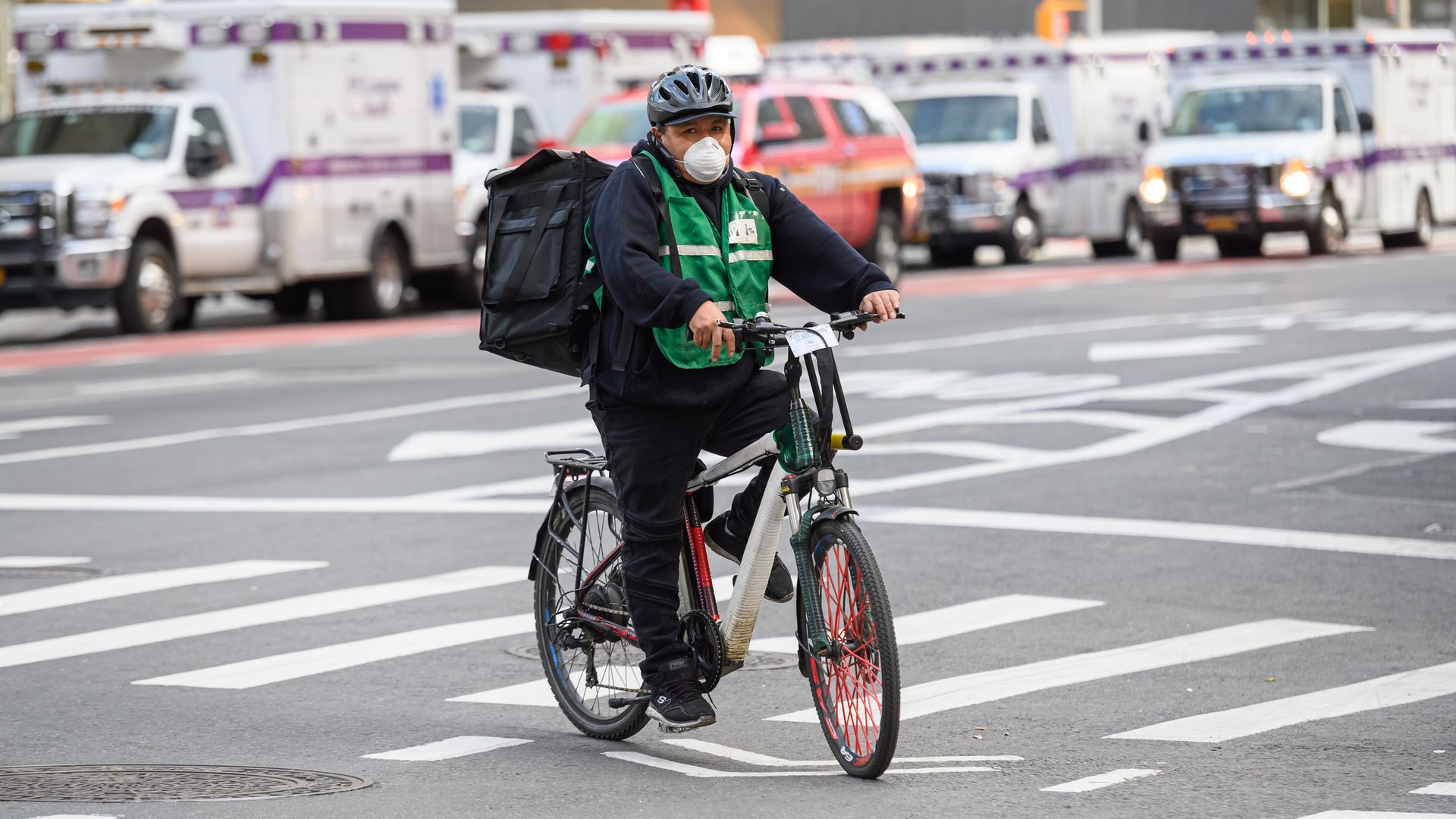
The big picture: While much of America stays home, a big portion of the jobs lost in the retail and restaurant sectors are being reallocated to the delivery economy.
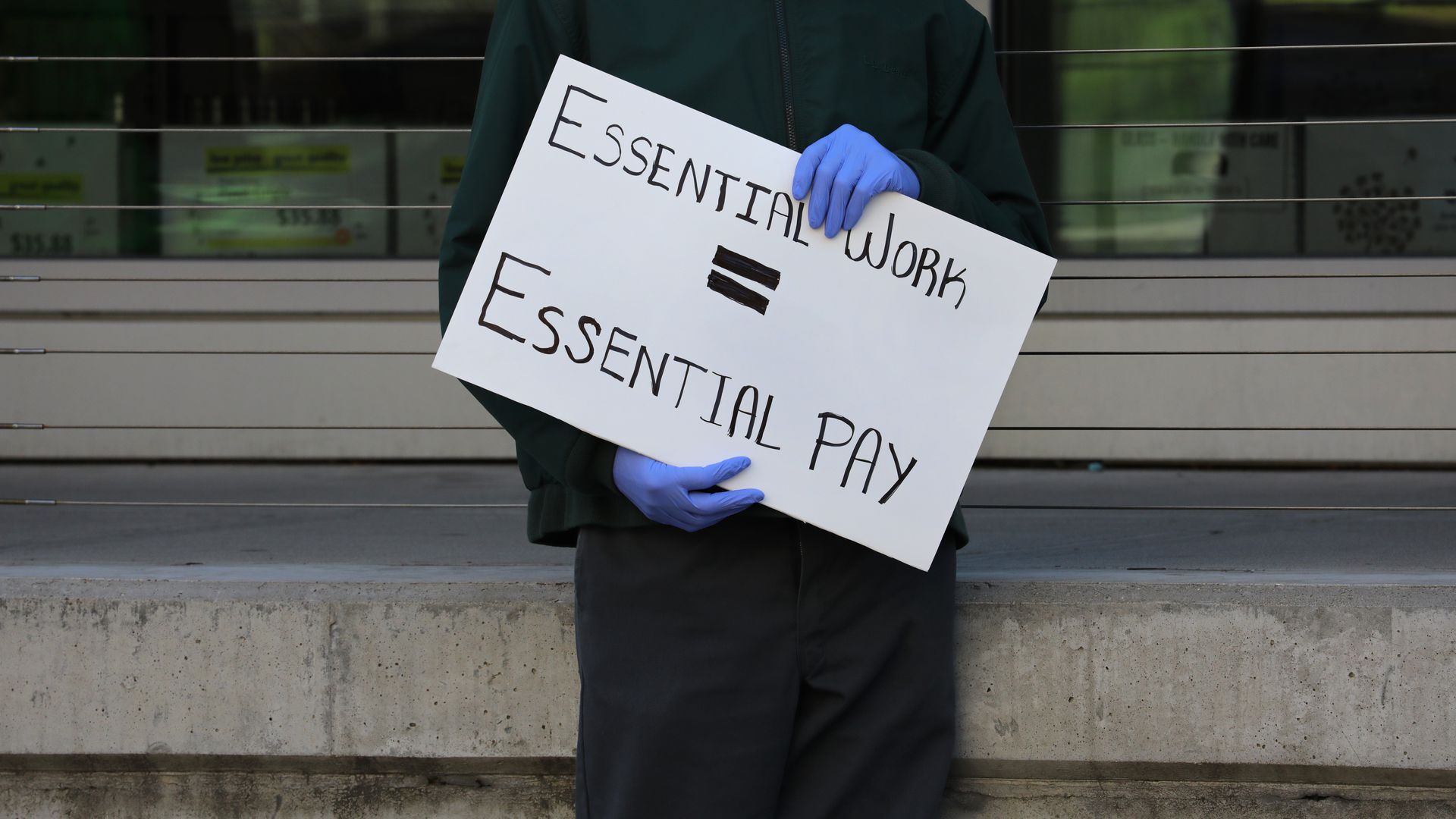
Although some companies have temporarily raised wages as a form of hazard pay for essential workers, the majority have not.
By the numbers: Those offering hazard pay include 46% of grocers and other essential retailers and 29% of health-related employers, reports the Wall Street Journal.
Millions of Americans are risking their lives to feed us and bring meals, toiletries and new clothes to our doorsteps — but their pay, benefits and working conditions do not reflect the dangers they face at work.
Why it matters: People who stock grocery shelves and deliver packages never expected to be on the front lines of a national crisis, and now they're playing a vital, but undervalued, role. "These are viewed as essential jobs done by disposable workers," says John Logan, a U.S. labor historian at San Francisco State University.
Facebook agreed in a preliminary settlement on Friday to pay $52 million in damages to current and former content moderators for mental health issues that were developed on the job, The Verge reports.
Why it matters: The settlement is an acknowledgement from the social network that content review systems take a toll on workers' mental health. The preliminary settlement filed in San Mateo Superior Court also said Facebook would provide more counseling for workers.
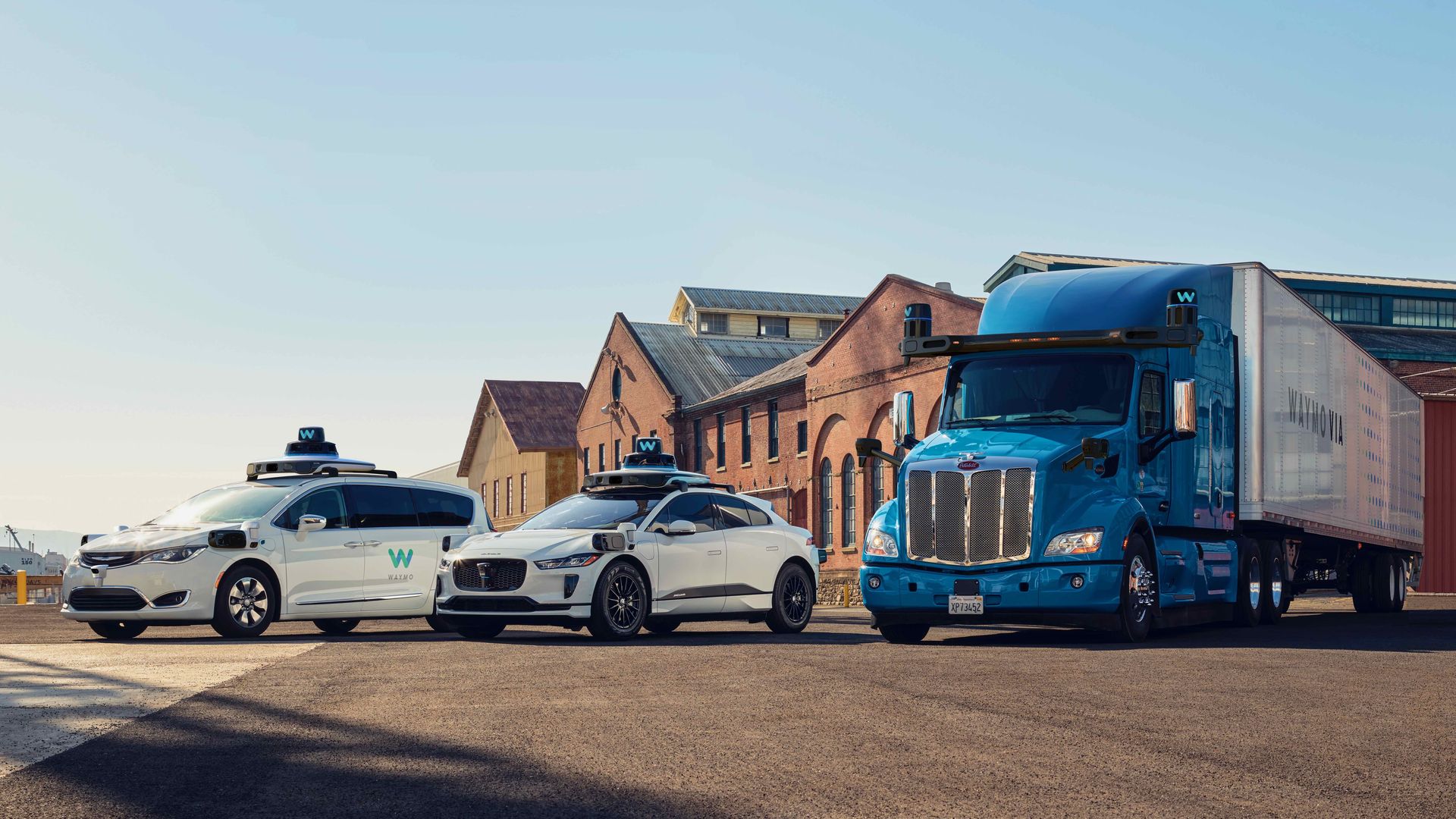
Waymo said Tuesday that it has raised another roughly $750 million for its self-driving technology, expanding the size of its first external investment round to $3 billion.
Why it matters: With the coronavirus pandemic likely to speed consolidation among self-driving tech firms, investors are lining up behind companies they see as the most likely winners.
Food delivery stalwart Grubhub received a takeover offer from Uber, a primary competitor in the space, Bloomberg reports. Grubhub's shares spiked 25% on the news.
Why it matters: Consolidation has been widely anticipated in the restaurant meal delivery space, which has seen increased demand amid the coronavirus pandemic, as companies like Uber and DoorDash have been hemorrhaging money in a race for market share.
Luckin Coffee, a Chinese rival to Starbucks that went public in the U.S. last year at a $4.3 billion valuation, fired both CEO Jenny Zhiya Qian and COO Jian Liu on Tuesday after an investigation into accounting fraud.
The backstory: Luckin disclosed in early April that its COO had fabricated around $310 million in 2019 sales — numbers the company had relied on while selling investors on both a secondary share sale and convertible bond offering.
Private equity investors have historically taken a dim view of peers that renege on signed merger agreements, believing that an honorable reputation can be the difference between winning and losing the next deal or next fund.
What's new: Not only have stigma worries dissipated, but some buyers now feel honoring their pre-pandemic word would diminish their reputation.
SSR Mining agreed to buy rival gold miner Alacer Gold for C$2.41 billion in stock.
Why it matters: This comes against the backdrop of rising gold prices, as investors seek safer assets amidst global economic uncertainty. It's also the week's second such merger, following Shandong Gold Mining's C$230 million deal for TMAC Resources.
TV execs, eager to court advertisers for their fall programming lineups, are turning to virtual "upfront" presentations to court marketers.
The intrigue: The "upfronts," a series of elaborate advertising pitches and parties that networks use to secure dollars ahead of time for their fall seasons, have been forced to go virtual for the first time this year due to the pandemic.
Senate Republicans are moving to swiftly confirm a conservative filmmaker to lead the independent agency in charge of Voice of America (VOA), the state-sponsored international news agency, per The New York Times.
Why it matters: The Trump administration has twice-nominated Michael Pack, but it's been held up in the Senate confirmation processes. Pack has received pushback from some Democrats for his ties to Steve Bannon.
The appetite for coronavirus stats has grown so big globally that traffic to Worldometer, a statistics website run by a group of international developers, surpassed 1 billion visits in April, in line with major platforms like Reddit and ahead of LinkedIn.
By the numbers: Worldometers.info was the #28 most-trafficked website worldwide this month, according to data and analysis from SimilarWeb.
The Trump administration unveiled a new proposal Monday, in which privately negotiated prices between hospitals and private health insurers would inform how Medicare pays for future health care services.
Yes, but: Hospitals are suing over the original price transparency regulation, so this proposal would get thrown in the trash if hospitals win in court.
The U.S. consumer price index dropped by 0.8% in April, the second straight month prices have fallen and biggest decline since 2008, the Bureau of Labor Statistics announced on Tuesday. The consumer-price index excluding food and fuel costs fell 0.4%, the largest monthly decrease for that indicator.
Why it matters: The number illustrates how business closures and government restrictions due to the coronavirus have slashed demand. Gasoline prices fell by 20.6% during the month. The indexes for apparel, motor vehicle insurance and airline fares all posted record declines, per Bloomberg. Lodging also fell sharply.
The latest sign that driving is coming back? Analysis from the data science company Descartes Labs shows substantial increases in mobility in recent weeks after driving reached its pandemic-related trough about a month ago.
Why it matters: The revival of travel in the U.S. and worldwide will affect how quickly oil demand recovers from its unprecedented collapse (if it ever indeed comes all the way back).
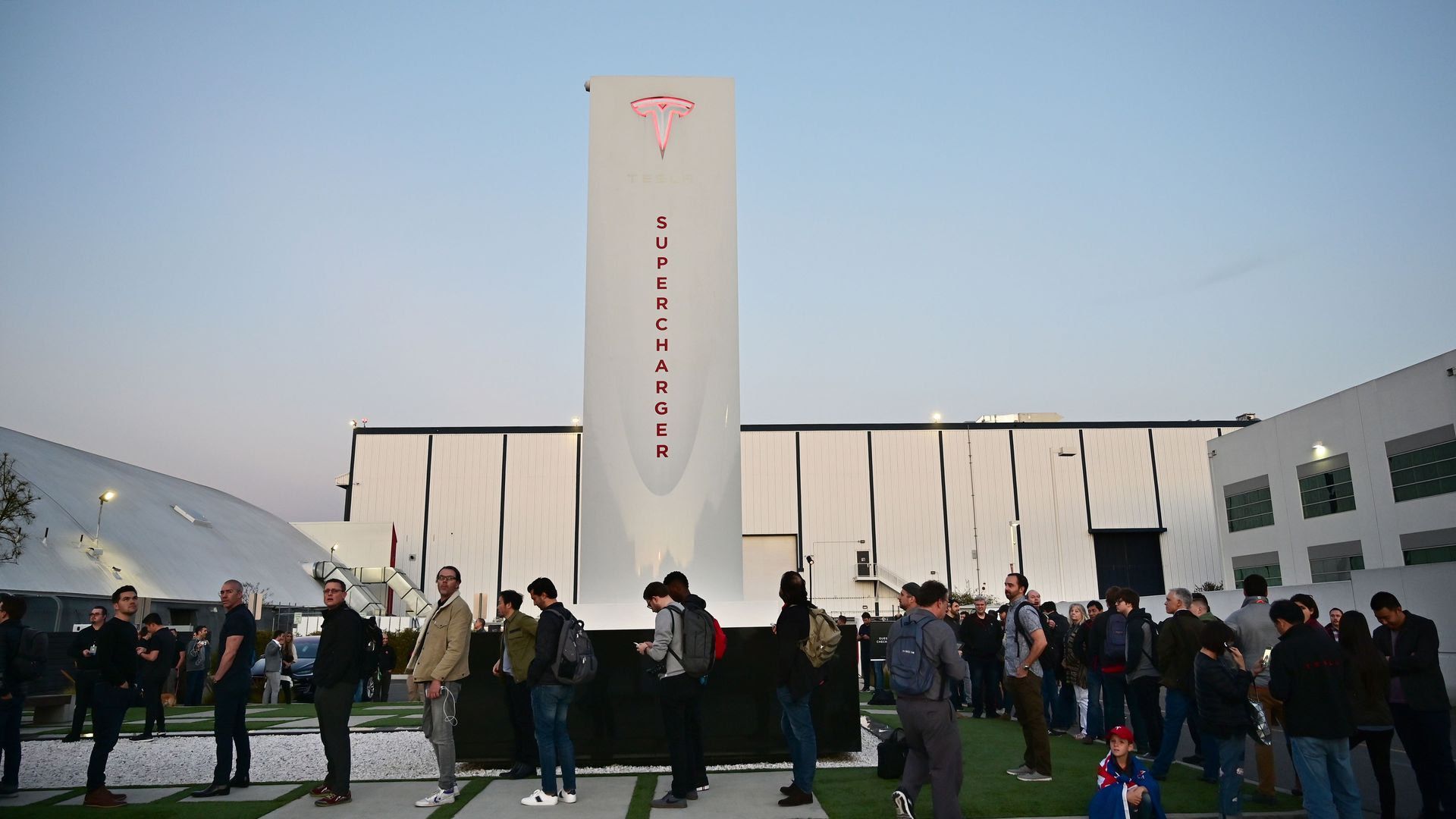
Tesla's California factory is now ground zero in the politically fraught debate about how to revive economic activity nationwide — and the decisions can have potentially life-or-death consequences for workers.
Driving the news: Tesla CEO Elon Musk yesterday announced reopening the electric automaker's Fremont manufacturing plant in defiance of county officials.
NextGen Venture Partners has raised $52 million for its second fund, the early-stage investment firm tells Axios.
In context: Unlike many VC firms that are now shifting to work from home, NextGen has been distributed from the start, including an extensive network of 1,300 venture partners. Startup pitches via Zoom are routine, and NextGen even built its own social network-like software for managing deals.
Why it matters: The move highlights Disney's rush to capitalize on people stuck at home during the coronavirus crisis by handing a prime piece of content directly to its flagship streaming service on a holiday weekend. It's also another bad sign for the theater industry — still shut down amid the pandemic — as "Hamilton" would likely have been a huge box office draw for the studio next year.
Nearly 40% of all respondents and 47% of those who say they’re still working reported saving the government stimulus payment they received, a new survey of over 3,000 U.S. adults from CivicScience finds.
Why it matters: "This is a shift from prior studies indicating that paying down debt/bills and buying necessities were higher priority than saving for those planning to receive payments," CivicScience analysts note.
Already facing an industry-wide recession coming into the year, the coronavirus pandemic has leveled the global transportation industry and pushed U.S. freight volume to its largest year-over-year percentage decline since the Association of American Railroads began collecting data in 1989.
By the numbers: The total number of originated carloads on U.S. railroads last month averaged 196,107 per week, "easily the lowest weekly average for any month since before January 1988, when our data began," AAR analysts wrote in the latest monthly assessment of the industry, "Real Time Indicators."
Expectations for U.S. stock earnings in the first quarter are the lowest since the global financial crisis, and may suffer more than global peers this year.
What's happening: Blended estimates imply a -13.7% decline in S&P 500 earnings, while in Europe, Japan and emerging markets the fall has been much bigger, "of the order of -31 to -34%," Deutsche Bank research analysts write in a note to clients.
The New York Fed's April survey of consumer expectations released Monday shows a "considerable deterioration in households’ expectations about most economic outcomes," but even higher expectations for stock prices to rise than the last record high in March.
What's happening: Nearly a third of Americans expect their own household financial situation will be worse in a year, the highest level on record.
The Federal Reserve's unprecedented response to the coronavirus pandemic has not helped it win the battle for public opinion as a little more than half of Americans indicate they don't trust the central bank, per the latest Axios-Ipsos Coronavirus Index.
Why it matters: As an unelected institution that has been granted the power to independently oversee monetary policy by Congress, the Fed's power "is contingent on securing as well as maintaining broad political and public support," Mark Spindel and Sarah Binder wrote in their 2017 book "The Myth of Independence: How Congress Governs the Federal Reserve."
The coronavirus conspiracy news cycle has grown more powerful off of audiences that were already susceptible to misinformation about other health care myths, like anti-vaccination conspiracies.
Data: Zignal; Chart: Axios Visuals. NOTE: This does not include mentions of "disinfectant," which is disproportionately much more viral than all of the select conspiracy theories combined. We removed it from this chart to show you the smaller theories at scale.
Driving the news: The latest conspiracy theory — that the virus is a "plandemic" engineered to increase vaccination rates — stems from a documentary-style video featuring a discredited medical researcher that has gone viral.
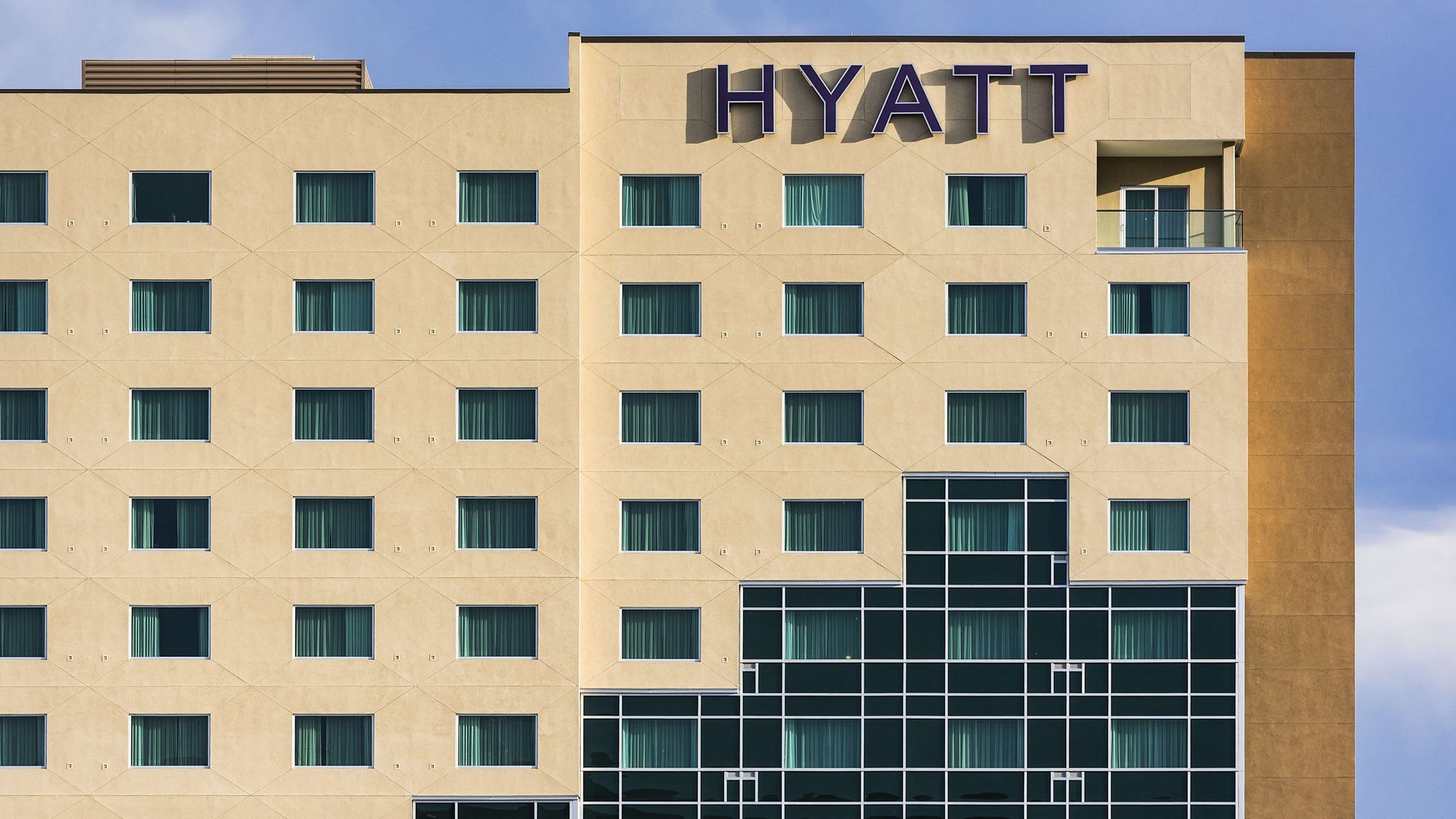
Hyatt Hotels is set to restructure roles for and lay off 1,300 corporate employees from around the world beginning June 1, per a company statement.
Why it matters: The move comes amid massive fallout in the hospitality industry during the coronavirus pandemic. Similar companies have been forced to implement large layoffs, including AirBnB cutting 25% of its global workforce last week.
What they're saying: "While parting ways with our colleagues is excruciating, we must be sensitive to commercial realities so we can continue to fulfill our purpose of care over the long term – through this pandemic and for what lies beyond," the company said.