At least 10 U.S. airlines will accept federal aid to help keep employees on the payroll during the coronavirus crisis, in exchange for stock warrants that could give the U.S. government an equity stake in each company.
Why it matters: The deal puts an end to nearly a week of intense negotiations between the airline industry and Treasury Secretary Steven Mnuchin, who insisted that airlines pay back a portion of the payroll aid and that taxpayers get some potential upside in exchange for helping the industry.
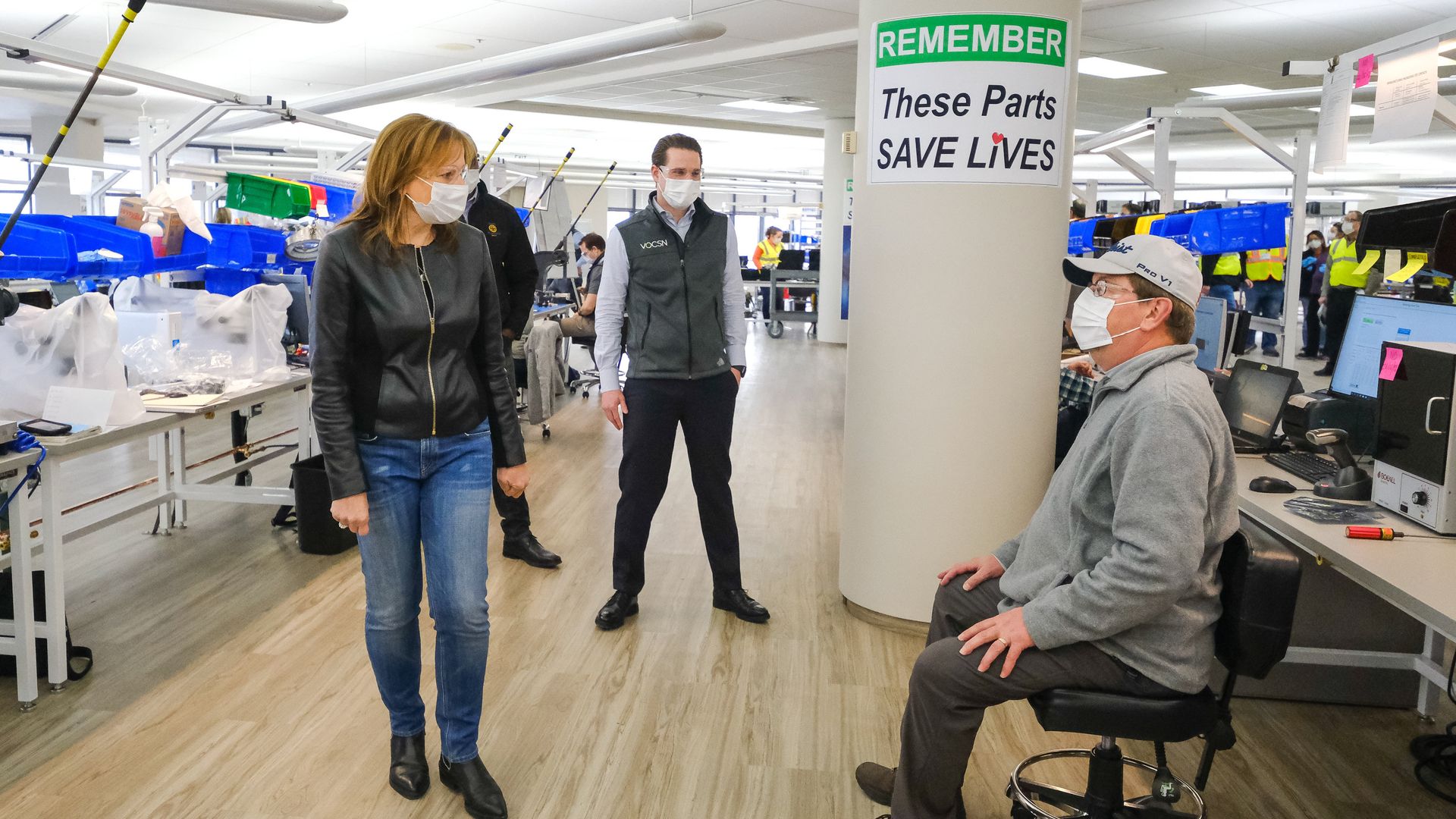
General Motors on Tuesday began mass production of critical care ventilators that will be delivered to the federal government to replenish depleted U.S. stockpiles in the fight against the coronavirus.
Why it matters: The automaker has a $489.4 million contract to produce 30,000 ventilators by August under the Defense Production Act, which President Trump invoked on March 27 in an effort to meet exploding demand for the life-saving devices.
Sen. Elizabeth Warren (D-Mass.) and Rep. Ro Khanna (D-Calif.) have proposed a "bill of rights" for essential workers, including everything from guaranteed protective equipment to universal paid sick leave and child care. Rep. Khanna joins Dan to discuss.
David Thacker, a Google vice president of product management who oversees G Suite's apps, is joining venture firm Greylock Partners as a general partner focused on consumer technology.
The intrigue: "This is an opportunity right now, in this pandemic, where entrepreneurs have an opportunity to expose consumers to new products and delight them," Thacker tells Axios, noting part of the challenge will also be to spot the fads that emerge from the current circumstances.
U.S. mayors have banded together to ask Congress for $250 billion in direct funding to help cities deal with the enormous costs of fighting the coronavirus pandemic while also facing significant revenue loss from shutdowns of local economies.
The big picture: Last month's CARES Act allocated $150 billion to state and local governments, which was $100 billion shy of the ask from the U.S. Conference of Mayors.
Over 70% of the federal government's $349 billion small business bailout program is already spoken for, as Democrats and Republicans continue to squabble over an expansion that both sides believe is necessary.
The state of play: There is still a lot we don't know about how the existing program is operating, and possibly won't until the next pot of money is emptied.
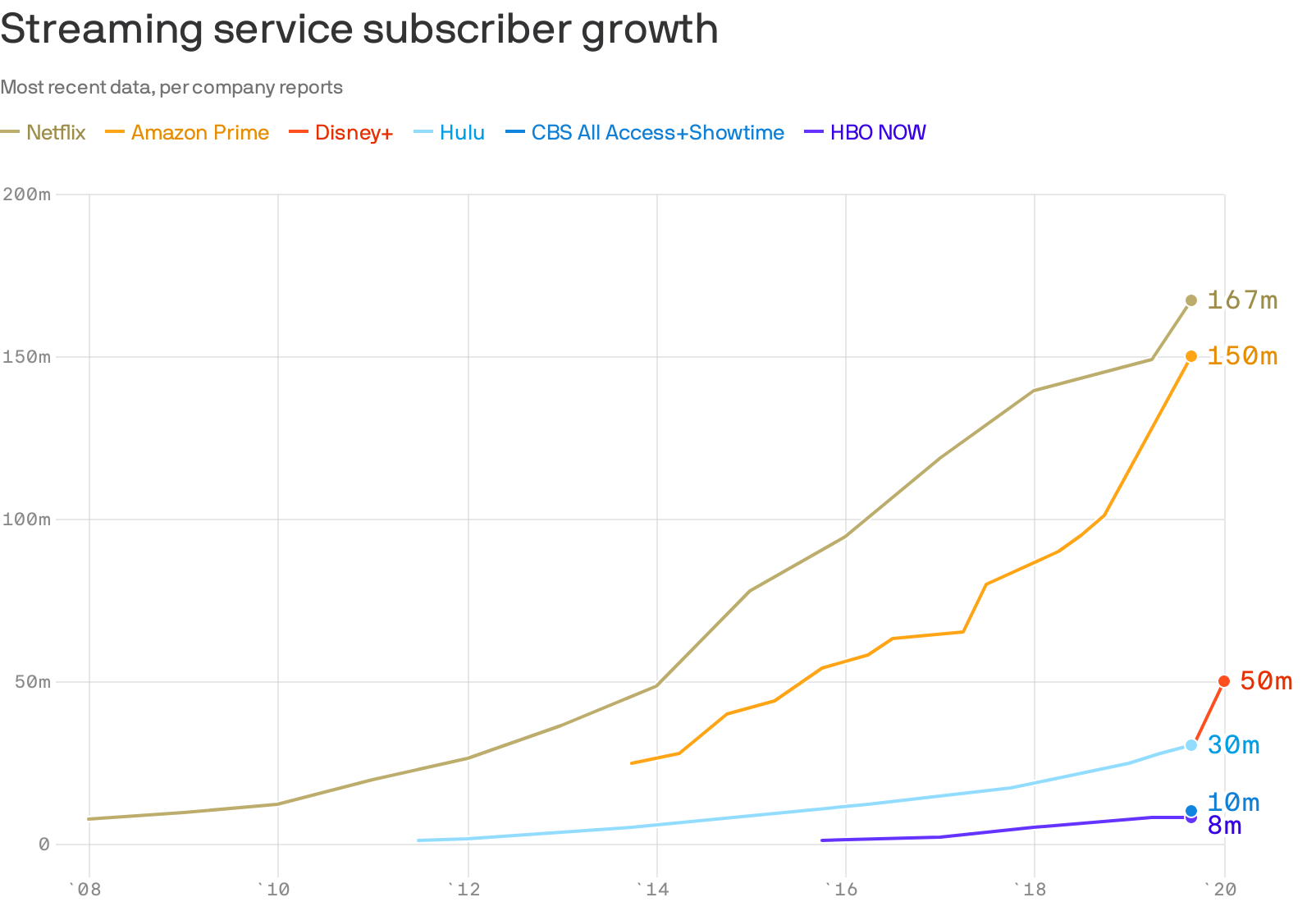
The highly-anticipated streaming wars are still on, even as most of Hollywood production has come to a halt.
The state of play: NBC's Peacock is still on track to launch tomorrow, April 15th. The company revealed its launch sponsors Monday, and says it will keep ad load at a minimum.
Disney's kingdom is losing its magic to the coronavirus pandemic.
Why it matters: Analysts point to Disney's healthy balance as proof that the company will weather the storm, but its experience dealing with coronavirus will fundamentally alter the way the nearly 100-year-old business operates moving forward.
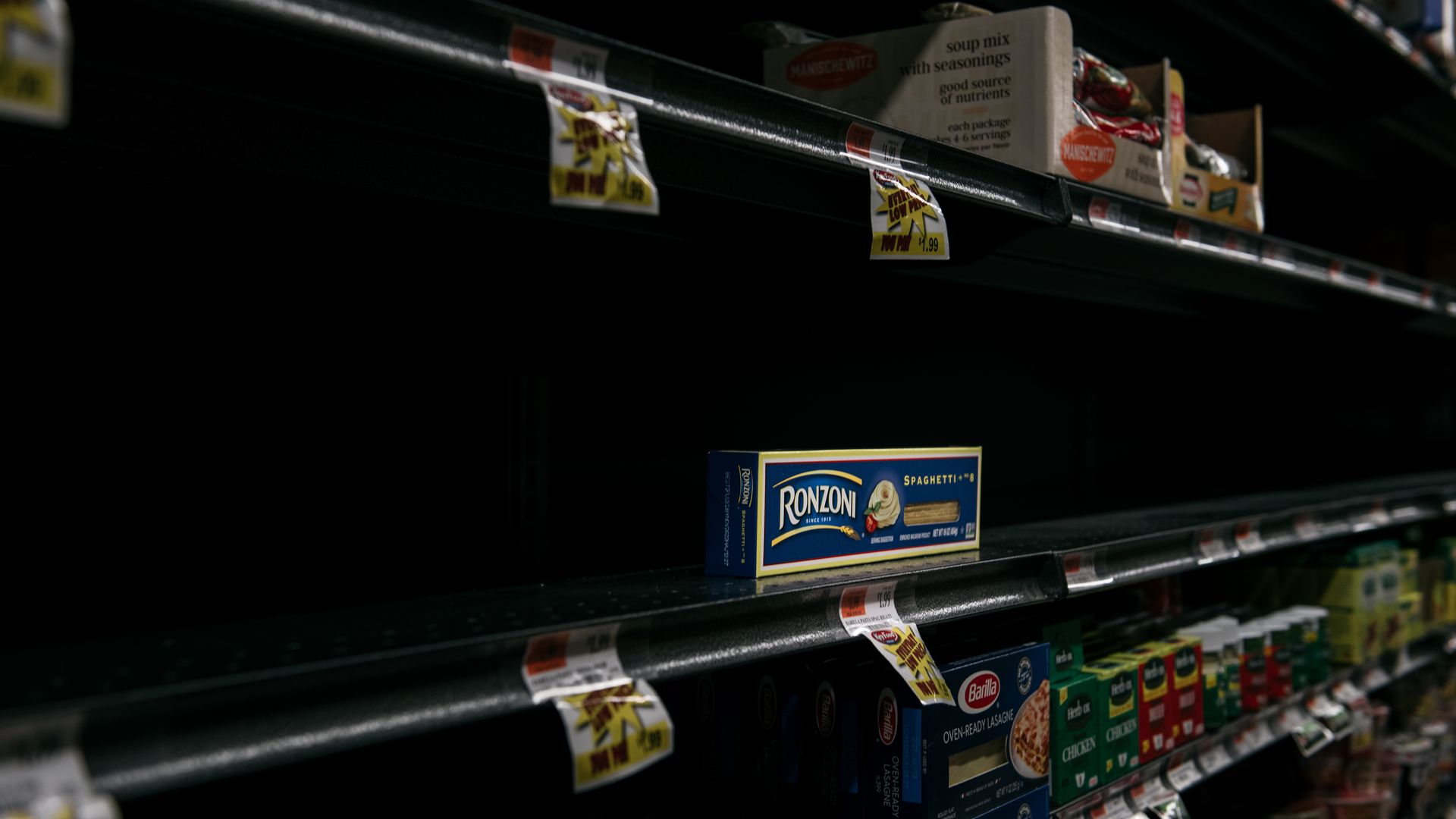
While industry giants reassure shoppers there is enough food during the coronavirus pandemic, people continue to be met with empty supermarket shelves due to stresses on established supply chains, the Washington Post reports.
The state of play: With restaurants closed, distributors are struggling to retool their product from bulk supply for restaurants and industrial-scale operations to smaller, consumer-focused packaging as Americans cook from home.
Consumers are looking for fun and lighthearted entertainment to relieve stress during the coronavirus crisis, instead of categories like true crime or suspense.
Why it matters: Some mediums, like podcasting, that over-index on genres like true crime, may be partially impacted by the fact that consumers need a break from their regular content routines.
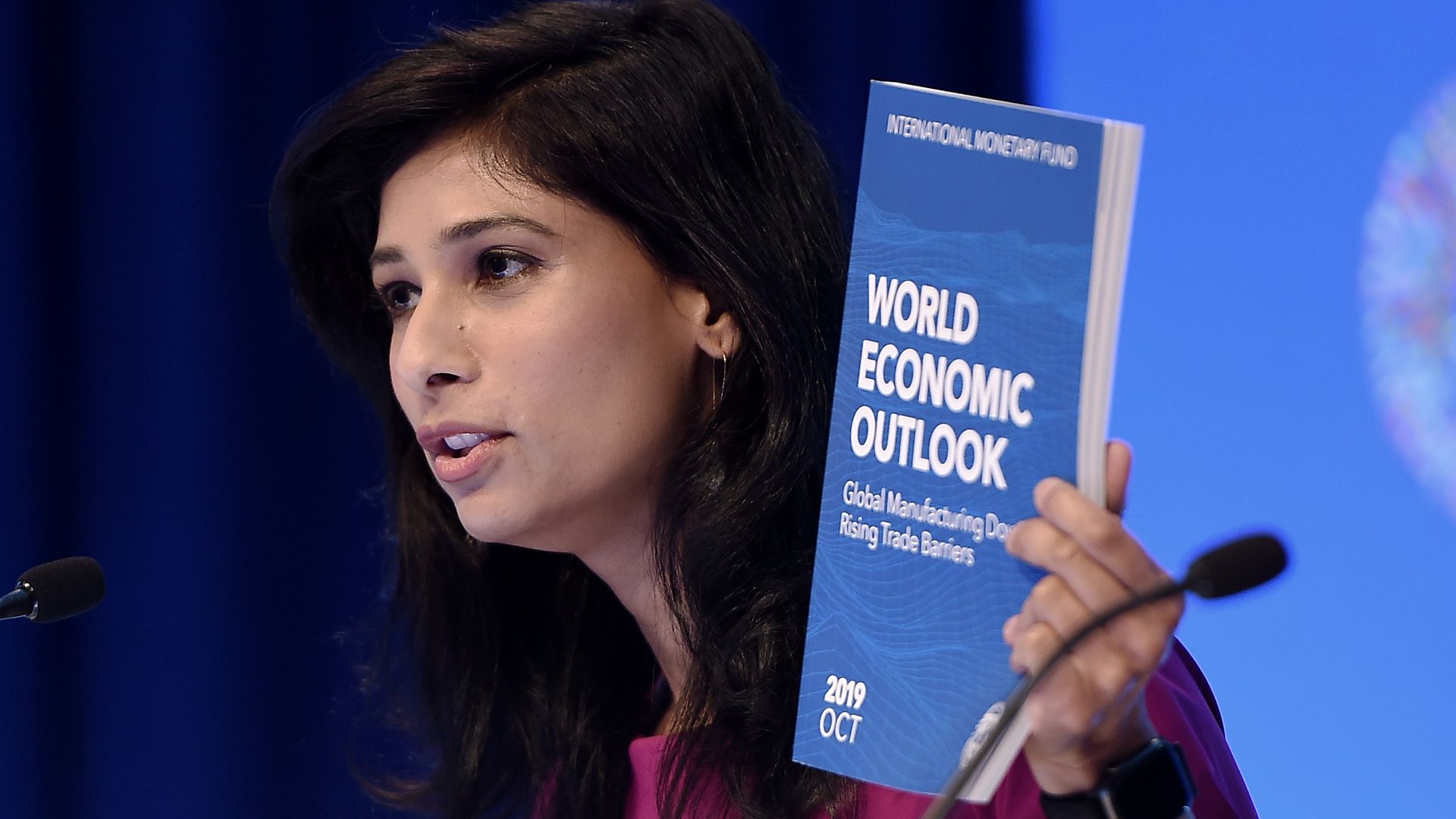
The coronavirus pandemic will bring about the worst economic downturn since the Great Depression, the International Monetary Fund projected Tuesday in its latest world economic outlook.
Why it matters: The organization expects a recession "far worse" than the 2008 financial crisis. In a revision to its earlier forecast, the IMF said global GDP growth will fall to -3% this year, a drastic downgrade from its forecast of +6.3% in January.
A bipartisan group of lawmakers is circulating a draft letter to be sent to the White House requesting additional relief targeted specifically at local newsrooms, according to a draft of the letter obtained by Axios.
Why it matters: Local news was already facing dire strains in the U.S., but the coronavirus and a pending recession have pushed the industry into near collapse at a time when people need access to news and information more than ever.
By the numbers: The increase in requests is actually an exponential decline. Forbearance requests rose by 1,270% between the week of March 2 and the week of March 16, and another 1,896% between the week of March 16 and the week of March 30, MBA reported last week.
Torsten Slok, chief economist at Deutsche Bank Securities, says he is expecting Thursday's initial jobless claims report to show 8 million Americans filed for weekly unemployment benefits last week.
Why it matters: That would be the largest number ever and the fourth time in history unemployment benefits have surpassed 1 million — all of which have been in the past four weeks.
Having initially predicted they could get through the coronavirus pandemic with their businesses largely unscathed and workforces intact, U.S. corporate leaders are now starting to change their tune.
What it means: Top financial officers have consistently written down their expectations for the economy, their company's financial situation, and how many of their employees they will be able to keep on staff in recent weeks.
Google has made significant progress toward developing its own processor to power future versions of its Pixel smartphone as soon as next year — and eventually Chromebooks as well, Axios has learned.
Why it matters: The move could help Google better compete with Apple, which designs its own chips. It would be a blow to Qualcomm, which supplies processors for many current high-end phones, including the Pixel.
New data from CrowdTangle shows that engagement for national and local news sources on Facebook is exploding during the coronavirus pandemic, while engagement with hyper-partisan publishers is hardly growing.
Why it matters: Consumers are looking to local and national outlets with authority to understand the impact of the virus on their health, the economy and their communities. This is different from the past few years, when hyper-partisan publishers dominated engagement on Facebook.
Hospitals have been clearing beds to care for the influx of coronavirus patients, but there's a looming capacity and equipment problem for the vast majority of patients who recover and need to be discharged to another facility.
Reality check: "I don't know that there's a nursing home in the country right now that is really able to admit an individual who is COVID-19-positive," said David Grabowski, a Harvard professor who studies post-acute care.













/2020/04/14/1586867657927.gif?w=3840)