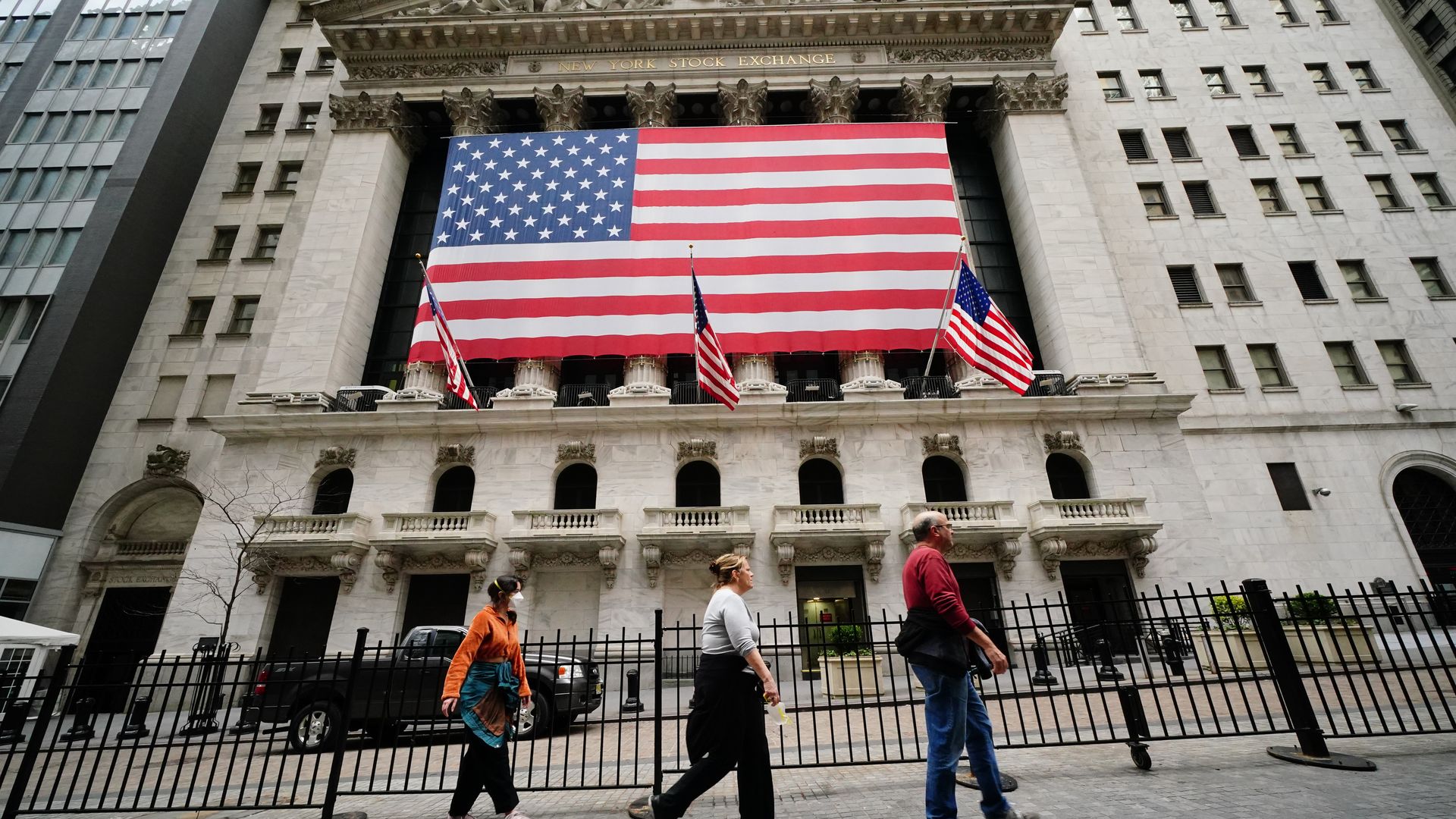
Wells Fargo surprised small business owners late Sunday when it said that it had run out of money to lend to small businesses under the Paycheck Protection Program (PPP), the federal stopgap for COVID-19 relief.
But an announcement by the Federal Reserve today might quell concerns for the customers who will be hard-pressed to apply for cash elsewhere.
Why it matters: Because of restrictions placed on Wells Fargo after its fake accounts scandal, one of the nation's biggest lenders says it has to turn away struggling small business customers.
Airbnb has raised $1 billion in debt and equity from Silver Lake and Sixth Street Partners.
Why it matters: Airbnb, like the rest of the travel industry, has taken a major business hit as a result of the coronavirus pandemic. The company recently halted all marketing spend and froze hiring. Questions also remain about its plans to go public this year.
The S&P 500 closed up 7% on Monday, while the Dow rose more than 1,500 points.
Why it matters: The huge market surge comes amid rare optimistic signs that the spread of the coronavirus may be slowing in parts of the country, including New York. But government officials say this will be a difficult week, while economists — including former Fed chair Janet Yellen today — warn that the pandemic could have a catastrophic impact on the global economy.
Former Federal Reserve Chair Janet Yellen said Monday on CNBC that U.S. unemployment, driven by the coronavirus pandemic, could already be as high as 13% "and moving higher."
Why it matters: Yellen said the country should expect a GDP drop of "at least 30%" in the second quarter, based on indicators she's reviewed — though she said she has seen even higher projections.
America's economy won't reopen anytime soon, despite frantic CEO whispers, but a glimmer of hope may be emerging in the form of serological testing.
Why it matters: Serologic tests aren't to determine whether or not you're infected with coronavirus. They are to determine if you have potential immunity that could allow you to safely return to work.
Platinum Equity completed its acquisition of Italian wine distributor Farnese Group from NB Renaissance Partners.
Why it matters: Because the deal actually closed, despite everything that's happened in the U.S. and Italy since it was agreed to in December. And the pricing terms never changed.
The Fed's massive injections of liquidity have reopened much of the bond market, and after back-to-back weeks in which more than $100 billion flowed out of bond funds, investors have regained their bearings and now see opportunity.
What's happening: But after the hemorrhaging outflows relented last week, bulls may now be sticking their heads out a bit too far. Junk bond funds took in more than $7 billion for the week ended April 1, according to Refinitiv Lipper, setting a new weekly record.
JP Morgan Chase Chairman and CEO Jamie Dimon said Monday in his annual letter to shareholders that the U.S. has "the resources to emerge from [the coronavirus] crisis as a stronger country."
The big picture: He added that while the New York bank will participate in government programs to address economic challenges set off by the effects of the virus, it will not ask for any regulatory relief in return.
Top CEOs, in private conversations and pleas to President Trump, are warning of economic catastrophe if America doesn't begin planning for a phased return to work as soon as May, corporate leaders tell Axios.
Why it matters: The CEOs say massive numbers of companies, big and small, could go under if business and government don't start urgent talks about ways groups of workers can return.
The health care system cut 42,500 jobs in March as the coronavirus epidemic forced providers to delay an array of nonurgent procedures and doctor visits, according to new data from the Bureau of Labor Statistics.
The big picture: Almost all of the lost jobs came in medical offices and other outpatient settings, but many people who are fighting the coronavirus in hospitals are seeing cutbacks, too.
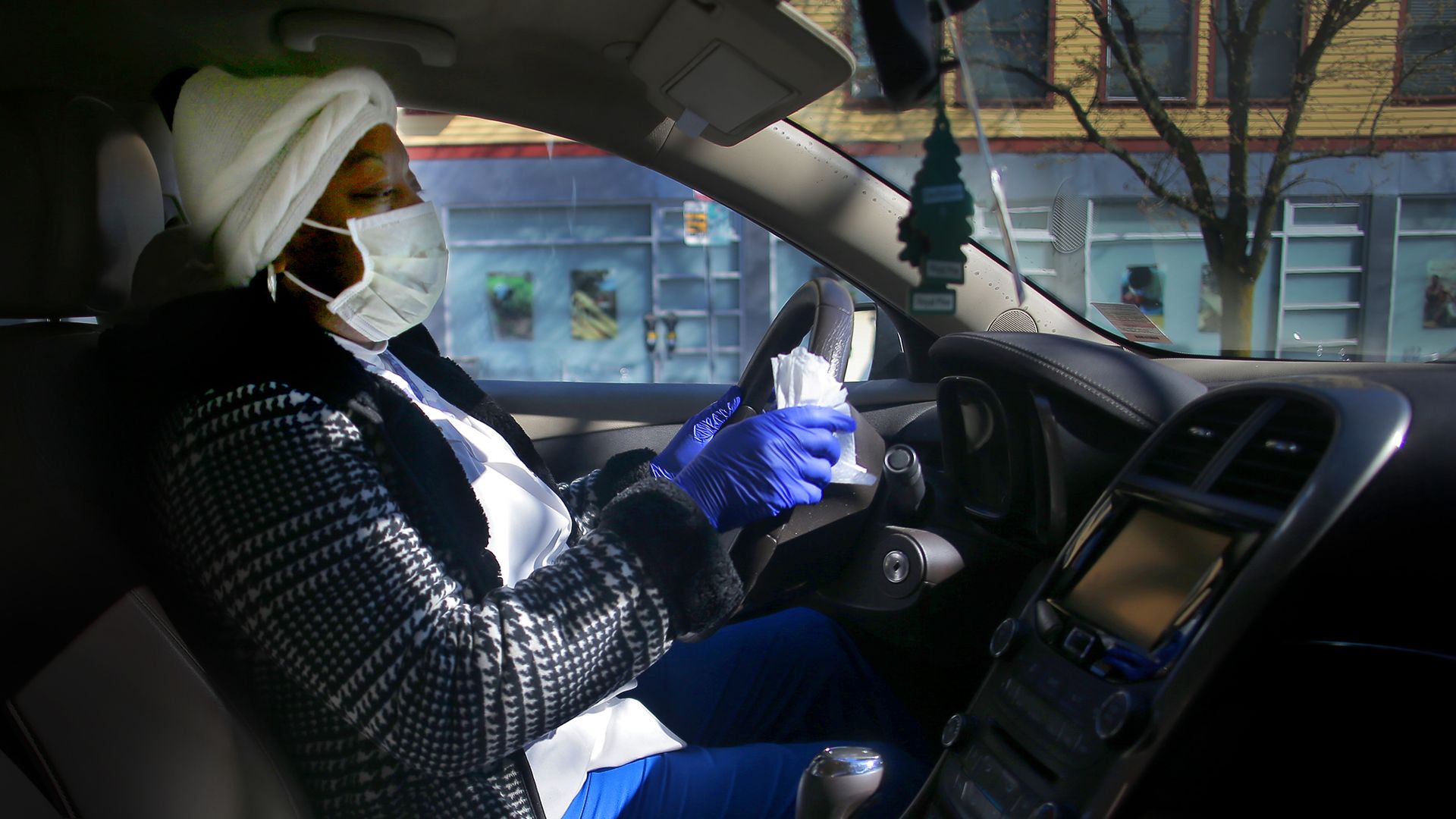
The coronavirus has made life even more difficult for the 5 million aides and workers who care for the frail populations living at home and in nursing homes.
Why it matters: These low-paid workers face the conundrum of seeing patients and increasing risk of exposure and spread, or staying away at the expense of their income and patients who rely on that care.
Quibi, the mobile-only video subscription streaming service, made its highly anticipated consumer debut Monday, launching its new app globally in the middle of the coronavirus pandemic.
Why it matters: Executives say that they are confident in the app's launch at this work-at-home moment, even though the short-form video product was built to be consumed on the go.