Peloton on Tuesday disclosed that it paid nearly $50 million to purchase Tonic Fitness, one of its two bike manufacturing partners in Taiwan.
Why it matters: The deal is officially about helping Peloton better control its supply chain, but CEO John Foley tells Axios it also could help the company protect itself in case of future trade tensions.
Xerox agreed to sell its 25% stake in a joint venture with Fujifilm to its Japanese partner for $2.3 billion.
Why it matters: This ends a 57-year partnership between the two companies, and comes after the pair's proposed merger was scuttled by activist investors Carl Icahn and Darwin Deason.
While it has struggled in the past to convert its success online into a presence in physical retail stores, PayPal is planning another go at it. During an "Axios on HBO" interview, CEO Dan Schulman said that the company will make new efforts starting next year under both the PayPal and Venmo brands.
Why it matters: The offline and online payments worlds are increasingly converging. Apple, for example, has introduced the Apple Card to go along with Apple Pay.
The 2020 presidential election is being fought online at a level we've never seen before, eclipsing television's traditional dominance.
Why it matters: Television is still one of the most important vehicles for candidates to message during a presidential election, especially during the general election, but its dominance is quickly being eaten by digital, and that's including digital alternatives of television, like commercials on Hulu.
Legendary Hollywood filmmaker Martin Scorcese is clearing up controversial comments he made last month that Disney's Marvel movies are "not cinema" and instead are akin to theme park rides.
Why it matters: Scorcese's comments reflect a greater sentiment of old-guard Hollywood pushing back against the franchising of action films and the greater digitization of movies in today's cinema landscape.
Municipal bonds are on pace to see the highest inflows on record, data provider Lipper notes, surpassing the previous high set in 2009.
What's happening: Not only has the asset class almost surpassed the previous record already, but by mid-year, 2019's inflows were also "more than 10 times the amount of new investor money gathered over the whole of 2018," notes Mark Marinella, a portfolio manager at Capital Group.
Despite a stronger-than-expected jobs report on Friday, the Conference Board's Employment Trends Index, which follows every U.S. payrolls report, decreased in October, with negative contributions from seven of its eight components.
Why it matters: “The index suggests that job growth may slow down a little in the coming months,” said Gad Levanon, head of The Conference Board Labor Market Institute.
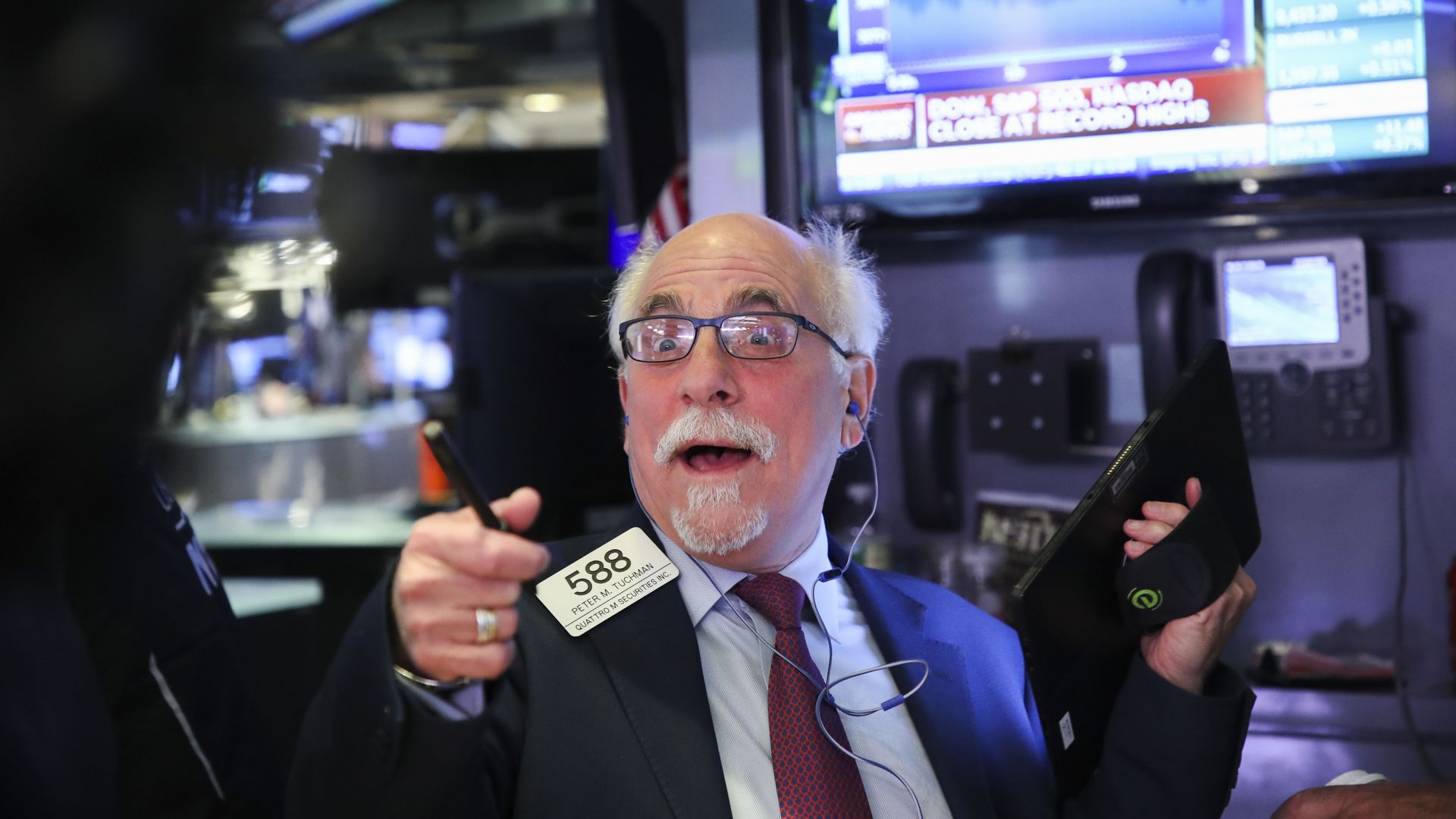
The Dow joined the S&P 500 and the Nasdaq in touching an all-time high on Monday, as U.S. equities continued to roar higher. All three indexes set record highs.
By the numbers: The U.S. has been outperforming other global markets for much of the year, but international bourses are starting to pick up the pace.
Gradients, or rainbow designs, are the hottest new trend to hit tech and media.
The big picture: According to design experts, the trend seems to be a rebuke to the simplistic design trend that captured the early 2000's, when web logo simplicity was more functional.
Investors have been basking in the glow of the "phase one" trade deal between the U.S. and China, but farmers, who are supposed to be the main beneficiaries of the agreement, have reason to be wary, experts say.
What's happening: U.S. farmers have been suffering this year. Chapter 12 bankruptcies have risen 24% over the previous year, and farm debt is projected to hit a record high $416 billion.
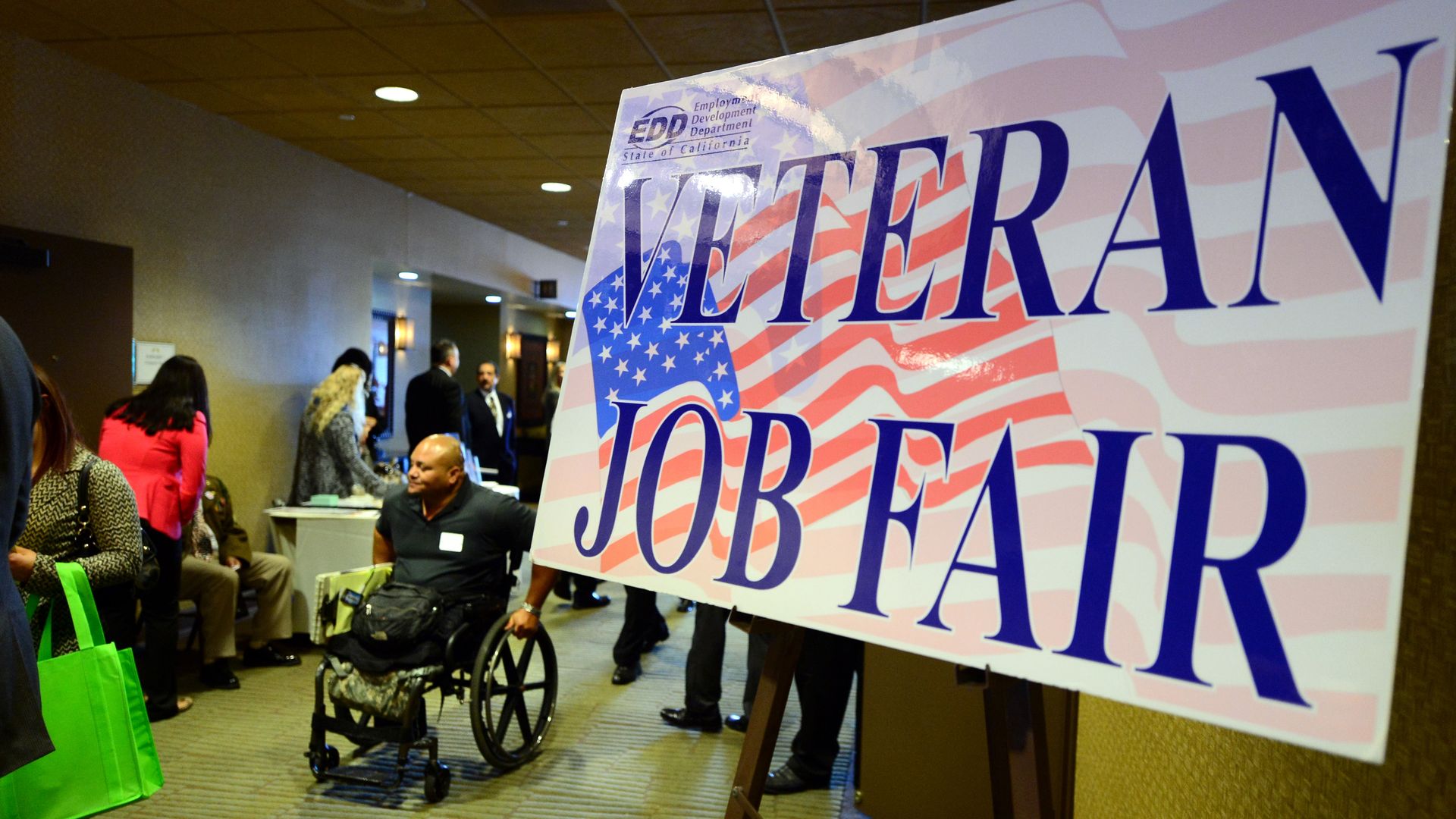
Retired service members are overall having better luck finding jobs, but they are still likely to be underemployed in several of the cities with the largest veteran populations, LinkedIn data shows.
The big picture: Sarah Roberts, head of military and veteran programs at LinkedIn, says underemployment is "when a person is engaged in work that does not make full use of their skills and abilities." Corporate responsibility programs and hiring incentives have largely driven down veteran unemployment rates, but underemployment remains rampant.
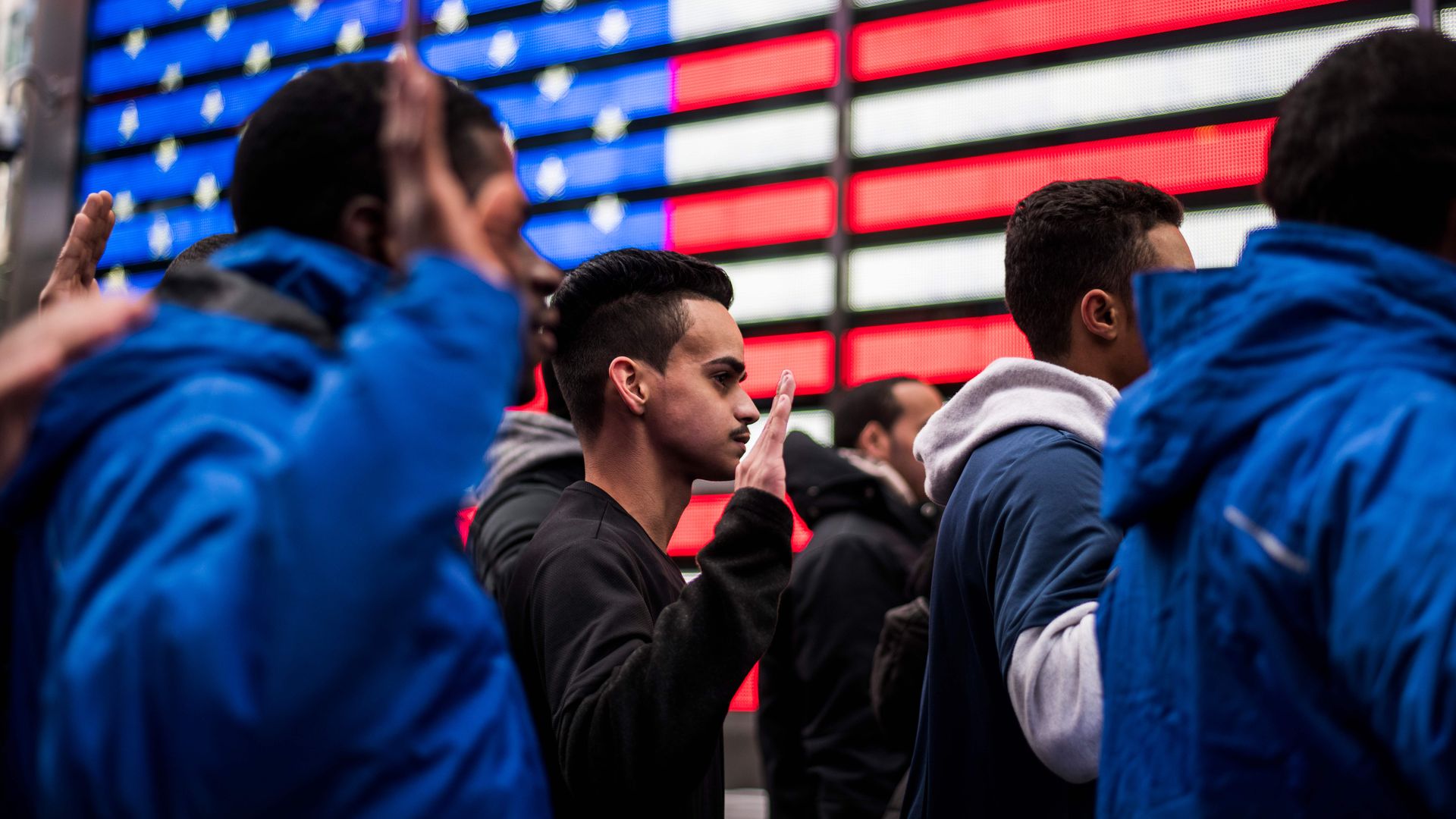
The Army is targeting young people "with a new multimillion-dollar advertising campaign designed to help recruit more than 130,000 people over the next year with promises of jobs everywhere from bio labs to cyber and culinary arts," reports Bloomberg Government.
Why it matters: Generation Z largely views of the military as a fighting force doing most of its work abroad, given that many in its ranks came of age after the September 11 attacks.
Despite possible progress toward a trade deal with China, American companies are frustrated by the opaque process for gaining an exemption to President Trump's tariffs on Chinese goods.
Why it matters: Exclusions are the only way for companies to seek relief from the pain of the trade war that’s upending the global economy.