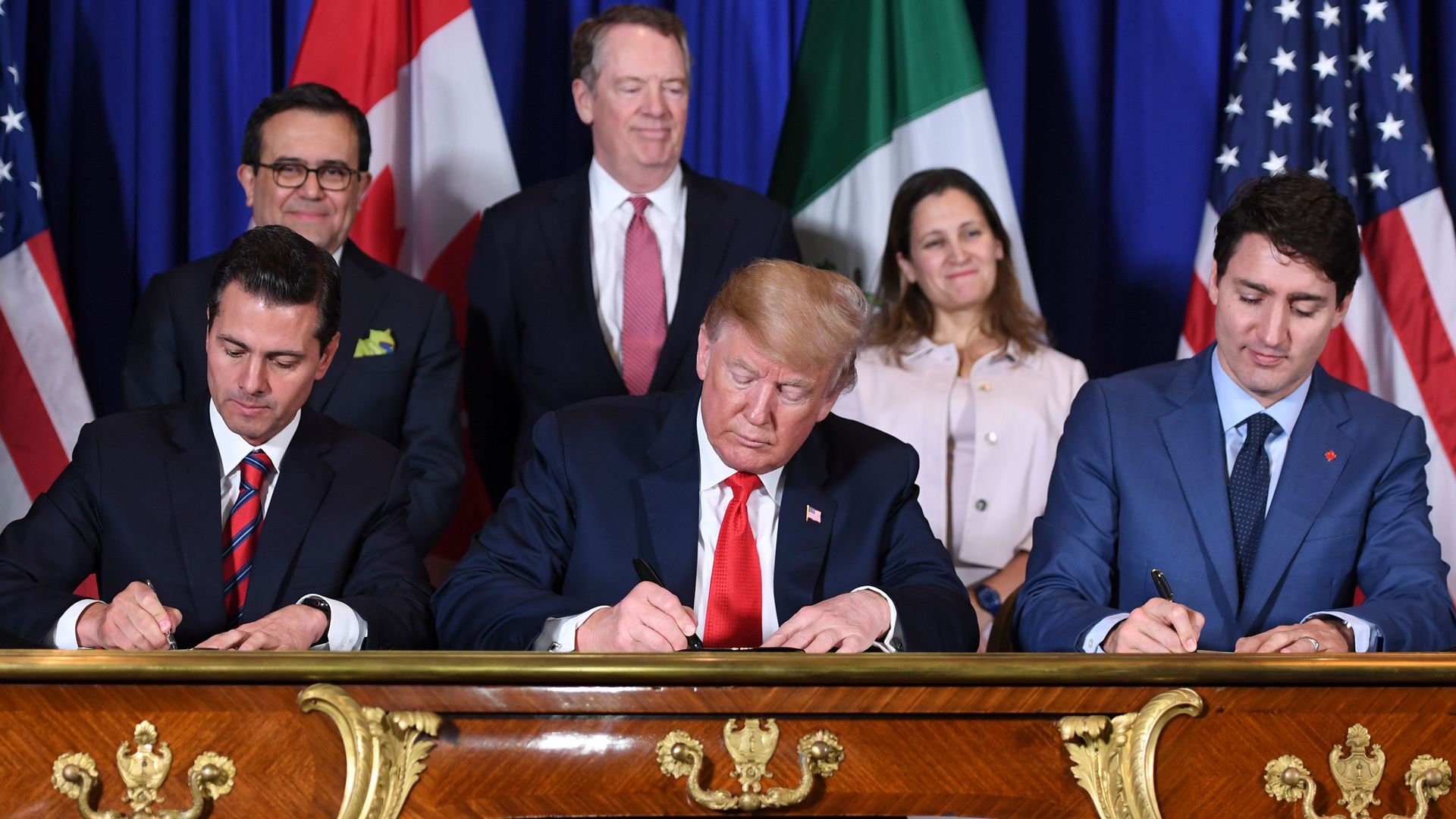
Mexico became the first nation to ratify the U.S.-Mexico-Canada trade deal on Wednesday with little opposition within the Mexican Senate, reports Politico.
Details: The new North American free-trade agreement may not be in its final format as House Democrats demand changes to the deal regarding enforcement, labor, the environment and drug pricing, per Politico. Mexico must sign off on any future changes.
Bahrain has granted journalists from six Israeli media outlets permission to enter the country next week to cover the conference at which the Trump administration will launch the economic portion of its Israeli-Palestinian peace plan.
Why it matters: This is an unprecedented move by Bahrain, which does not have formal diplomatic ties with Israel. It's also a significant achievement for the White House "peace team," led by Jared Kushner, which has been working to gradually normalize relations between Israel and the Gulf states. During preparations for the event, the White House asked Bahrain to allow Israeli reporters to cover it.
Multibillion-dollar stock market debuts from companies like Zoom, Uber and Pinterest have grabbed headlines in 2019 with eye-popping numbers, but new data shows IPO activity actually declined significantly this year, globally and in the U.S.
What's happening: Capital raised for both domestic and cross-border IPOs fell by 37% year-over-year, with volume down 34%, multinational law firm Baker McKenzie reports.
European Central Bank President Mario Draghi signaled that more stimulus is coming for the eurozone in a speech Tuesday morning.
What's next: The new measures are likely to include the central bank lowering interest rates below the current -0.4% interest rate that already means some depositors pay the ECB to loan it money.
AT&T will lodge a formal complaint with regulators against television station owners that, the company says, are refusing to negotiate terms for channels to be carried by its subsidiary DirecTV, resulting in blackouts for viewers.
Why it matters: The Federal Communications Commission generally does not intervene in private negotiations between programmers and the pay-TV stations that carry their content. But regulators could get involved when there are claims, as AT&T is making here, that parties are acting in bad faith.
The Trump administration's proposed tariffs on Chinese goods could starkly impact the printing industry, and lead to a shortage of Bibles and children's books, reports Bloomberg.
Why it matters: The $300 billion tariffs on Chinese goods includes printed materials and would make it difficult to afford printing some formats of the Bible, raise prices and lead to a shortage affecting the Christian bookseller market. Chinese manufacturers also use non-toxic and waterproof material for children's books, and it could be challenging for publishers to achieve that same quality for comparable prices elsewhere, per Bloomberg.
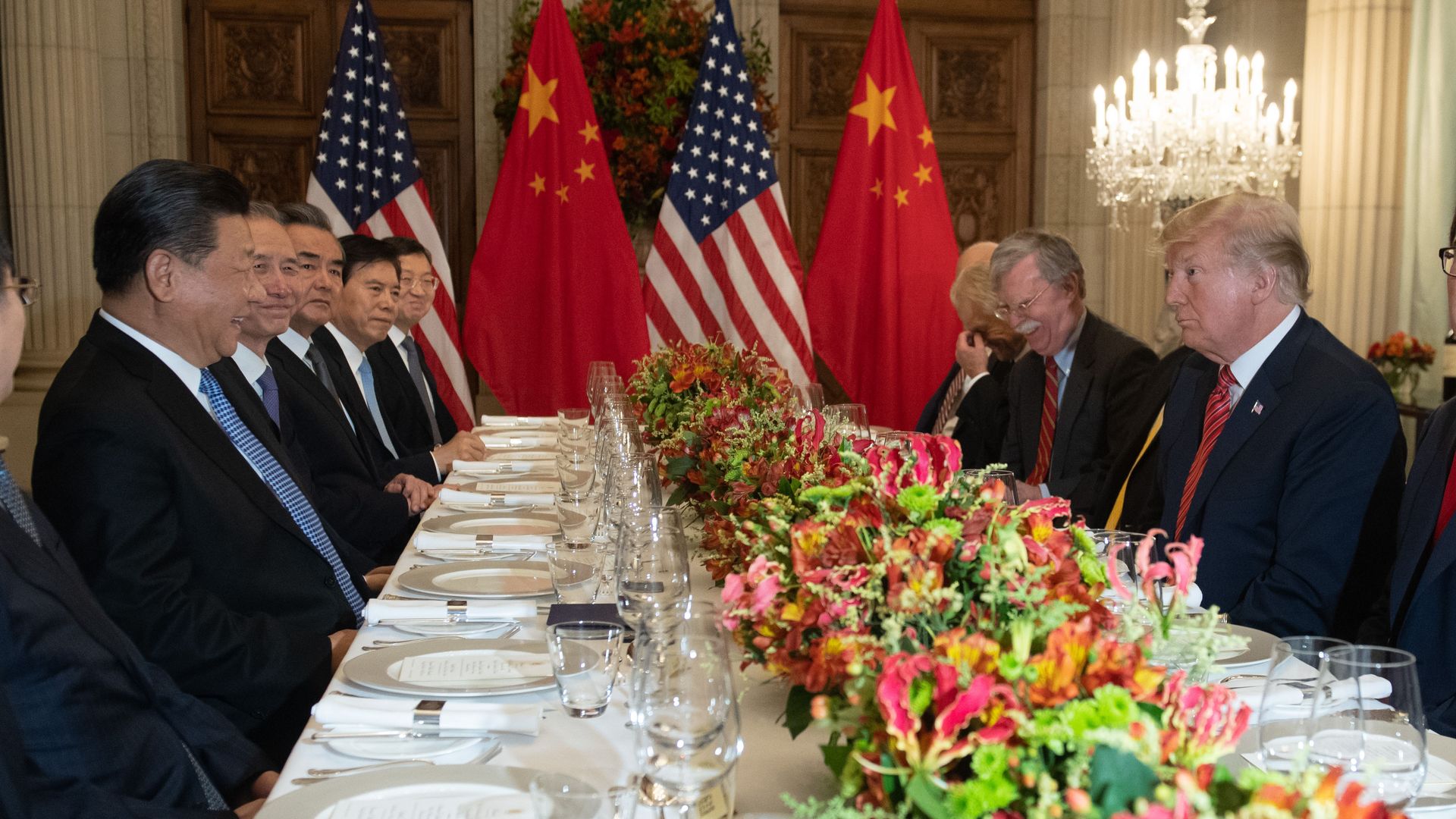
President Trump tweeted Tuesday that he spoke with Chinese President Xi Jinping on the phone this morning and that the two leaders agreed to have an "extended meeting" at the G20 summit in Japan on June 28–29. He added that talks between the two sides will take place before the meeting.
Why it matters: The Dow jumped several hundred points on the news that Xi and Trump have agreed to meet, with the risk of new tariffs on $350 billion of Chinese goods still looming over the global economy. Trump threatened last week that the tariffs would go into effect if Xi failed to attend the G20.
With 496 S&P 500 companies having reported first quarter earnings, more than three quarters (75.6%) beat expectations, with Q1 earnings now expected to increase 1.6%, data from Lipper shows.
What it means: That's a far cry from the first stage of an earnings recession analysts feared early in the year.
The June reading of the Empire State Manufacturing Index, a regional survey of manufacturing industry business owners by the New York Fed, was quite bad.
Details: The headline reading was -8.6, down from 17.8 the month before, the largest monthly decline ever recorded.
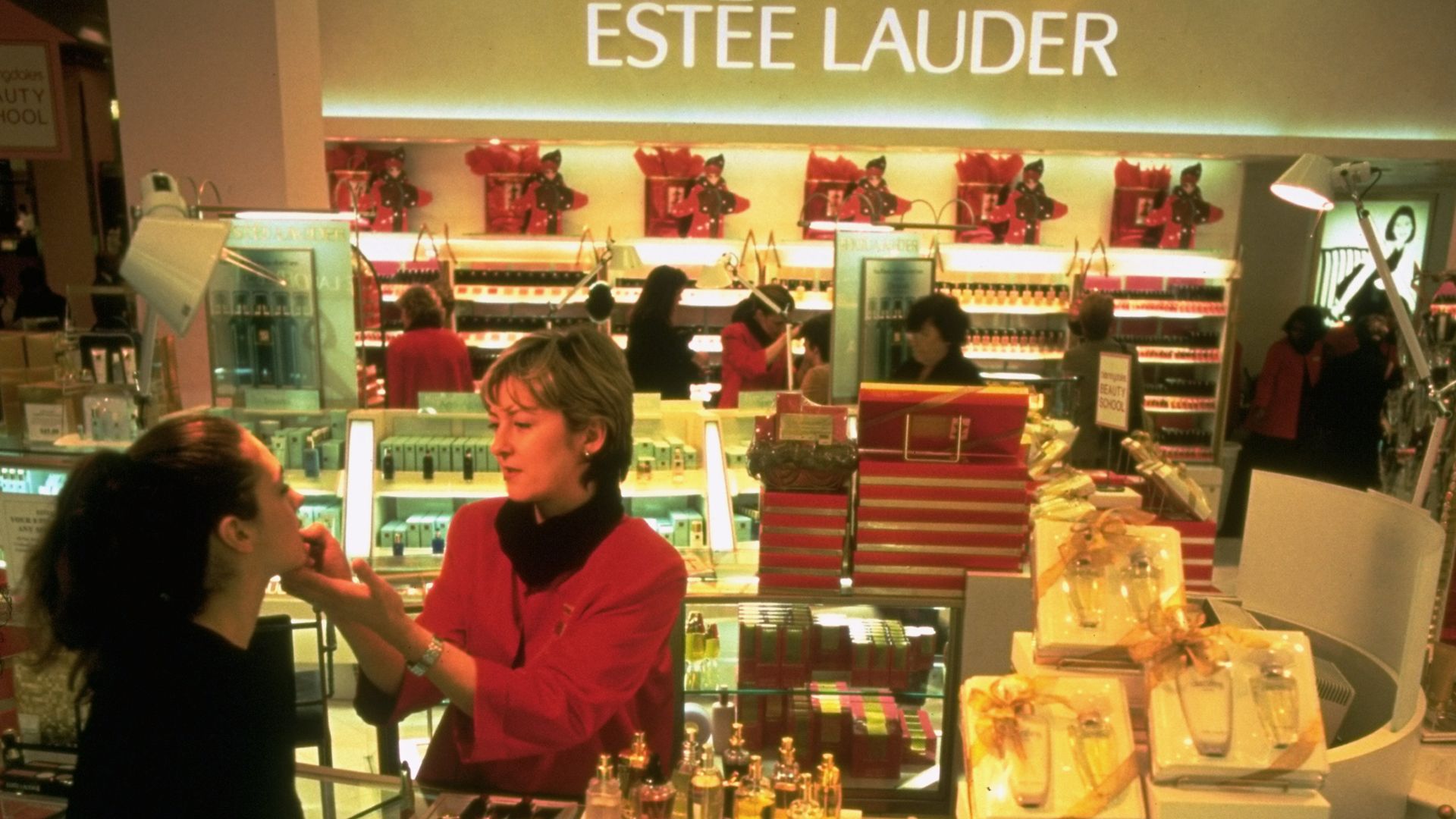
As dollars have grown scarce at many traditional retail outlets, cosmetics powerhouse Estée Lauder has found an interesting way to make its money. For the first time last year, it generated more revenue at airports globally than at U.S. department stores, data shows.
What's happening: The airport is becoming a booming shopping destination and Estée Lauder, home to brands like Clinique, MAC and Tom Ford Beauty, has been taking full advantage.
Dozens of the world's biggest advertising and content companies, including major tech firms, brands, ad agencies and industry groups, announced Tuesday their commitment to a newly-created alliance to take significant steps to improve digital safety.
Why it matters: It's the biggest and most comprehensive industry effort to date to tackle the ongoing brand safety crisis online. Competing groups are putting their differences aside to solve the problem quickly in the face of global regulatory threats.
Former Snapchat Chief Strategy Officer Imran Khan is today launching Verishop, a digital marketplace for luxury goods, with more than 150 contemporary brands across multiple lifestyle categories.
Why it matters: Three decades into the internet era, there still isn't a major ecommerce destination for department store quality shopping online. This is especially true given Amazon has chosen to focus on basic goods instead of luxury.
Drone delivery — tied up in regulatory debates and largely nonexistent beyond a few, isolated pilots — hasn't boomed in the U.S. yet, but Amazon and Walmart are placing big bets on unmanned vehicles.
The big picture: The hooplah has intensified to the point where a number of upstarts are popping up to offer drone-delivery-in-a-box to the retailers who can't afford to invest themselves. The two retail rivals are betting that drone delivery — currently estimated to be worth $30 billion — will take an increasingly large share of the $1.5 trillion logistics business.