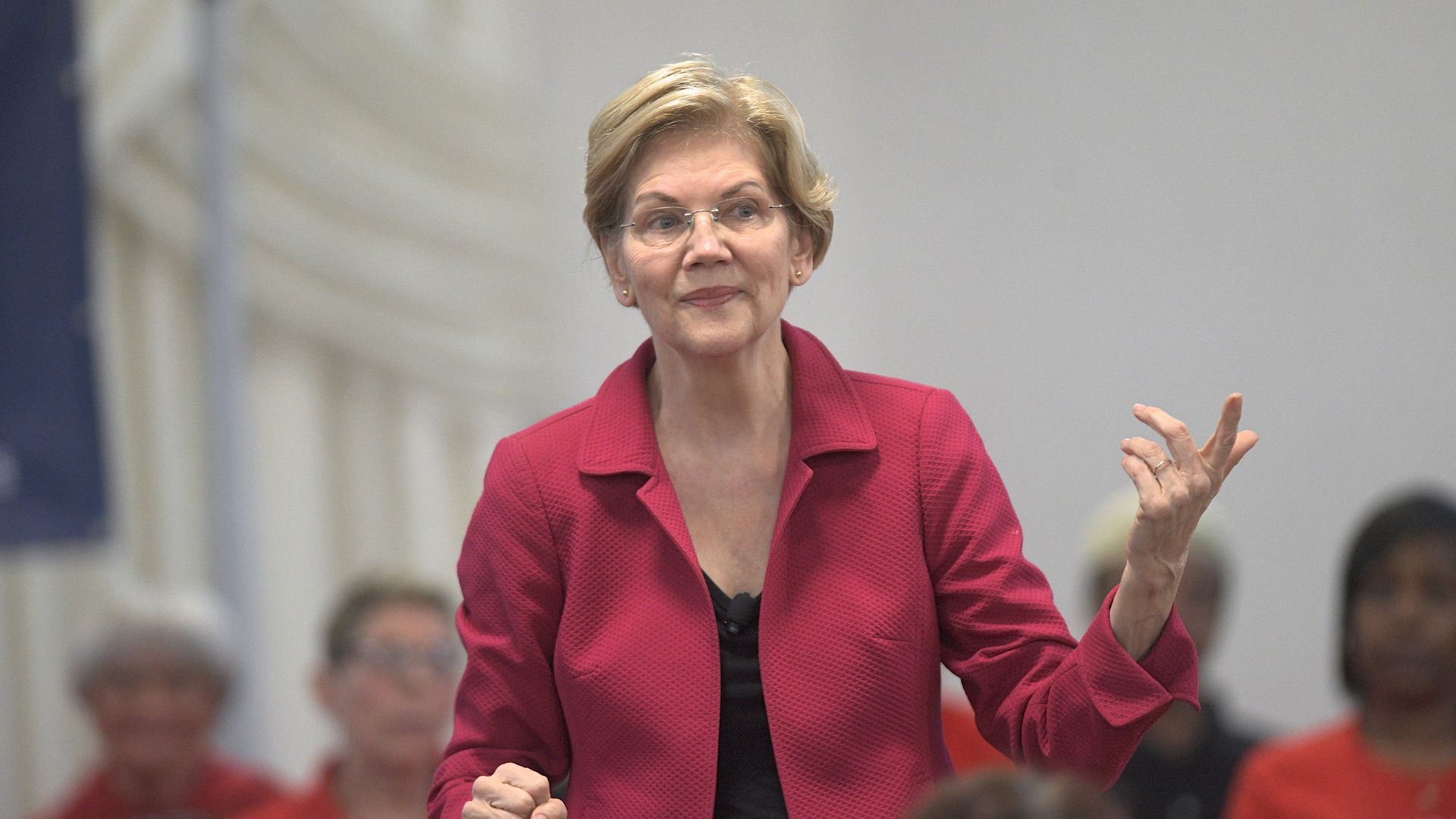
2020 Democratic candidate Sen. Elizabeth Warren said in Twitter thread Tuesday she's taking a "hard pass" on an invitation to appear at a Fox News town hall, calling the network "a hate-for-profit racket that gives a megaphone to racists and conspiracists."
The big picture: Warren's refusal to appear on the conservative-leaning network strikes a different tone than 7 of her 2020 Democratic peers, who have either agreed or are currently in talks to do a Fox town hall. Several candidates have defended going on Fox News as an opportunity to reach Trump supporters, but Warren said she won't let her name be used to help Fox News bring in advertising dollars.
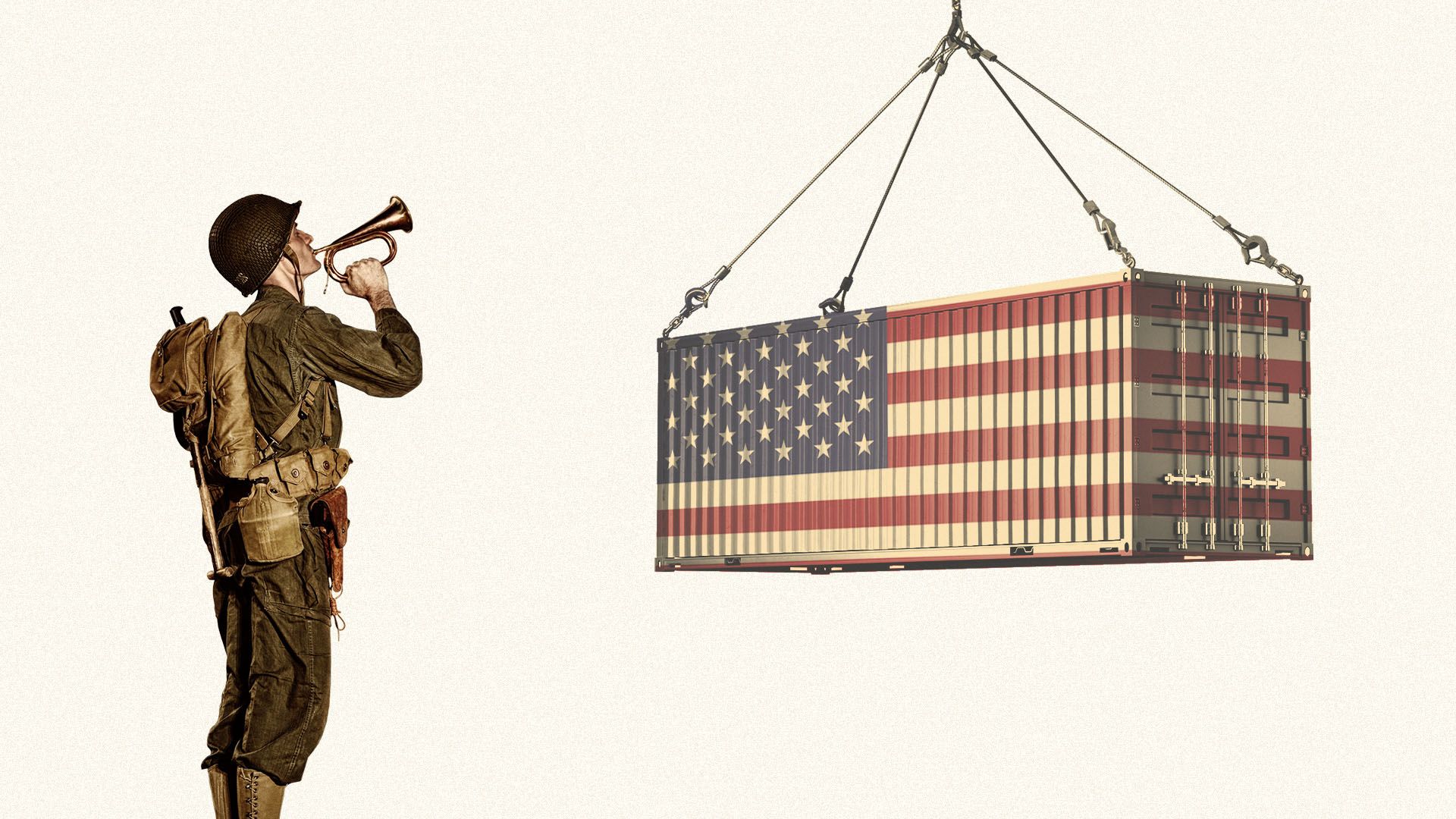
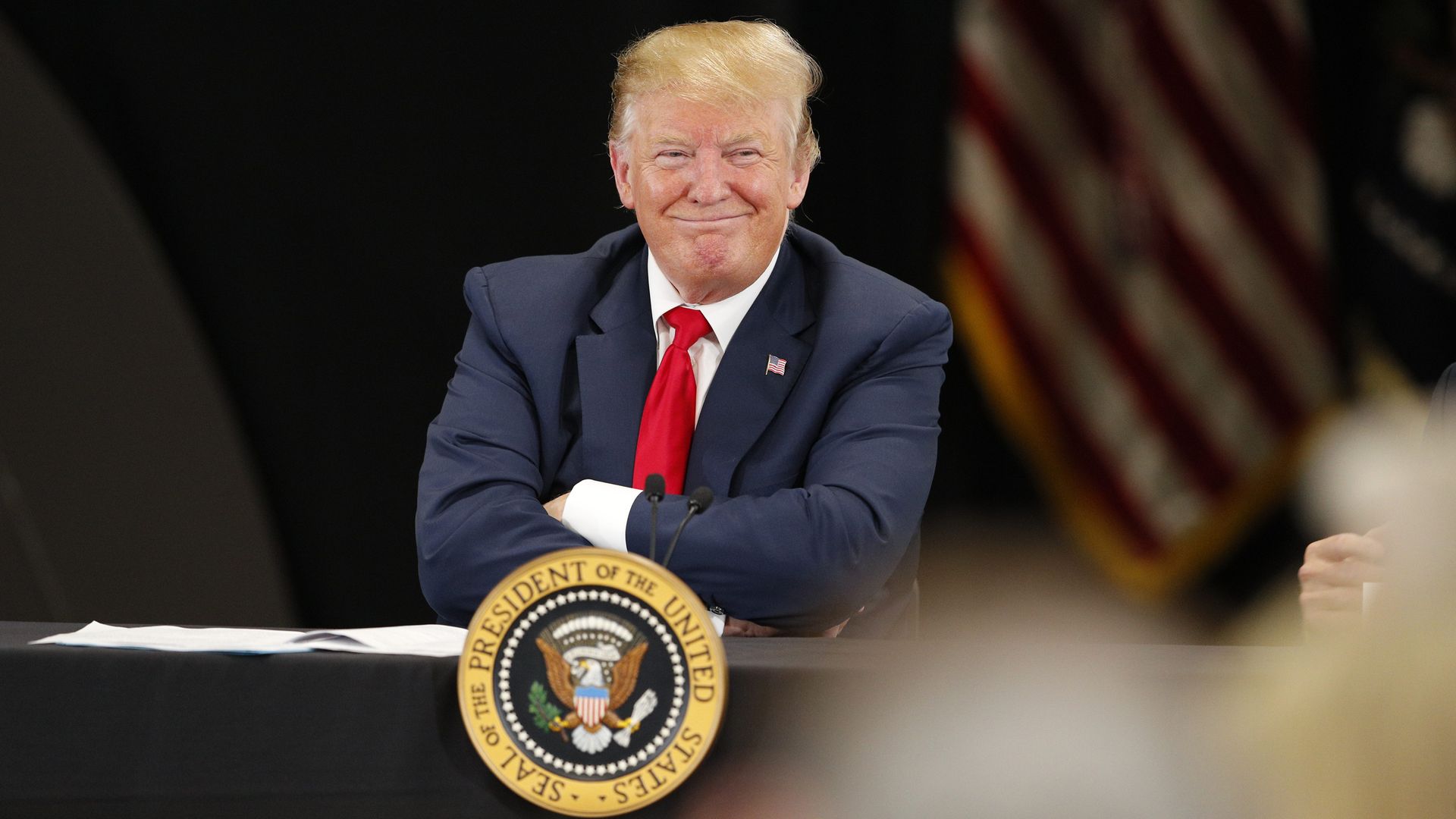
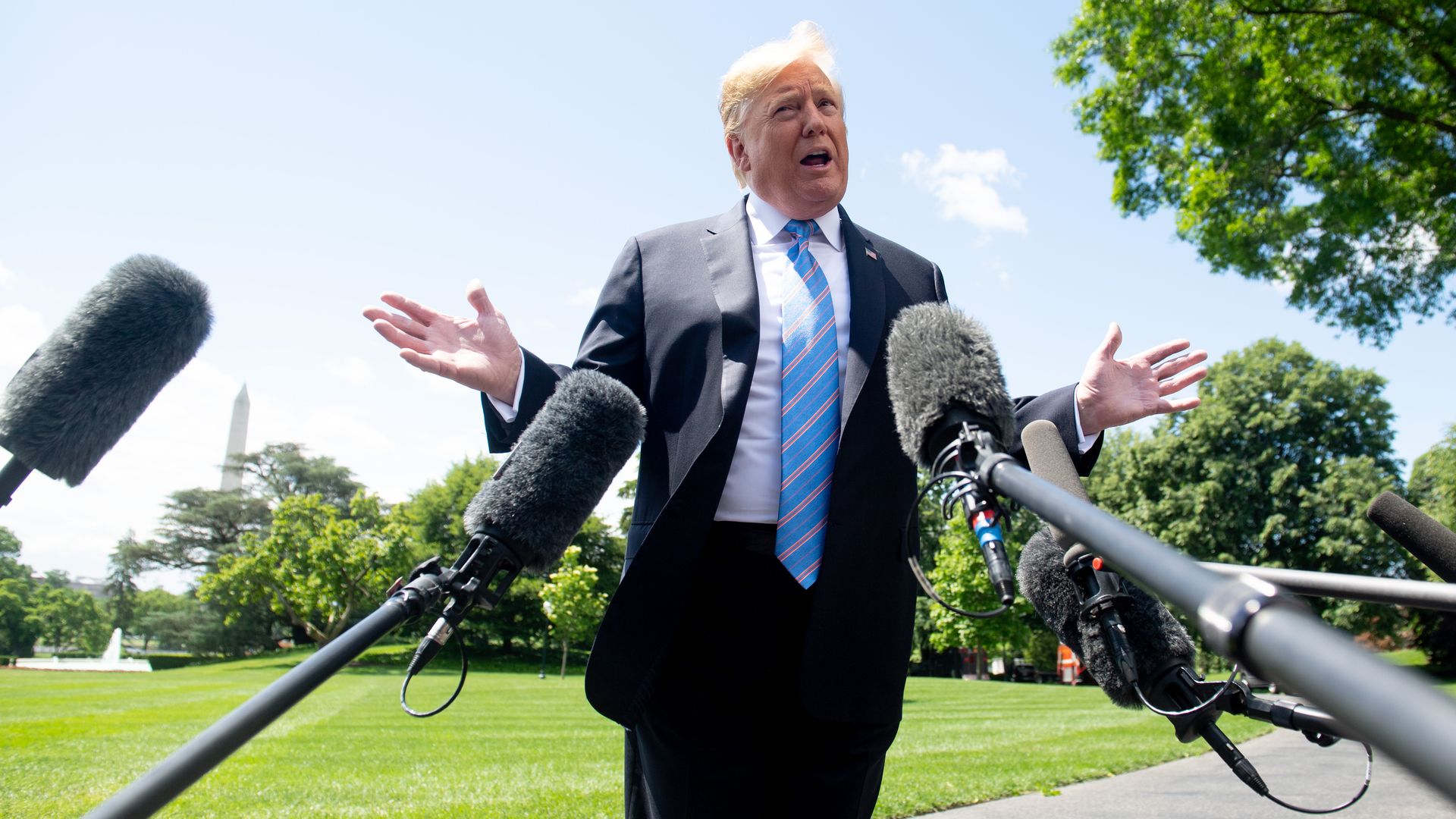
President Trump dismissed the ongoing trade war, which kicked off in earnest this week, as "a little squabble with China" while speaking to reporters outside the White House on Tuesday.
The big picture: The effects of the trade war have been felt in industries across the country. Yesterday's announcement that China would seek to impose retaliatory tariffs against the U.S. set off Wall Street's worst day in months. And the bad news spread to Silicon Valley, where Uber's IPO lost billions in market value as it got caught up in the trade war storm, as well as America's heartland, where soybean farmers saw their prices — already sagging thanks to the ongoing trade dispute — sink to a 10-year low.
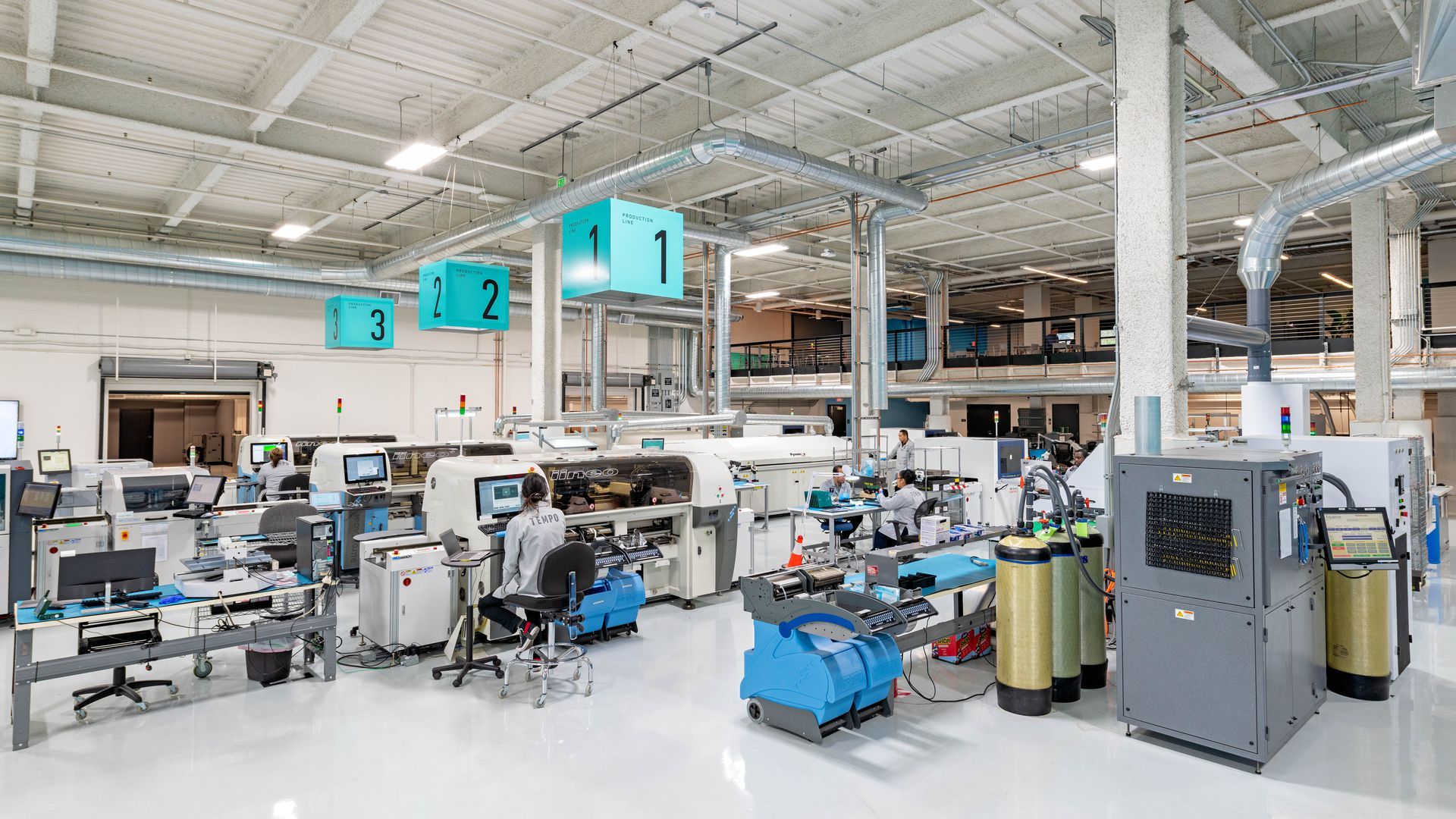
Flashback: It was formed with the idea that the ability to generate small runs and prototypes close to Silicon Valley can be worth the added cost of doing work in one of the priciest rents and highest labor costs around.
Despite the onslaught of bad headlines around cord cutting and the death of traditional TV, Madison Avenue hasn't given up on the big cable and broadcast networks just yet.
Driving the news: Despite viewership declines, Variety's Brian Steinberg reports that ad commitments saw an increase of 5.2% to more than $20.7 billion in 2018, citing data from Media Dynamics, a media consultancy.
Two of America's largest Spanish-language broadcasters rolled out fresh new slates of scripted programming at this year's UpFronts, including more minority characters and shorter formats.
Details: Univision unveiled a new series titled "El Corazón Nunca Se Equivoca" (The Heart is Never Wrong) about a gay couple making their way in Mexican society. Telemundo announced a new series called "Operación Pacífico" starring a female lead, based on themes about federal agents chasing after drug lords.
Spanish-language media is branching out locally, with more national outlets investing in local Hispanic coverage and more digital-first, Spanish-language news outlets emerging in small cities and towns across America.
Why it matters: The Hispanic population in the U.S. is increasing swiftly, leading to record-high numbers of Spanish-speaking households, according to U.S. Census data.
Comcast Corporation has agreed to sell its 33% stake in Hulu to the Walt Disney Company in five years, the companies announced Tuesday ahead of Disney's "UpFront" presentation to advertising executives in New York.
Why it matters: The deal means that Disney will become the full owner of Hulu. The entertainment giant will gain full operational control of the streaming service immediately.
Monday was a rough day for pharmaceutical companies on Wall Street. The SPDR S&P Pharmaceuticals ETF fell more than 4%, and that was a relief.
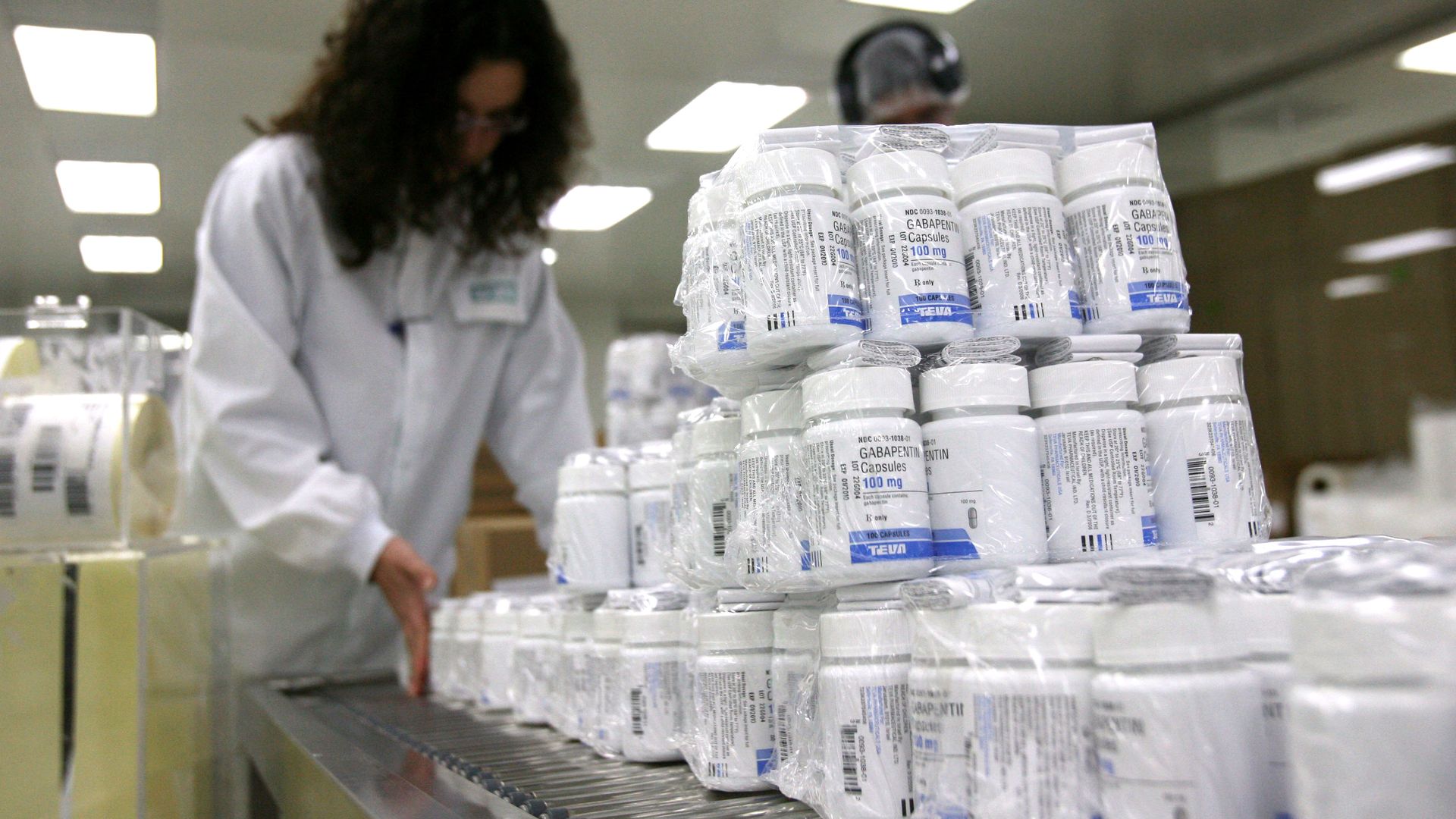
Driving the news: Generic drugmakers were hit by a price-fixing lawsuit filed by 44 states alleging 20 corporate defendants conspired to fix prices of more than 100 generic drugs, raising prices by more than 1,000%.
Univision, one of the largest U.S. Spanish-language broadcasters, is partnering with regional cable company Altice USA to provide Spanish-language digital news segments for Altice USA's seven hyperlocal TV stations throughout the New York metropolitan area.
Why it matters: The effort is part of a greater push by news companies across the U.S. to bring more Spanish-language media to local markets, especially ones that they already cover.
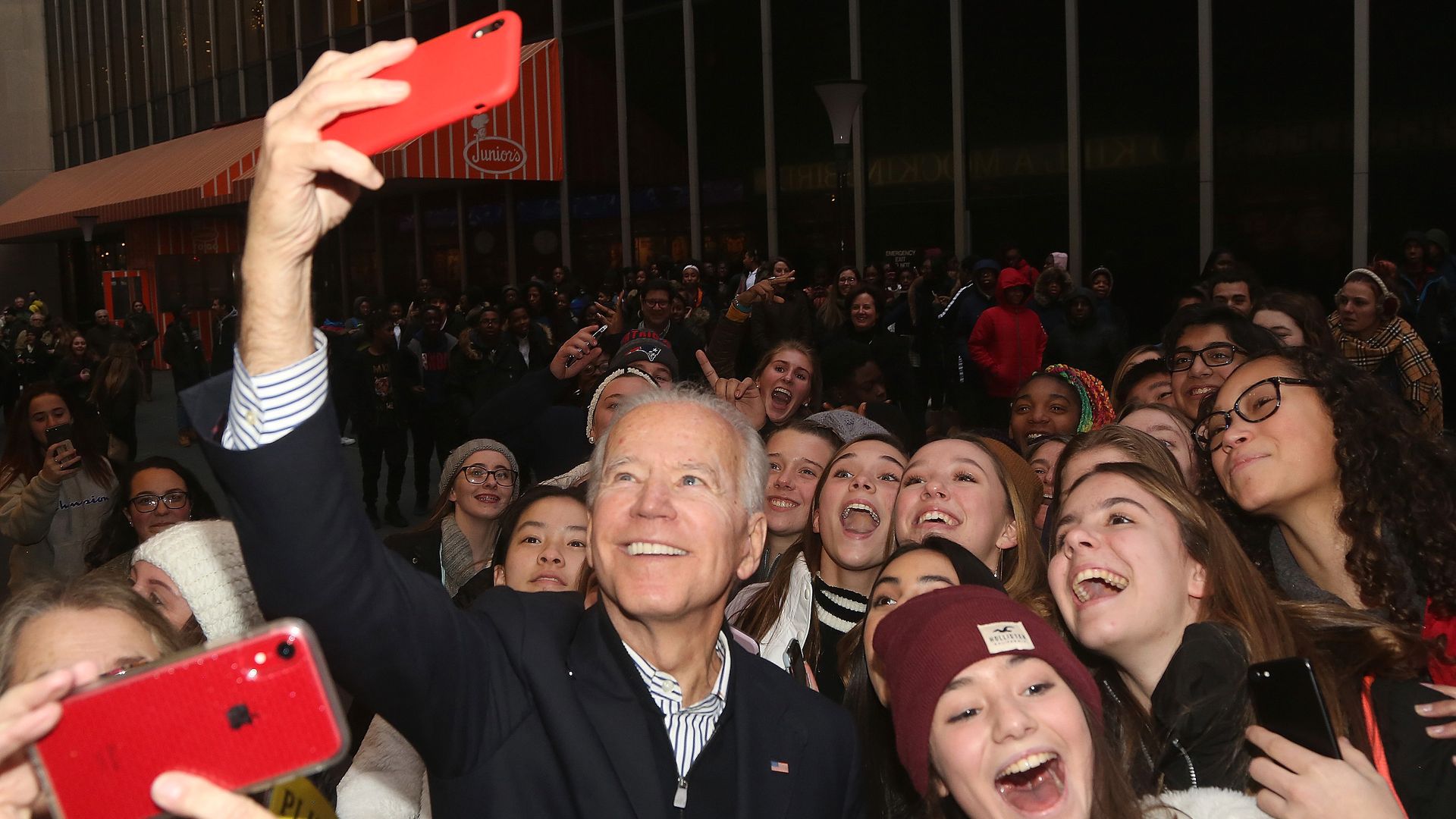
Former Vice President Joe Biden holds a 12-point lead over Sen. Bernie Sanders among daily Twitter users, a social network that is seen as skewing in Sanders' favor, according to a Morning Consult poll released Tuesday.
Why it matters: Some pundits have declared that Biden, 76, would have a tough time appealing to millennials and other younger voters given his relatively moderate policy stances. But Biden even holds a one-point lead — well within the poll's margin of error — among daily Snapchat users, one of the youngest possible demographics.
Reports show China's intellectual property theft costs U.S. companies hundreds of billions of dollars a year, and Chinese businesses have clearly benefited from a government-manipulated currency, goods dumping and non-tariff barriers at the expense of American firms.
Why it matters: A lack of money is not America's problem, given its $21 trillion economy. But President Trump has yet to explain how a trade war victory benefits working people in places like Louisiana, Michigan and South Carolina who will suffer higher prices on account of his conflict.
Walmart "is rolling out a next-day delivery service to counter Amazon’s recent move to speed shipment times for top customers to just one day from two," writes Bloomberg's Matthew Boyle:
Why it matters: "The company wants to convince more of its in-store shoppers to buy online, because when they do they spend more than twice as much with the retailer."
Senior administration officials tell Axios that a trade deal with China isn't close and that the U.S. could be in for a long trade war.
The state of play: A senior administration official said the differences between the two sides are so profound that, based on his read of the situation, he can't see the fight getting resolved before the end of the year.
Soybean prices sunk to a 10-year low after the trade war escalated and left little hope that China — the world's biggest soybean importer —would resume buying U.S. soybeans.
Data: FactSet; Chart: Harry Stevens/Axios
Why it matters: Soybean farmers are once again at the center of a heightened trade war — targeted strategically by China. Some fear the damage may be irreversible. "We spent 40 years developing this trade relationship with China and in one fell swoop, it was all taken away," Bret Davis, a fourth-generation soybean farmer, tells Axios.







/2019/05/13/1557773691184.gif?w=3840)