Beyond Meat shares popped 163% yesterday on their first day of trading, marking the best IPO day performance since before the financial crisis.
The bull case: Beyond Meat rival Impossible Foods recently got onto Burger King's menu, and there is widespread speculation that Beyond Meat will strike a similar deal with McDonald's or Wendy's.
The U.S. economy added 263,000 jobs in April, blowing past the 180,000 economists were expecting, the Labor Department said on Friday, while the unemployment rate dropped from 3.8% to 3,6% — the lowest since December 1969.
The big picture: Average hourly wage growth rose 3.2% on an annual basis, which is somewhat slower than before. That's not great for workers, but it could be a sign that there's still slack in the labor market and room for more job growth.
Earlier this week we marveled at how news of WeWork's confidential IPO filing hadn't leaked, despite having submitted it last December. We also should have noted the import of that particular month, since it was the last opportunity for WeWork to be considered an "emerging growth company."
The bottom line: Companies with less than $1.07 billion in revenue for their most recently-completed calendar year qualify for certain benefits that make the IPO process easier.
American consumers may not have benefited all that much from the pharmaceutical components of trade deals, a new article in the New England Journal of Medicine argues.
The big picture: Starting with NAFTA, every U.S. trade agreement made since has included a pharmaceutical component.
Sinclair Broadcasting has reached a $10 billion agreement to purchase 21 regional sports networks from Walt Disney Co., according to The Wall Street Journal, with a formal announcement coming as early as tomorrow.
Why it matters: The price is only about half of what was originally sought by Disney, which needed to sell the RSNs as a condition of its recent purchase of 21st Century Fox's entertainment assets. It's also is a huge boost to Sinclair, a right-wing local broadcaster that last year was blocked from buying Tribune Media after allegedly lying to the Federal Communications Commission.
President Trump on Thursday signed the America's Cybersecurity Workforce executive order aimed at bolstering the cybersecurity labor pool.
Why it matters: While estimates vary, the growing global shortage of cybersecurity practitioners will be as much as 3 million by 2021. For the government, which cannot compete with the pay scales of the private sector, that could cause a national security problem.
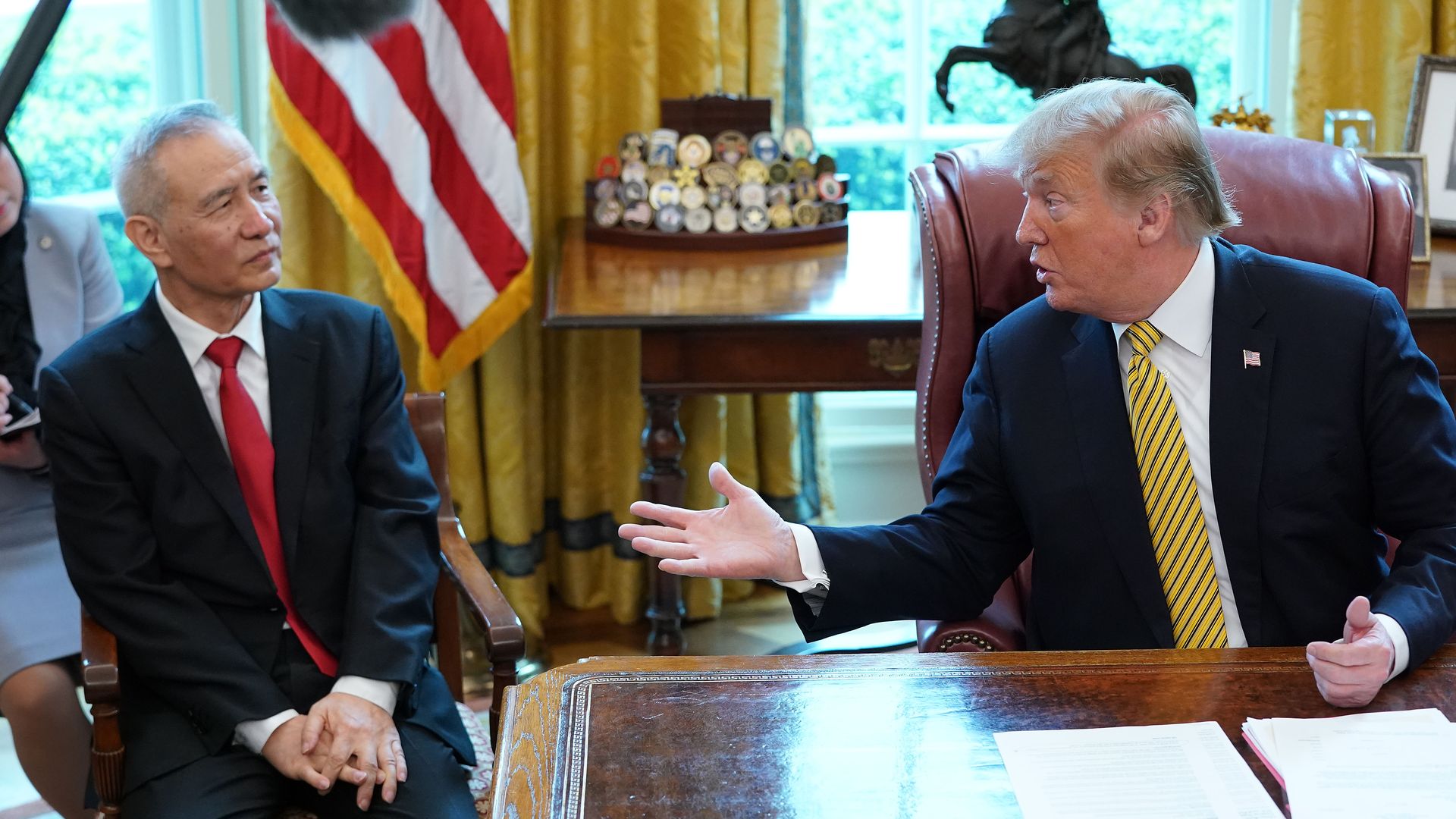
The Trump administration is dropping its trade negotiations demand that China cease hacking U.S. companies to steal intellectual property, according to the Financial Times.
Why it matters: Per the report, President Trump's team is softening its positions in order to finish a deal by the summer. But Chinese intellectual property theft is a multibillion-dollar drain on U.S. industry.
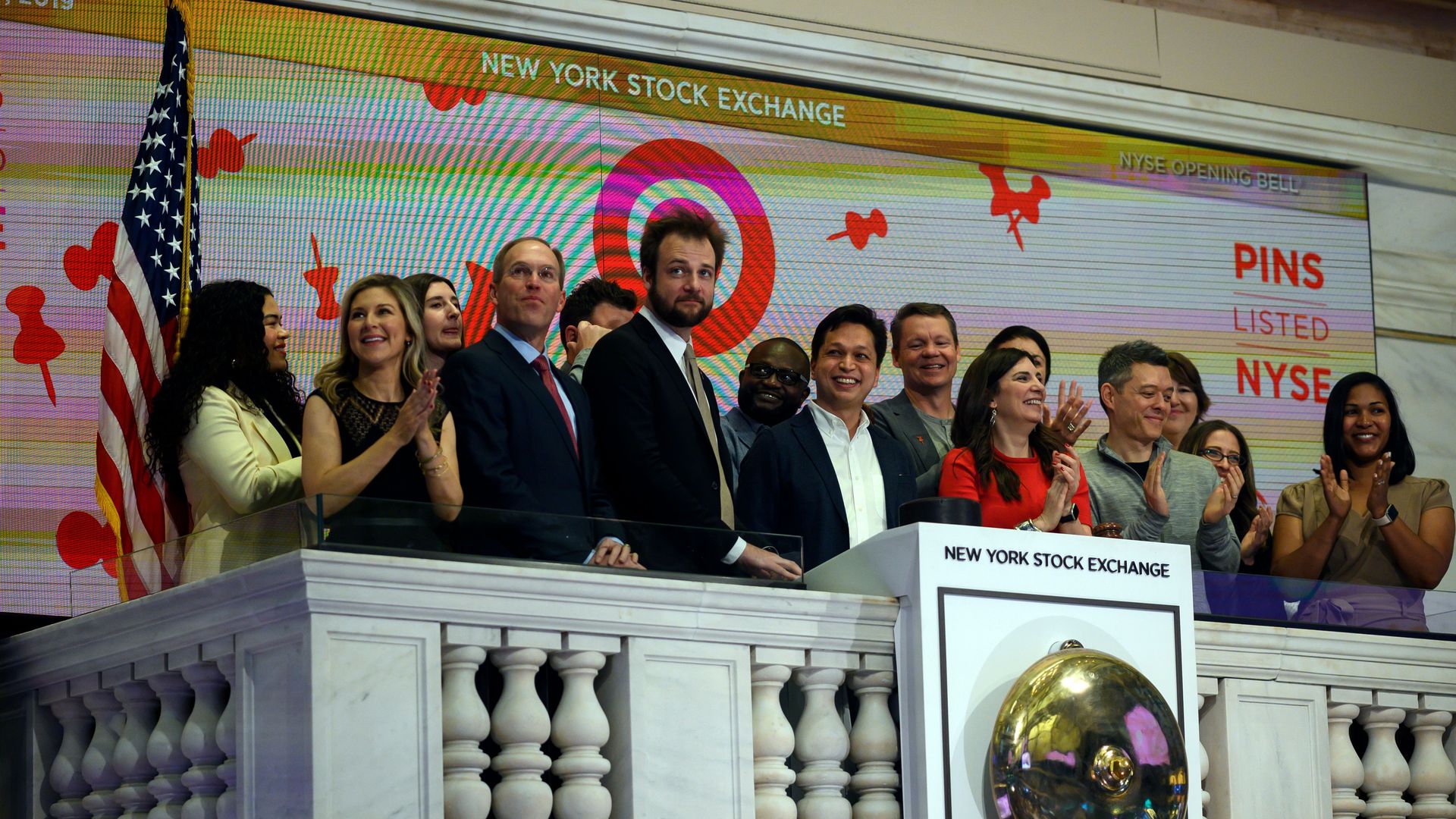
Public market investors continue to grumble over how many big new tech IPOs are designed with dual-class structures that give disproportionate voting control to founder/CEOs.
Details: Recent examples include Lyft, Pinterest, Zoom Video and Slack. Uber is using a single-class structure, in part because its founder/CEO is now its founder/ex-CEO.
The cost of U.S. mutual funds and ETFs shrank last year by the second largest amount on record, saving investors $5.5 billion, according to a new study from Morningstar.
Typically, stocks rise because investors are buying them, increasing prices. But that's not what's happening in 2019.
What's new: U.S. equity prices are soaring to record highs, with the S&P 500 up 17% and the Nasdaq up 21% in just 4 months. But not only are investors not buying, they're selling.
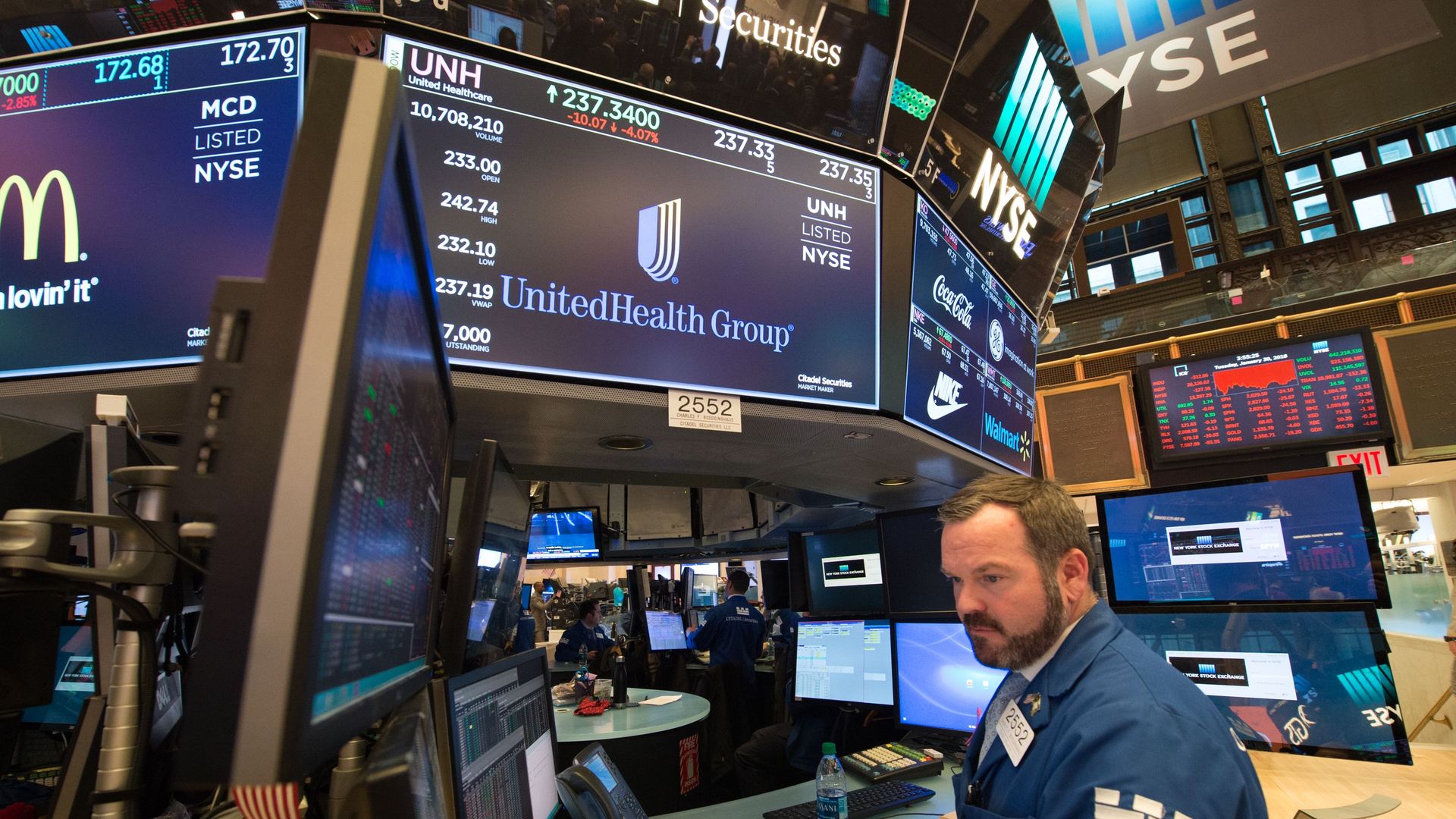
Many of the largest health care companies — including UnitedHealth Group, HCA Healthcare, Anthem and Humana — have reported blowout profits in the first quarter. And yet, the industry's stocks continue to take a pounding on Wall Street.
Between the lines: Stock prices of health care companies have consistently outperformed broader indices over the past several years, so some pullback is natural. But stock prices also are a reflection of future value, and everything from rising support of "Medicare for All" to drug pricing regulation is clouding what future profits will look like.
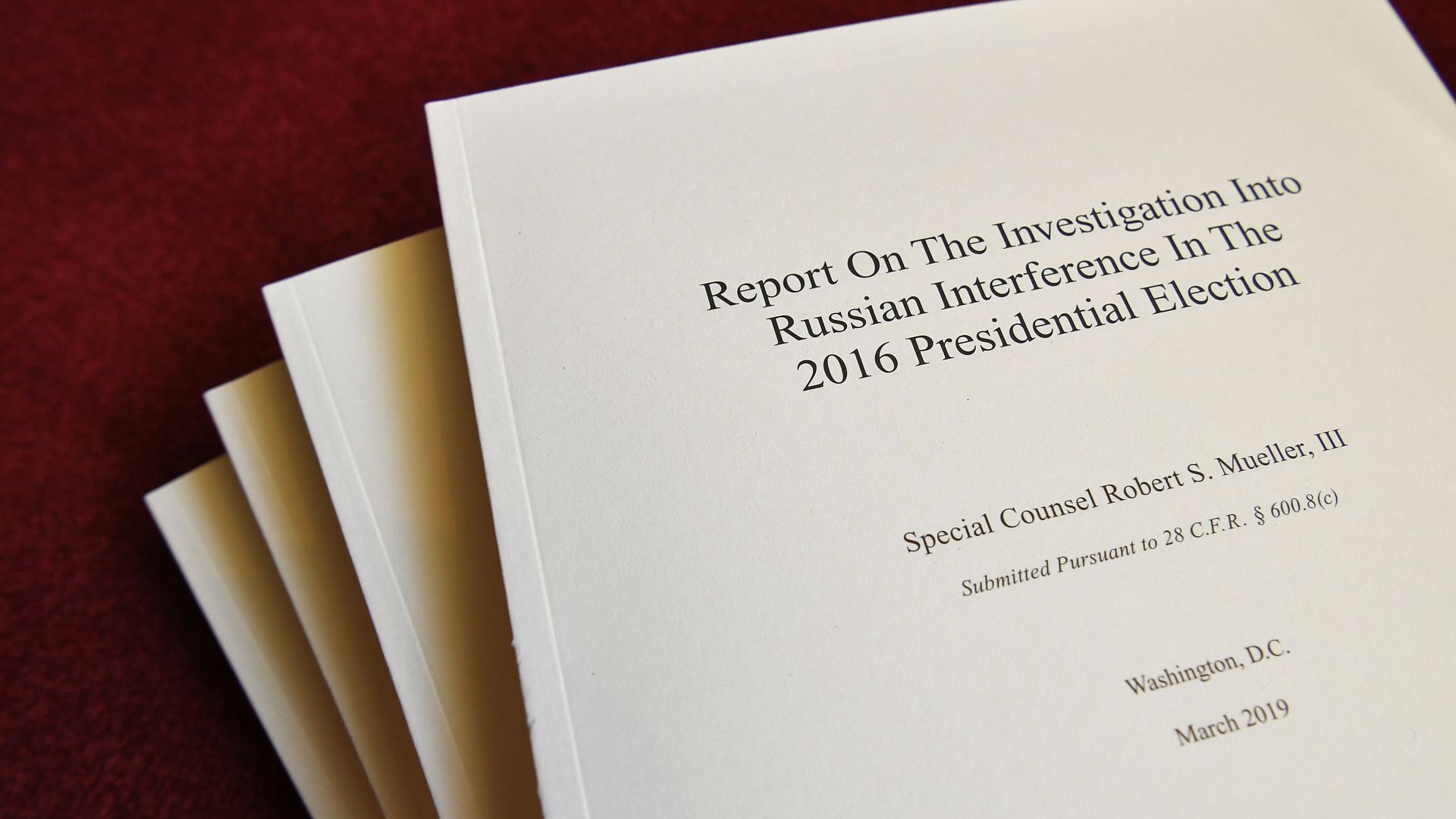
The Washington Post and Scribner's book edition of The Mueller Report, published on April 19, climbed to the top of the New York Times' Best Seller list, debuting at No. 1.
Quick take: The acknowledgement reflects sales for the week of April 22-27. Publishers were quick to distribute the redacted report, even noting it is available for free online. The print copy includes Mueller's most relevant findings, a timeline of events, a list of players wrapped up in the investigation, and Attorney General William Barr’s 4-page letter to Congress sent on March 24. Investigative reporters Rosalind S. Helderman and Matt Zapotosky — both with The Washington Post — produced an introduction based on their extensive coverage of the nearly 2-year special investigation.