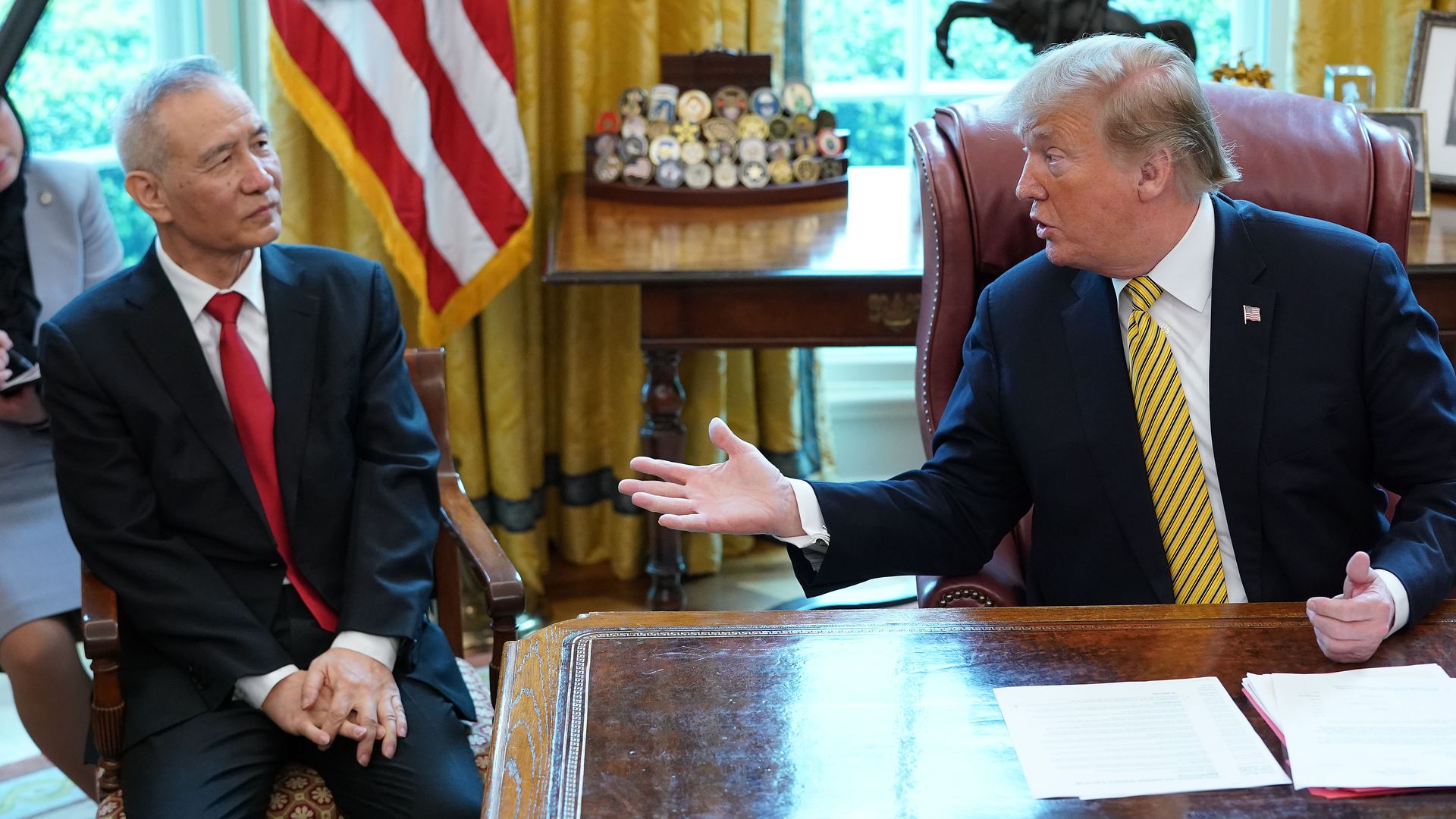
The Trump administration's long-running trade talks with China have hit a new obstacle. The president sent two tweets today that should rattle both stock markets and President Xi Jinping.
"For 10 months, China has been paying Tariffs to the USA of 25% on 50 Billion Dollars of High Tech, and 10% on 200 Billion Dollars of other goods. These payments are partially responsible for our great economic results. The 10% will go up to 25% on Friday. 325 Billions Dollars of additional goods sent to us by China remain untaxed, but will be shortly, at a rate of 25%. The Tariffs paid to the USA have had little impact on product cost, mostly borne by China. The Trade Deal with China continues, but too slowly, as they attempt to renegotiate. No!"
Behind the scenes: A source familiar with the situation told me that the Chinese had been backing off of agreements the U.S. negotiating team believed they had already made. Trump's view, the source said, is that he's negotiating from a position of clear economic strength, especially with the latest strong U.S. jobs numbers.
Uber. WeWork. SoftBank. Even Tesla. After a decade in which private markets have overwhelmingly funded the most innovative and dynamic companies in the world, public markets are having their day, and showing what they're capable of.
Driving the news: Uber will go public this week in the most feverishly anticipated IPO since Facebook. (Let's hope it goes better than that fiasco.) It's probably going to end up raising somewhere in the region of $9 billion. To put that in context: The company has raised about $20 billion to date and is currently sitting on about $6.4 billion in cash. So while the public markets are providing a lot of capital, they're still providing less than private investors have done over the years.
Eventbrite was one of the hottest IPOs of 2018. After pricing at $23, it closed up 60% at $36.50, giving the ticketing company a valuation of $2.8 billion. Today, just over 6 months later, the stock is languishing below its IPO price, at $18.41, and well over a billion dollars' worth of market value has evaporated.
The big picture: Eventbrite was sold as a way to bet on a booming "experience economy." The intuition: Companies that can deliver real-life experiences have real value in a world increasingly intermediated by smartphone screens. The problem: Companies are having difficulty turning that intuition into stable profits.
The stock market is getting worse at an accelerating pace, as is demonstrated by this week's Chewy filing.
Background: Chewy is the Pets.com of the current decade, except it's even frothier. Chewy lost more money last year than Pets.com did over its entire lifetime, and it's worth 10 times more than Pets.com ever was. Chewy is also being taken public by its current owner, PetSmart, which is struggling with the debt it took on to buy Chewy in 2017.
President Trump tweeted on Sunday that tariffs on $200 billion of Chinese goods will be raised from 10% to 25% on Friday, as trade talks between the U.S. and China progress "too slowly."
For 10 months, China has been paying Tariffs to the USA of 25% on 50 Billion Dollars of High Tech, and 10% on 200 Billion Dollars of other goods. These payments are partially responsible for our great economic results. The 10% will go up to 25% on Friday. 325 Billions Dollars of additional goods sent to us by China remain untaxed, but will be shortly, at a rate of 25%. The Tariffs paid to the USA have had little impact on product cost, mostly borne by China. The Trade Deal with China continues, but too slowly, as they attempt to renegotiate. No!
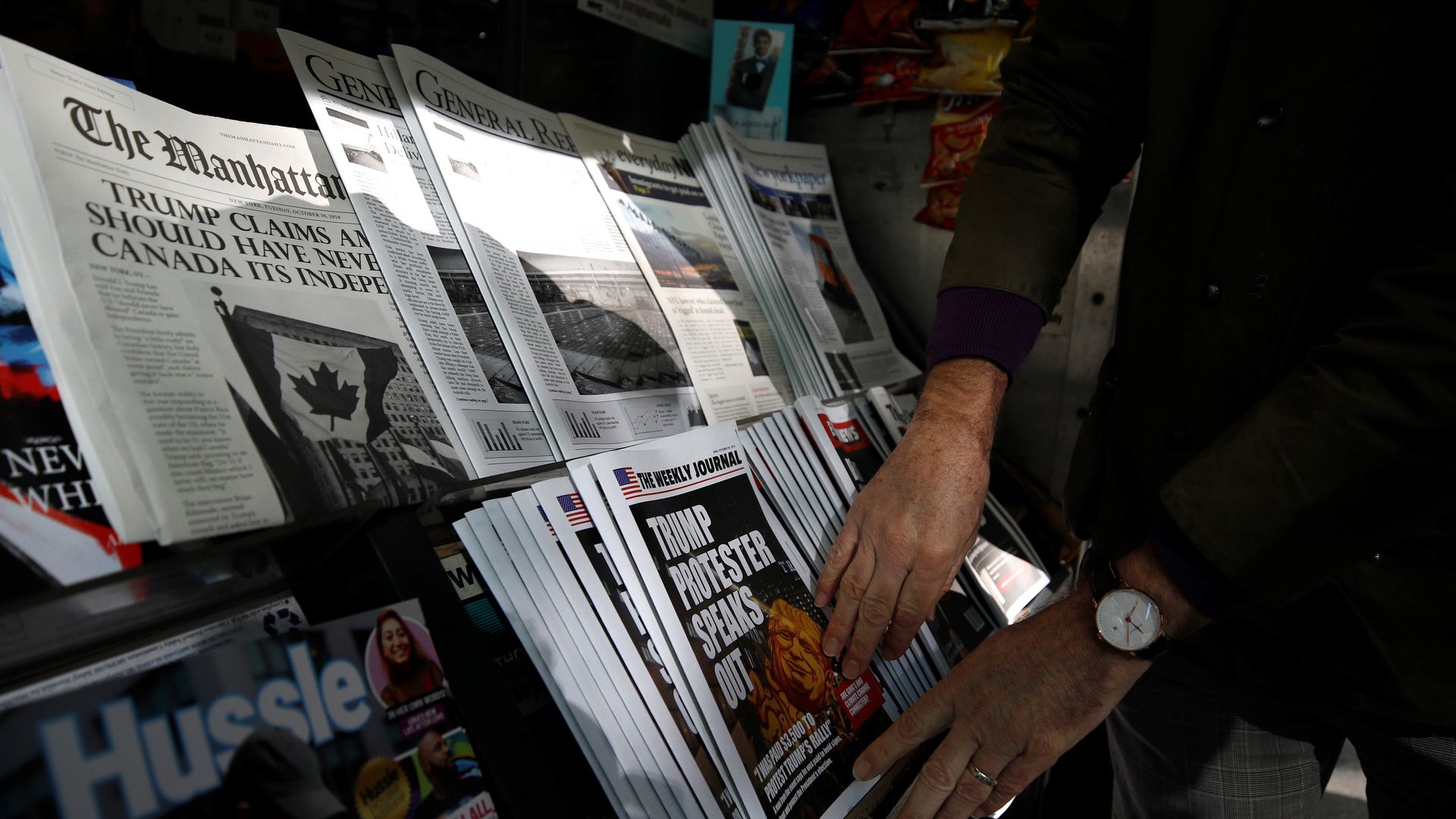
Half of the surviving U.S. newspapers will be gone by 2021, Nicco Mele, director of Harvard’s Shorenstein Center on Media, Politics and Public Policy, tells the Wall Street Journal.
Driving the news: The Times-Picayune of New Orleans laid off its entire staff after being sold to its rival New Orleans Advocate.
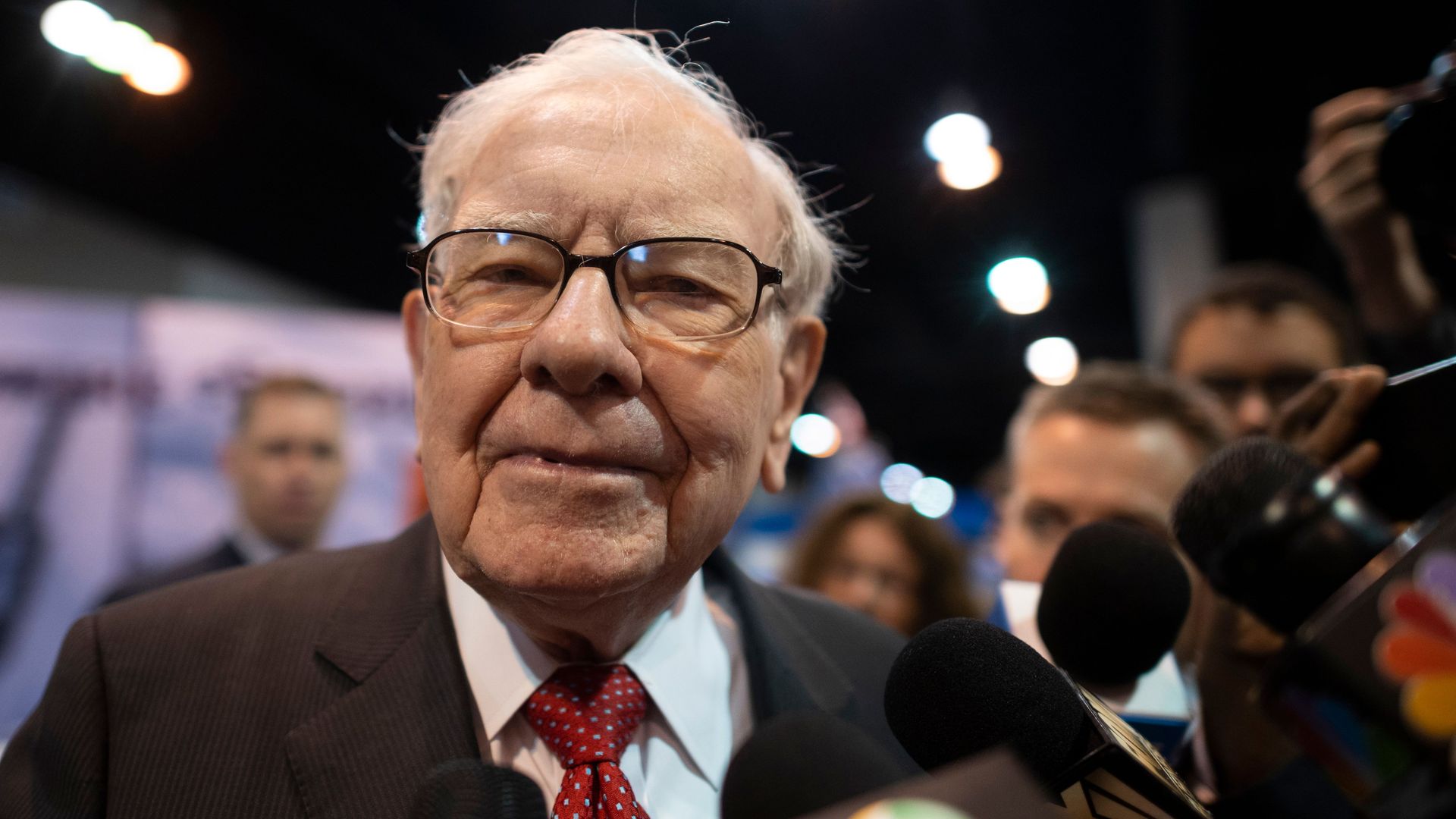
A shareholder asked Warren Buffett at this year's annual Berkshire Hathaway meeting why the billionaire investor has “been so silent” about the scandal that plagued Wells Fargo starting in 2017. Buffett said: "It looks to me like Wells made some big mistakes," adding that the banking institution incentivized "the wrong behavior."
The backdrop: When it was revealed that Wells Fargo employees had opened more than a million unauthorized accounts, the Department of Justice launched an investigation into the companies handlings of wealth management, and the bank was fined for charging customers for unwanted insurance. Buffett also became the largest shareholder of Wells Fargo in 2017 with about 10% of the shares.
The U.S. economy is confounding: Three months from the longest expansion since such data began being tracked 170 years ago, the economy keeps pumping out strong job growth, and has now pushed down unemployment to a 50-year low.
Yes but: It is delivering only middling wage growth,lower for instance than the last expansion in the 2000s. That has been an enduring mystery, especially amid month after month of ultra-low jobless figures over the last year.