The Washington Post announced that it "will premiere a 60-second message during Super Bowl LIII highlighting the critical work of reporters and the role that work plays in Americans’ everyday lives. A first for The Post, the spot was voiced by actor and director Tom Hanks."
Details: Fred Ryan, publisher and CEO of The Post, said: "While most Super Bowl ad producers have the better part of a year, we had the lesser part of a week, but with an event this big, we decided to seize the opportunity." The ad, which CNBC reports will cost the newspaper about $5.25 million for a 30-second slot, is expected to show murdered and missing journalists around the world, months after The Post's own Jamal Khashoggi was assassinated at the Saudi Consulate in Istanbul.
After tomorrow's Super Bowl, the NFL will officially be able to exercise its option to exit from its current NFL Sunday Ticket deal with DirecTV, starting with the 2020 season.
Why it matters: If it does, it's expectedto open the floodgates for new and bigger bids, serving as a litmus test for how much Big Tech is willing to spend to meaningfully get enter the sports streaming market.
The legalization of sports betting is putting pressure on nearly every company that touches athletics to capitalize on what is expected to be an extremely lucrative new industry.
What's happening: Casinos, leagues and media are finding ways to get a piece of the action.
Former ESPN boss John Skipper made waves last year when he joined relatively unknown sports streaming network DAZN (pronounced "Da Zone").
Why it matters: Skipper is hoping to build a subscription service akin to the "Netflix of sports" by wooing leagues that already have a line of digital and TV companies waiting anxiously for existing contracts to expire.
From Serena Williams to the U.S. women’s national soccer team, there is clearly no shortage of women at the top of their athletic game. And yet, for most sports, the pay gap between elite female athletes and their male counterparts continues to widen.
Why it matters: Economics speaks volumes, and the dollars just aren’t there for nearly all female athletes, even those playing professionally.
McKinsey & Co.,the global consulting firm businesses and governments quietly use for complex and controversial projects, is getting pounded for its practices and secrecy.
Why it matters: Like Facebook, McKinsey is getting hit with sustained negative media coverage and deep scrutiny for its techniques and mystery. Also like Facebook, The New York Times in particular sees it as a juicy investigatory target.
Work in the United Statesis a mixed bag: in many cases, you can get a job if you want one, even if you're a convicted felon, a former opioid addict, or have no resume to speak of. But if you are outside higher-skilled occupations, don't expect much in the way of outsize wages — or pay increases as time passes.
What's happening: In reports yesterday, the government said the U.S. economy is roaring into 2019 — but not wages.
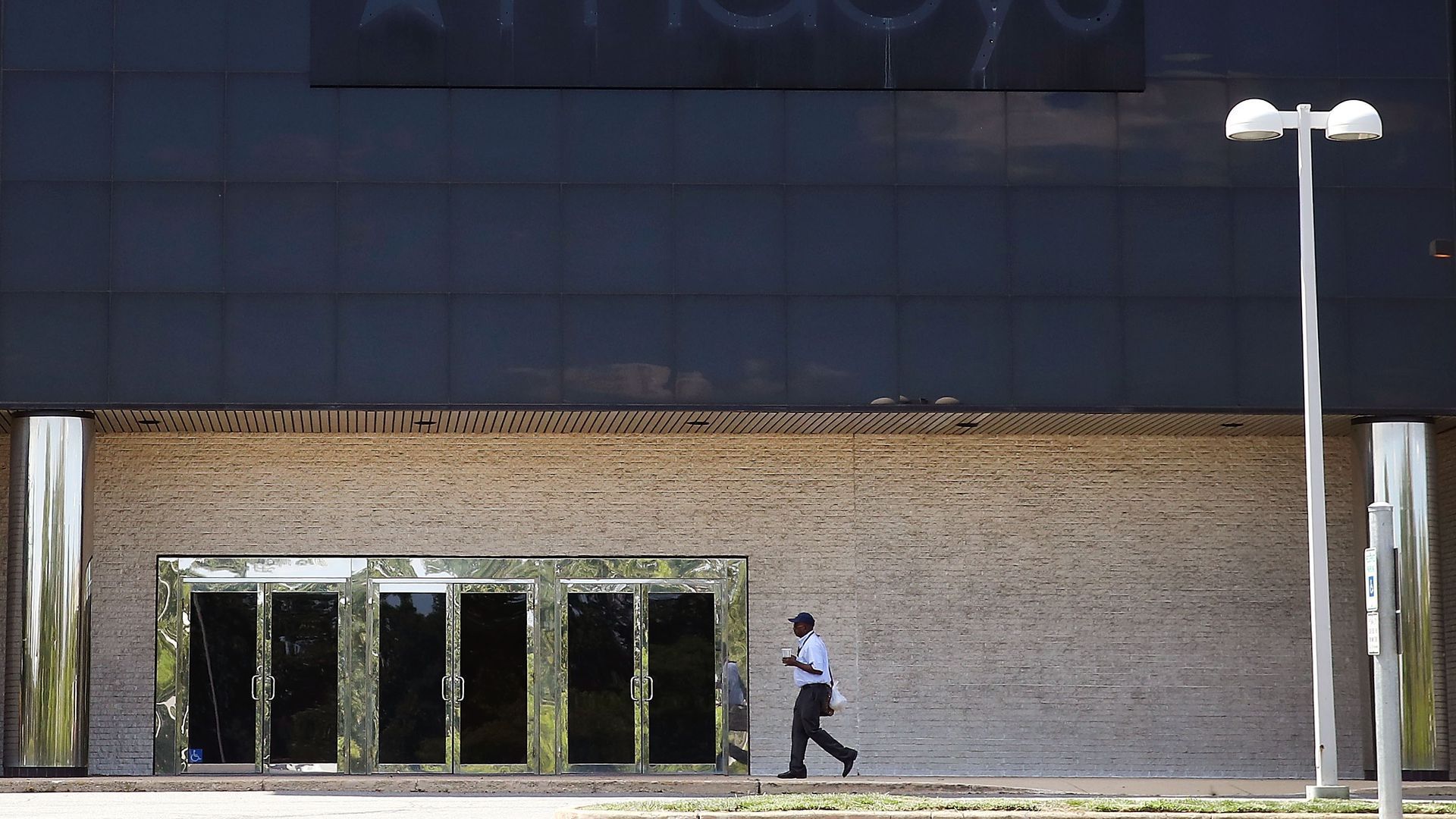
In a twist of the knife, developers are turning defunct malls and failed big-box stores into warehouses — for e-commerce businesses, among other uses.
What's happening: Since 2016, 7.9 million square feet of U.S. retail space has been turned into warehouses, according to a new analysis from CBRE, the research firm. These redevelopment projects span the country, impacting cities in every region. But, per the report, they are especially prevalent in lower-income areas.