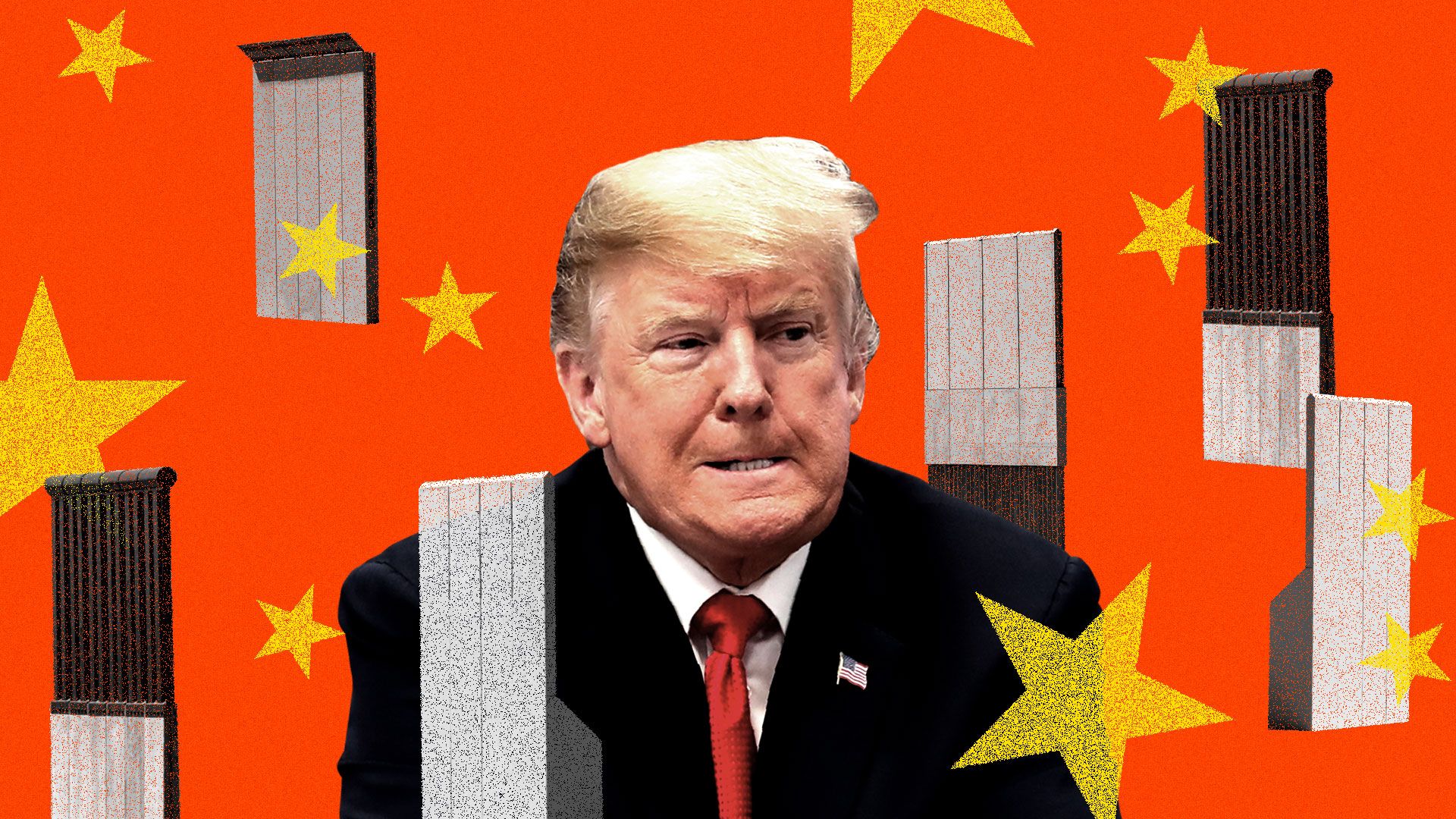
As President Trump enters a tough new phase in his hardline offensive against China, he now has allies he lacked in his other high-profile attacks on the status quo: the establishment.
The bottom line: Unlike his attacks on NAFTA, immigrants, climate science, and the Affordable Care Care — which triggered denunciation by critics both in and outside of the U.S. — Trump finds himself in the embrace, if conditional, of mainstream experts when it comes to China.
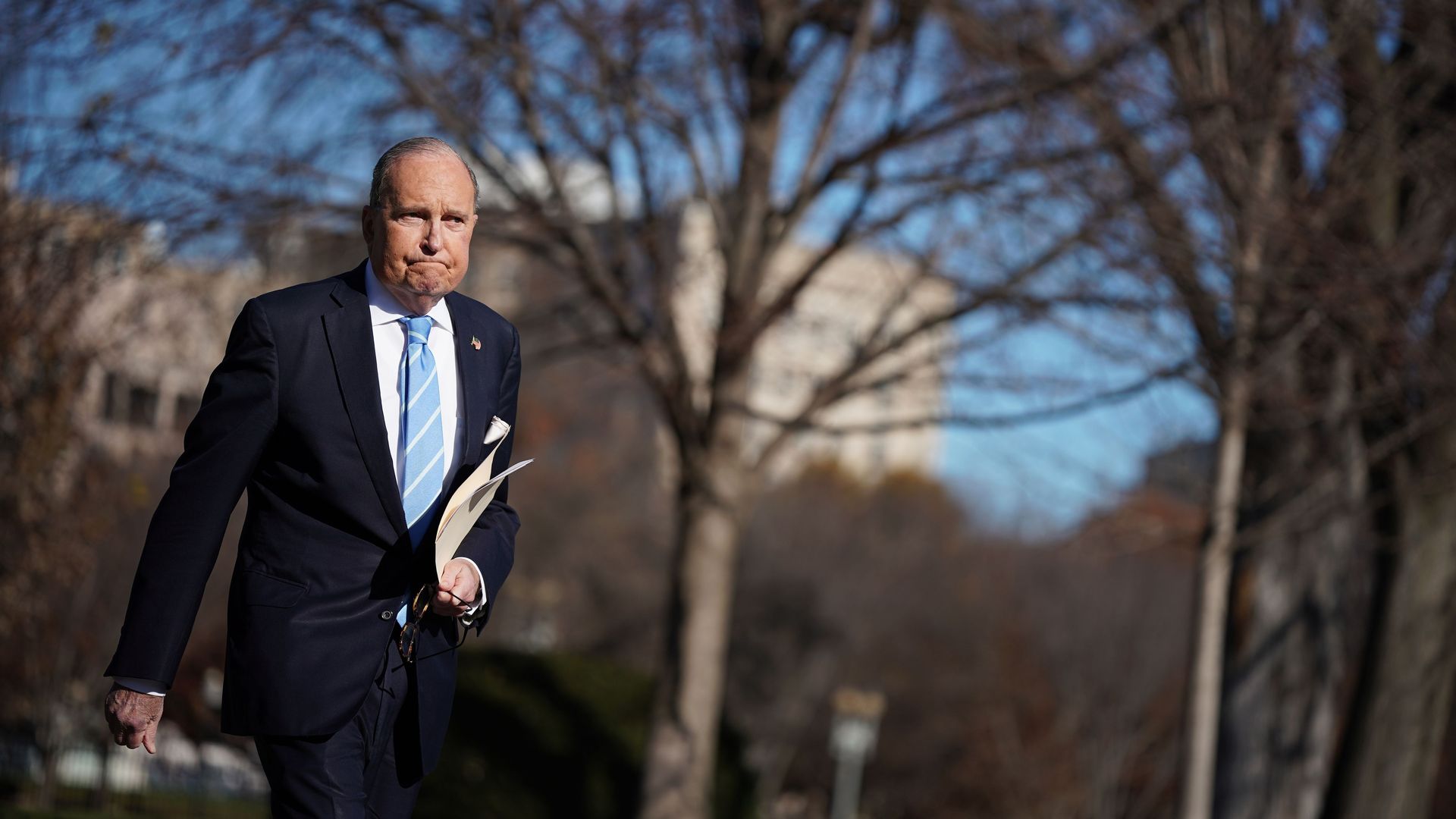
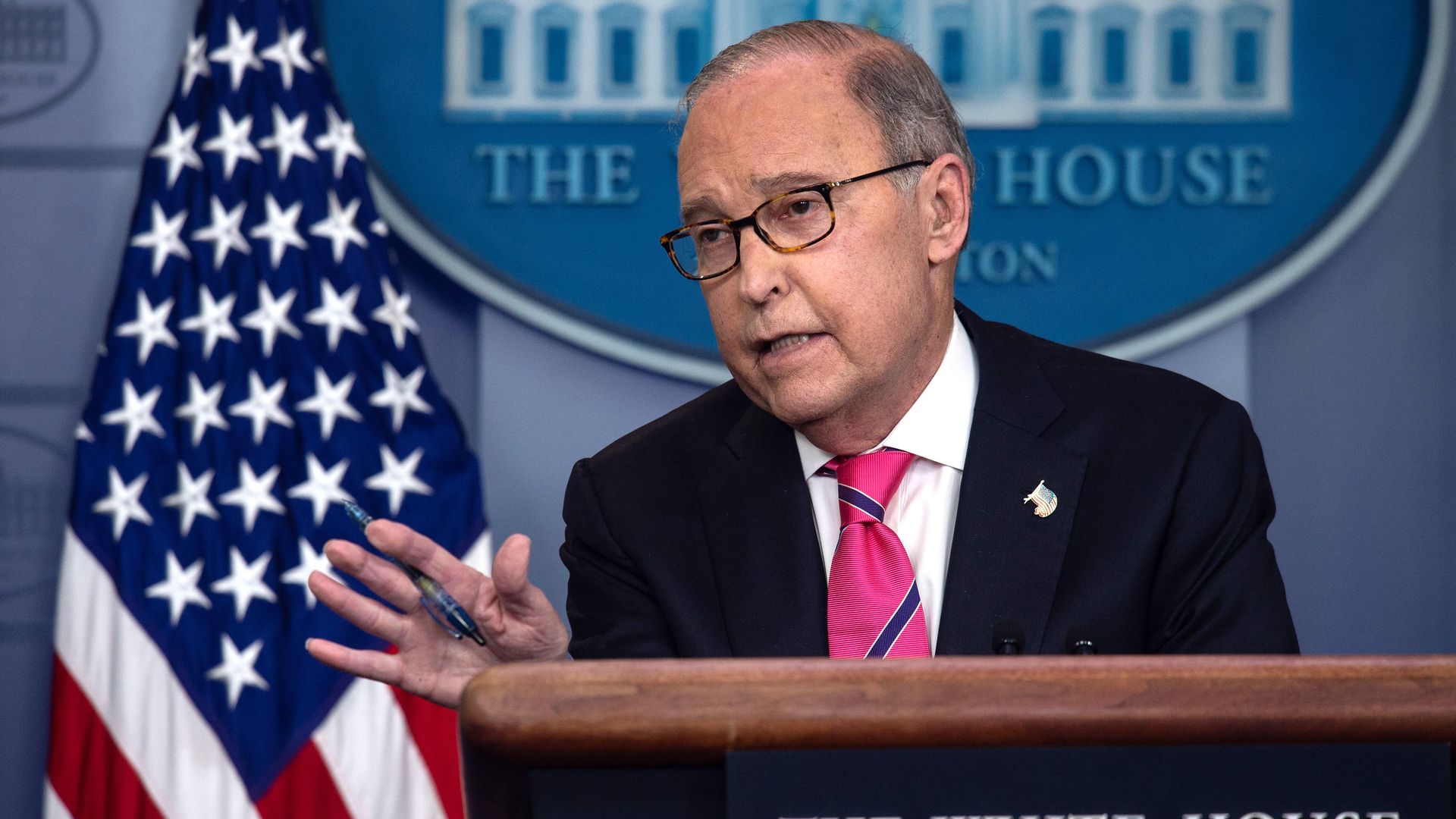
Hours after President Trump's chief economic adviser Larry Kudlow told reporters that a 90-day trade war truce between the U.S. and China will begin Jan. 1, the White House issued a correction stating that the truce actually began on Dec. 1.
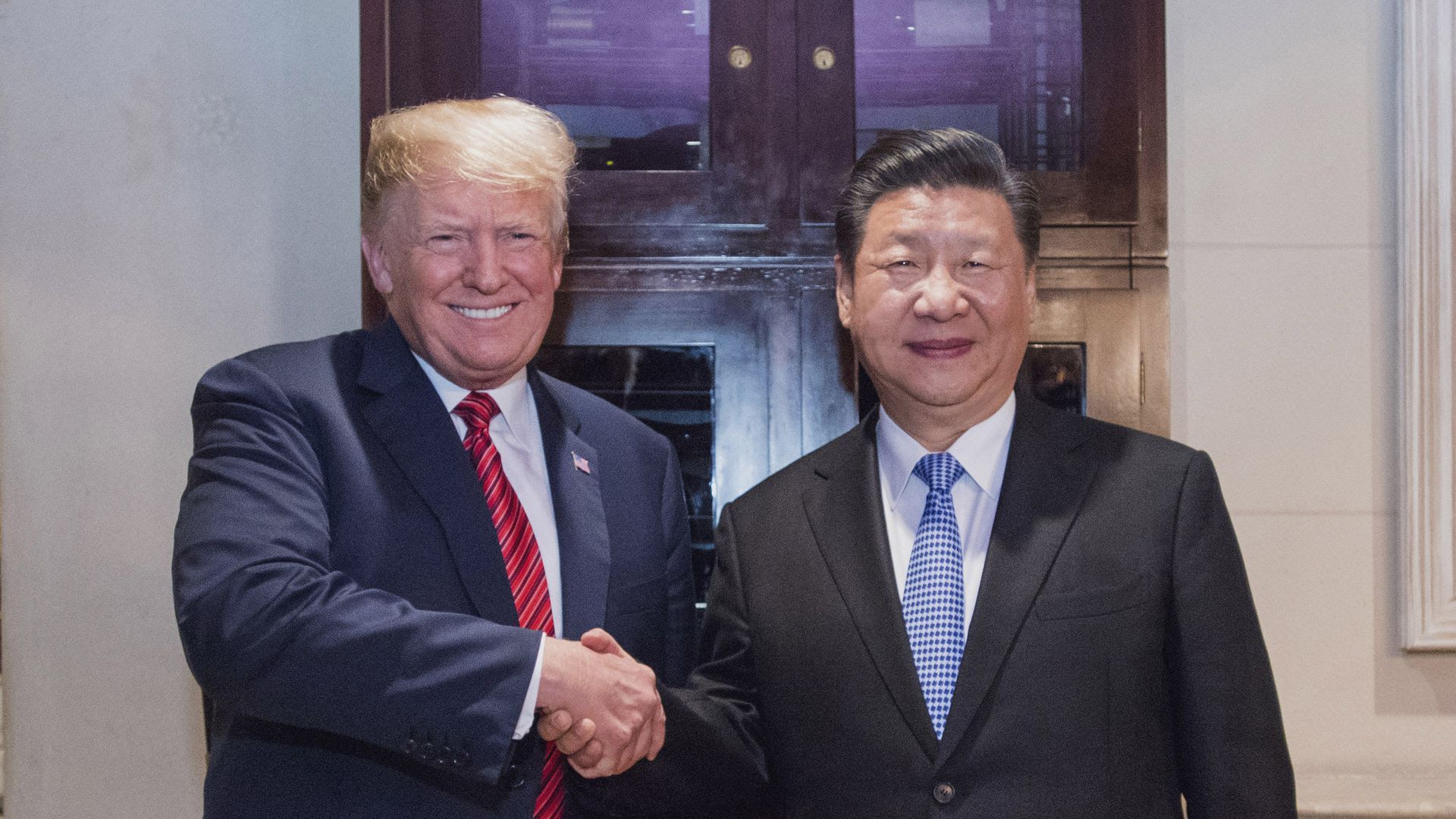
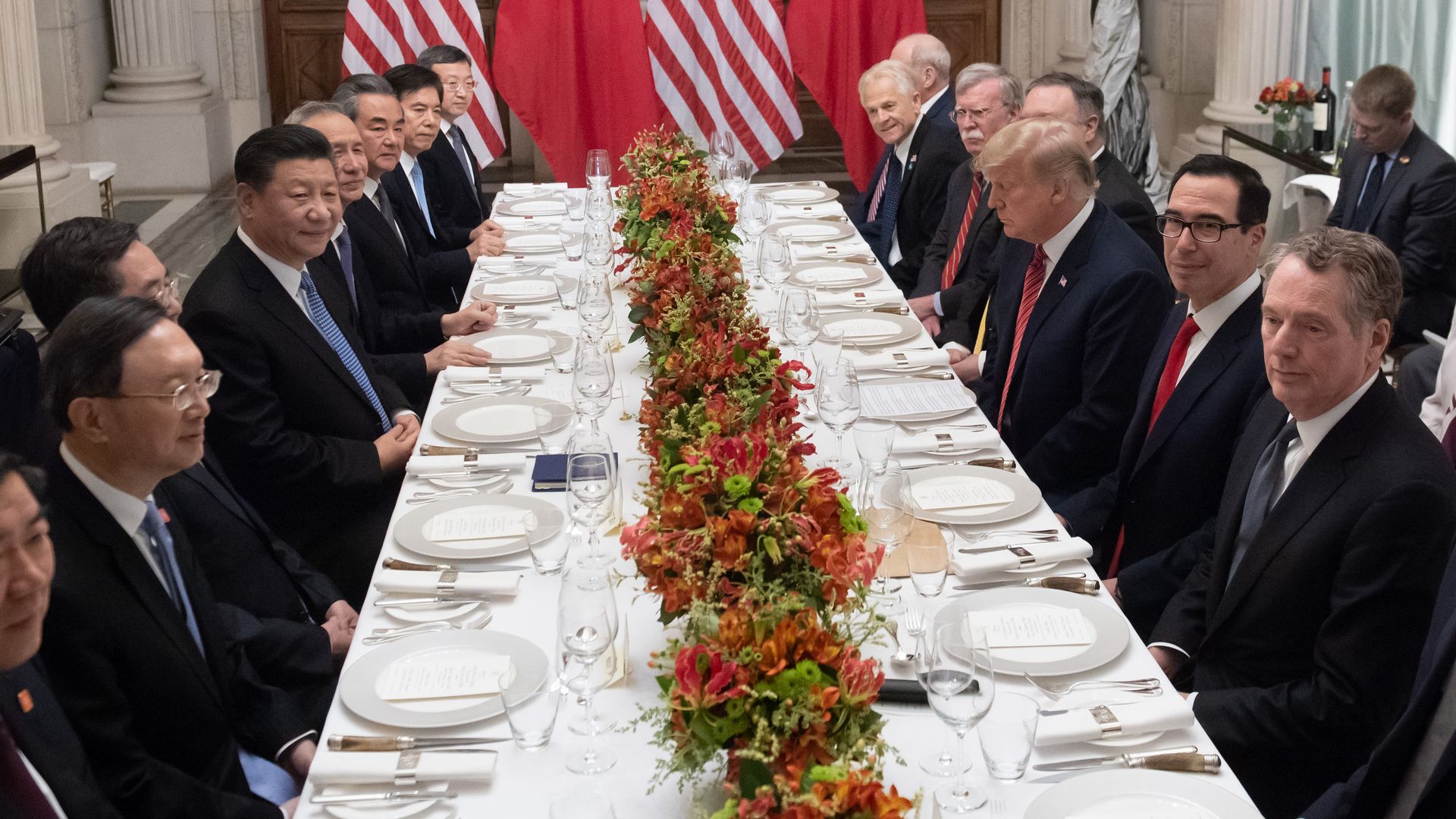
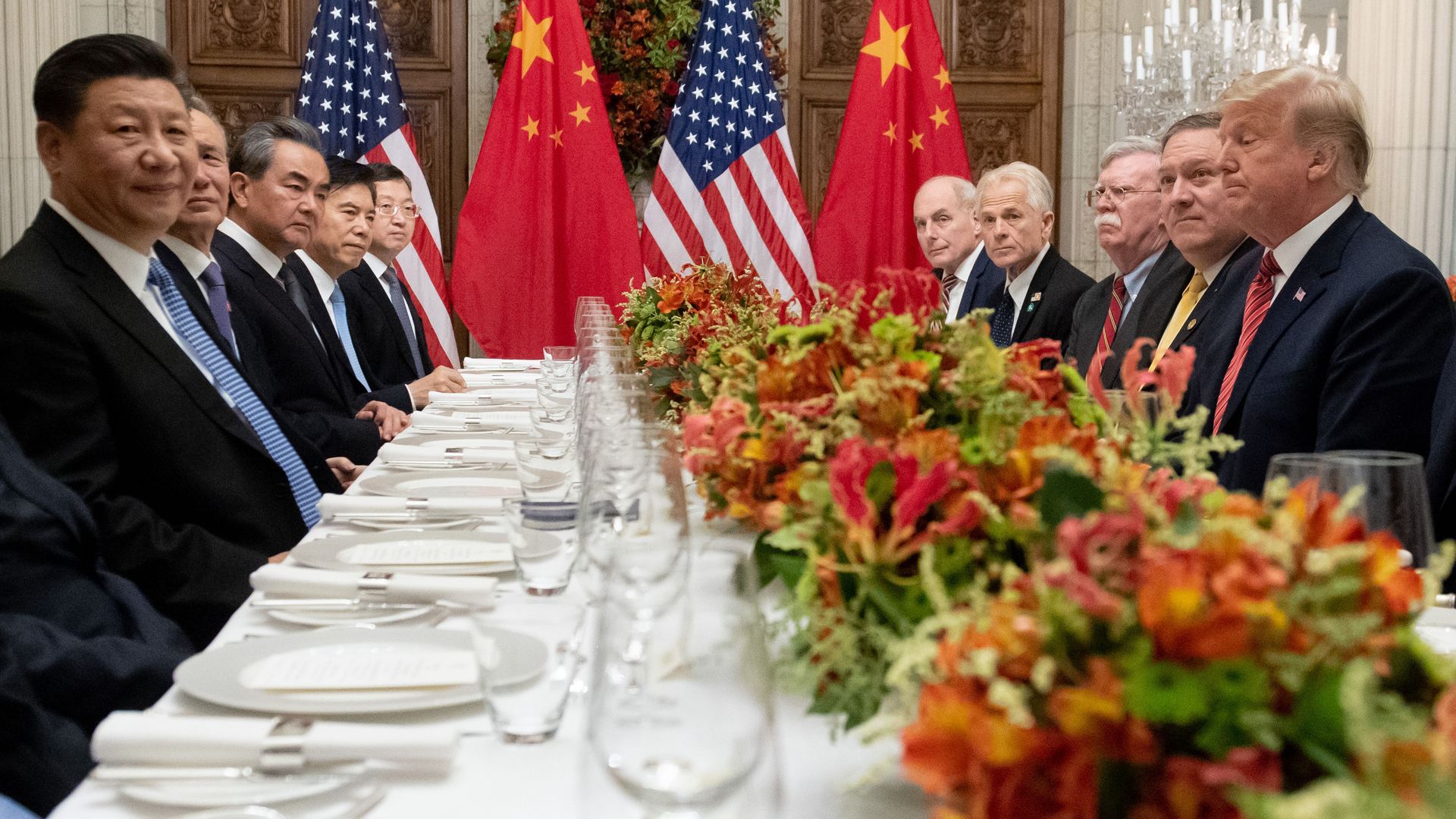
Behind the scenes: Administration officials and China hawks close to the White House were stunned by Kudlow’s comments. The Trump team left Saturday's dinner with Chinese President Xi Jinping on the sidelines of the G20 summit in Buenos Aires and announced to the world the 90-day negotiating clock began immediately. Kudlow’s comments threw that timeline into confusion. I emailed the White House repeatedly to get clarity. It took them until shortly before 6pm to correct the record.
With nothing that we know of in writing, the U.S. has allowed the Chinese to further delay harsher new tariffs for a big chunk of President Trump's remaining first term.
Driving the news: The White House has stated that a 90-day trade war truce between the U.S. and China began on Dec. 1 (correcting its chief economic adviser Larry Kudlow, who told reporters earlier Monday that the truce would begin on Jan. 1).
Hours after President Trump's chief economic adviser Larry Kudlow told reporters that the 90-day trade war truce between the United States and China — with the Trump administration postponing a planned tariff increase — will begin Jan. 1, the White House issued a correction stating that the truce began December 1.
The big picture: Kudlow wasn't able to confirm President Trump's claim Sunday that China will lower tariffs on American cars from 40% to 0%. He added that he expects China to roll back tariffs on U.S. agriculture very soon. However, it's worth noting that U.S. Trade Representative Robert Lighthizer — not Kudlow — will be the lead negotiator as the two countries attempt to resolve more fundamental disagreements on forced technology transfers, intellectual property theft and other issues in the coming months, per the Wall Street Journal.
Editor's note: This post has been updated to reflect the White House's correction to Larry Kudlow's comments — that the truce began on Dec. 1, 2018, not Jan. 1, 2019.
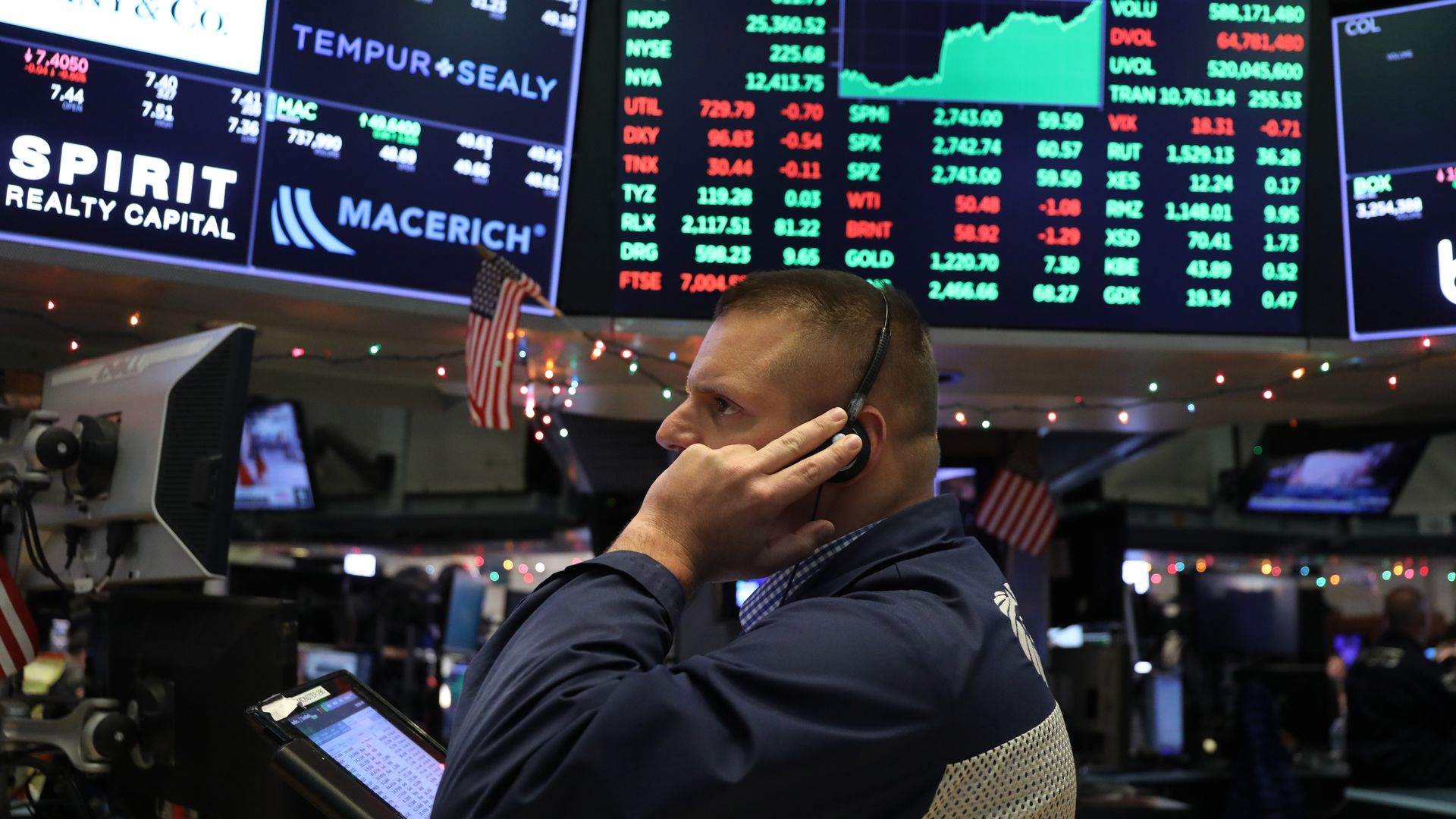
Stocks jumped in early trading on Monday, with the Dow Jones Industrial Average opening 400 points higher and the S&P 500 and Nasdaq Composite each rising over 1%.
Why it matters: The stock surge comes after the 90-day ceasefire of the trade war between the U.S. and China, with the hope that it will ratchet down tensions between the two nations in the long term and provide relief for companies that have been feeling the pain from tariffs.
Global markets surged Monday morning on news that President Trump and Chinese President Xi Jinping had reached a 90-day ceasefire in their high-stakes trade war, issuing relief for businesses who had scrambled to cushion the blow from heightened tariffs on $200 billion worth of goods originally slated for Jan. 1, the WSJ reports.
Yes, but: That relief is temporary. As the Journal's Bob Davis notes, Trump and Xi didn't reach a resolution on some of the major differences that had set off the trade war in the first place, including forced technology transfers, intellectual property theft, non-tariff barriers to Chinese markets and cyberespionage.
United Technologies, which announced last week it will split into three separate public companies, is joining the ranks of industrial giants that have decided bigger is not always better.
Between the lines: Industrial conglomerates were formed in the post-WWII era after an antitrust crackdown made it challenging for companies to buy rivals or acquire businesses within their own supply chains. But by the 1990s most began slimming down, and the best-known remaining industrial conglomerates are now determined to shrink (General Electric) or shake off the conglomerate label (3M).
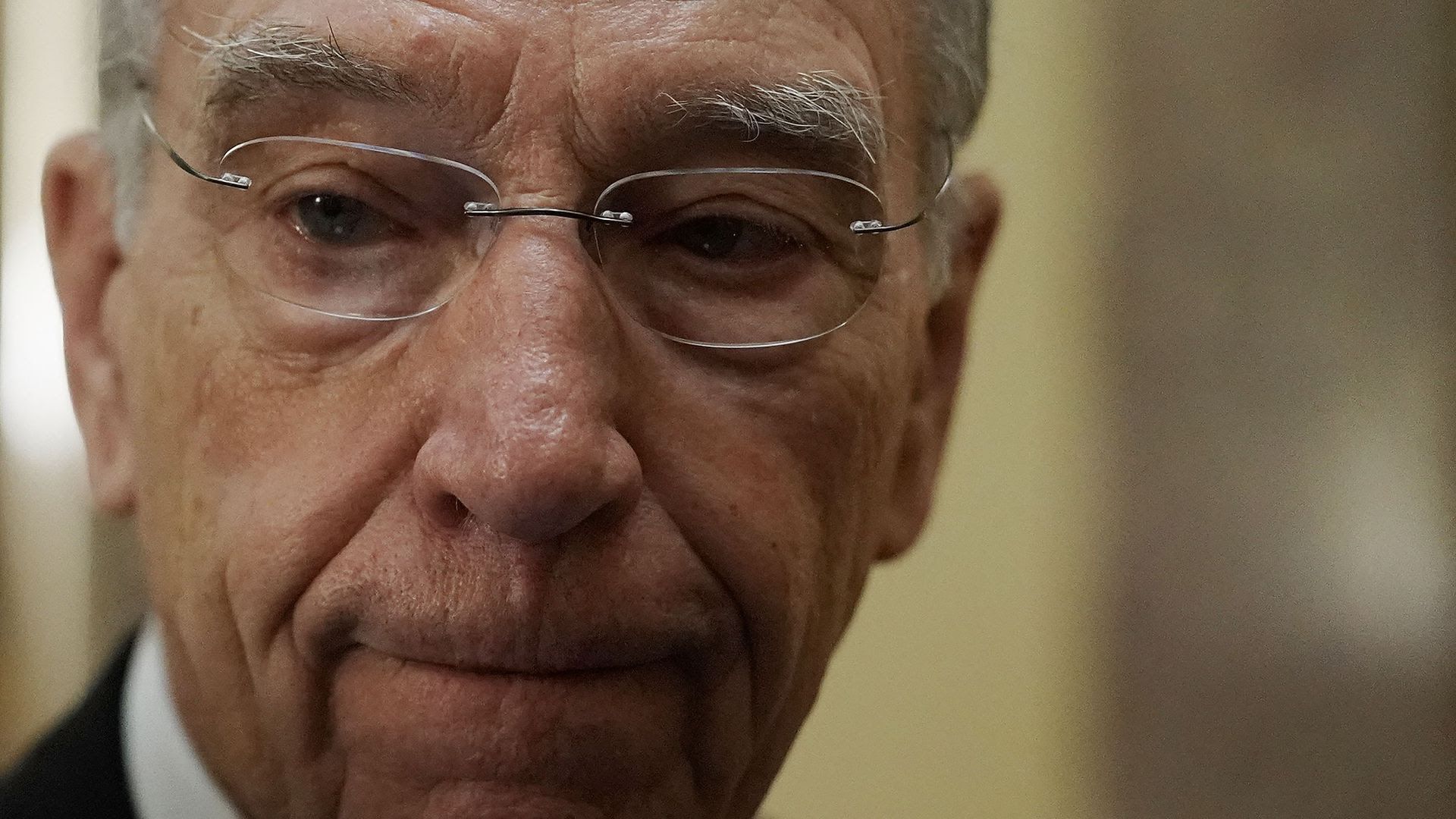
A fresh example of the political hurricane about to hit Trump's hardline trade agenda: Incoming Senate Finance Chairman Chuck Grassley (R-Iowa) told Axios he may try to make it harder for the president to impose new tariffs.
What he's saying: Grassley said he would take a favorable view of legislation limiting the administration's power to impose tariffs to protect national security (known as Section 232 authority). "Maybe the definition of national security or maybe the conditions under which national security could be used as an excuse is a little wide," he told Axios.
One night in Buenos Aires could define Donald Trump's presidency. Within a few hours, Trump telegraphed ambivalence about the two issues that have defined his time in politics: China and the wall.
Why it matters: Trump's comments mean the next three months may define his presidency. His first term is slipping away from him. On the trail, he promised to build a wall. But almost two years into his presidency, he's barely built anything. He also promised to force China to end its abuse of American businesses. But China hasn't changed in any meaningful way.
Women don't earn 80% of what men earn. The true number is closer to 50%.
Driving the news: A new report from the Institute for Women's Policy Research looks at how much money women actually earned, in aggregate, over three different 15-year time periods. While men's incomes were largely unchanged over the past 50 years, and women's rose significantly, women are still only halfway to equality.
Did you know I take requests? Lobbyist Bruce Mehlman writes in to ask: "If more than 70% of firms regularly beat Wall Street quarterly earnings expectations, doesn't that suggest the experts setting expectations are not so good at their jobs?"
It's a good question. In the second quarter of this year, the earnings-beat ratio actually reached 81%.
CNBC's Carl Quintanilla passes along a Morgan Stanley report that has quantified the amount that stocks fall after a data breach is made public.
Driving the news: Marriott was above average. It fell 5.6% on Friday, after a data breach that could have affected as many as 500 million customers. That's more than the 4% one-day decline Morgan Stanley has calculated after looking at Target, Home Depot, Yahoo, Heartland Payment and Anthem.
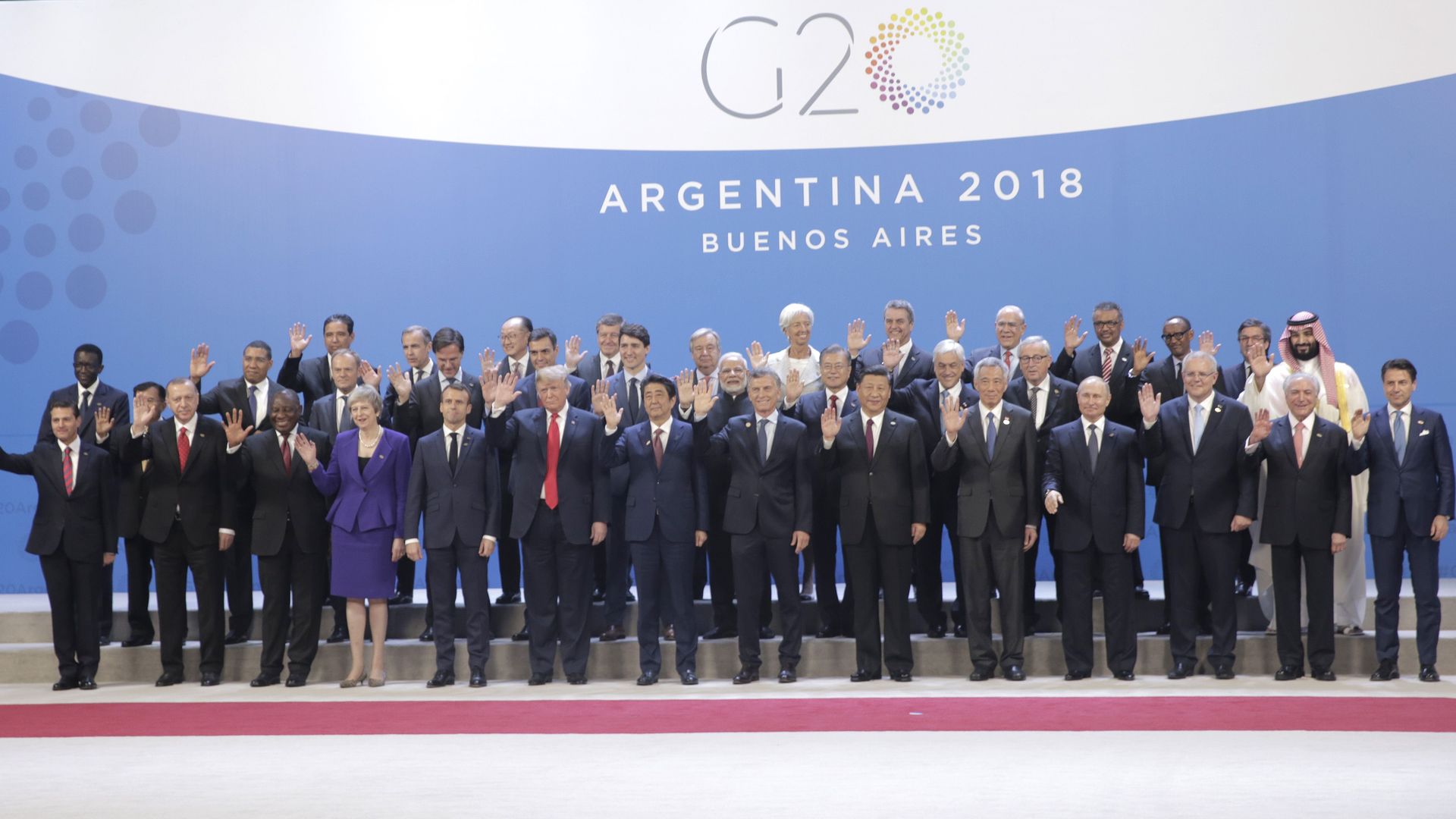
The G20 summit in Buenos Aires exceeded all expectations. No one thought Donald Trump had prepared for his dinner with Chinese President Xi Jinping, but somehow an agreement was hashed out that calls a 90-day truce to the trade war between the two countries. The planned tariff hike on Chinese goods from 10% to 25% will no longer happen on Jan. 1 as scheduled. Instead, a more normal set of trade negotiations will commence.
Why it matters: Score one for the globalists: This is a win for NEC Director Larry Kudlow and Treasury Secretary Steven Mnuchin; it's a loss for White House trade hawk Peter Navarro. But "90 days is a short time," says Axios' Jonathan Swan. "Trump has hedged and could easily reverse."
"The global economy is ... palpably weakening," the NY Times' Peter Goodman reports from London. "Many nations are mired in stagnation or sliding that way. Oil prices are falling and factory orders are diminishing, reflecting slackening demand for goods."
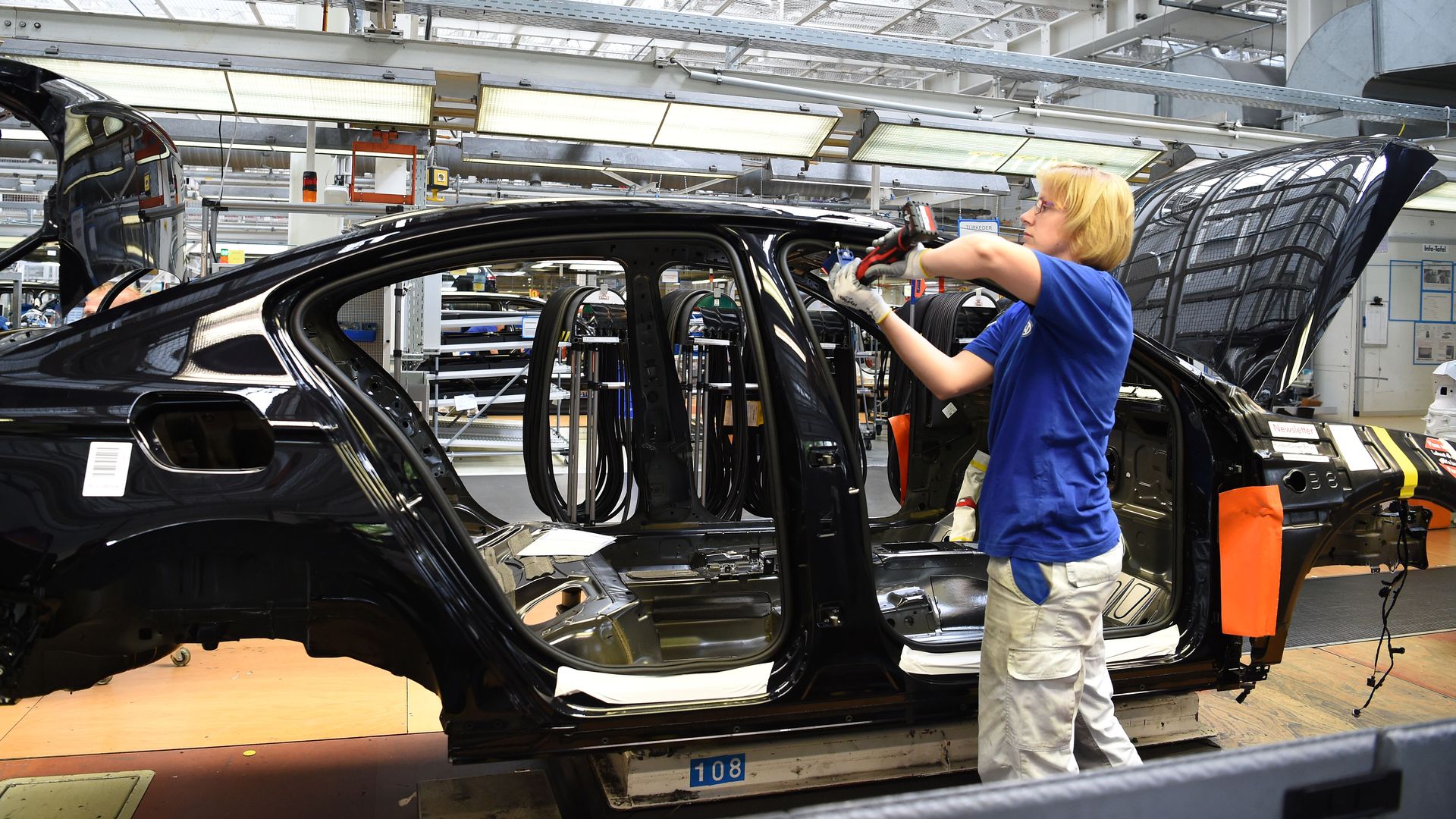
Be smart: Slower growth is not going to make anyone feel more secure about the prospect of robots replacing human hands, or jobs shifting to lower-wage lands.
Following dinner between President Trump and Chinese President Xi Jinping at the G20 on Saturday, the United States and China reached a ceasefire in their ongoing trade dispute after the Trump administration postponed a plan to increase tariffs while trade negotiations continue, according to the White House.
Details: The United States was set to hike tariffs on $200 billion of Chinese goods from 10% on 25% on Jan. 1. That's now on hold for at least 90 days after China agreed to negotiate issues like forced technology transfer, cybersecurity and intellectual property theft. China also agreed to purchase a "very substantial" — though unspecified — amount of farm and industrial products from the U.S.

/2018/12/03/1543864748894.gif?w=3840)