Friday's business stories

Nscale reports ballooning debt and need for more as IPO approaches
Neocloud startup Nscale reported ballooning debt and increased reliance on Nvidia for financing as the startup aims for an IPO amid swirling questions about the sustainability of the AI boom.
Why it matters: The U.K. company is buying chips from Nvidia, getting financing from Nvidia, promising cloud computing to Anthropic and collaborating with Microsoft — illustrating the increasingly dense thicket of ties that bind together the AI economy.

Contract AI can cut costs, reduce risk and speed up work
Contracts power nearly every business transaction, but the work behind them can slow companies down and quietly drain revenue and margins.
- From repeatedly negotiating the same terms across agreements to missing renewal deadlines, critical information is often buried in contracts and disconnected workflows, making it difficult to effectively manage key terms and obligations.

Blackstone is becoming a biotech bank
Blackstone Life Sciences has agreed to pay Pfizer up to $1.5 billion to finance development of a monthly GLP-1 receptor agonist.
Why it matters: Blackstone has become something akin to a biotech bank, helping offset drug development costs for Pfizer, Apogee, Alnylam, Boston Scientific, J&J, Merck and Moderna.

Anthropic to IPO amid Nvidia fiasco
Anthropic's IPO is just a week away, and is suddenly trying to dodge Nvidia fallout.
The big picture: The macro is a possible unwind, or at least reorientation, of the entire AI trade. The micro is a myriad of financial and strategic ties between the two companies.

Bessent puts Megaspeed heat on Lutnick: "Commerce has the pen"
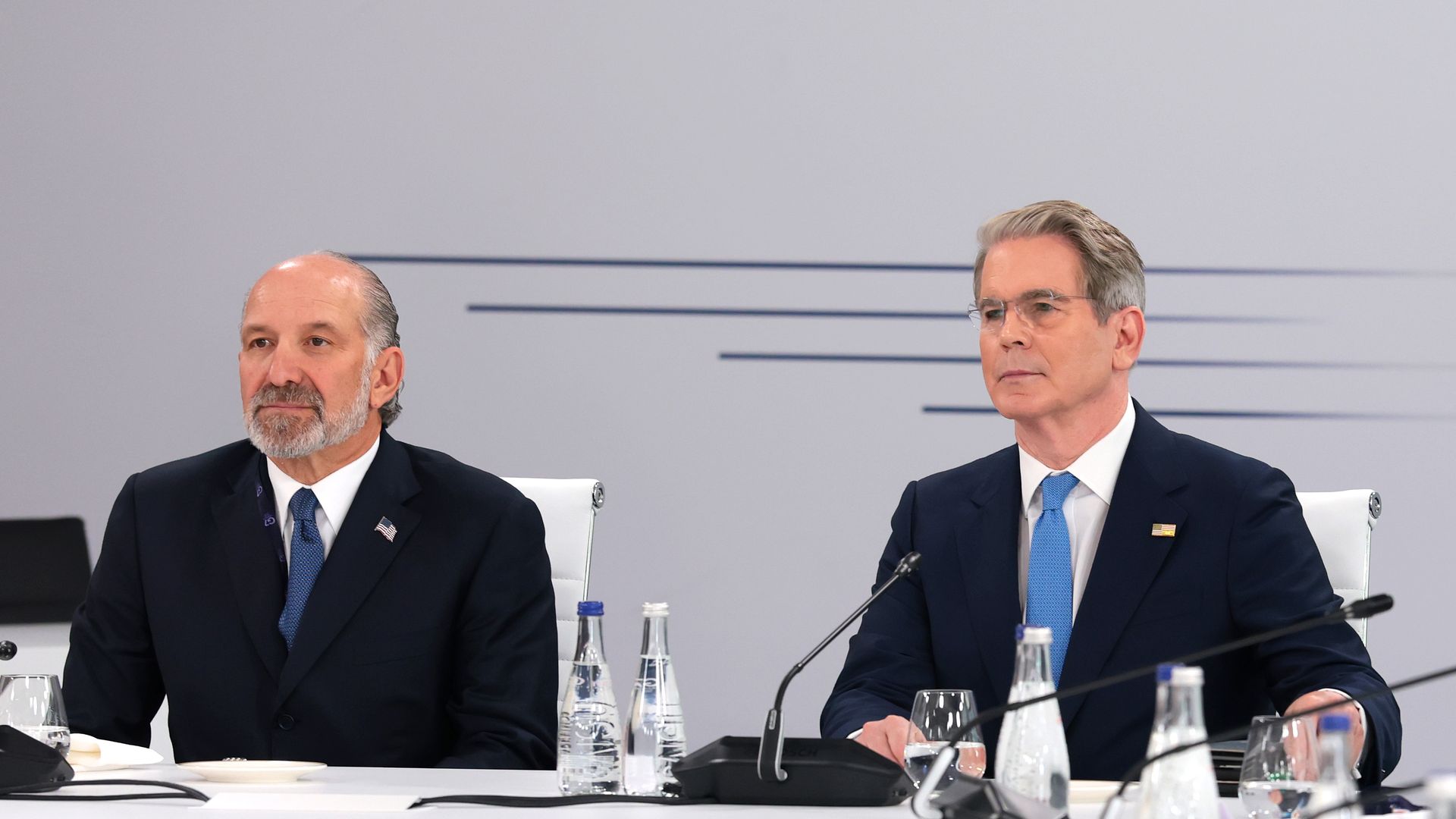
Treasury Secretary Scott Bessent said in a Friday interview that while his department and others agreed on placing Megaspeed on a special list of companies that pose national security concerns, the Commerce Department "has the pen."
Why it matters: Bessent didn't deny reports of tension between him and Commerce Secretary Howard Lutnick, who has come under scrutiny for his inaction over Megaspeed.

CEO's exit roils the stocks in Nvidia's orbit
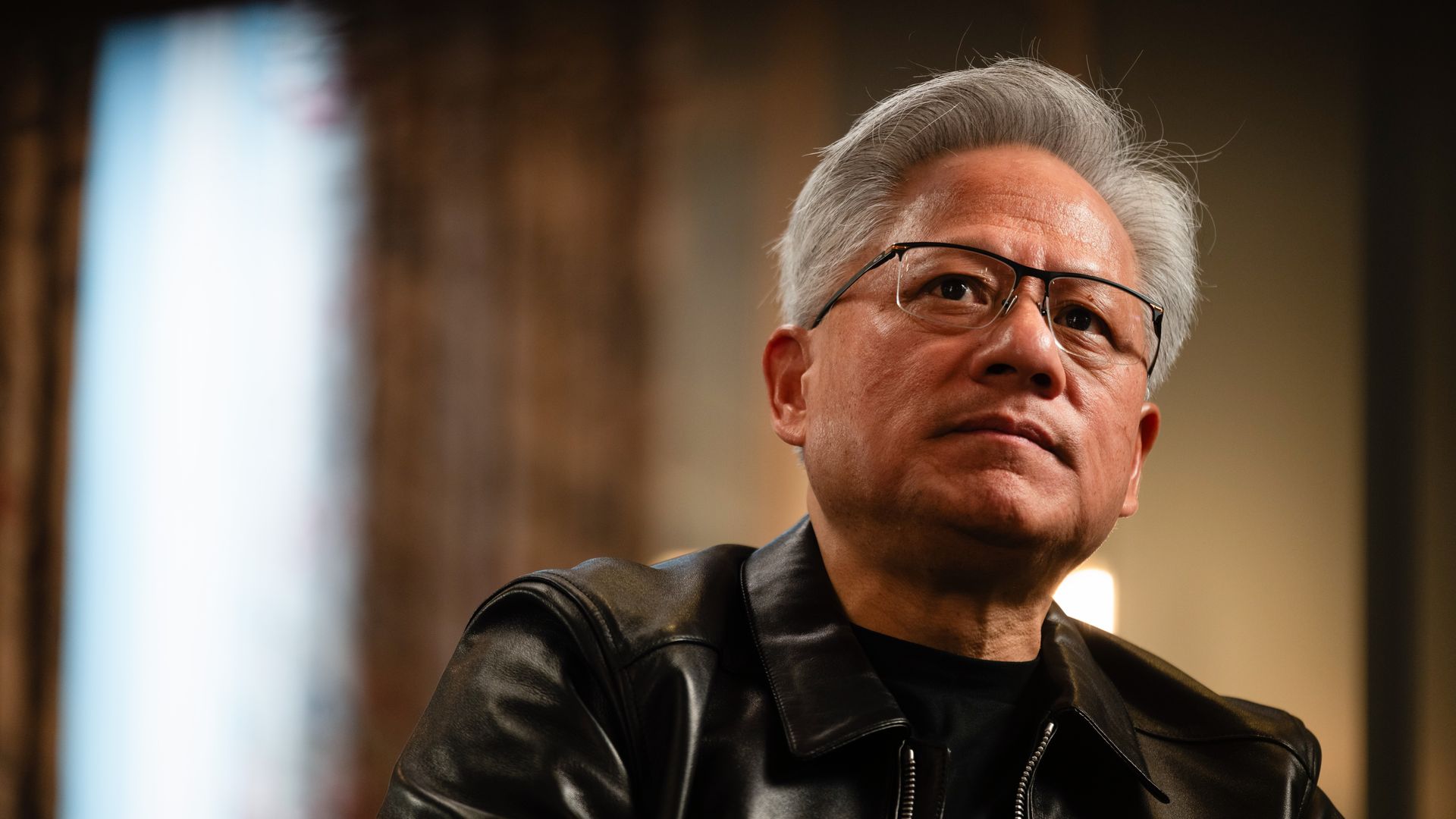
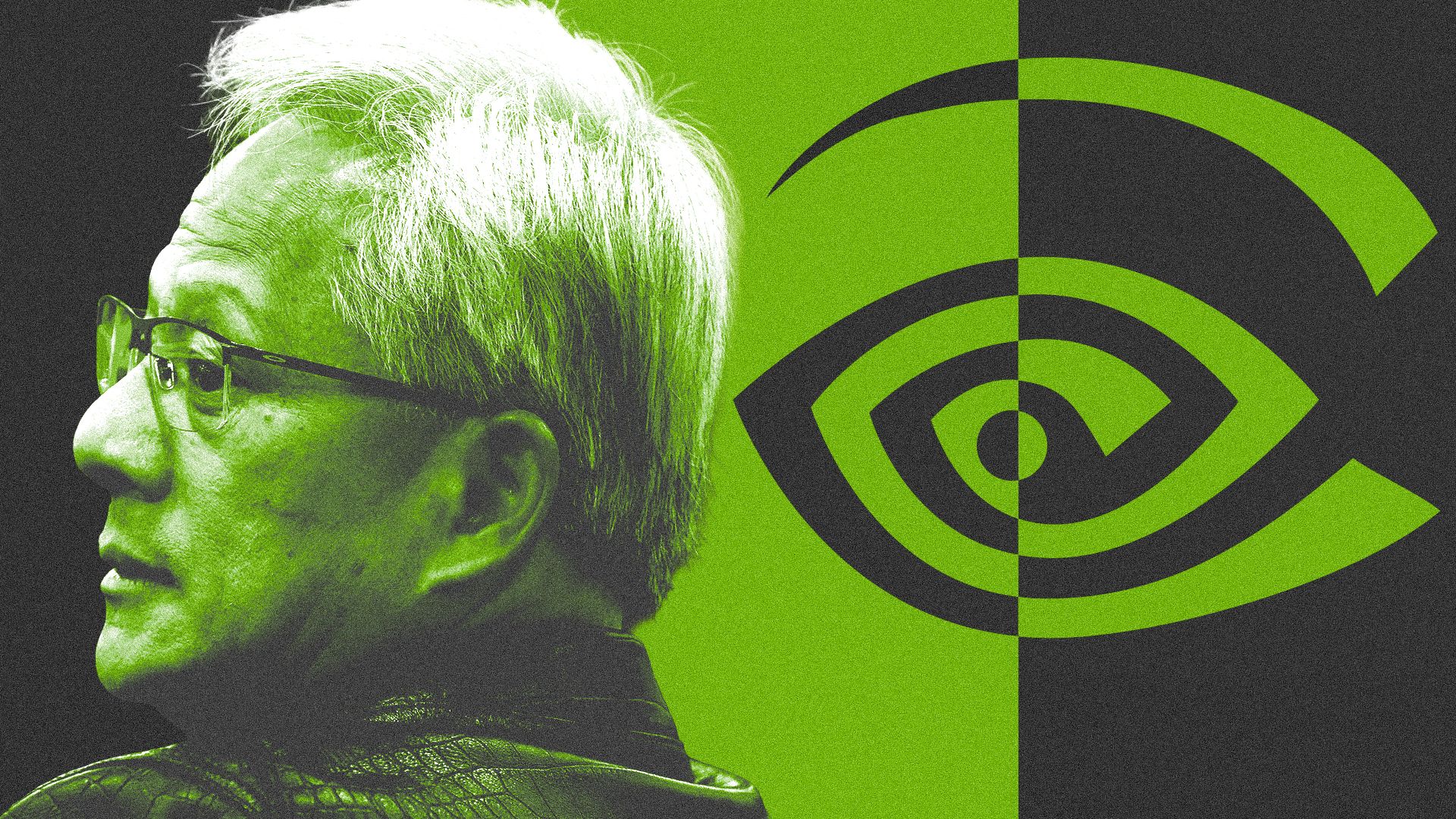
Jensen Huang's departure as Nvidia CEO is spurring investors to rethink the financial ties between the chip behemoth and some of the most heavily indebted AI entities.
Why it matters: Nvidia's role in the AI boom isn't limited to producing its highly sought-after GPUs (graphics processing units).
- It has also extended its vast financial resources to support a range of companies involved in the infrastructure boom.


Behind the Curtain: Democrats' algorithm trap

Chuck Schumer and Hakeem Jeffries are both cautious, calm, compromise-minded leaders fantasizing about a serious, sensible Democratic-run Congress.
- But social media is a temptress no party leader has tamed. The seduction of attention, likes and followers invariably proves too strong for the savviest, most self-promotional politicians to resist.
Why it matters: That's the lesson of the Internet Era of American Politics — the algorithms always win.


The AI boom enters its post-Jensen era
The AI boom without Jensen Huang will test a hard truth: Even if the tech world has grown somewhat less reliant on Nvidia's chips, it remains highly dependent on its checkbook.
Why it matters: With rival chips maturing and recent software breakthroughs, the tech ecosystem has achieved what would've seemed impossible a year ago: a viable path around Nvidia.

11 names to watch in the Jensen Huang succession search


Nvidia has begun searching for a permanent replacement for longtime CEO Jensen Huang, who resigned Thursday amid scrutiny over reports of multiple extramarital affairs.
Why it matters: Nvidia's next leader will inherit one of the world's most valuable companies — and the daunting task of succeeding the pioneer who transformed it into an AI powerhouse.

Jensen Huang's implosion leaves trail of collateral damage
Jensen Huang's self-destruction has left a trail of collateral damage that threatens to ensnare the board of Nvidia and the AI boom itself.
Why it matters: Huang was a singular leader in the global economy, capable of exciting or calming markets with a single sentence and viewed as a virtually indestructible force behind Nvidia's rise.

Communicator spotlight: Harley-Davidson's Dylan Riddle
As Harley-Davidson's head of government and corporate affairs, Dylan Riddle's workday can span meetings with policymakers on Capitol Hill, product launch conversations with reporters and crisis training with a factory.
Why it matters: For an American icon like Harley-Davidson, business decisions can carry political and cultural weight far beyond the boardroom.

Brands grapple with influencer ownership internally
Marketing and communications teams are competing over who should manage creator relationships as brands increasingly rely on influencers to build credibility, reach new audiences and drive sales.
Why it matters: Things get messy when different teams approach the same creator with competing priorities, budgets and expectations.

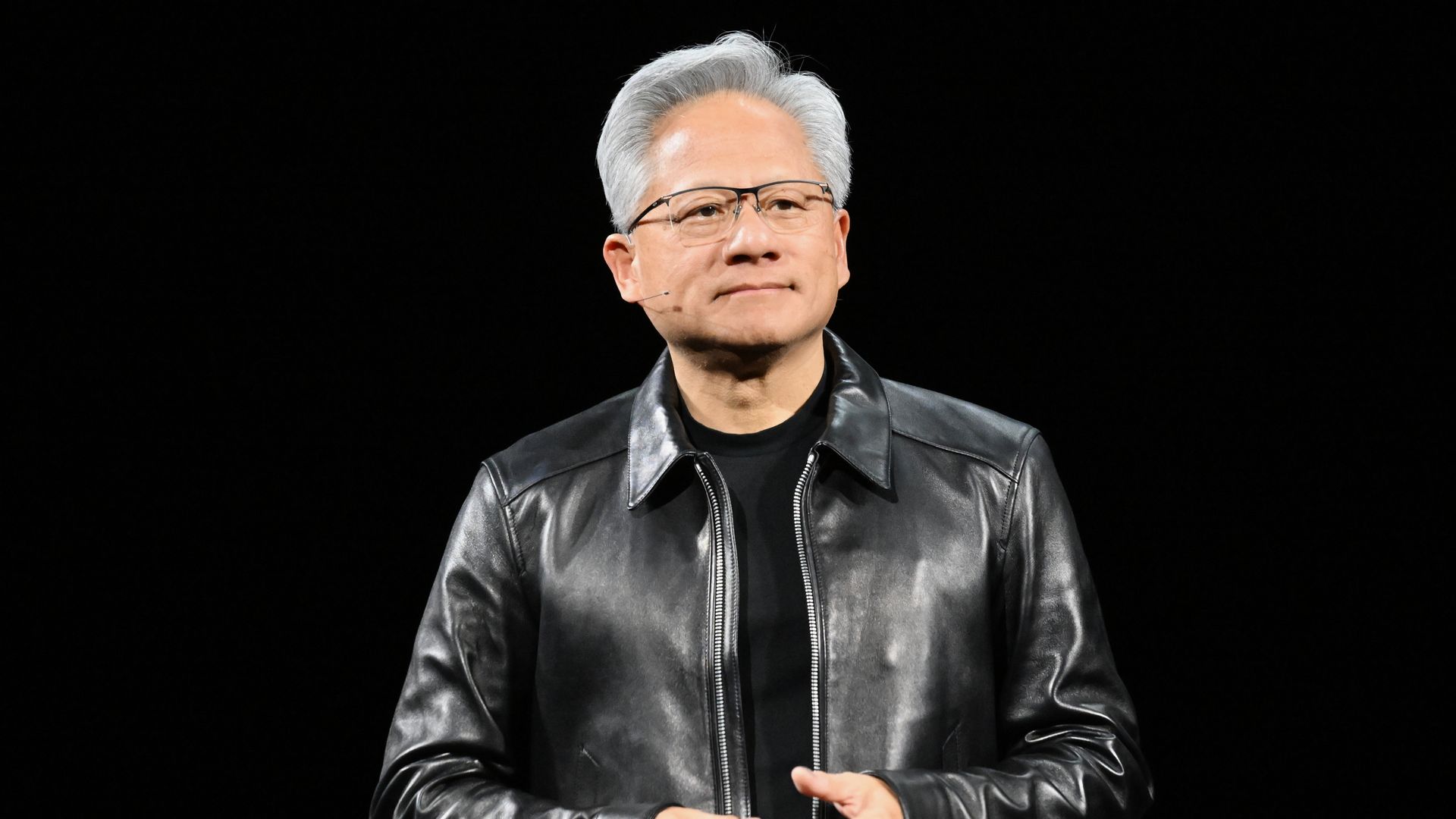
Jensen Huang, an architect of the AI boom, resigns as Nvidia CEO
Jensen Huang resigned as CEO of Nvidia after he reportedly had two affairs, including one with a purported Chinese spy.
Why it matters: It's impossible to overstate how critical Huang is to Nvidia, to the AI buildout, to the stock market and economy.

Defense-tech group UForce valued at $6 billion
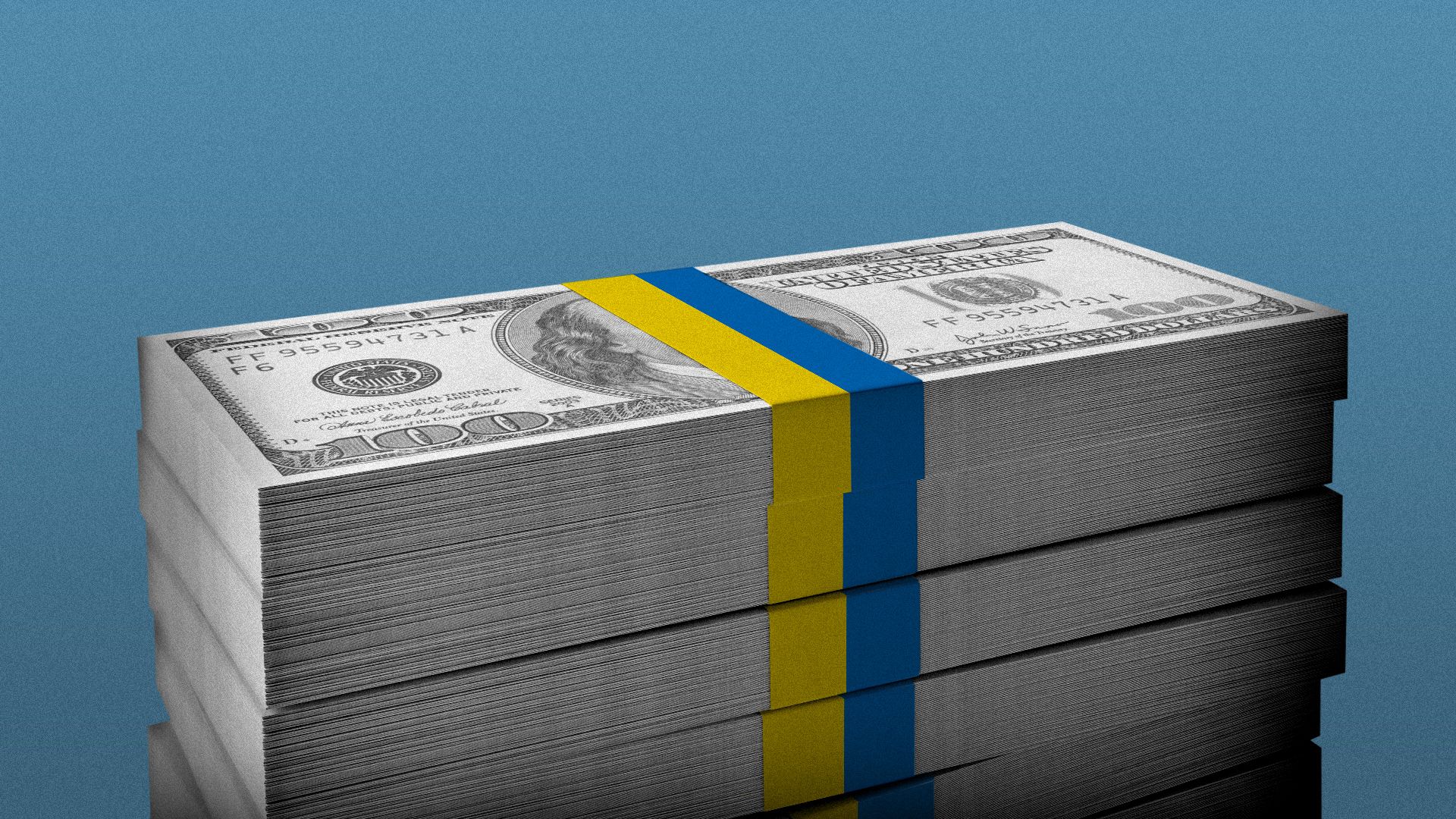
UForce, a Ukraine-founded developer of autonomous uncrewed platforms, raised $700 million in Series A funding led by Valor Equity Partners and the U.K. National Wealth Fund at a $6 billion post-money valuation.
Why it matters: This is a short-term bet on the persistence of the Ukraine-Russia war and a long-term bet on all of Europe continuing to increase its defense-tech spend.

Nvidia shares dive, rattling tech stocks
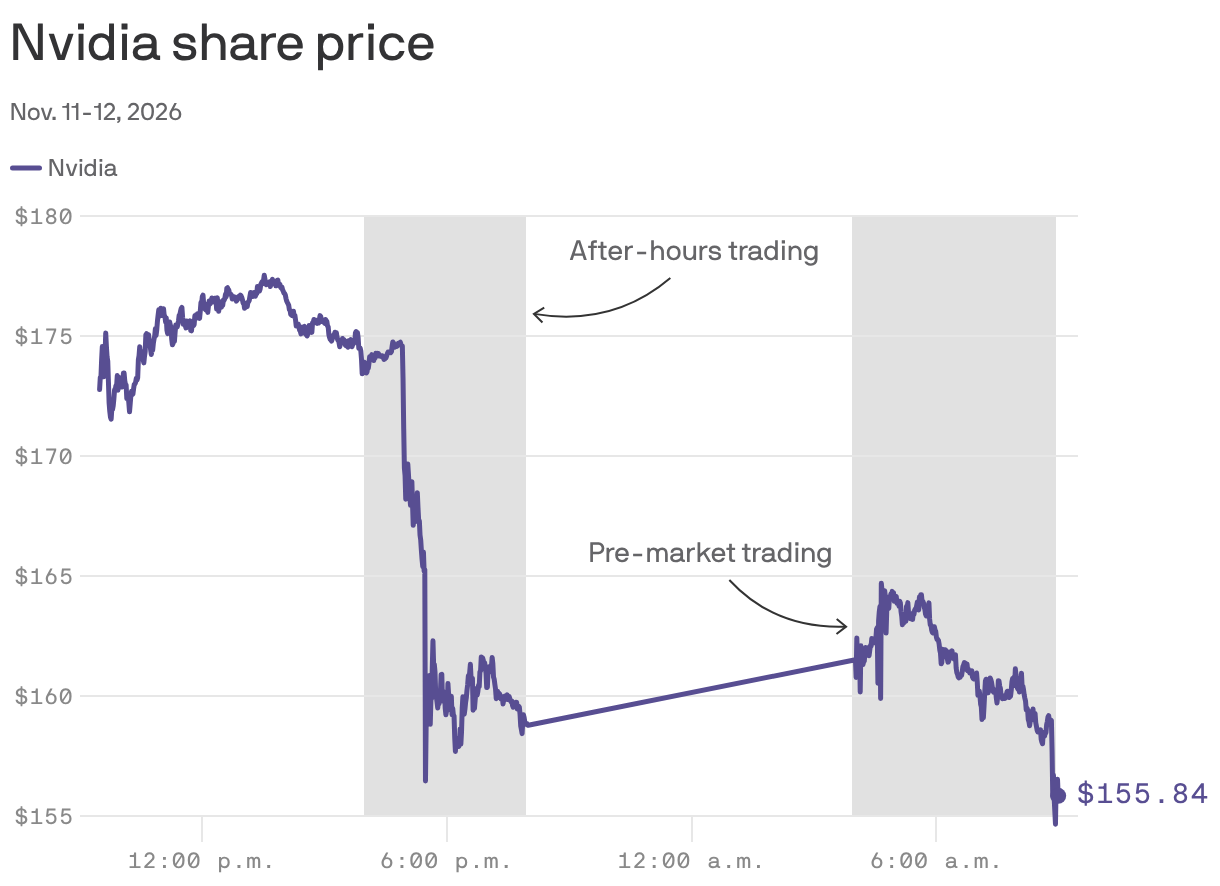
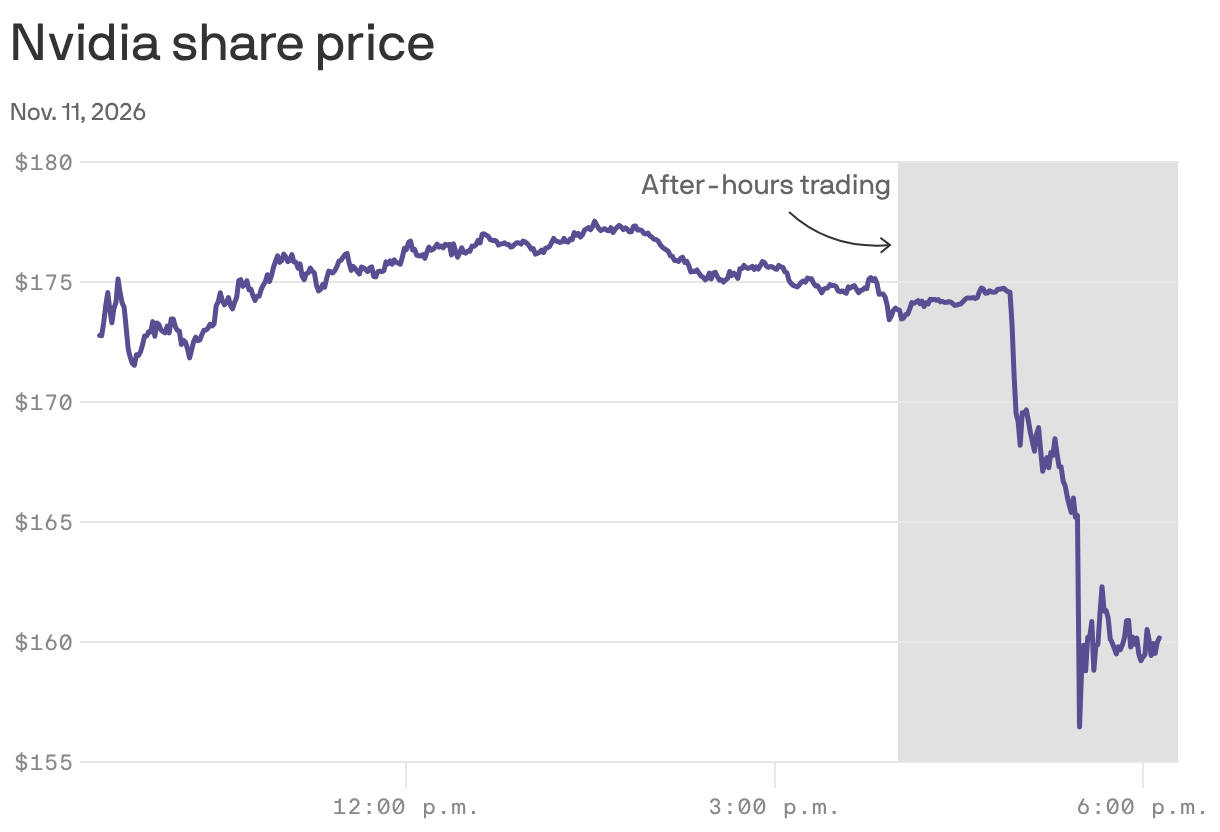
Nvidia's sell-off deepened early Thursday after co-founder and CEO Jensen Huang resigned.
Why it matters: As the second-largest U.S. company by market capitalization, Nvidia has outsized influence over the market-cap-weighted indexes like the S&P 500 and Nasdaq 100, which serve as cornerstones for many portfolios among professionals and individual investors alike.

Exclusive: Southern Living launches its own sweet tea brand
Southern Living, a lifestyle magazine published by People Inc., is launching its own sweet tea brand called "Sweet Talk," representing the publisher's first owned and produced consumer packaged good company.
Why it matters: People Inc., one of the largest content publishers in America, is leaning into new revenue lines across commerce, events and licensing across its portfolio to help offset AI-driven changes to open web traffic.

Jensen Huang's ouster triggers an AI earthquake
Jensen Huang's departure from Nvidia has plunged the AI industry into uncharted territory — a corporate earthquake that dwarfs even the chaos unleashed by Sam Altman's temporary firing from OpenAI in 2023.
Why it matters: Nvidia is the backbone of the global AI economy, with its chips, investments and financial guarantees sustaining an entire ecosystem of companies worth trillions of dollars.


Bracing for Nvidia's impact
Nvidia CEO Jensen Huang's apparent fall from grace is a shock to a company at the core of the U.S. markets and the AI ecosystem that he did much to create.
Why it matters: CEO scandals happen at companies. Their stocks fall. But there is no other company quite like Nvidia.
- Its size, financial resources and strategic position in the AI boom have made both the chipmaker and Huang, personally, pillars of the industry that has come to drive both the stock market and the economy.
Catch up quick: Following revelations this week that Huang had admitted to an extramarital affair with a woman believed by the U.S. government to be a Chinese intelligence asset, the New York Times reported Wednesday evening that Huang also had a romantic relationship with an Nvidia executive who reports to him.
- The Wall Street Journal and other outlets are reporting that the company's board of directors was preparing to oust Huang.
- Nvidia shares plunged in the after-hours trading session.
Context: The uncertainty surrounding Huang's position comes as the AI trade is going through one of the crises of investor confidence that have periodically hammered AI shares in recent years.
- The concern this time centers on the ability of the AI build-out to continue, as rising interest rates and a saturated market curtail the sale of bonds to pay for data centers.
- Chip makers like Nvidia have been particularly hard hit by this recent AI slump. Its shares were down roughly 30% from their recent high through Wednesday's close, vaporizing nearly $1.59 trillion in shareholder wealth.
- There have been market drawdowns around AI before, says Eric Sheridan, a research analyst at Goldman Sachs, in a big new report on the investment cycle.
- "The stakes are undoubtedly higher now as we're further along in the cycle and the dollars being spent have grown considerably, which may be adding to investor skittishness."
Stunning stat: Since the end of last week, the company lost over $600 billion in market value through Wednesday's after market session.
Zoom out: Those losses will touch a lot of portfolios.
- With a market capitalization of roughly $4.18 trillion — through Wednesday's close — Nvidia is the world's second-largest publicly traded company, behind Apple, giving it significant sway in market capitalization-weighted indexes, such as the S&P 500 and the Nasdaq 100.
Yes, but: If anything, a focus on Nvidia's massive size obscures how important the company is.
- It dominates the market for the graphics processing units, or GPUs, that are the costliest input into AI data centers — about 75% of a data center's total cost, per Goldman.
- It also finances and backstops significant chunks of AI computing power.
- That means Nvidia is bankrolling a small army of AI firms: AI coding companies, data center operators, neoclouds.
- For example: Nvidia has put more than $2 billion into CoreWeave, the troubled neocloud that's seen its borrowing costs soar in recent weeks. It has equity stakes in Anthropic and OpenAI.
Follow the money: Such was Nvidia's — and Huang's — stature in the tech world that in recent years, the mere mention of a company by the Nvidia CEO could create big market winners and losers.
- In June, for example, positive comments from Huang about Marvell Technology sent the company's stock soaring nearly 33% in a single day.
State of play: Now, it's Nvidia shares that might need words of encouragement.
- On Wednesday the stock received a downgrade to "market perform" from "outperform" from Bernstein Research.
- "We admit to struggling mightily with this call, and can sympathize with the case to buy the dip," Bernstein's analysts wrote. "But our gut tells us that we probably haven't yet fully probed the depths of what might be found here; we've had enough, and prefer to watch from the sidelines."
- Morgan Stanley also removed the company from its list of "top picks" earlier in the day, after the stock had declined more than 25% since it was named top pick last month.
What's next: Whatever comes next for Nvidia, the company is likely to be in an extended period of strategic paralysis.
- "Decisions about acquisitions or investments or product roadmaps, those are the kinds of things that will now have to be paused, if — again — if this happens, all these things are going to have to pause," Gil Luria, an analyst covering Nvidia for the brokerage firm D.A. Davidson, tells Axios. "So it just slows the company down when it can't make the most important, biggest decisions."
The big picture: Huang has presided over one of the most remarkable explosions of wealth creation in market history.
- From the closing price on its first day of trading, Nvidia's total compound return with dividend reinvestment is 462,906%, according to FactSet.
- He has been at the helm of the company since he co-founded it in 1993.
The bottom line: But depending on how the situation plays out, shareholders may be about to find out what an Nvidia without its charismatic leader looks like.

Exclusive: York Space Systems eyes robot maker
York Space Systems is planning to buy an Australia-based robot maker, marking the publicly-traded U.S. company's expansion into unmanned technology.
Why it matters: Space and autonomous systems are the future of modern warfare. York wants to weave the two together.

Exclusive: Trusted Space buys FalconExoDynamics
Trusted Space, a space software company, has purchased Falcon ExoDynamics, a firm that builds technology for maneuverable satellites.
Why it matters: As the number of satellites surges, there likely won't be enough Space Force guardians to monitor and operate them all.
- Investors see autonomous software and dynamic satellites as key developments in orbital warfare.

New on streaming: "Rings of Power" Season 3, "The End of Oak Street" and Janelle James stand-up
Whether you're looking for sci-fi, suspense or stand-up, there are fresh streaming titles to choose from this week. Here are five to consider.
The Lord of the Rings: The Rings of Power — Season 3 available now on Prime Video
- Set long before Frodo enters the story, the prequel shows how Sauron builds the power that will threaten Middle-earth generations later.
- The latest: Simon Pegg joins the cast as the voice of the Balrog, while Jamie Campbell Bower plays Celeborn, Galadriel's husband.
The End of Oak Street — Sci-fi movie available Friday on HBO Max
- Anne Hathaway and Ewan McGregor play parents trying to keep their family alive when their 1980s suburban block suddenly lands in a world of dinosaurs.
- Behind the scenes: "It Follows" filmmaker David Robert Mitchell wrote and directed the movie, which opened in theaters in August before its streaming debut.
The Good Daughter — Limited series available Thursday on Peacock
- Sisters played by Meghann Fahy and Rose Byrne return to the Georgia town where their mother was killed two decades earlier.
- Behind the scenes: Karin Slaughter turned her own 2017 bestseller into the six-episode adaptation.
Being Heumann — Historical drama available Friday on Apple TV
- Inspired by true events, Judy Heumann (Ruth Madeley) leads disabled activists in occupying a San Francisco federal building to demand enforcement of their civil rights.
- Behind the scenes: Siân Heder wrote and directed the film after winning an Oscar for her screenplay for Best Picture winner "CODA."
Janelle James: How Romantic — Stand-up special available now on Netflix
- The "Abbott Elementary" star talks about relationships, money and the social rules she wants to challenge.
- Catch up quick: James previously appeared on Netflix's "The Comedy Lineup" and "The Standups," but "How Romantic" is her first full-hour showcase.
Go deeper: See last week's picks.