Treasury Secretary Scott Bessent on Sunday questioned whether Nvidia's earnings might have been inflated by inappropriate sales to China and urged the company to hire an outsider as CEO.
Why it matters: Nvidia is central to the AI economy, which has been key to U.S. economic growth.
The Treasury secretary casting doubt on the quality of its financial results and leadership could be a blow to an already shaky market.
Only at the Rock & Roll Hall of Fame ceremony will you find Wu-Tang Clan shouting out Phil Collins, "Wicked's" Cynthia Erivo bringing down the house and the Red Hot Chili Peppers dancing around in fake white beards.
Why it matters: The Rock Hall touts its annual induction as "rock's biggest night," and it lived up to that billing Saturday at Los Angeles' Peacock Theatre.
Nvidia's near-30% stock plunge in the last month is a drag on the retirement savings of millions of Americans, many who may not realize just how much their investments are tied to the scandal-engulfed chip giant.
Why it matters: Nvidia's enormous weight in popular index funds means even those who have never purchased a single share of the company could feel the pain of its corporate upheaval in their 401(k)s.
The resignation of CEO Jensen Huang after he had an affair with an alleged Chinese spy may have cost an average Baby Boomer thousands of dollars, according to an Axios analysis of outside estimates.
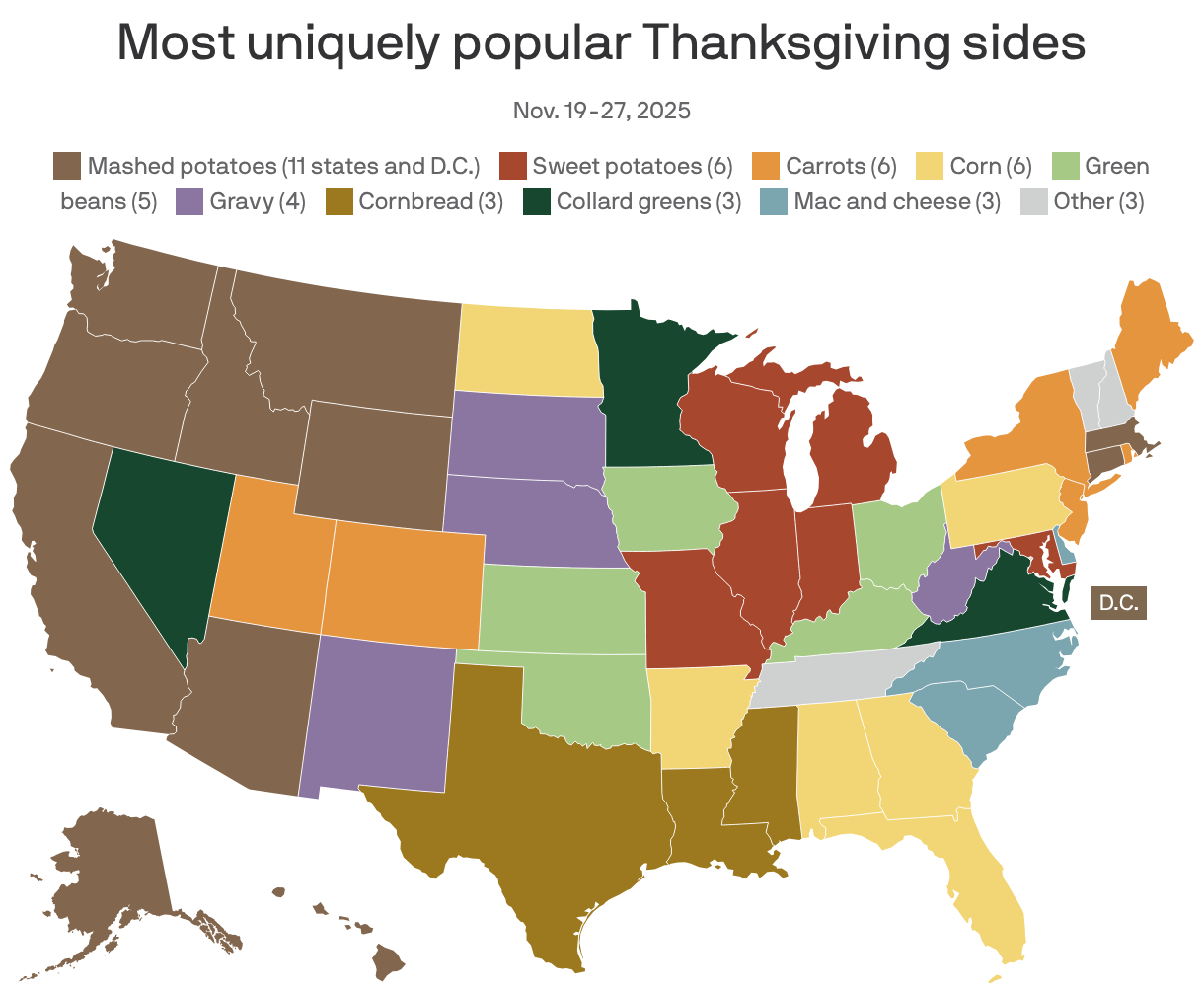
Mashed potatoes are America's most-ordered Thanksgiving side, butcornbread, collard greens and mac and cheesehave their own loyal followings, according to new DoorDash data.
State of play: The spuds lead nationally and over-index in 11 states and Washington, D.C. — the most of any side.
The media and entertainment industries are some of the toughest arenas for dealmaking, buffeted by financial pressure, shifting consumer habits and intense regulatory scrutiny.
Why it matters: Shrewd dealmakers can work Washington and Wall Street to get deals done, but it takes visionary leaders to turn acquired assets into thriving businesses that last.
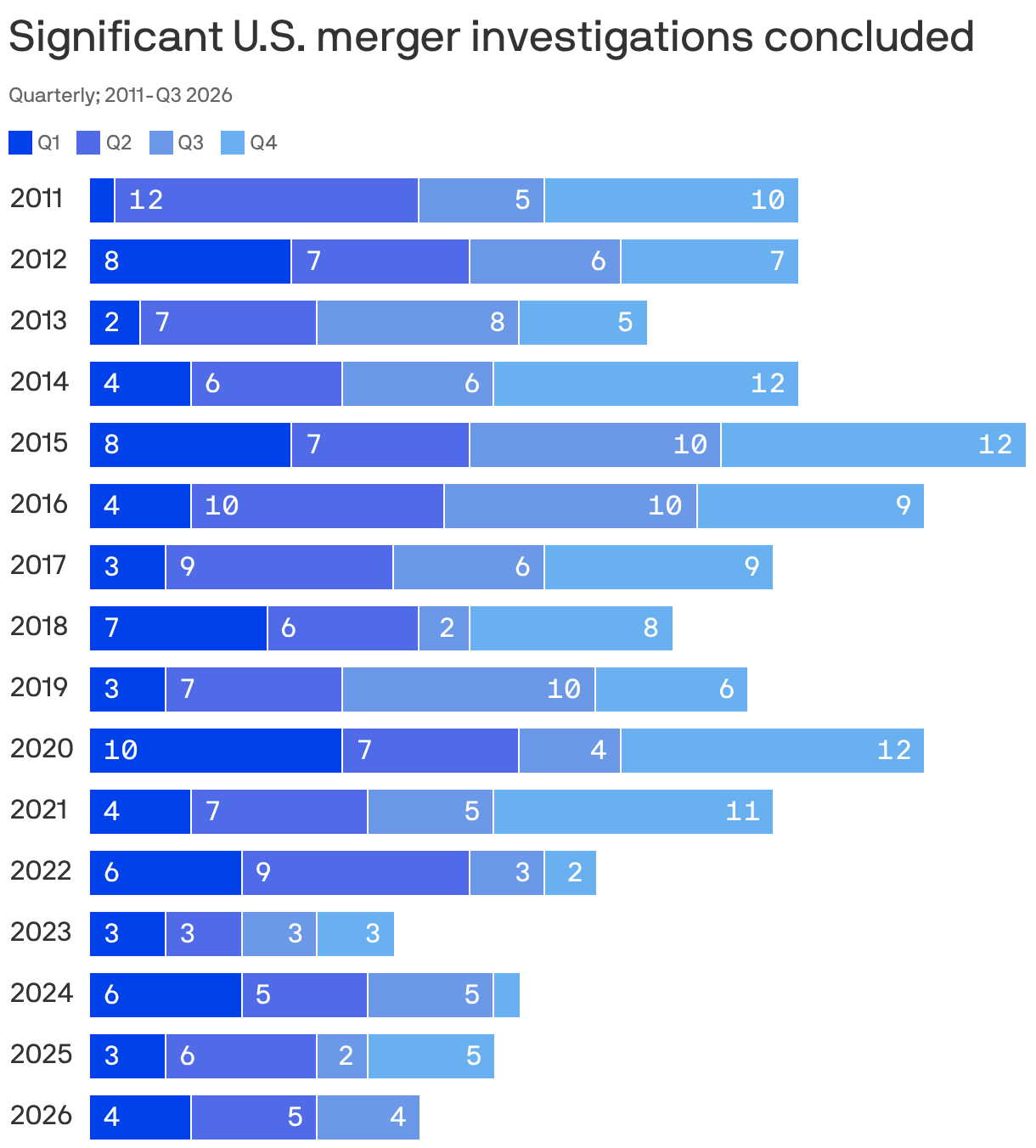
The Trump administration has opened the door to more media consolidation as federal antitrust investigations remain near 15-year lows.
Why it matters: That environment inspired companies to pursue transactions that might have faced greater scrutiny under former President Biden. But many of those deals now face unexpected scrutiny at the state level.
Middle Eastern money is still flowing into U.S. media, albeit not at the clip it once was, bankers and dealmakers told Axios.
Why it matters: Geopolitical tensions haven't put deals on ice, but they've forced governments and sovereign wealth funds to reconsider where they deploy capital. Sectors like energy and infrastructure are a high priority.
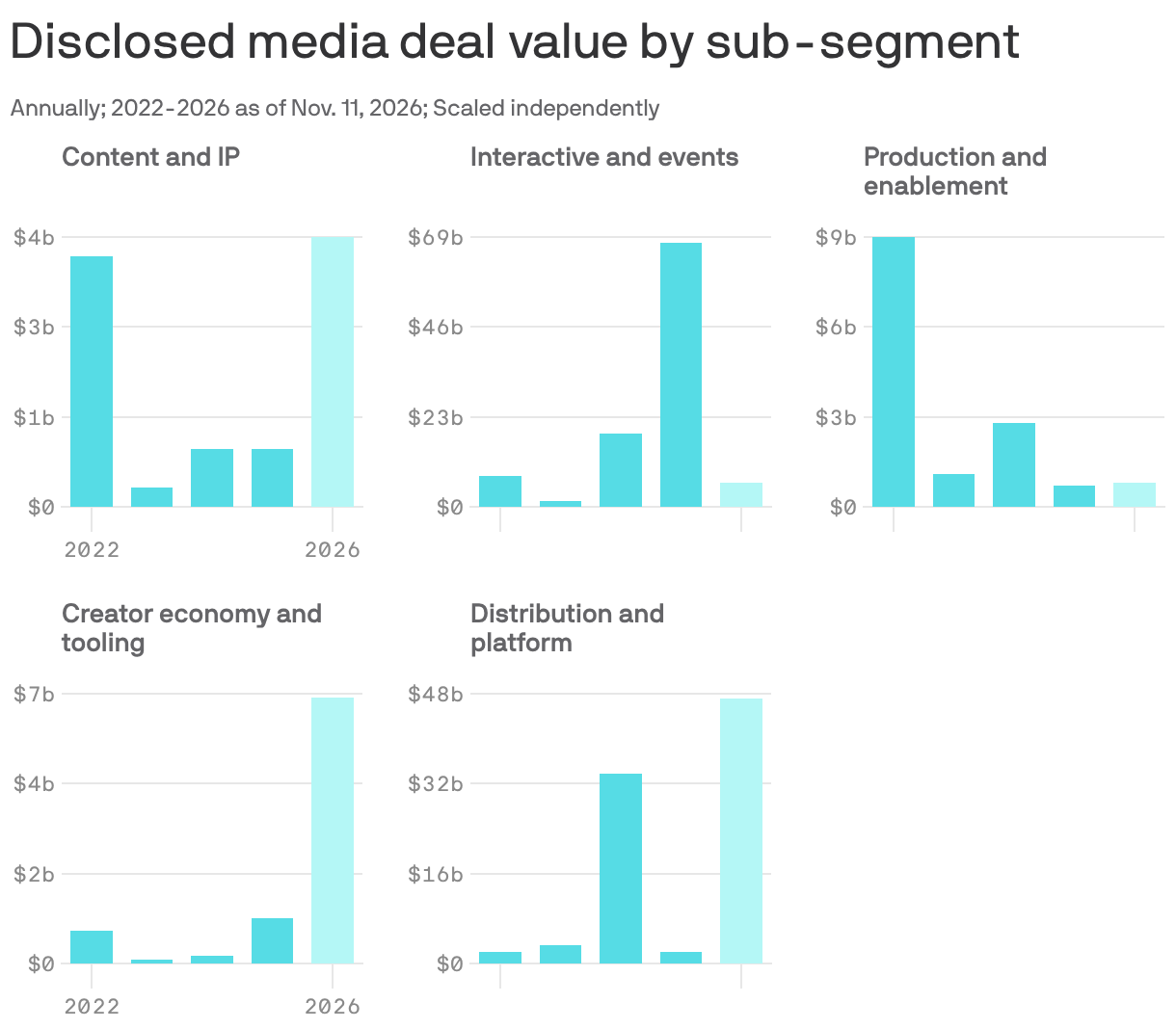
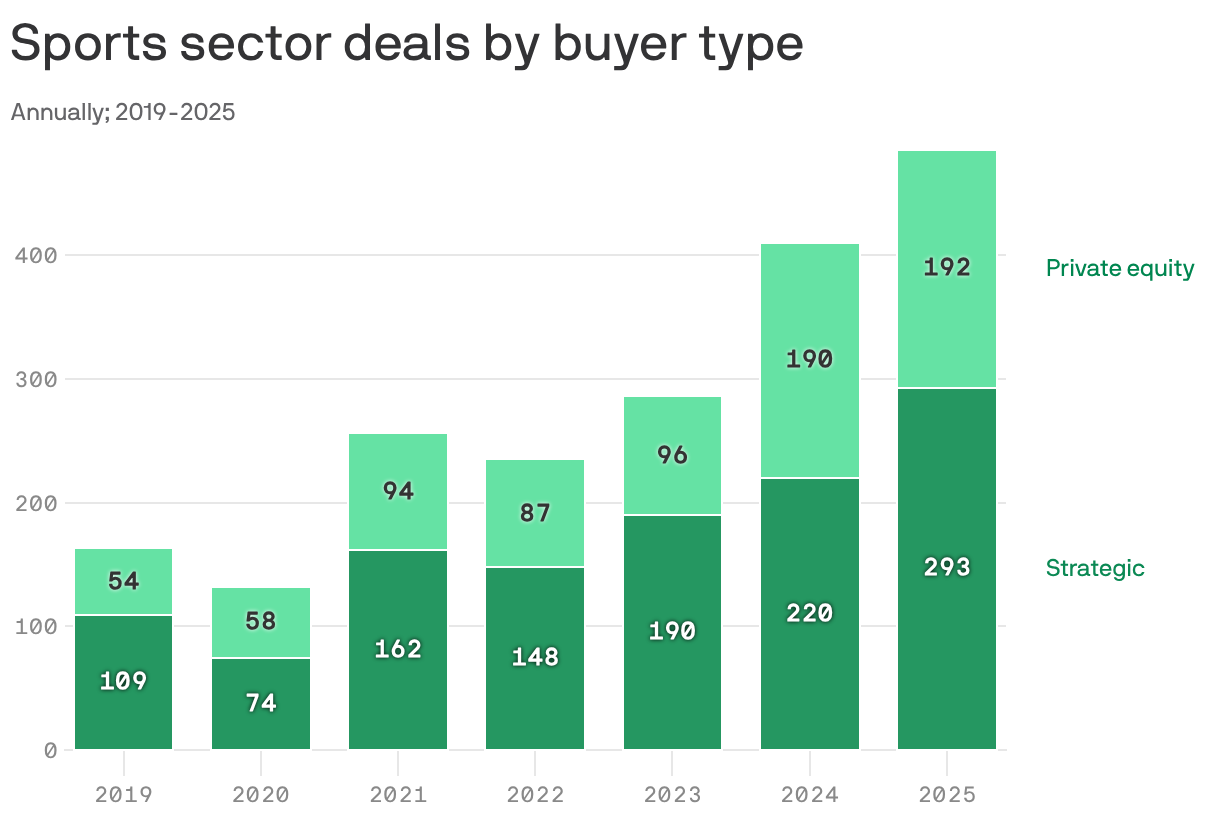
Sports, live events, original IP and proprietary data represent the hottest assets in media right now.
Why it matters: The next wave of media deals is not just about owning content, but using scarce assets to drive fandom and then owning and optimizing that customer relationship.
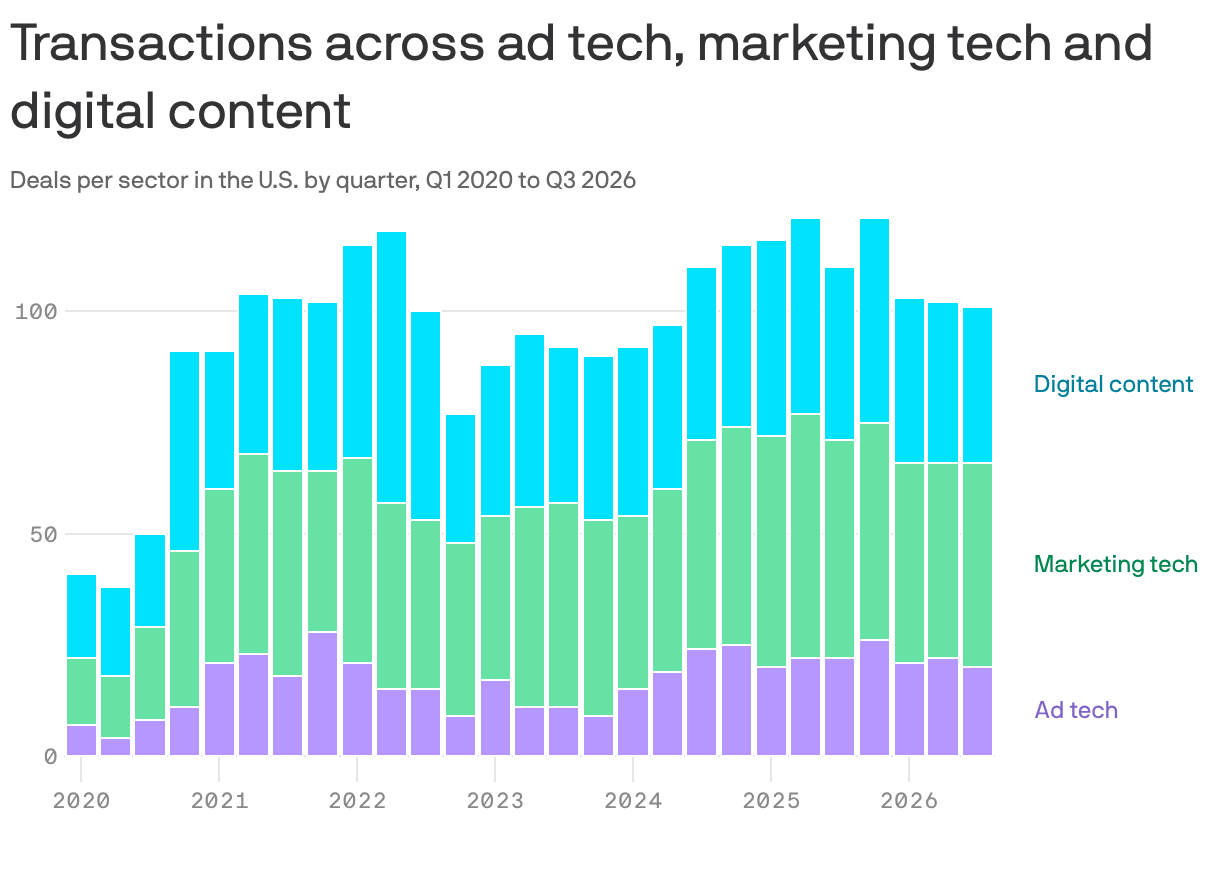
Why it matters: The advertising supply chain is transforming with the collapse of the open web, boosting firms with access to customer data while squeezing intermediaries that rely on commoditized targeting.
After a decade of failed megamergers, the media industry is finally facing a sobering reality: Scale doesn't necessarily drive value in an AI world.
Why it matters: Dealmakers want assets that AI can't commoditize, such as premium intellectual property, unique live experiences and proprietary consumer data.
AI's titans were handedan extraordinary mandate: Police yourselves.
But the industry faces a four-pronged crisis of trust as Democrats surge to power and many Americans rebel over AI and data centers. Guardrails for the industry will be a priority for the new Congress, with some populist Republicans eager to pile on.
Why it matters: The collision of safety scares, political blows, financial turmoil and leadership scandals threatens to derail AI's once seemingly unstoppable ascent.
Food prices are rising sharply even before they reach supermarket shelves.
Why it matters: Americans are already paying more for groceries. New inflation data this week suggests that the pressure is not letting up.
Wholesale fresh and dry vegetable prices surged 27% last month, adding to a 31% price jump the previous month.
These are the prices paid by food distributors, grocery chains and other businesses to farmers and other producers for eventual sale to consumers.
Wholesale food prices overall are up 1.7% from a year earlier, ending a three-month streak of annual price declines.
Zoom in: Unusually warm weather, crop disease and insect infestations have reduced lettuce and other leafy green harvests in California.
The Iran war, meanwhile, has driven up the cost of fertilizer and fuel, making it more expensive to grow and transport food.
A regional grocery chain recently told Federal Reserve officials that it now costs more to transport a head of lettuce from California than to buy the lettuce itself, citing high diesel fuel prices.
Truck freight costs are up almost 25% over the past year, the largest annual increase since 2022 and on par with the surge seen during the pandemic-era inflation shock.
The big picture: It's unclear how much of the surge in producer prices will be passed along to consumers. But steeper price increases were already showing up at supermarket checkout counters last month.
Grocery prices rose 0.4%, the biggest monthly increase in 6 months, driven by higher prices for meat, dairy products and snack foods.
Fresh vegetable prices climbed 2%, including a nearly 8% jump in lettuce prices.
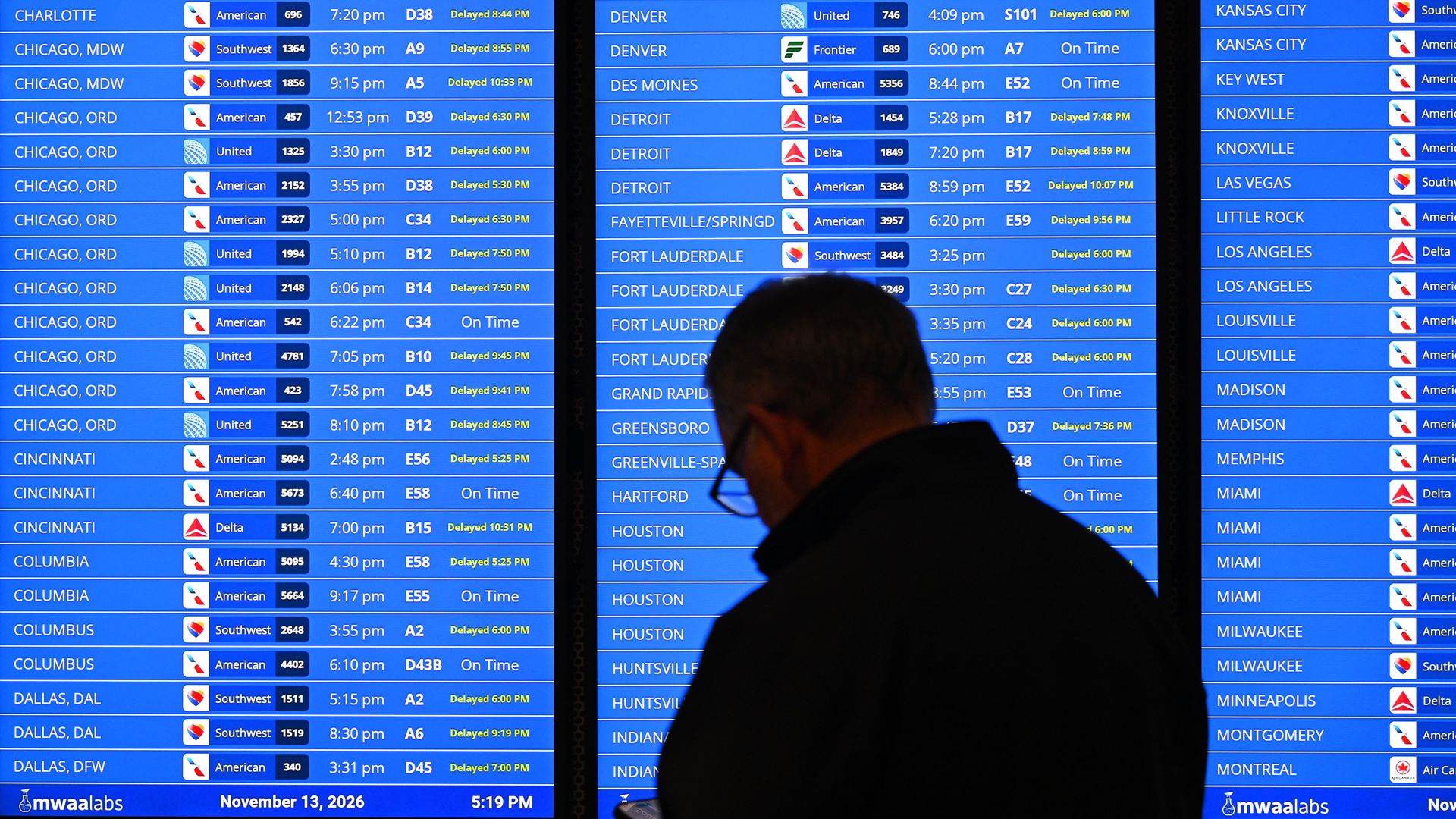
The chaos from the FAA's nationwide ground stop lingered into early Saturday morning, with thousands of flights cancelled as airlines played catch-up.
Why it matters: Millions of travelers will find themselves inconvenienced over what the government says was simply old technology that couldn't keep up with modern upgrades.
The FAA lifted its nationwide ground stop Friday night after hours of chaos and thousands of delays and cancellations.
Why it matters: The effects of the rare and extreme move will likely ripple through the weekend, with travelers stranded and airlines' planes and crews out of position.