The stakes in regulating digital assets now go far beyond cryptocurrencies, as the technology begins to reshape how money moves, financial markets operate and countries control their currencies.
Why it matters: The central challenge for governments is allowing the useful features of digital assets into mainstream finance while protecting financial stability, according to a new report from the World Economic Forum and Boston Consulting Group.
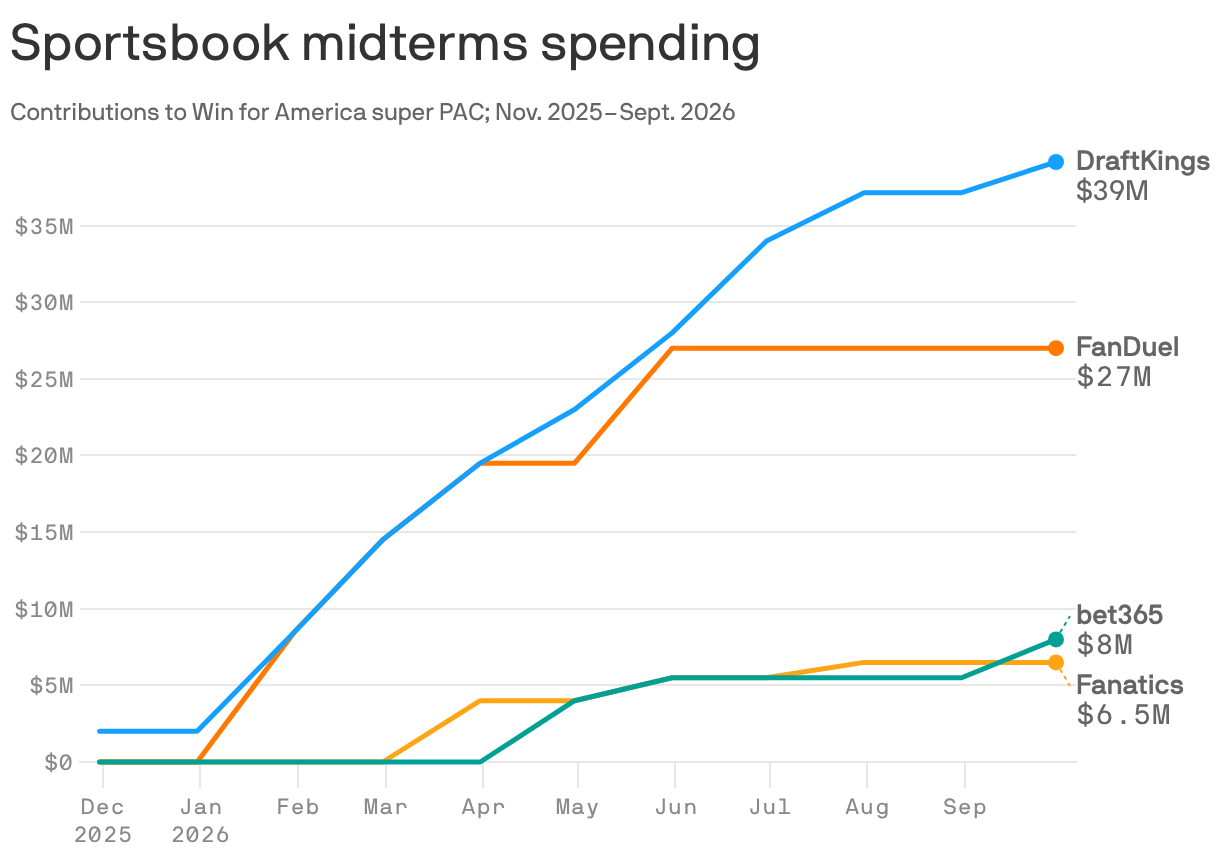
Four of America's biggest sportsbooks have poured more than $80 million into a political operation seeking to influence state elections ahead of the midterms, according to Federal Election Commission data reviewed by Axios.
Why it matters: Sportsbooks are ramping up their political spending as they seek broader legalization and navigate a growing rivalry with prediction markets.
Electric vehicle charging is getting tantalizingly close to effortless, as I discovered on a recent road trip through the Pacific Northwest.
But every time I thought we'd finally arrived at charging nirvana, some little annoyance reminded me that we're not quite there yet.
Why it matters: Public charging has long been one of the biggest obstacles to EV adoption. Now, automakers are finally eliminating some of the hassles that keep many drivers tethered to gasoline.
Honda is urging the U.S., Canada and Mexico to coordinate policies to keep Chinese automakers from gaining a foothold in the American market — even as it acknowledges their arrival is ultimately inevitable.
Why it matters: Chinese automakers are expanding rapidly around the world with inexpensive, technologically sophisticated vehicles, putting pressure on established carmakers to move faster and slash costs.
If Democrats gain full control of Congress next week, as many polls and prediction markets suggest they will, private equity could once again find itself in the political crosshairs.
The big picture: Private equity has become a rhetorical punching bag for a number of Democratic House and Senate candidates, including in debates and on the stump, as an affordability bête noire.
Instacart shares hit an all-time high on Monday, before a slight Tuesday pullback, following reports that the grocery delivery giant is nearing a sale to DoorDash.
Zoom in: Both the WSJ and Reuters put around a $17 billion price on the prospective deal, which would work out to over $70 per Instacart share, although neither said if DoorDash would pay all cash or cash and stock.
A senior Treasury official who played a key role in the Trump administration's trade negotiations with China is leaving the department for Netflix, Axios has learned.
The big picture: The departure comes as Treasury Secretary Scott Bessent helps steer Trump's sweeping overhaul of U.S. trade policy.
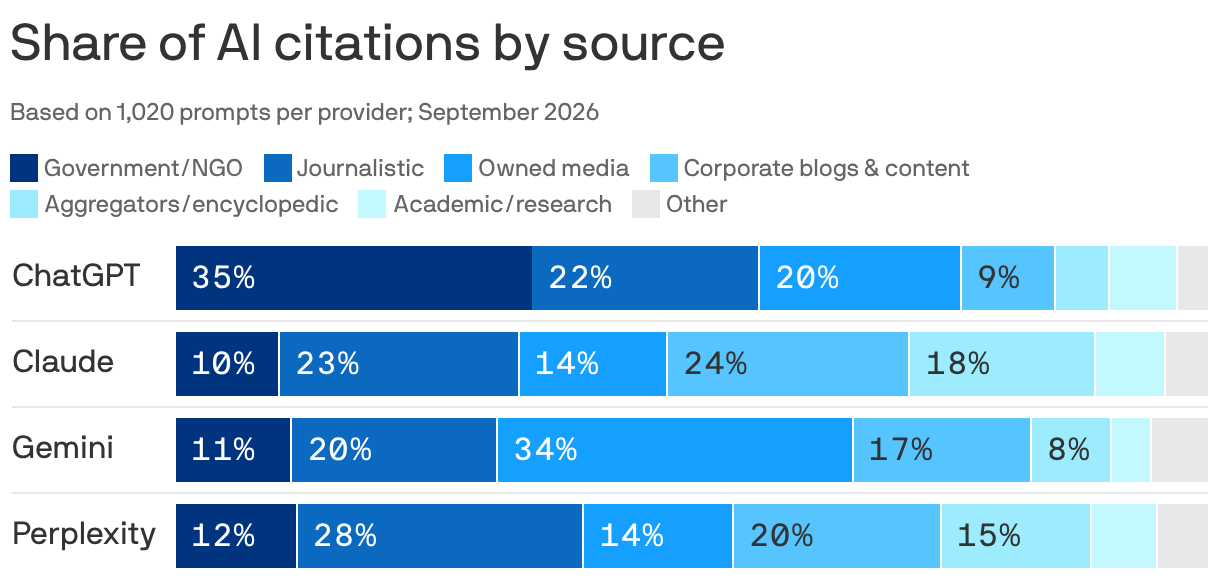
Data: Generative Pulse/Muck Rack; Chart: Simon Hernandez-Arthur/Axios
Before trying to get AI to cite your company, findings from a new study shared exclusively with Axios suggest figuring out what your audience is asking about in the first place.
Why it matters: As communications teams invest in generative engine optimization, they risk spending time and resources on media coverage or content that doesn't show up in the AI answers their audiences are looking for.
The CEO may be the face of the company, but they're not always the person audiences want to hear from most, according to a new report by We. Communications shared exclusively with Axios.
Why it matters: Comms leaders should have a bench of executives who can speak credibly to different issues and audiences while sticking to a cohesive brand story.
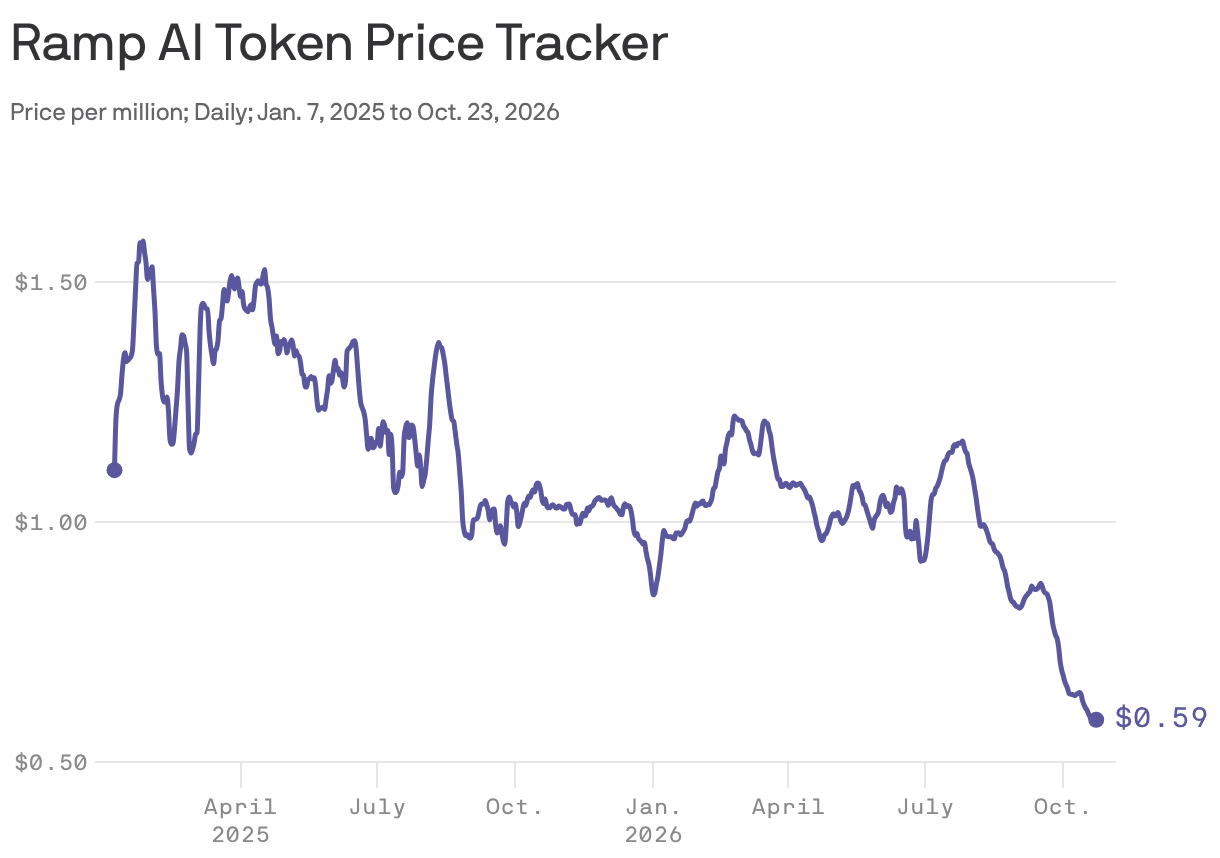
OpenAI has launched a cheaper GPT-6.1 Terra model, costing up to half as much per token as the previous version.
Why it matters: Prices for tokens — a basic unit for AI usage — have been falling sharply, raising questions about both the strength of the demand for AI and how much revenue the data center boom will ultimately create and shower on investors.
The cybersecurity world braced for catastrophe after AI uncovered critical flaws in the web's foundational code, but the anticipated wave of automated attacks has surprisingly struggled to get off the ground.
Why it matters:Millions of hacking attempts have yielded few successful attacks, an apparent lucky break due to the degree of difficulty of building attacks on the bugs. The defense work at many companies to address the issue also appears to have helped.
The last week has unfolded in ways that remind some researchers of the Y2K phenomenon, a software problem in 1999 where warnings of Armageddon helped rally companies to engineer a solution in time.
Rival satellite companies are jockeying to loosen Elon Musk's grip on battlefield communications after his company's restrictions on Ukraine's Starlink service shook officials in Europe and the U.S.
Why it matters: The episode, which temporarily disrupted Ukraine's drone usage, shows how vulnerable a military can be to the whims of a single company or market dominator.
Three brothers, including two prominent real estate agents, were sentenced Tuesday to 30 years in prison each for their roles in a decade-long sex trafficking and sexual abuse scheme, the Department of Justice said.
The big picture: The sentencing follows the March convictions of Tal Alexander, 40, and twins Oren and Alon Alexander, 39, of Miami, on multiple federal sex offenses, including conspiracy to commit sex trafficking.