Several major brands that target working-class and middle-income Americans are struggling to attract customers.
Why it matters: While much of the market's attention is focused on the booming AI economy, there's a street fight going on among some of the biggest brands for the wallets of value-conscious consumers.
The FCC on Thursday voted 2-1 to eliminate the national TV ownership cap rule that bars a single broadcaster from owning stations that reach more than 39% of U.S. TV households.
Why it matters: The party-line vote clears the way for local broadcasters to merge, giving single broadcast ownership groups far more reach than they previously could have.
The U.K. Competition and Markets Authority (CMA) on Thursday said it gave Paramount the green light to acquire Warner Bros. Discovery.
It comes following assurances from Paramount that it would preserve editorial independence, invest in U.K. programmingand protect children's networks..
Why it matters: It's a major regulatory win for Paramount, which is facing a more contentious approval battle back home.
OpenAI on Thursday announced a series of changes that will upgrade ChatGPT for both paid and free users.
Why it matters: Free AI plans from frontier labs now offer more intelligence than most people will use, while enterprises are still figuring out how to budget for advanced capabilities.
Michelle Lammers has spent her career at the intersection of defense, space, cyber and national security, and now serves as vice president of communications at Nightwing, a national security technology company.
Why it matters: Lammers' "anything but linear" career reflects a broader shift in the profession, as communications leaders are increasingly expected to understand business strategy just as well as storytelling.
AI can generate almost anything on a screen, but it can't re-create what happens when thousands of people gather around something they genuinely care about.
Why it matters: Communicators have long managed relationships with employees, investors, regulators and the media. Now add fans to the mix.
Three recent studies converged on two big themes for communicators: Americans are most concerned with practical, pocketbook issues and are looking for consistency from business leaders.
Why it matters: Our inboxes are flooded with industry research, but separate surveys conducted by three of the largest consultancies highlight specific trends of what Americans say matters.
The leaders of America's biggest companies are much less optimistic than they were before the start of the war earlier this year, according to a survey of Fortune 500 leaders out Thursday morning.
Why it matters: When leaders are feeling optimistic, they push for more hiring, capital investment and dealmaking, and that drives growth in the economy and markets.
And all of that is critically important right now — businesses' AI infrastructure spending is a key driver of GDP growth. Regular folks, meanwhile, are struggling in the face of rising prices.
Verb, a data exchange, is launching a marketplace Thursday that lets consumers sell their personal data directly to companies, the company first shared with Axios.
Why it matters: AI companies have spent years buying — or just scraping — datasets from publishers, app developers and data brokers. Verb is betting consumers will want a cut for themselves.
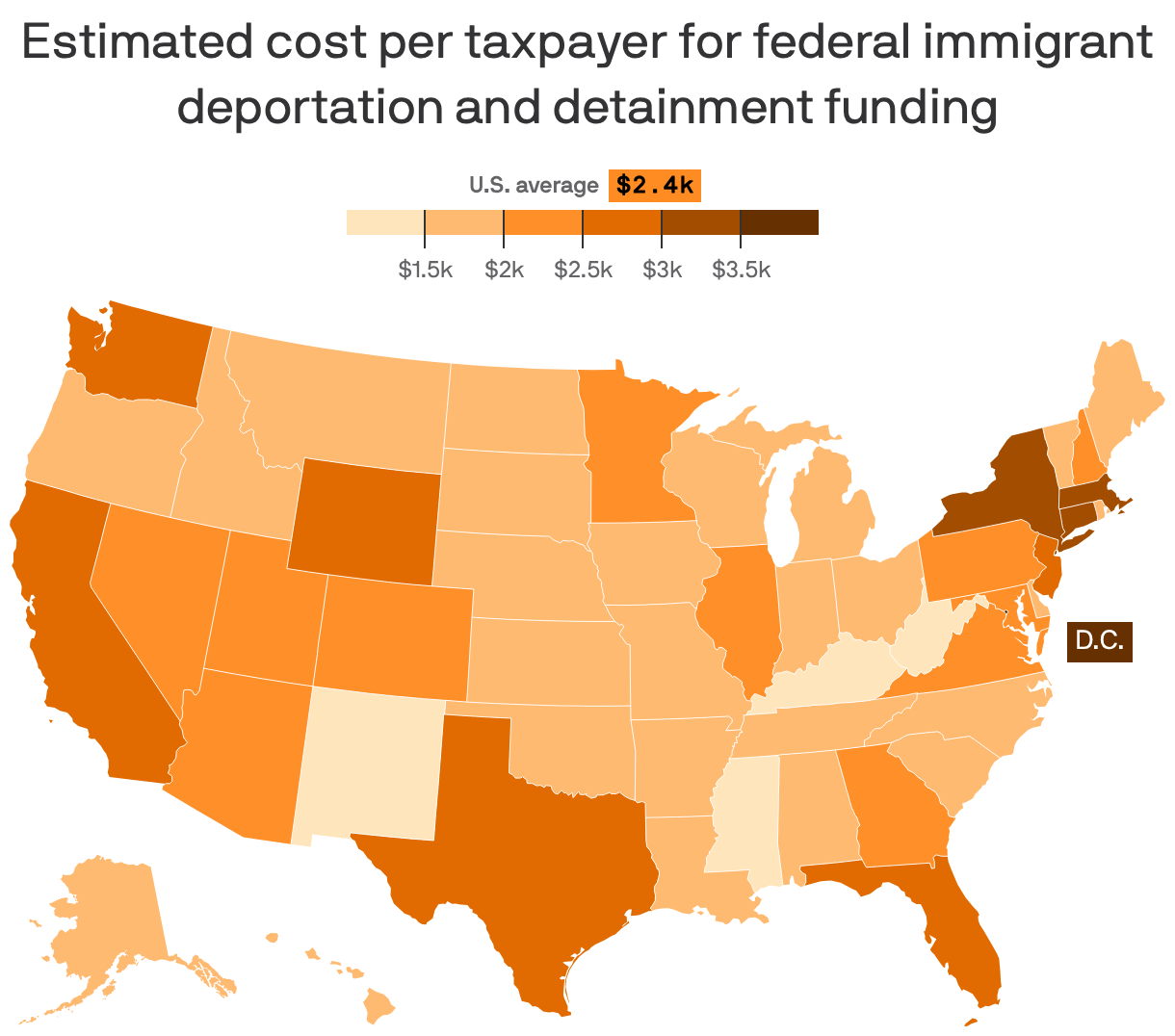
American taxpayers would pay about $2,358 each for President Trump's mass deportation push, according to a new calculator tool from the Economic Policy Institute.
Why it matters: The estimate fuels debate over whether billions of federal dollars devoted to deportations could instead fund other public priorities such as food assistance, health care or housing.