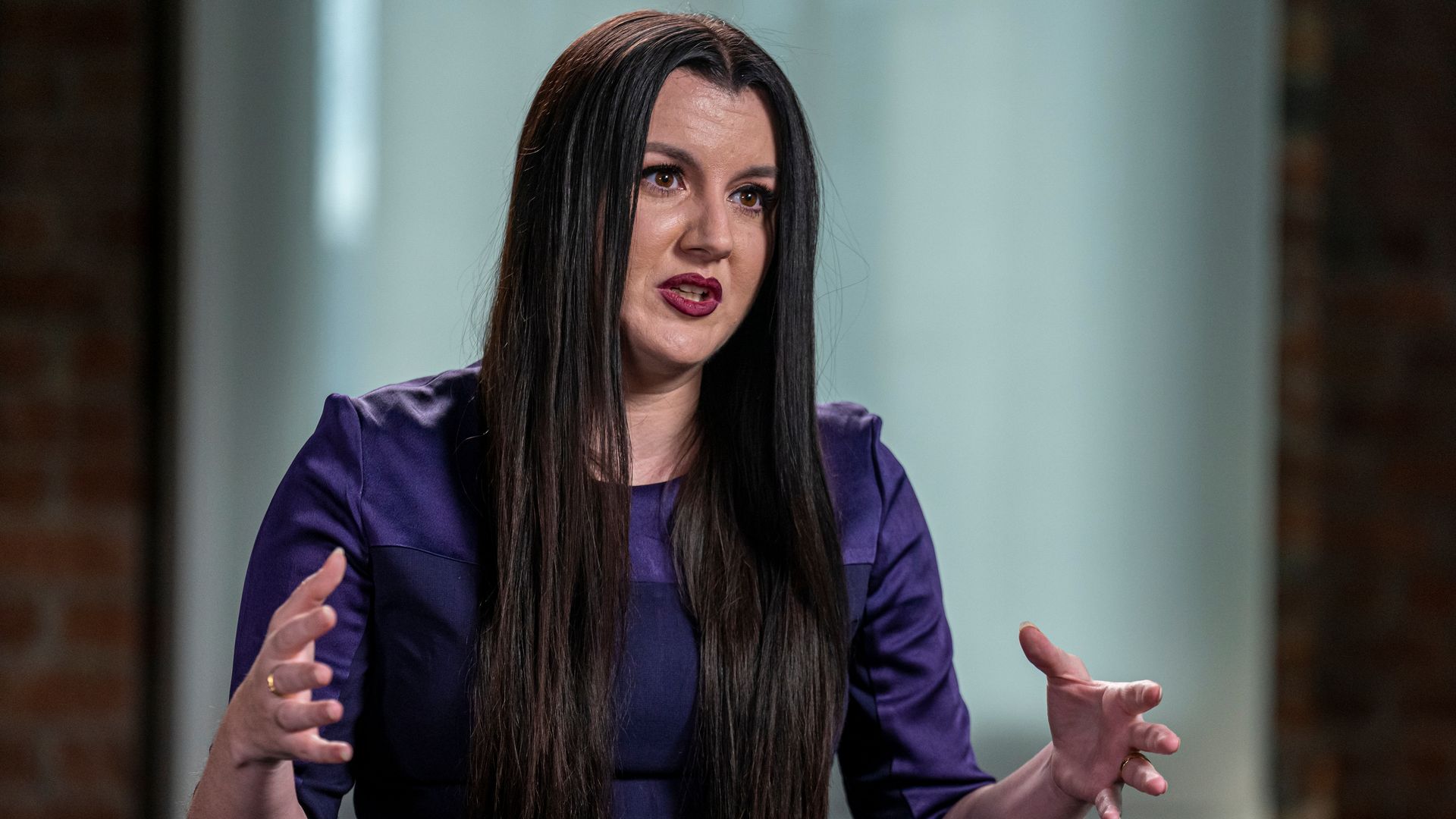
OpenAI's head of AGI deployment, Fidji Simo, is taking "several weeks" of medical leave, according to an internal memo that Axios has reviewed and that was originally reported by The Information.
The big picture: Simo's leave sets off a broader leadership reshuffling across OpenAI, with responsibilities spreading across top executives.
Cocoa prices have plunged from last year's record highs — but shoppers are still paying more for Easter chocolate, Wells Fargo says.
Why it matters: Once food companies raise prices, they're slow to bring them back down when ingredient costs fall — even as consumers are expected to spend a record $24.9 billion on Easter this year, according to the National Retail Federation.
The big picture: United Airlines is introducing a new tier of premium options on long-haul flights — borrowing the unbundling playbook from coach and turning once-included perks into new fees.
The U.S. Commodity Futures Trading Commission on Thursday sued three states — Arizona, Connecticut and Illinois — for what what it calls "unconstitutional and invalid" applications of state anti-gambling laws to prediction markets.
Why it matters: These cases could determine who really regulates companies like Kalshi and Polymarket, which have raised billions of dollars from venture capitalists
Data: DoorDash; Note: Analysis of Easter candies that over-indexed most in each state from April 7-20, 2025; Map: Sara Wise/Axios Visuals
Data: DoorDash; Note: Analysis of Easter candies that over-indexed most in each state from April 7-20, 2025; Map: Sara Wise/Axios Visuals
Kinder Joy Eggs dominate Washington Easter baskets to an unusual degree, according to DoorDash.
The company analyzed which Easter basket treats are uniquely popular in each state, based on ordering data from last year.
Kinder Joy Eggs — which include a surprise toy, plus layers of chocolate and sweet cream that you scoop out to eat — took the top spot in Washington and three other states.
Reese's is the national MVP, with Peanut Butter Bunnies uniquely popular across the country.
The labor market snapped back with 178,000 jobs added in March, while the unemployment rate ticked down to 4.3%, the government said Friday.
Why it matters: Hiring boomed after shedding jobs in February, suggesting a steadying labor market as the Iran war injected fresh uncertainty into the economic outlook.
A big, overlooked risk in private credit is coming from the life insurance industry, investors and economists warn.
Why it matters: Life insurance, particularly the annuities that people buy to fund their retirements, could be the vehicle through which the pressures on private credit actually affect the lives of real people.
State of play: Stress is building in private credit — or nonbank lending.
An increasing share of investors in private credit funds are looking to get their money out.
Redemptions at business development companies, which invest in small and medium-size private firms, are rising, notes a report Thursday from Bloomberg Intelligence.
Zoom out: That distress is raising concerns about the private credit market overall — which is much bigger than BDCs alone.
In fact, some of the biggest players in the market are life insurance companies.
They invest in private credit to earn enough return to pay the people who buy insurance and annuities.
Over the past few years, insurance has become the "lifeblood" of private credit, as the Financial Times put it earlier this year.
By the numbers: Data is hard to come by, butone estimate from researchers last year at the Chicago Fed finds that life insurer investments in private credit reached $849 billion in 2024 — that's more than double what it was in 2014 and close to half of the $1.8 trillion sector.
Zoom in: Private equity firms in recent years have gotten into the insurance business, driving up the industry's exposure, as the Fed report notes.
Both Apollo Global and KKR have insurance arms that are investing in private market debt, while Blackstone is a huge manager of insurance companies' portfolios.
There are also smaller, less well-known firms that have followed these big guys into the insurance business — and are causing worries.
Friction point: The big issue is with annuities: Regular folks buy these from insurers, handing over a chunk of their savings, and in return they are assured a steady retirement benefit.
The exposure to private credit that individual retirees have through their annuities is a "big problem," says Andrew Milgram, managing partner and chief investment officer for Marblegate Asset Management, an opportunistic credit and special situations investment firm.
He warns of a potential "doom loop" — where concerns over the market lead retirees to terminate, or "surrender," their annuities, creating more private credit distress and leading to more withdrawals.
Reality check: While Cassandras like Milgram issue warnings, those in the industry say that insurers invest in very safe private assets, unlike the software loans most at risk in the current private credit upheaval.
"We're trying to find the safest investment possible for insurers," a source in the credit industry tells Axios. "It's misleading to say insurers are being pushed into risky assets."
"The vast majority of private credit is private investment-grade credit which helps to generate high-quality yield and retirement income for families and savers across the country," says Apollo in an explainer, which notes that it's a massive market and that private debt is on the balance sheets of pensions and banks, too.
Threat level: The private market is opaque, however, and it's simply hard to assess the risk.
"The lack of transparency surrounding private credit funds makes it impossible to evaluate just how vulnerable they are," economist Eileen Appelbaum wrote in a recent analysis for the Center for Economic and Policy Research.
Zoom out: Milgram has been warning about private credit for years. He is one of a handful of distressed debt investors now looking for opportunities in the struggling sector.
"Biggest opportunity since 2008," Victor Khosla, founder of Strategic Value Partners, told the Financial Times late last month.
Yes, but: Asset managers continue to say that the turmoil in the space is driven mostly by investor anxiety, specifically in "semi-liquid" private credit funds, and that retail investors didn't understand the risks they were taking on.
"A lot of the selling that's happening right now in the private credit space is being driven by fear rather than the fundamentals," says Aaron Mulvihill, a global alternatives strategist at JPMorgan Asset Management.
The bottom line: Fear over private credit is raising questions about exposure in the life insurance industry.
The idea of breaking up big health insurance companies has suddenly entered the political conversation, even if it faces long odds of ever actually happening.
Why it matters: Politicians across the ideological spectrum are increasingly convinced that those owning multiple parts of the health care system have a big role in making medical costs unaffordable.
Public resistance to data centers isn't driven as much by electricity prices as conventional wisdom suggests — it's more about how the giant projects might alter theircommunities, a new Harvard/MIT poll shows.
Why it matters: The poll could shape how developers engage with communities as they try to build more data centers to meet AI's massive electricity demands, said Harvard researcher Stephen Ansolabehere, who oversaw the poll.
Jigsaw puzzling isn't just a solitary bad-weather activity anymore — it's snapping into place as a social sport.
Why it matters: Puzzling's shift from solo to social mirrors a bigger trend: People are turning analog or "grandma" hobbies into in-person communities.