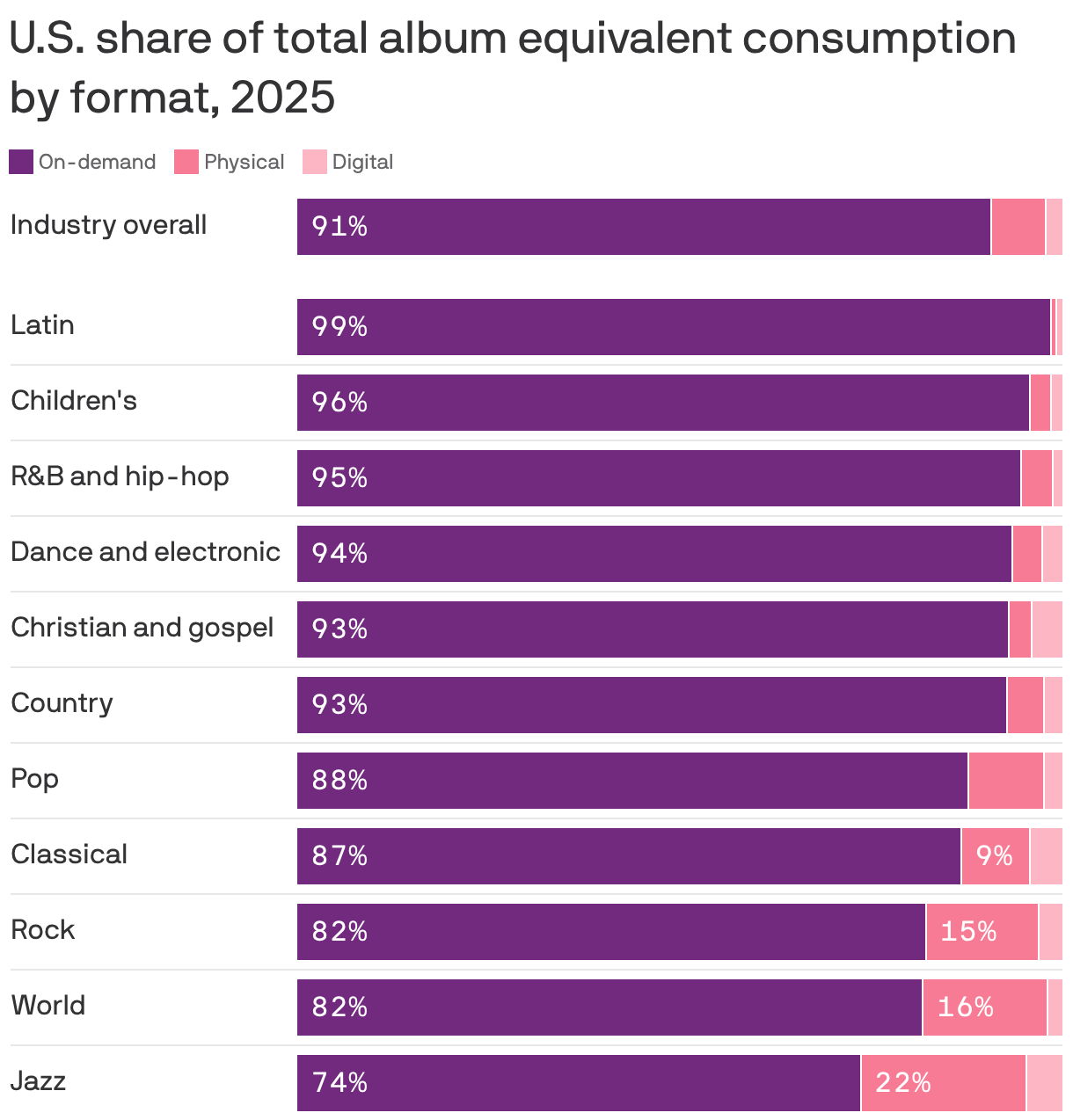
Music consumption is fragmented across formats based on genre with some audiences driving outsized consumption through physical albums or video streams.
Why it matters: In an industry dominated by streaming, revenue opportunities vary depending on genre and fan behavior.
Success for artists is being driven by marketing power and superfandom in a more democratized music industry.
Why it matters: Instead of relying on revenue from album sales or streams alone, artists increasingly depend on building dedicated audiences that follow them across platforms, buy their merch and attend their shows.
Subscription streaming platforms are expanding payouts to more music creators than ever before, but top artists still capture the vast majority of revenue.
Why it matters: The streaming era has made distribution and discoverability easier for a wider group of artists, but it's also reinforced the dominance of the biggest stars.
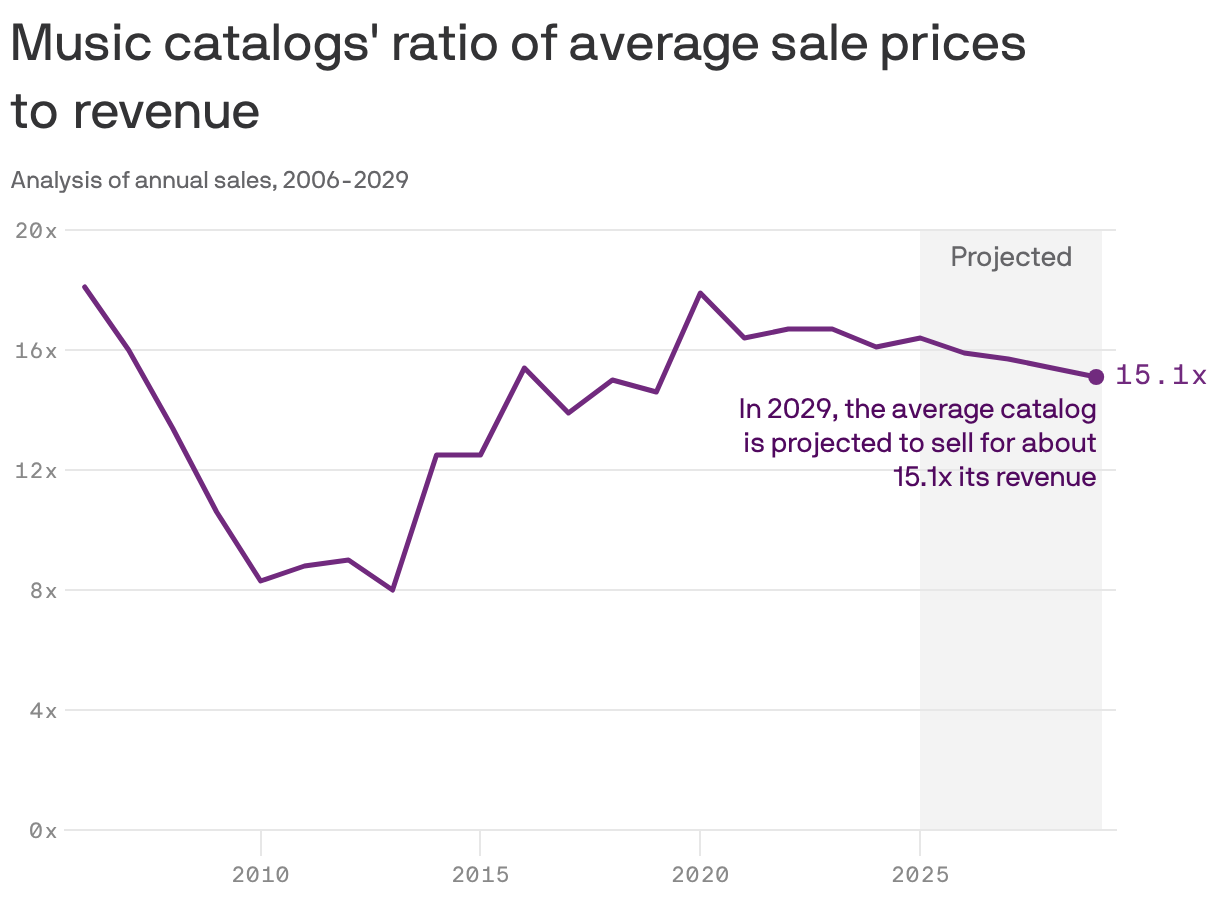
Data: Shot Tower Capital; Note: Excludes 10 sales of catalogs valued over $200m; Chart: Erin Davis/Axios Visuals
Dealmaking around blockbuster music catalogs is off to a fast start in 2026, with at least four major artist deals already announced and others quietly in negotiations.
Why it matters: Music rights have become an in-demand asset given their steady cash flow and resilience in volatile markets.
While publishing, TV and film have struggled to financially weather the transition from analog to digital, global music industry revenues today are bigger than ever.
Why it matters: Strong copyright protections and collaboration between labels, artists and distributors have helped the music industry successfully pivot to a lucrative subscription model and rebuild in the digital era.
As America pulls back from investments in traditional pillars of soft power such as international aid and broadcasting, one area stands out as a growing cultural export: music.
Why it matters: The forces that launched the U.S. to the top of the global stage in music can't be easily unwound by a single administration or policy. They are woven into the cultural fabric of America's history and identity.
Easter baskets are getting a squishy upgrade this year, as parents hunt for toys like NeeDoh and glittery "dumplings" — among this season's hottest items.
Why it matters: The surge shows how viral, low-cost toys can quickly turn into must-have items — driving sellouts and resale markups.
OpenAI co-founder and CEO Sam Altman offered up three tips in an interview this week with Axios' Mike Allen for those in the C-suite thinking about AI implementation in the next 6-12 months:
JPMorgan Chase chairman and CEO Jamie Dimon offered his advice to other CEOs and C-suite members in an interview with Jim VandeHei for a new episode of "The Axios Show."
Why it matters: Dimon, former chair of the Business Roundtable, is a legendary figure in the American business landscape.
Criminals are growing bolder, stealing priceless art, jewels and truckloads of goods — but it's harder than it looks for them to cash in on their heists.
Why it matters: Because massive heists immediately dominate global news cycles, thieves quickly find themselves stuck with highly recognizable merchandise that even underground buyers are too afraid to touch.