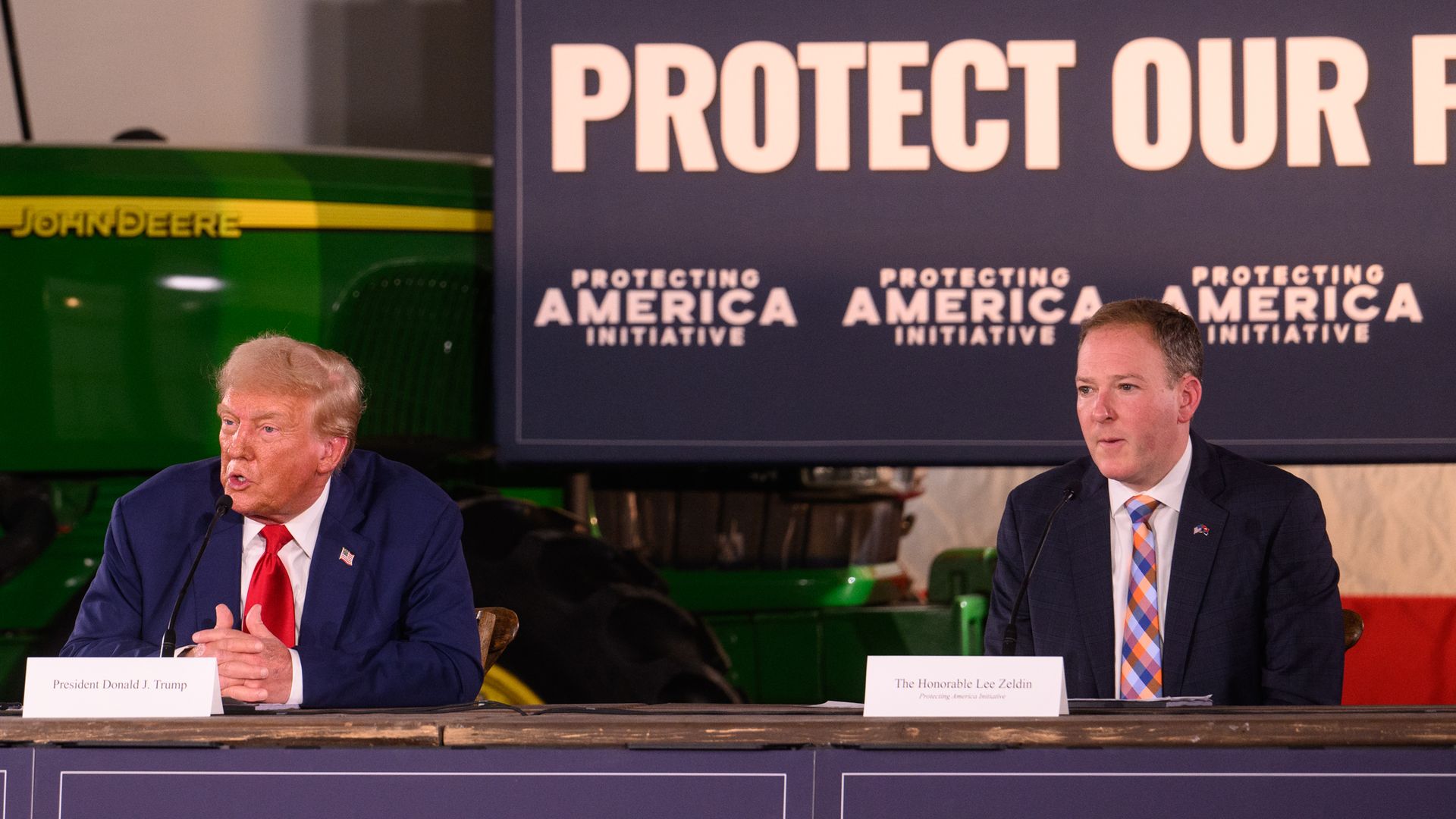
GLP-1 drug stocks slumped today after President Trump signaled plans to drive down the price of at least one of the blockbuster weight-loss and diabetes treatments.
Why it matters: GLP-1 drugs remain cost prohibitive for many Americans as Medicare and many private insurance plans don't cover them for weight loss purposes.
Nvidia and TSMC announced Friday their first completed U.S.-made wafer that will eventually become Blackwell chips for AI purposes, Nvidia first tells Axios.
Why it matters: This milestone represents some of the first fruits of the Trump administration's push to build AI technology in the U.S., and stay ahead in the race to control the future of artificial intelligence.
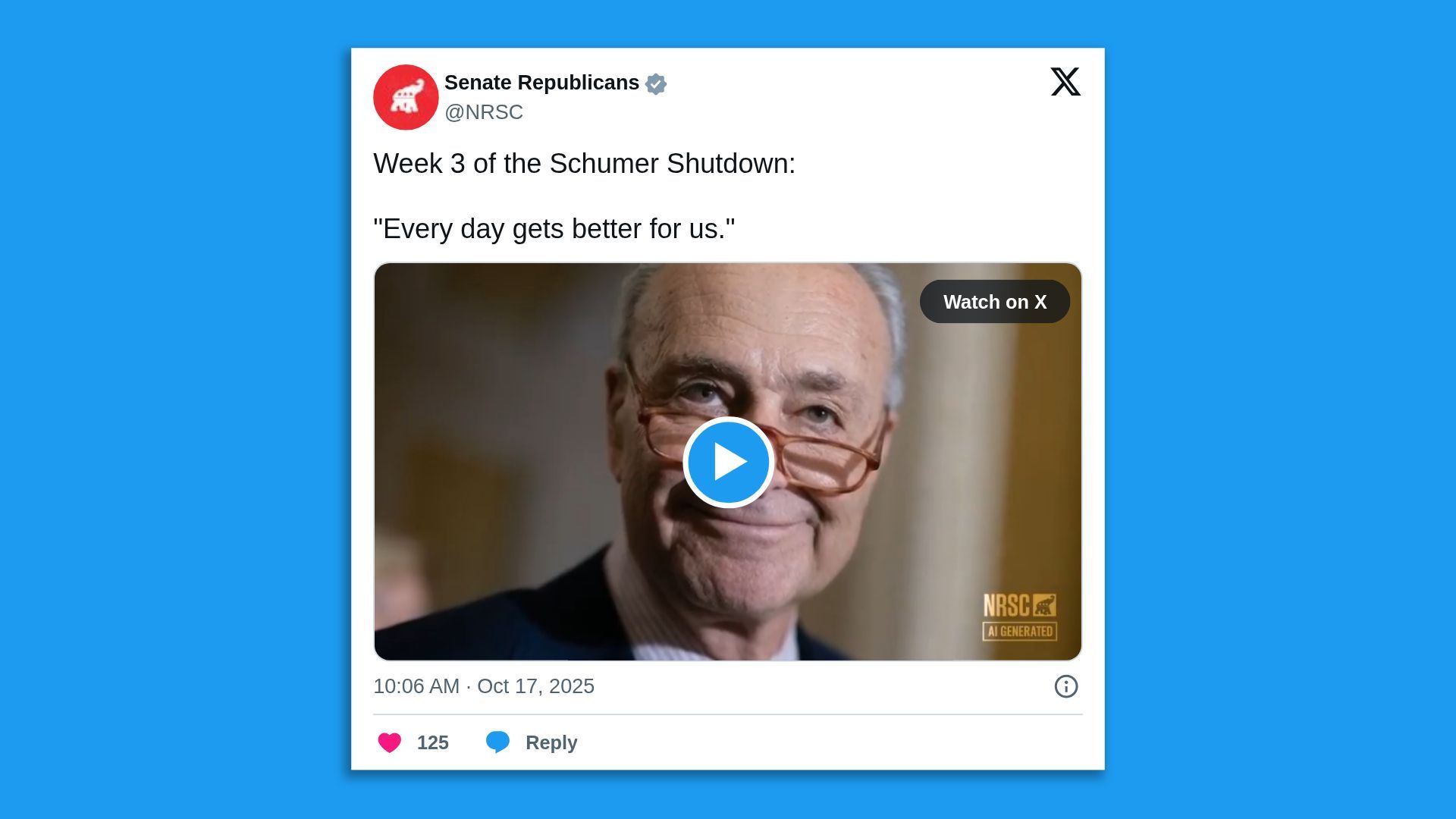
The National Republican Senatorial Committee posted an AI-doctored video today that features Schumer saying — with a grin — that "every day gets better" for Democrats during the shutdown.
The quote is real. But he never said it on camera.
Why it matters: There's a lot more of this coming fast in the AI era.
As global tensions reshape the business landscape, geopolitics is a core concern in every boardroom. In this episode, PwC Partner Michelle Horton and Axios Creative House Host Ryan Heath explore how leaders can turn geopolitical uncertainty into strategic advantage.
As policy shifts, digital disruption, and rising energy demands redefine the global economy, leaders are rethinking how to turn change into opportunity. PwC Partner Erika Ryback, who specializes in real estate strategy and workplace transformation, and Axios Creative House Host Ryan Heath explore where growth is happening now, and what's driving it.
Executives today face complex challenges — from surging energy demand to supply chain volatility, leveraging tax incentives to building resilience and allocating capital to unlocking value from data. These aren't just pressures — they're decision points. And with disruption comes opportunity.
PwC's Michelle Horton and Brigham McNaughton and Axios Creative House Host Ryan Heath explore how sustainability helps to meet that opportunity.
Our world has become increasingly affected by shifting tariffs, evolving trade policies and constant disruption. Supply chains can be both a source of risk and a wellspring of opportunity.
PwC Principal Carla DeSantis and Axios Creative House Host Ryan Heath explore how leaders can turn short-term challenges into long-term advantages with:
In this episode, PwC's Rohit Kumar and Anna Green join Axios Creative House Host Ryan Heath to discuss the way today's evolving tax landscape is reshaping business strategy.
President Trump re-filed a $15 billion defamation lawsuit against the New York Times on Thursday after the original complaint was dismissed for being unnecessarily long.
Why it matters: The New York Times lawsuit is one of several legal battles involving the president and media organizations — some of which chose to reach multi-million dollar settlements with Trump.
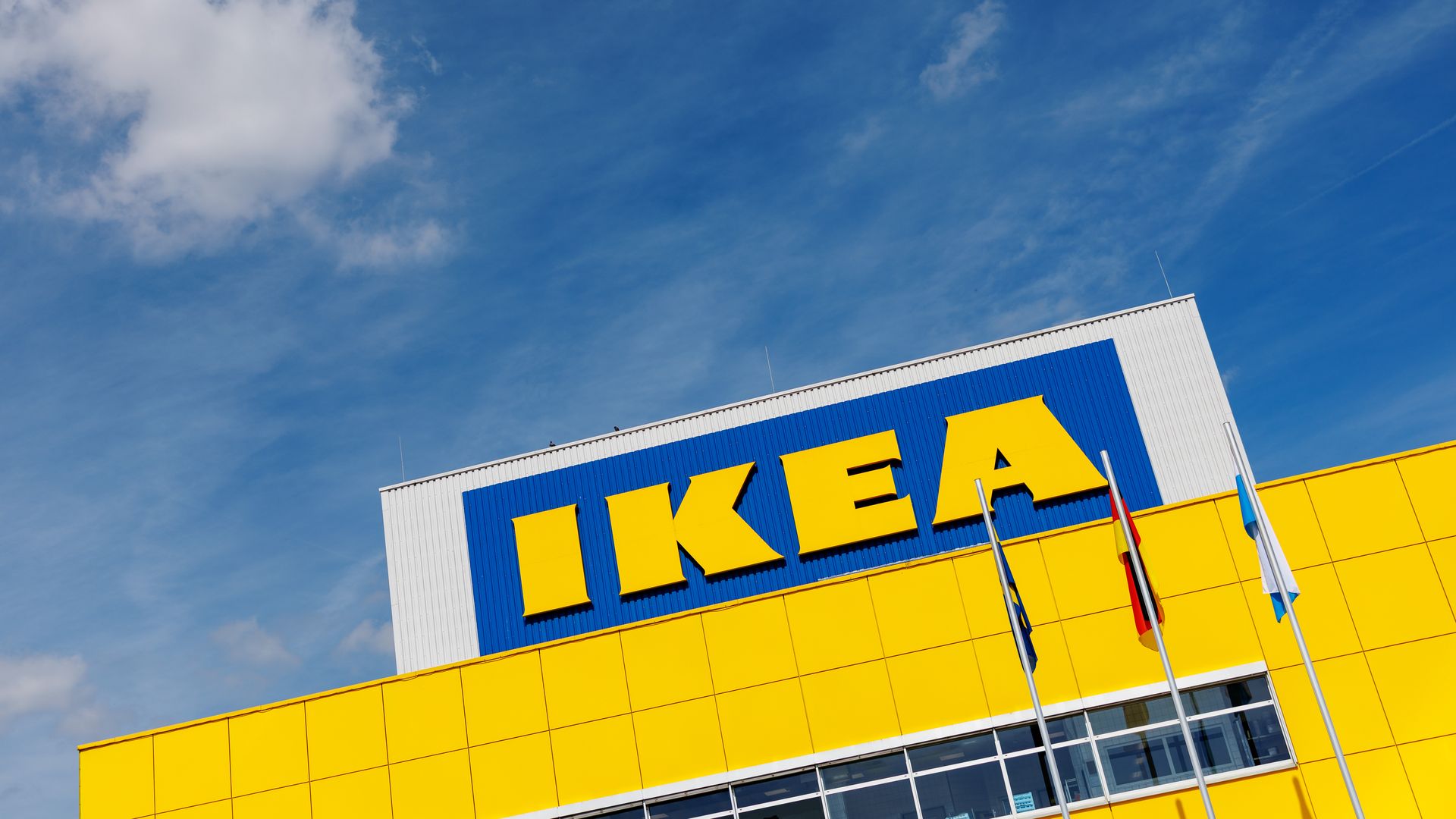
IKEA confirmed that it has raised prices as President Trump's furniture tariffs went into effect this week.
The big picture: The famously budget-conscious Swedish brand has at least partially ended its price-slashing campaign, indicative of the way that tariffs are ultimately hitting consumers rather than businesses.
First things first: Safe, stable housing is the foundation of financial security for individuals and households across America and critical to economic success. Yet for too many, affordable housing remains out of reach, whether they are seeking to own or rent their homes.
Apple and Formula 1 on Friday announced a five-year media rights deal that will bring all races exclusively to Apple TV in the United States, beginning in 2026.
Why it matters: The deal, which is reportedly valued at roughly $140 million annually, represents a significant milestone in F1's evolution and growth in the U.S.
A new investment firm is betting on a big idea: There's no collision between prioritizing both climate and returns despite the recent vibe shift — if you do the homework.
Why it matters:Resolution Investors is helmed by veterans of Al Gore's Generation Investment Management.
Weakness persisted in the financial sector today, after two regional banks warned of credit issues in their quarterly earnings reports. Safe-haven corners of the market caught an early bid, indicating investors are seeking safety.
Why it matters: For a stock market which has been largely unshakeable but lately a little more tepid, the response could turn significant if selling deepens and sticks around.
They have performance reviews. Human managers. Email addresses. Logins. But they're not human. BNY Mellon says it has over 100 digital employees working on everything from payment remediation to engineering and code repair.
Why it matters: The bank's AI strategy is among the most aggressive on Wall Street as it seeks to increase productivity and enhance profits, though the firm says AI will not affect headcount.
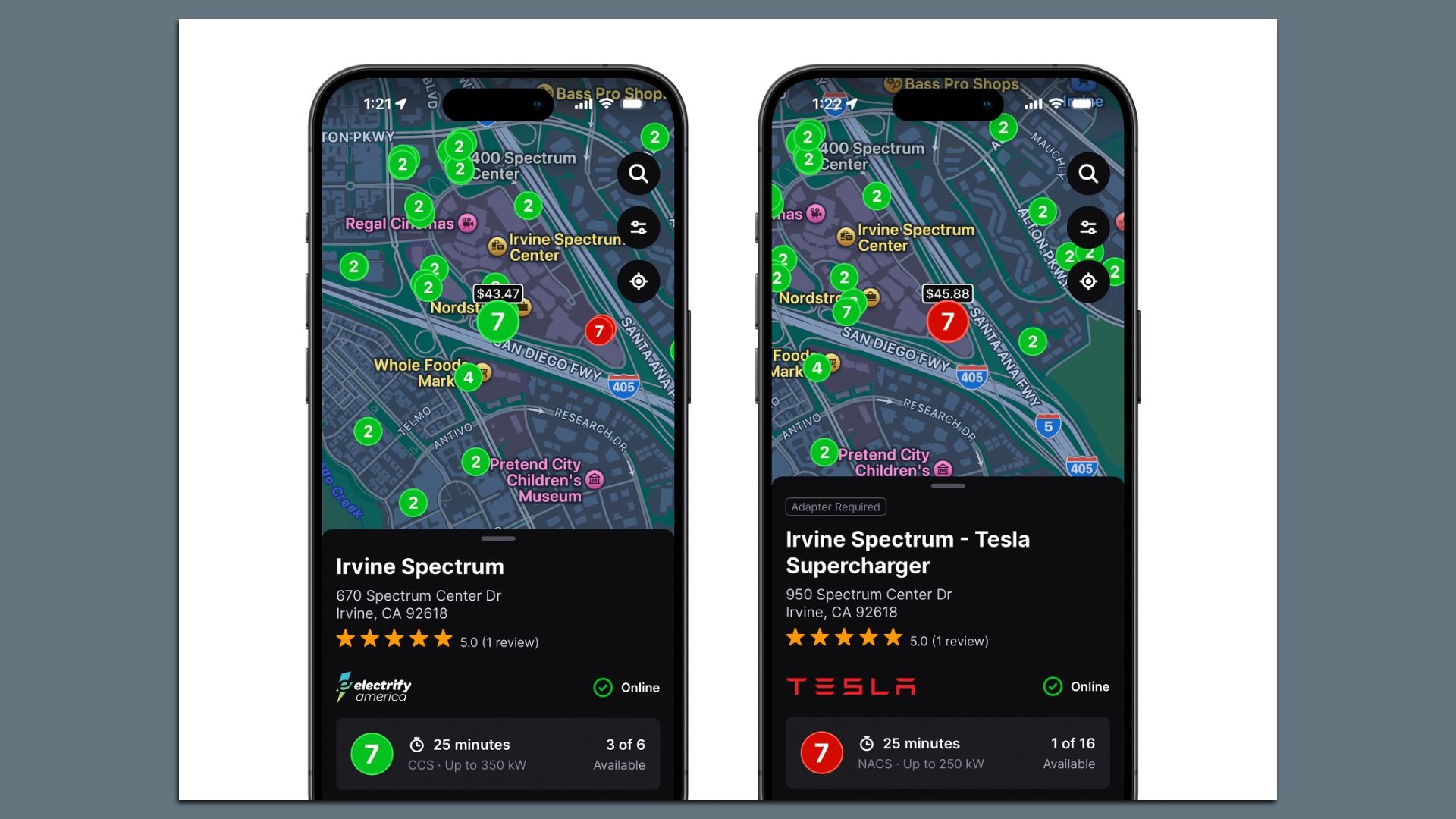
If you want to know the price of gasoline, it's easy to find posted at any gas station — but the cost of refueling an electric car is something of a mystery for many EV owners.
Why it matters: Public charging is one of the biggest hurdles to EV adoption.
The Trump administration's immigration crackdown is projected to reduce the U.S. workforce by 6.8 million people by 2028 and by 15.7 million by 2035, per a study first shared with Axios.
Why it matters: Fewer workers in the labor force could have dramatic effects on the U.S. economy, from lower economic growth to reductions in the nation's goods and services produced.
The rip-roaring performance of just 30 AI-linked stocks may be driving nearly $200 billion in annual consumer spending, according to a new report from JPMorgan economists.
Why it matters: The overall economy has become increasingly dependent on AI-driven growth, most notably through investment in data centers and software. But the "wealth effect," in which higher asset prices make consumers more willing to spend money, is part of the story as well.
The Trump administration was sued by some two dozen states that are seeking to block the Environmental Protection Agency (EPA) from canceling a $7 billion solar energy program.
The big picture: The states argue in a lawsuit filed in the U.S. District Court for the Western District of Washington Thursday that the EPA "illegally terminated" the program that's "designed to bring low-cost distributed solar energy to over 900,000 households in low-income and disadvantaged communities."
Two weeks into the government shutdown, Senate Majority Leader John Thune and Democratic Leader Chuck Schumer are talking at each other through the media — but not to each other.
Why it matters: Both see President Trump as the key to eventually unlocking real negotiations on health care.