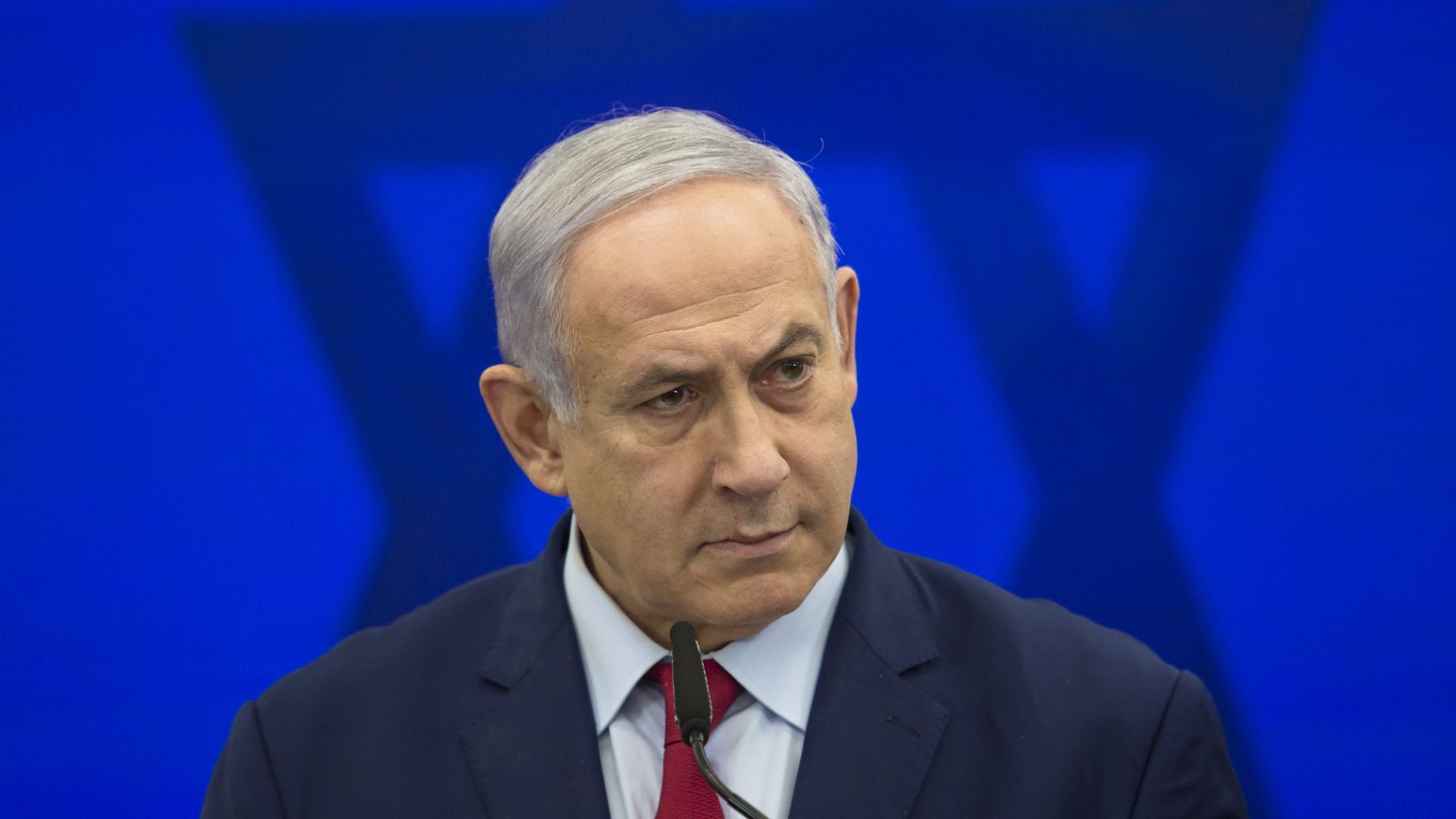
Israeli Prime Minister Benjamin Netanyahu's Likud party trails the center-left Blue and White party in 3 of 3 exit polls, which continue to be updated after polls closed with real vote counts. All 3 polls show Netanyahu's right-wing bloc falling short of the 61 seats needed for a majority.
Why it matters: Exit polls are not the same as official results, but they are a significant indicator. This was Israel's second election in a matter of months after Netanyahu failed to form a governing coalition following April's vote. He is facing 3 pending corruption indictments and may have to remain in power to stay out of jail.
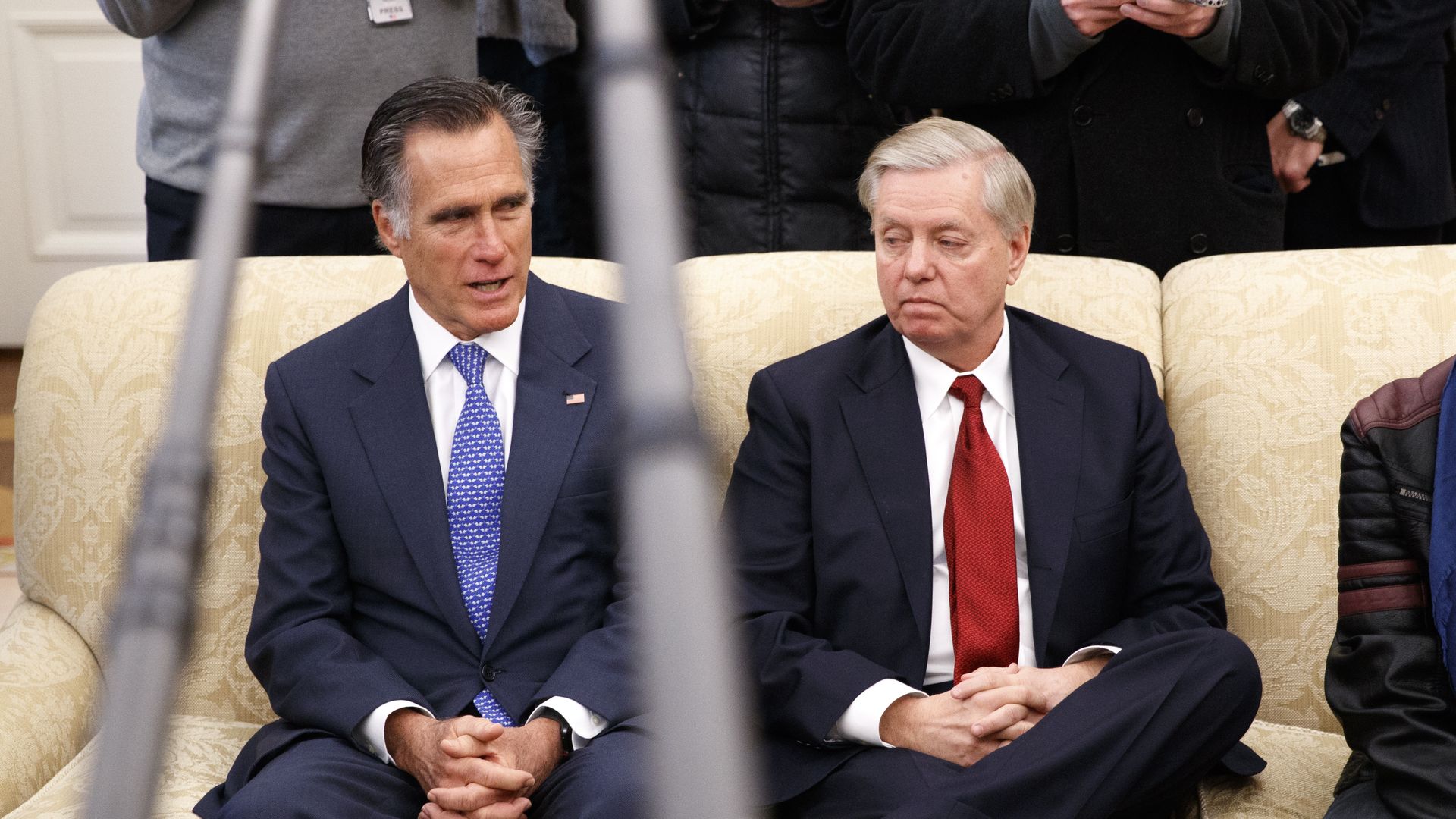
Sen. Lindsey Graham (R-S.C.) said President Trump should consider attacking Iranian oil refineries in retaliation for the drone strikes on Saudi oil plants, while Sen. Mitt Romney (R-Utah) said direct U.S. intervention would be "a grave mistake," per Bloomberg.
The big picture: Opinions on U.S. involvement are split since the attack against Saudi Arabia didn't occur on U.S. soil, endanger American lives or happen in a country that is a partner in a defense treaty with the U.S.
President Trump's anti-Iran strategy increasingly looks like it's facing its greatest test, while his White House waits for a new national security adviser.
The state of play: Evidence out Monday indicates Iranian weapons were used in Saturday's attacks on major oil facilities in Saudi Arabia, which sent oil prices soaring.
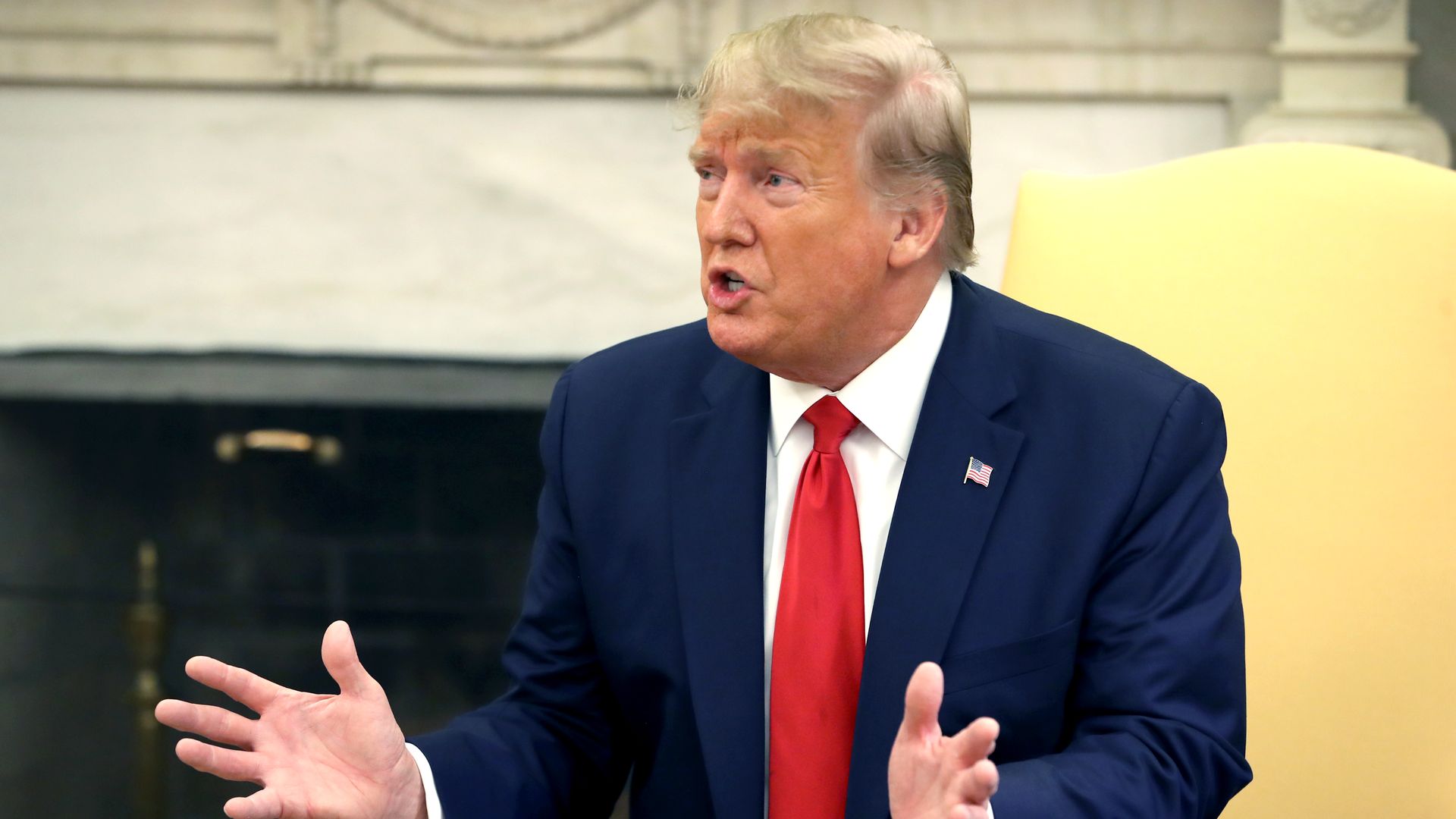
President Trump said today at the top of his meeting with the Crown Prince of Bahrain that the Israeli elections tomorrow are going to be “interesting and very close”.
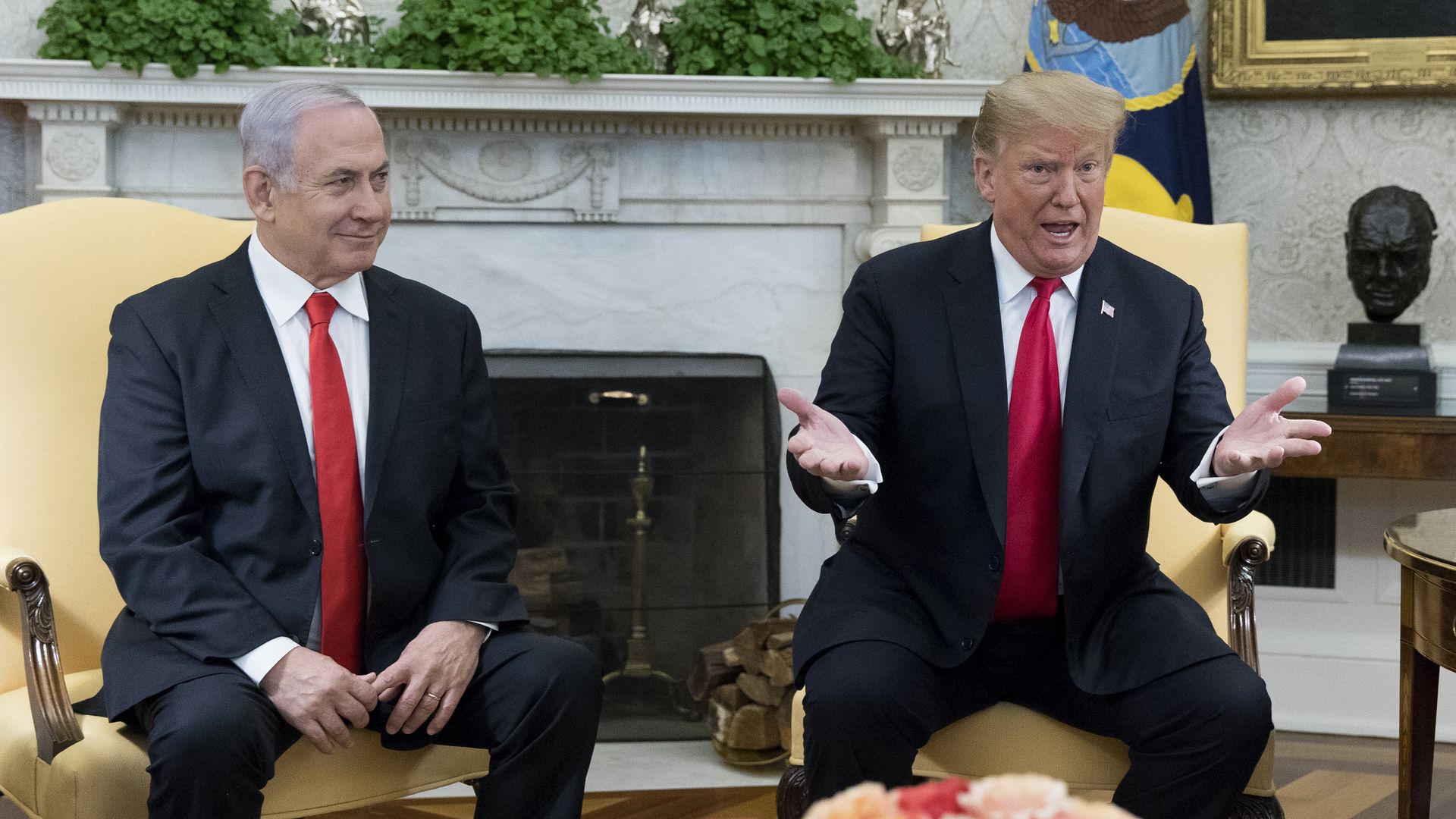
Why it matters: Trump's remark echoes Netanyahu’s main campaign message in the last few days — that the polls are tight and the center left bloc led by Benny Gantz is about to win.
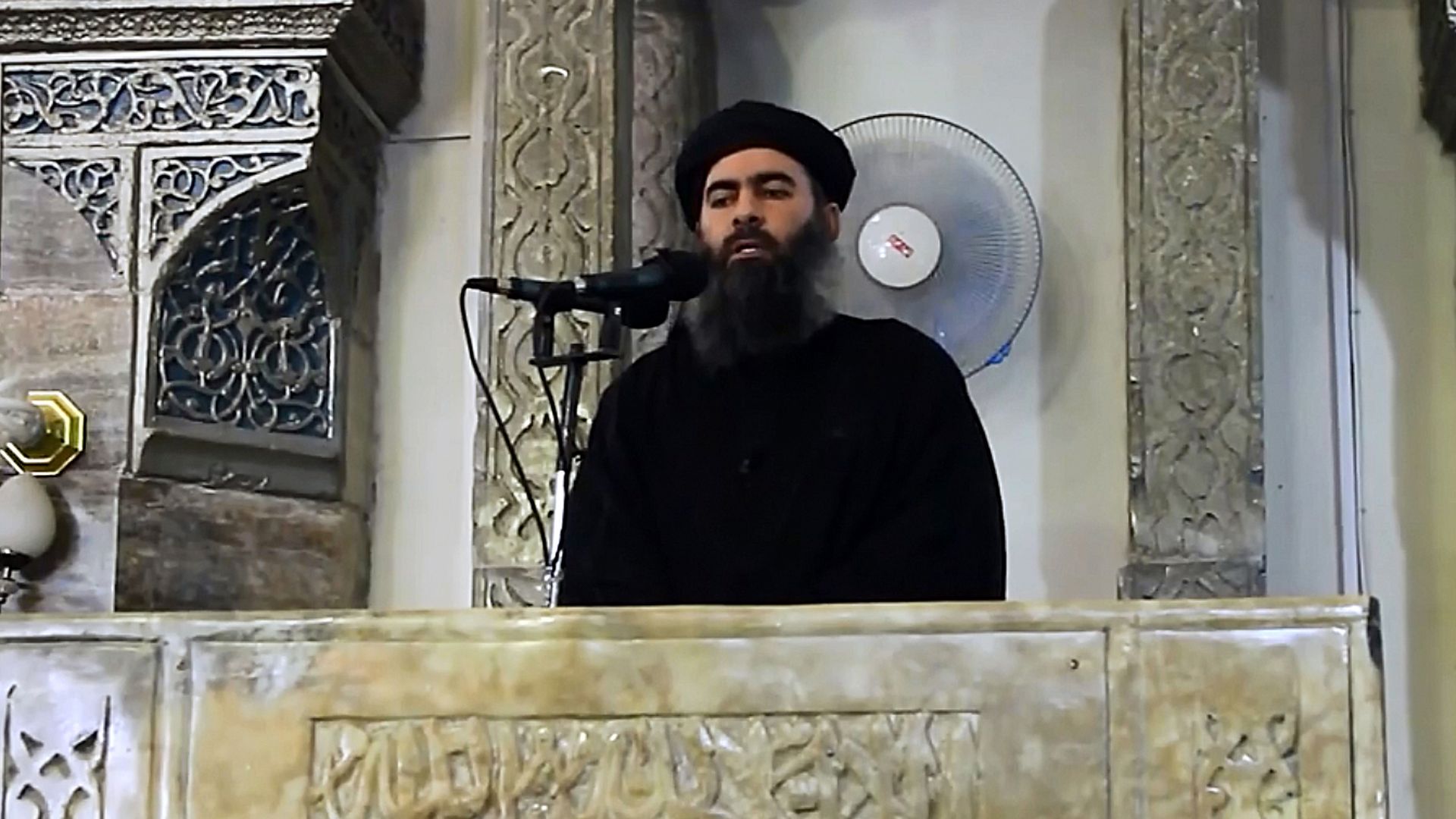
Abu Bakr al-Baghdadi, leader of the Islamic State, has issued an audio message to followers urging them to redouble efforts to further the group's mission, per the Wall Street Journal.
The message appears to be an attempt at boosting spirits among the extremist organization, which lost control of territories in Iraq and Syria earlier this year.
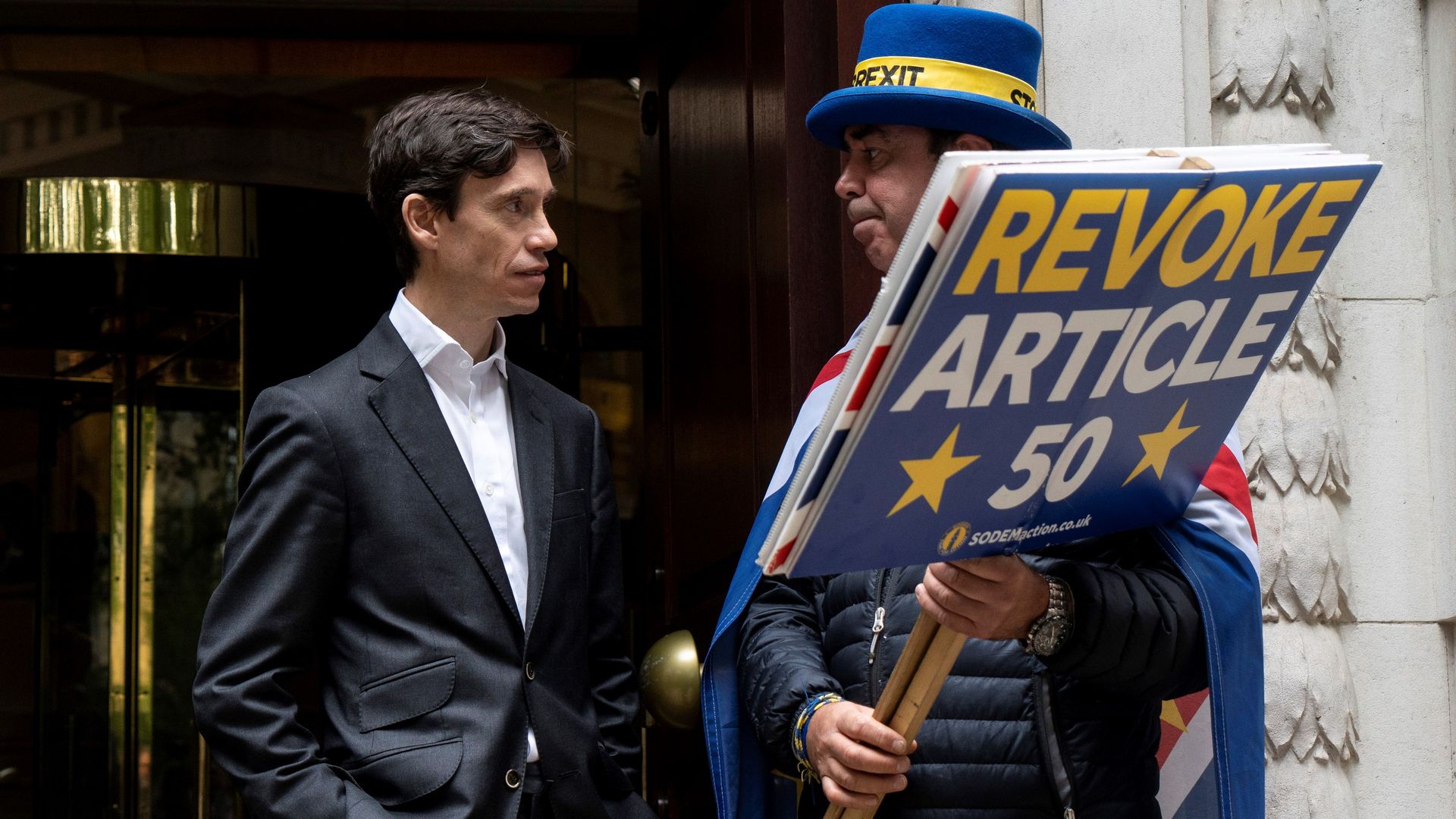
Rory Stewart, who challenged Boris Johnson for leadership of the U.K.'s Conservative Party over the summer only to see Johnson expel him from the party this month, says British politics have descended into an unrecognizable state in which ends justify any means.
“I think our politics is breaking. The parties are breaking. But unfortunately you do get a sense that the center isn’t holding either.”
Driving the news: As the member of Parliament and former cabinet minister sat down with Axios at a coffee shop in D.C. on Monday, Luxembourg’s prime minister was standing next to an empty podium meant for Prime Minister Johnson, who backed out of the press conference due to anti-Brexit hecklers.
After the U.S. accused Iran of carrying out drone attacks against Saudi Arabia over the weekend, President Trump has ramped up his rhetoric rather than seeking to ease tensions — including the "locked and loaded" proclamation that echoed his "fire and fury" threats against North Korea 2 years ago.
Why it matters: Airstrikes or any other form of military retaliation against Iran would require not only congressional authorization but a thorough strategy for a sprawling web of security issues that would affect American troops, regional stability and global energy markets.
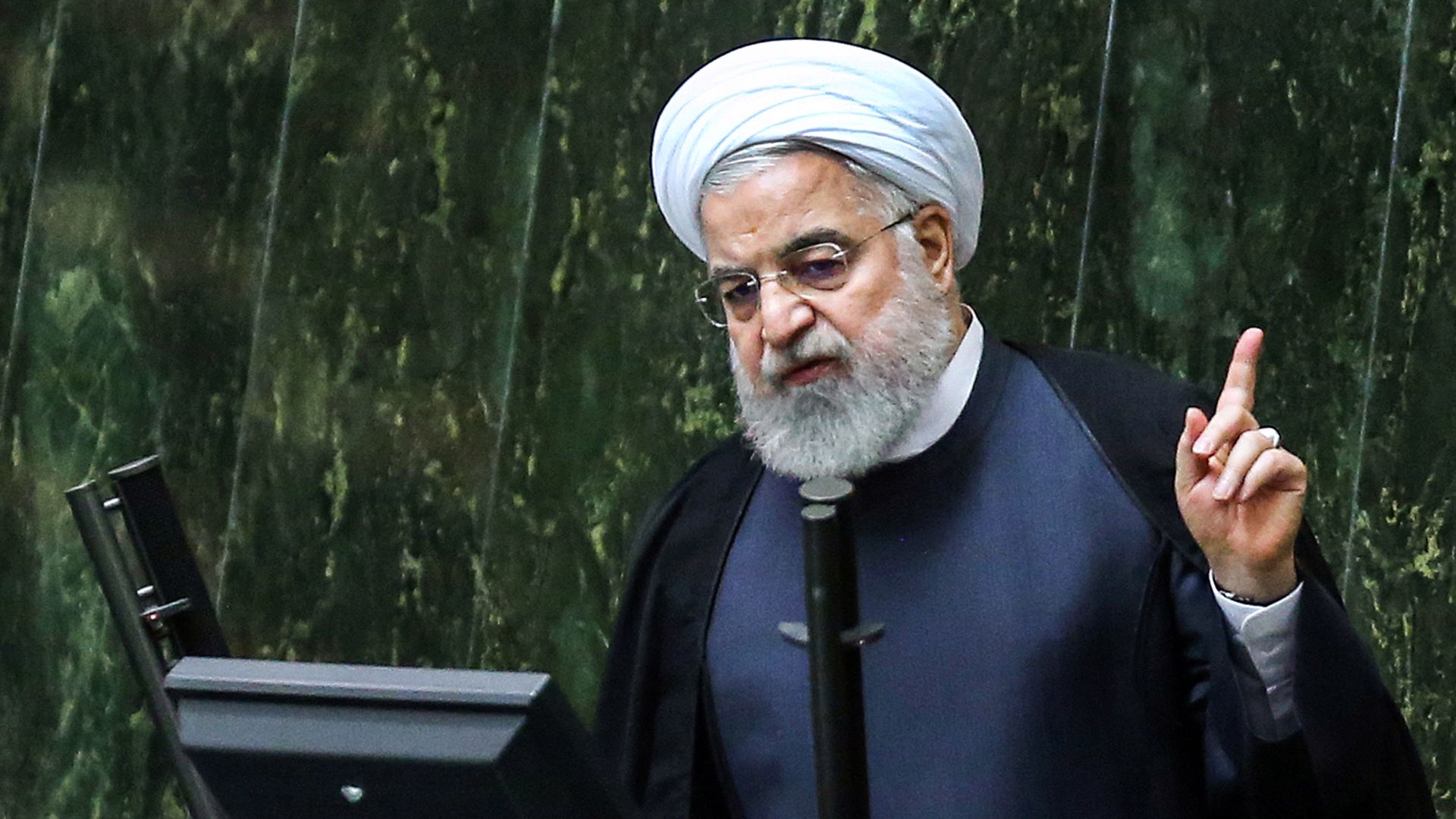
Iran on Monday rejected the possibility that President Hassan Rouhani would meet President Trump on the sidelines of the UN General Assembly meeting next week, according to the New York Times.
Why it matters: After Iranian Foreign Minister Mohammad Javad Zarif made a surprise visit to the G7 summit last month, there was speculation that the two leaders could meet in an effort to de-escalate tensions. Iran's dismissal comes a day after Trump accused Tehran of carrying out an attack on two major oil facilities in Saudi Arabia on Saturday and said that the U.S. is "locked and loaded" while it awaits verification of the culprit.
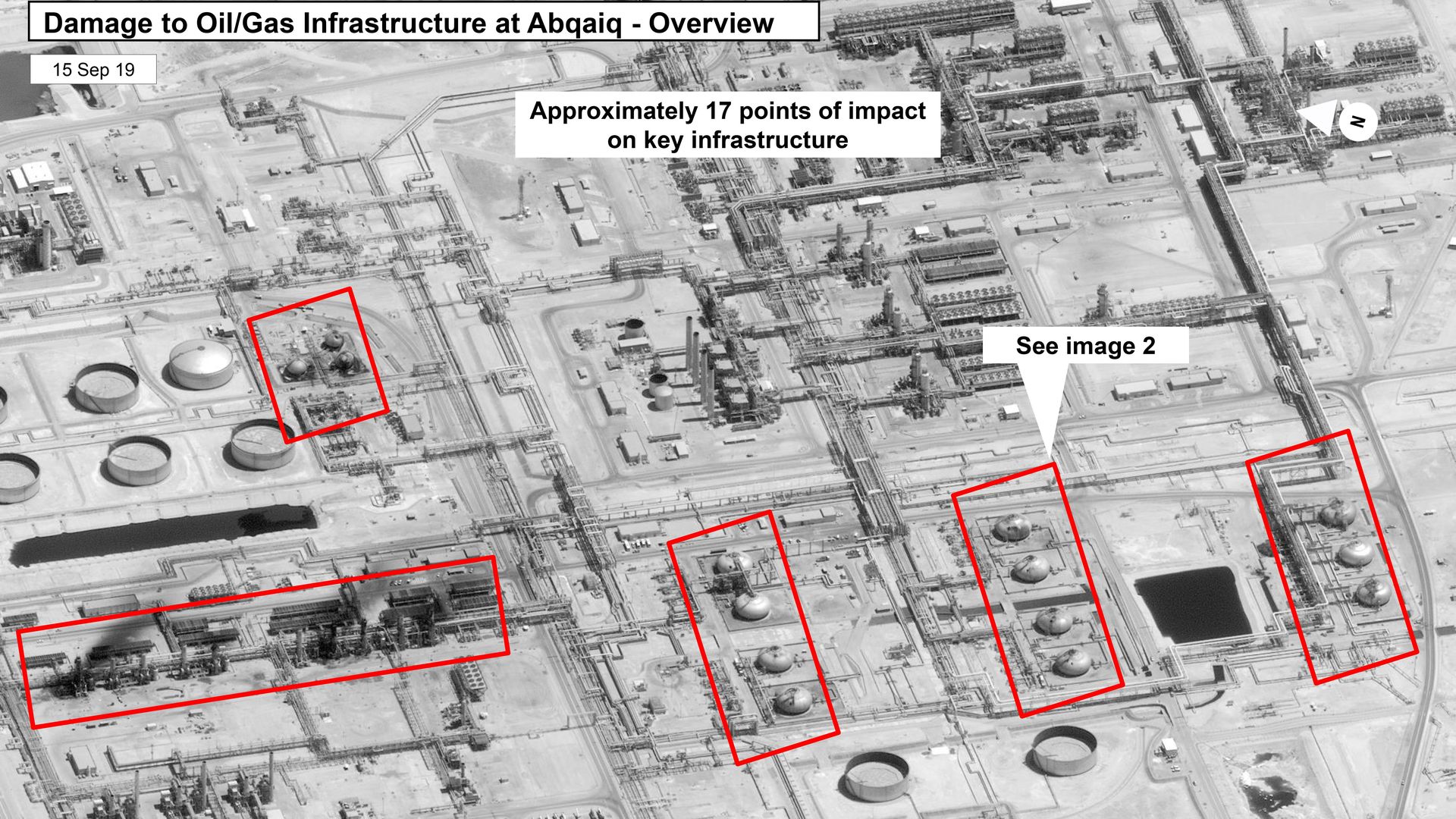
The Saudi Arabian-led military coalition fighting in Yemen said Monday that Iranian weapons were used to strike major oil plants in Saudi Arabia over the weekend, Reuters reports.
Why it matters: The Saudi claim, which also said the strikes did not come from Yemeni territory, came hours after the Trump administration released satellite images as evidence that the attacks came from Iraq or Iran, highlighting a marked escalation in months of tension between the U.S. and Iran, which has denied involvement.