The White House said in a statement Monday that it will continue its "maximum pressure" campaign against Iran after the Islamic Republic announced it had breached the maximum level of low-enriched uranium allowed under the 2015 nuclear deal.
Why it matters: The Iranian breach is the most substantial move the regime has taken yet to retaliate against the administration's maximum pressure campaign, a policy designed to cripple Iran's economy after Trump's withdrawal from the nuclear deal. The move also follows weeks of heightened tensions between the U.S. and Iran, which have led to fears of a potential military intervention.
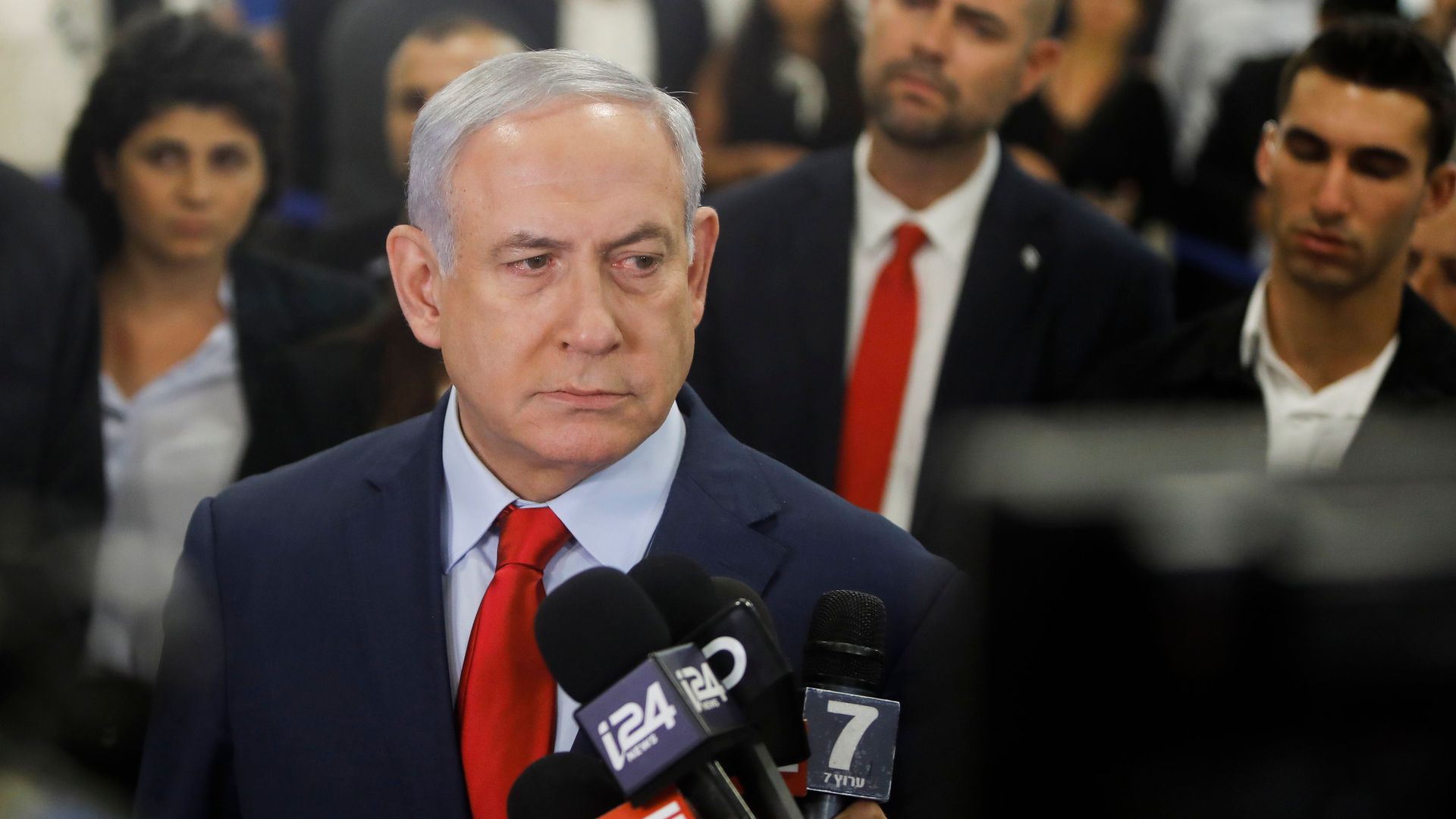
Israeli Prime Minister Benjamin Netanyahu said Monday that Israel will soon reveal more evidence that Iran has been lying all along about its nuclear program, in response to news that the Islamic Republic has breached uranium stockpile limits from the 2015 nuclear deal for the first time.
Why it matters: Netanyahu didn't elaborate on what kind of evidence will be released, but Israel has twice in the last two years released intelligence about Iran's nuclear program. The first revealed documents captured by the Mossad from Iran's secret nuclear archive, while the second included photographs of what Israel claimed to be an "atomic warehouse" in Tehran, where the country allegedly stored parts from its clandestine military nuclear program.
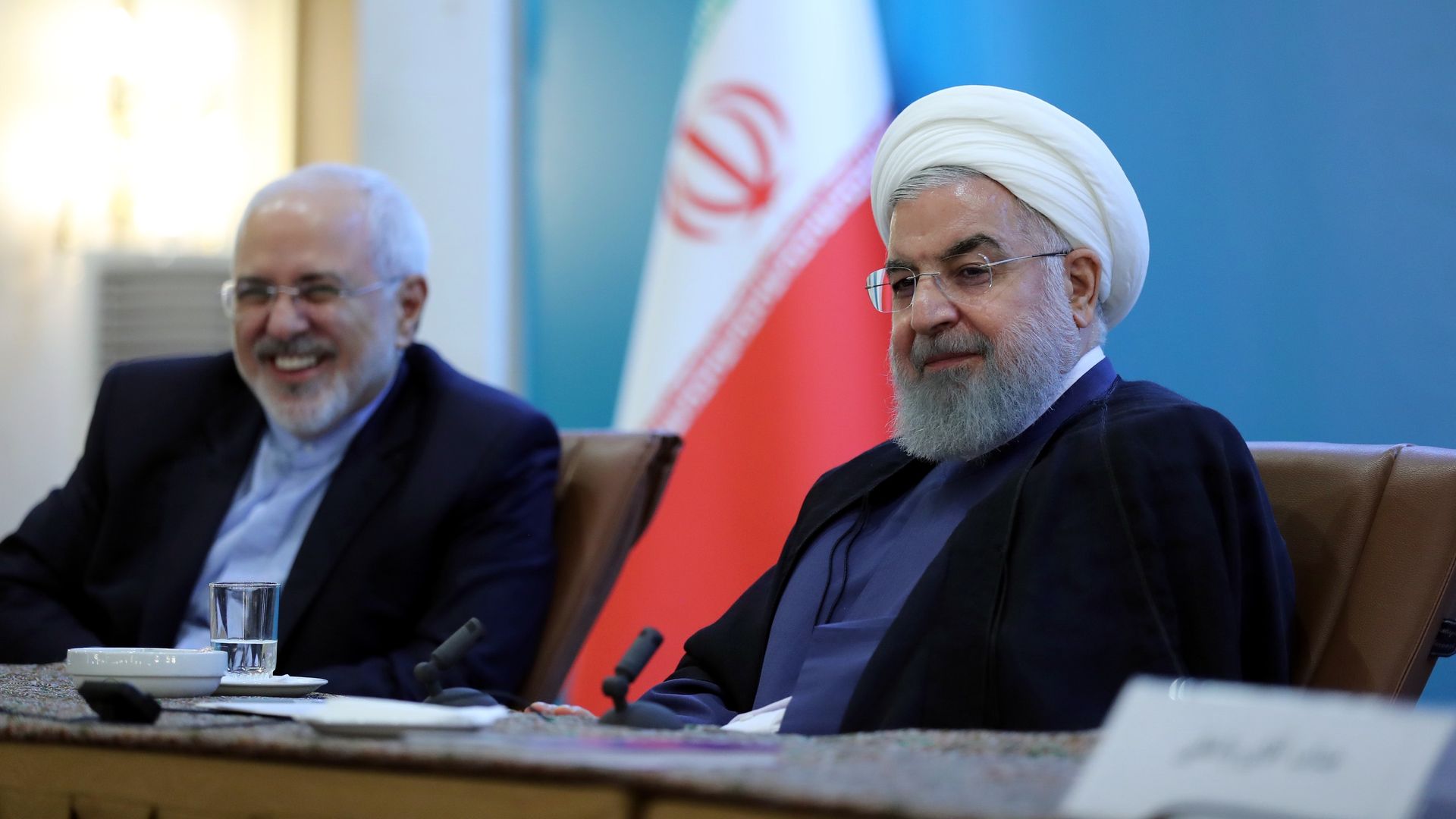
Iranian foreign minister Mohammad Javad Zarif says his country's stockpile of low enriched uranium has crossed 300 kilograms — the maximum amount it is allowed to hold under the 2015 nuclear deal.
Why it matters: This is the first time Iran has deliberately violated the 2015 deal.
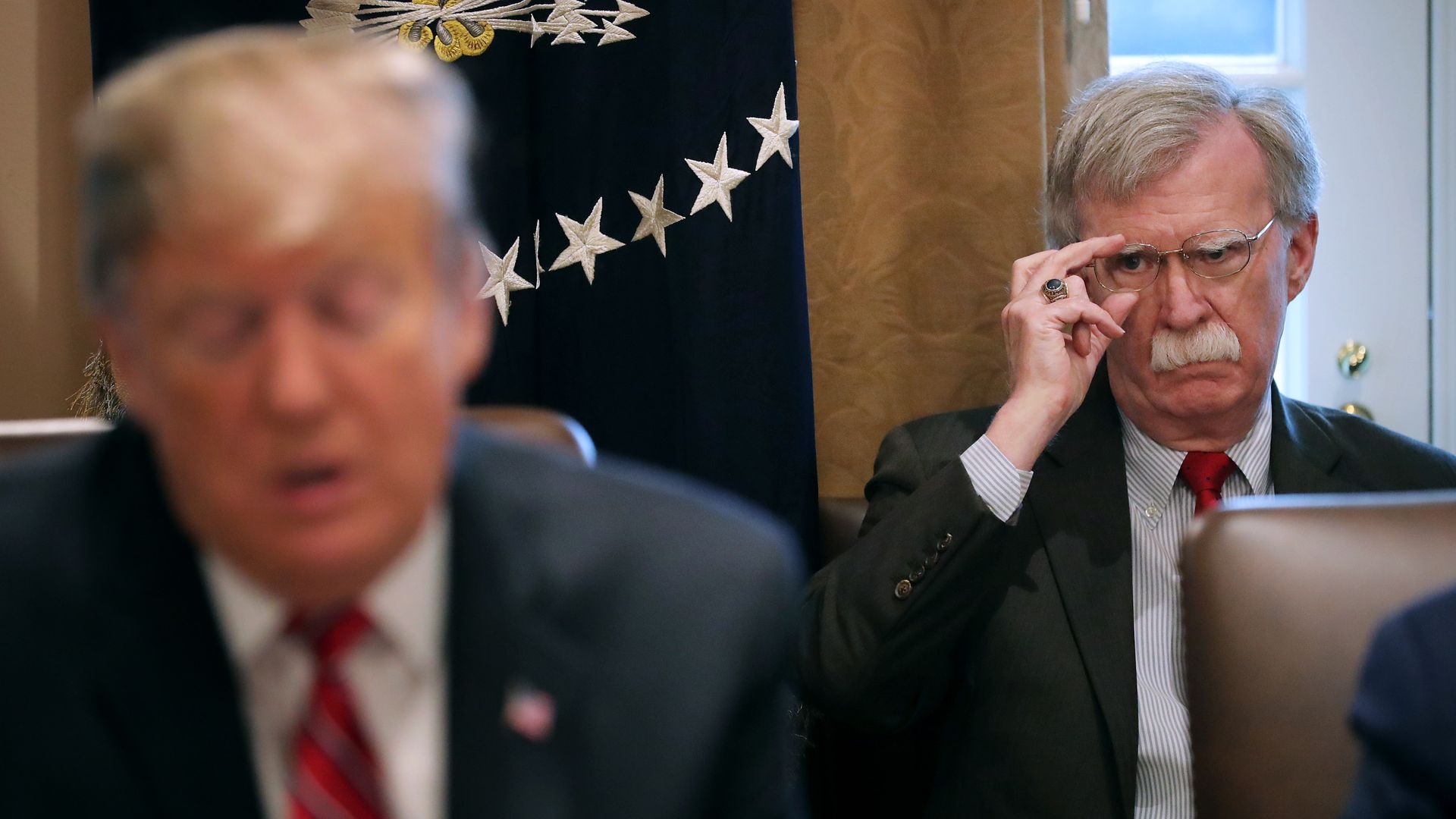
National security adviser John Bolton denied a New York Times report that the U.S. was considering endorsing a North Korean nuclear freeze in the next round of negotiations between Pyongyang and Washington in a Monday tweet.
"I read this NYT story with curiosity. Neither the NSC staff nor I have discussed or heard of any desire to 'settle for a nuclear freeze by NK.' This was a reprehensible attempt by someone to box in the President. There should be consequences."
The big picture, per the Times report:A nuclear freeze would pause further weapons development in North Korea but allow it to keep existing weapons — a step back from the Trump administration's previously outlined goal of complete denuclearization.
South Korea’s military detected an "unidentified object" flying near its border with North Korea Monday, AP reports, as North Korean state media hailed the "amazing" historic meeting between President Trump and its leader Kim Jong-un a day earlier.
Why it matters: While South Korea's military was unable to immediately identify the object at the Demilitarized Zone that separates the 2 Koreas, the incident is a reminder of the tensions at the DMZ. Hours earlier, North Korea's state-run KCNA news agency said Trump and Kim had agreed to proceed with talks on the denuclearization of the Korean Peninsula.
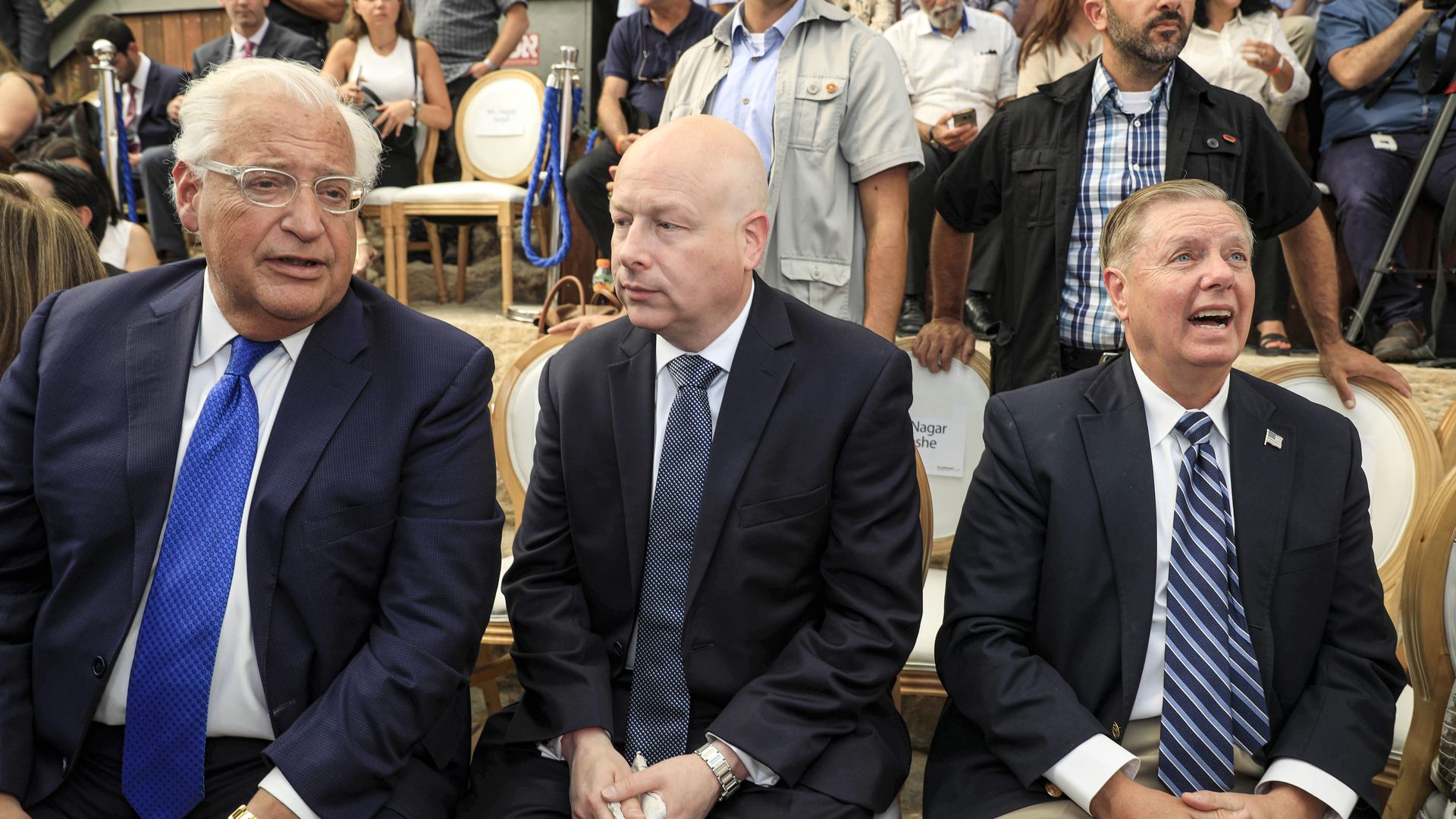
Together with Israeli officials, U.S. Ambassador to Israel David Friedman, senior White house officials and Sen. Lindsey Graham (R-S.C.) took part Sunday in the opening of a tunnel that runs under the Palestinian village of Silwan in East Jerusalem to the Old City, very close to the Temple Mount.
Why it matters: This is an extraordinary event, as the digging of the tunnel was initiated by a Jewish settler group called Elad. For decades, U.S. government officials refrained from participating in Israeli government events in East Jerusalem — not to mention those led by settler groups.
A new report prepared for the Pentagon suggests that the U.S. is underestimating the scale of Russian President Vladimir Putin's "grand strategy" for dominance on the world stage, and that inaction in the face of Russia's malign influence activities poses a serious threat to U.S. national security.
"Contrary to conventional analysis, after two decades under Vladimir Putin, Russia represents an ideological challenge to the West, not just a political and military rivalry. Although NATO continues to possess impressive overmatch against Moscow, that edge is dwindling, and Western vulnerabilities in certain military areas are alarming. Moreover, the unwillingness of Western experts and governments to confront the ideological — as well as political and military — aspects of our rivalry with Putinism means that the threat of significant armed conflict is rising."
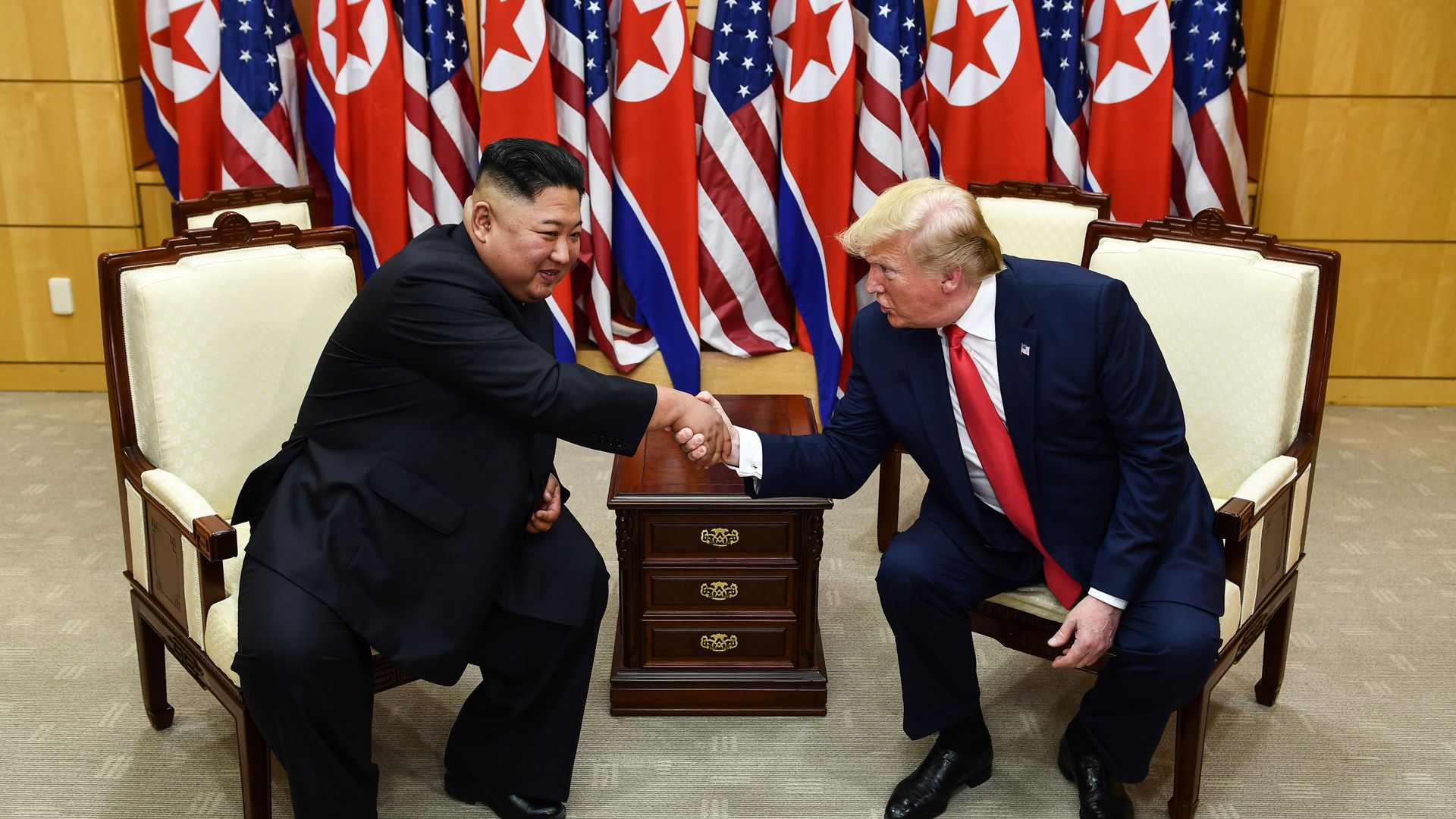
President Trump on Sunday became the first sitting U.S. president to step inside North Korea, where he shook hands with North Korean leader Kim Jong-un. He told reporters afterward that stalled nuclear talks between Washington and Pyongyang would resume.
President Trump on Sunday became the first U.S. president to cross the border at the Demilitarized Zone (DMZ) that divides the two Koreas and enter North Korea, where he shook hands with North Korean leader Kim Jong-un.
Details: Afterward, Kim walked with Trump over to the South Korean side of the border, where he met South Korean President Moon Jae-in for the first trilateral meeting between the leaders of the 3 countries. Here's how the historic event unfolded, in photos.