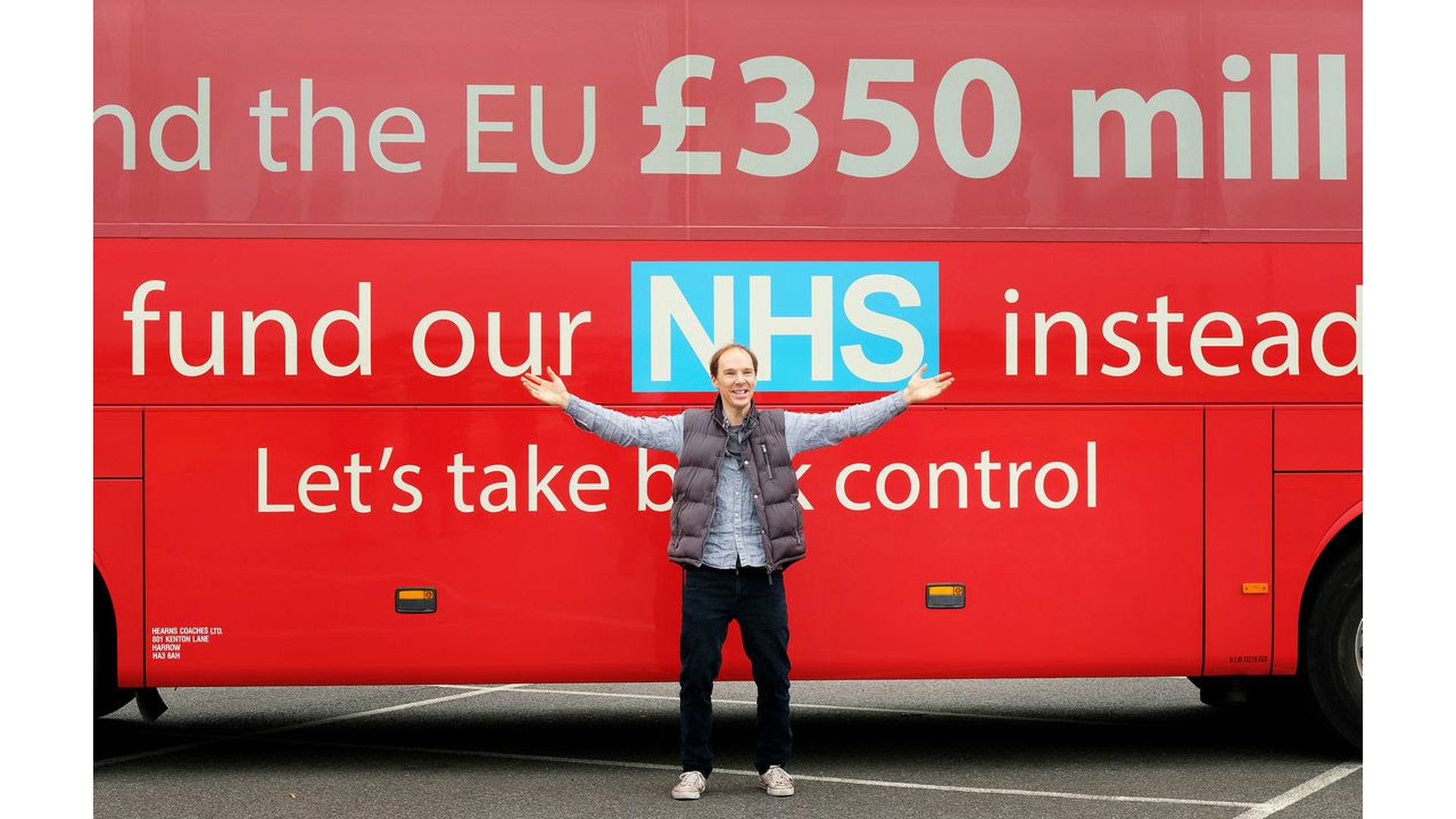
HBO Films has a fast-turnaround Brexit movie, debuting Saturday at 9 pm (in partnership with BBC Studios, Channel 4 and House Productions) just days after Parliament decides the future of Prime Minister Theresa May's deal.
The backdrop: "The film [portrays] the outsized characters of Nigel Farage, David Cameron, and Boris Johnson as they attempt to convince Britons to leave or remain in the EU in what resulted in one of the most consequential elections in modern history."
The British pound rallied going into the weekend, rising to its highest level against the dollar since Nov. 22.
Between the lines: That's odd considering the spate of bad news for British Prime Minister Theresa May's one and only Brexit deal. It seems, however, that the market is not pricing a better Brexit agreement, but no Brexit at all, says Bannockburn Global Forex Chief Market Strategist Marc Chandler.
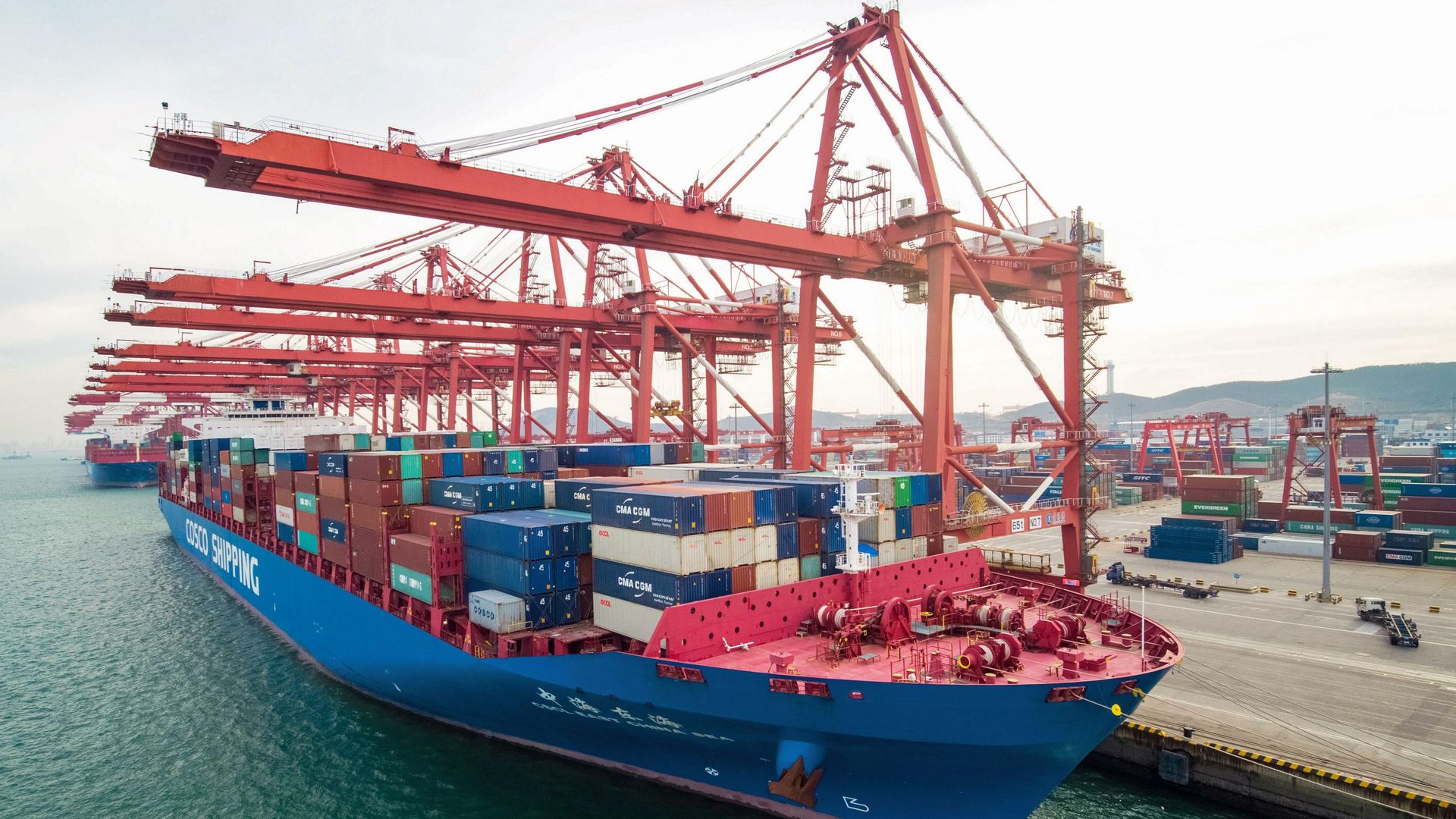
China posted its largest trade surplus with the U.S. on record in 2018, the country's government data showed Sunday. The trade surplus was nearly $50 billion greater than 2017, with exports rising by 11.3%.
Why it matters: President Trump has made cutting the trade deficit with China a top administration priority, however it has widened significantly since he became president.
The Chinese government has detained more than 1 million Uyghur Muslims in re-education camps. Beijing has put Uyghur children into dozens of orphanages while their parents are incarcerated for their faith and culture. It's one of the world's most shamefully overlooked atrocities, and some members of Congress plan to step up efforts to pressure the administration to hold China accountable.
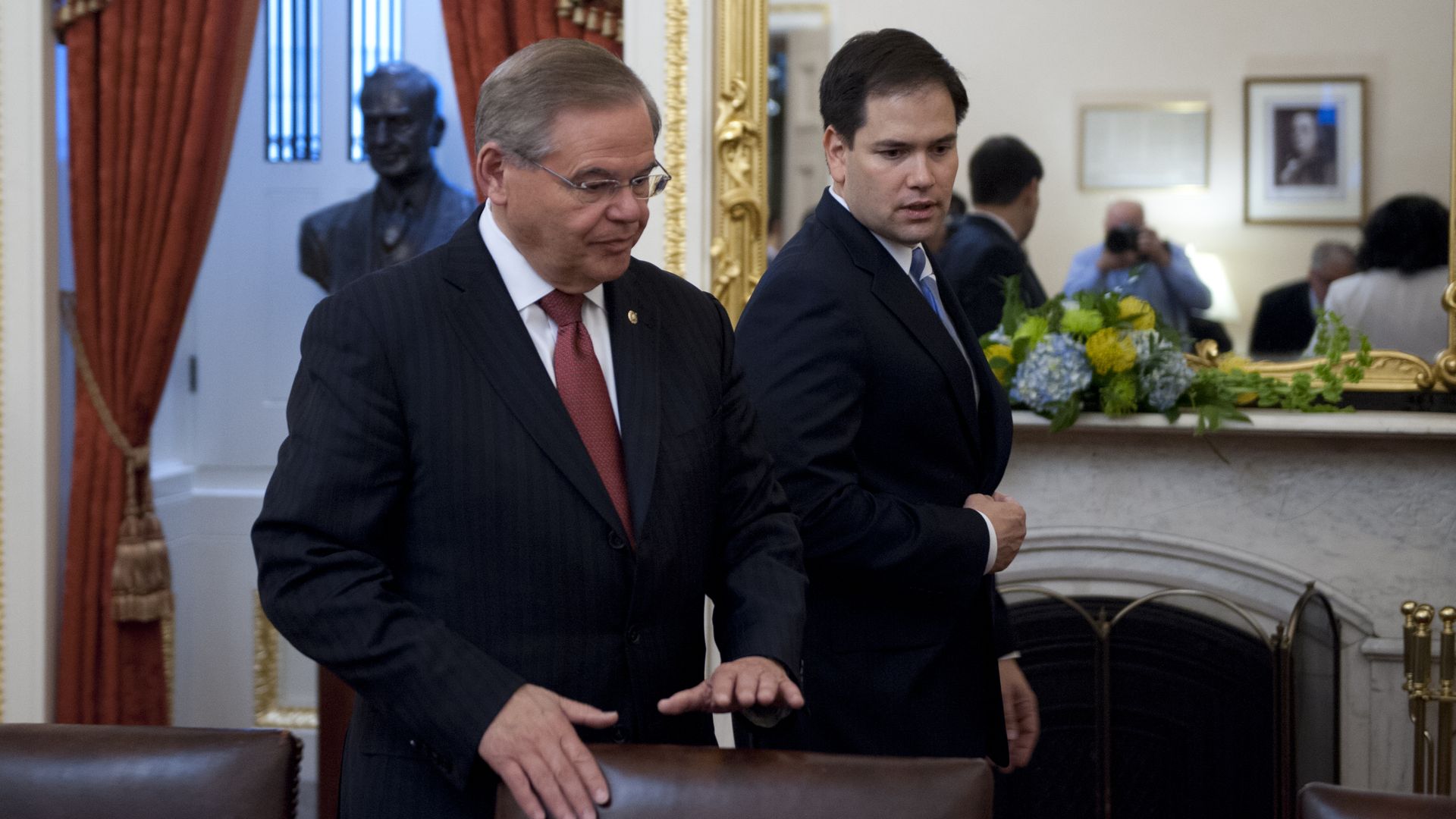
What we're hearing: Democratic Sen. Bob Menendez and Republican Sen. Marco Rubio plan to introduce this week the Uyghur Human Rights Policy Act, according to sources with direct knowledge. (They introduced a similar version of the bill late in the last Congress but didn't have time to get it onto the Senate floor.)
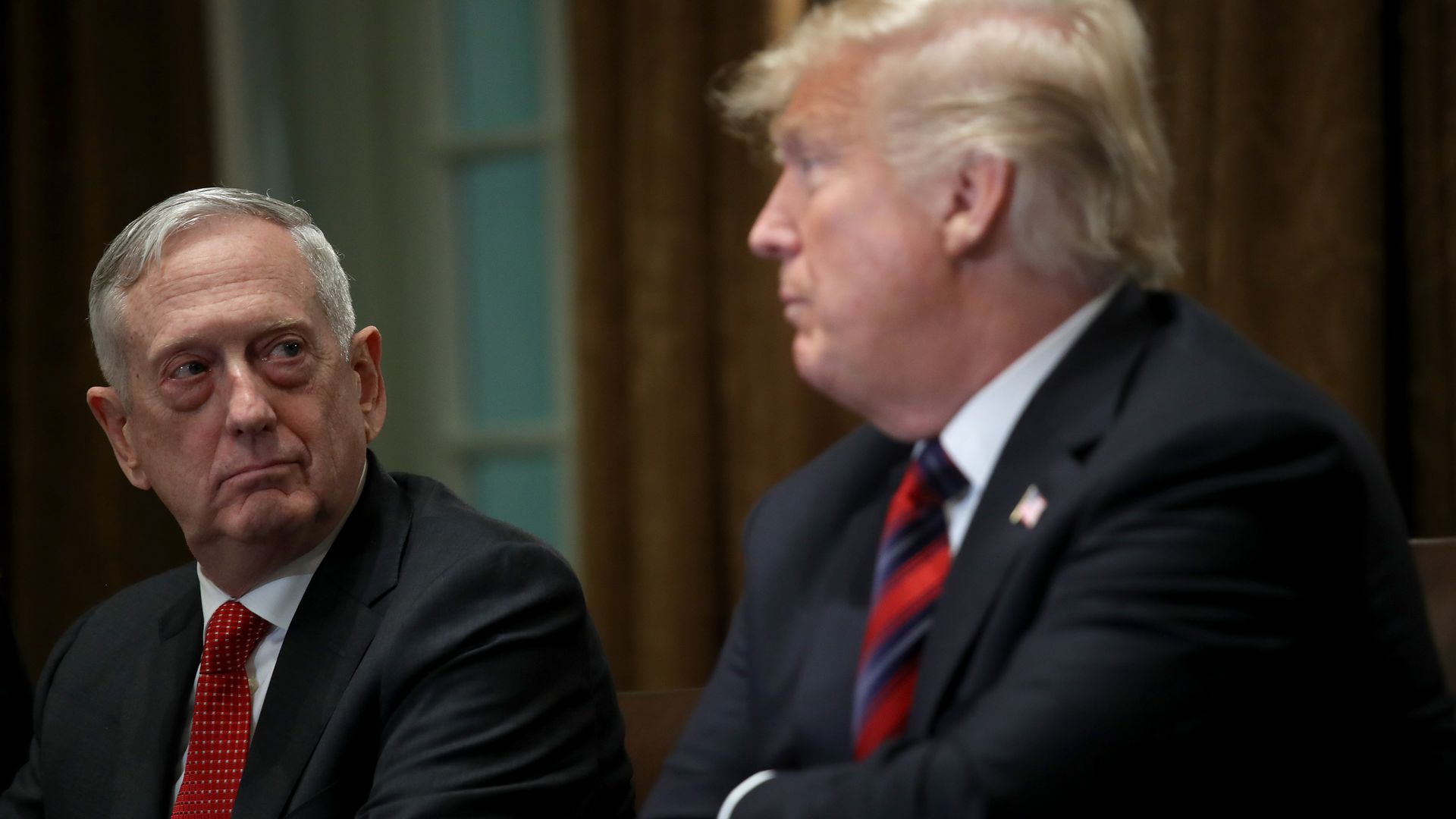
Former Defense Secretary James Mattis had "deep concerns" about a request late last year from national security adviser John Bolton for options to attack inside Iran, according to a source close to Mattis.
The big picture: "There were deep concerns about any efforts to escalate a conflict with Iran," the source told me. As the Wall Street Journal first reported, Bolton's request came "after militants fired three mortars into Baghdad's sprawling diplomatic quarter, home to the U.S. Embassy, on a warm night in early September. The shells — launched by a group aligned with Iran — landed in an open lot and harmed no one."
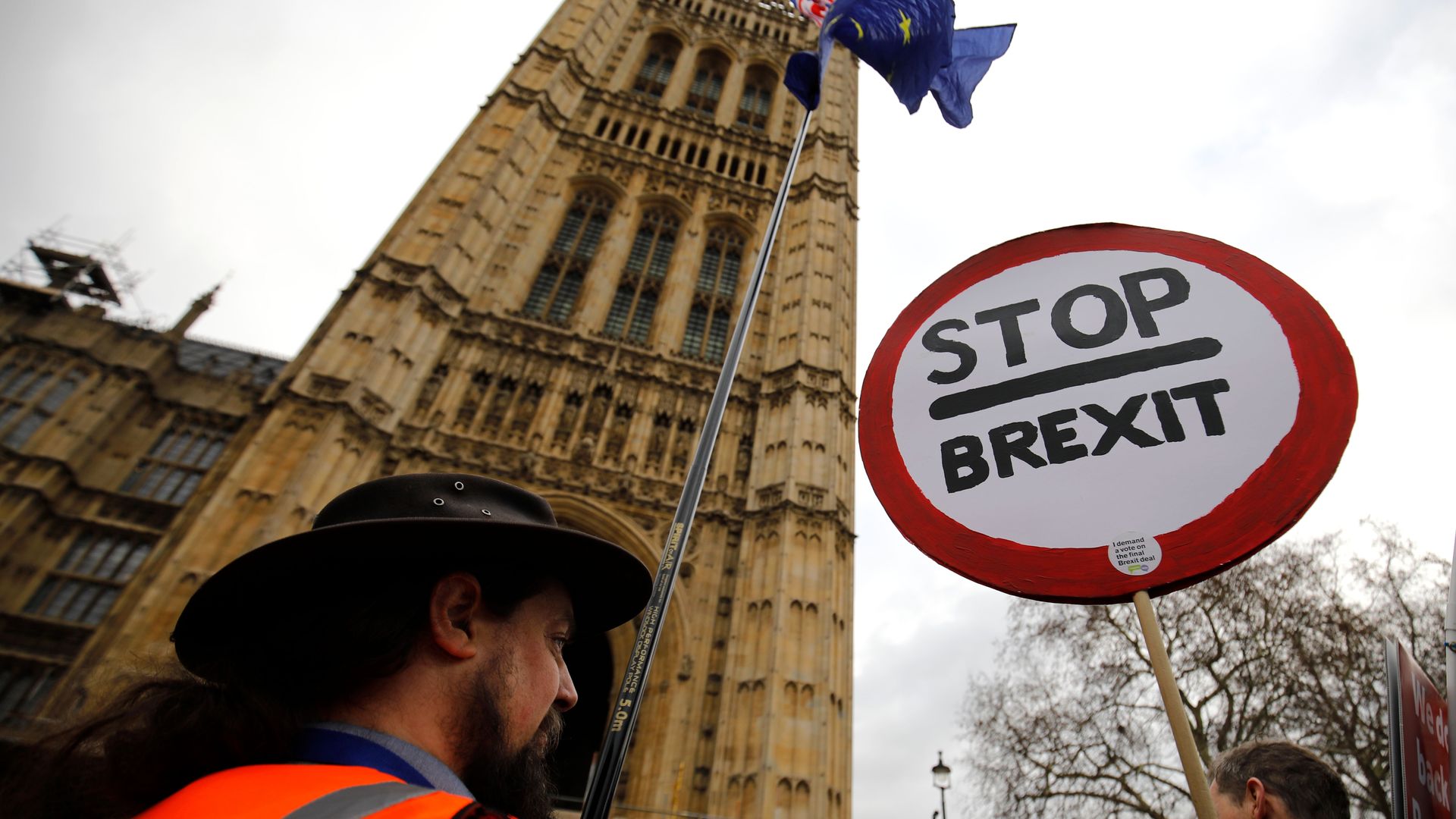
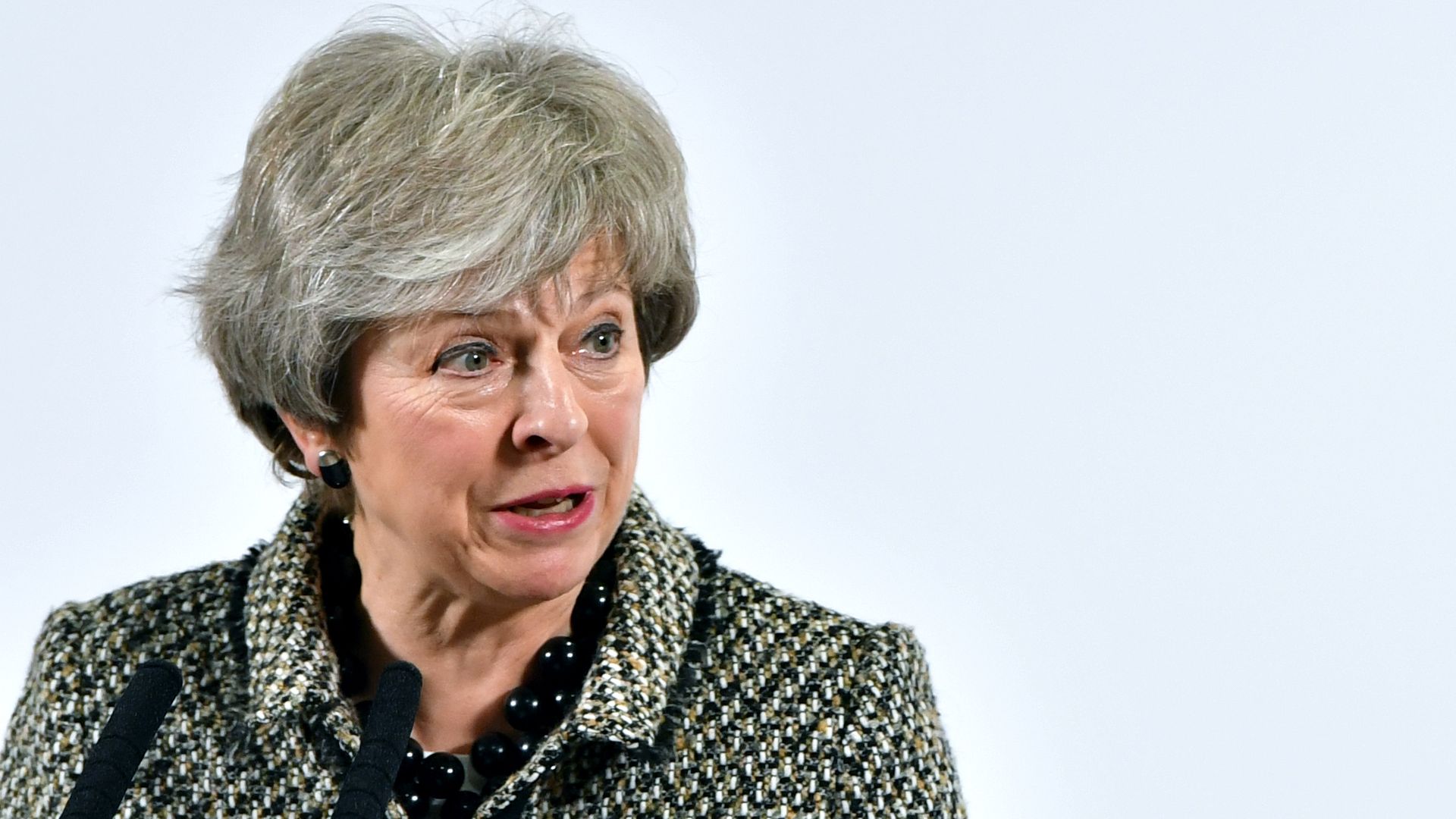
British Prime Minister Theresa May warned members of Parliament that voting down her Brexit deal this week would be "a catastrophic and unforgivable breach of trust in our democracy" in an op-ed for the Sunday Express.
The big picture: May's deal, which faces a lack of support from both the opposition Labour Party as well as pro-Brexit members of her own Conservative Party, is largely expected to fail in a vote on Tuesday — more than one month after she delayed a vote under similar circumstances. The European Union is expecting her deal to fail and the current planned Brexit date of March 29 to be delayed until at least July, The Guardian reports. And Labour leader Jeremy Corbyn has promised to table a motion of no confidence in May's government should that occur, which could oust her as prime minister and force a snap election.