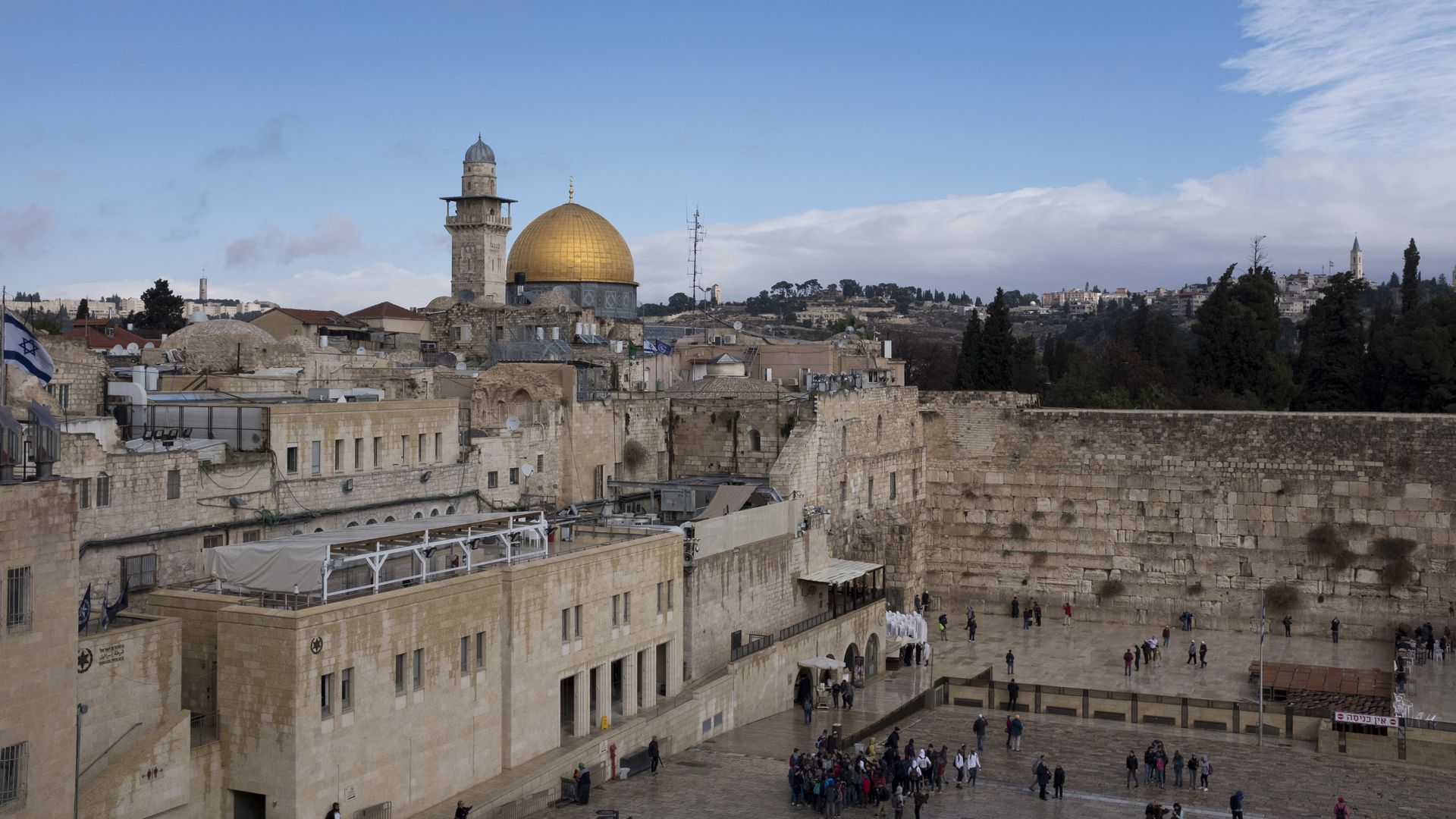
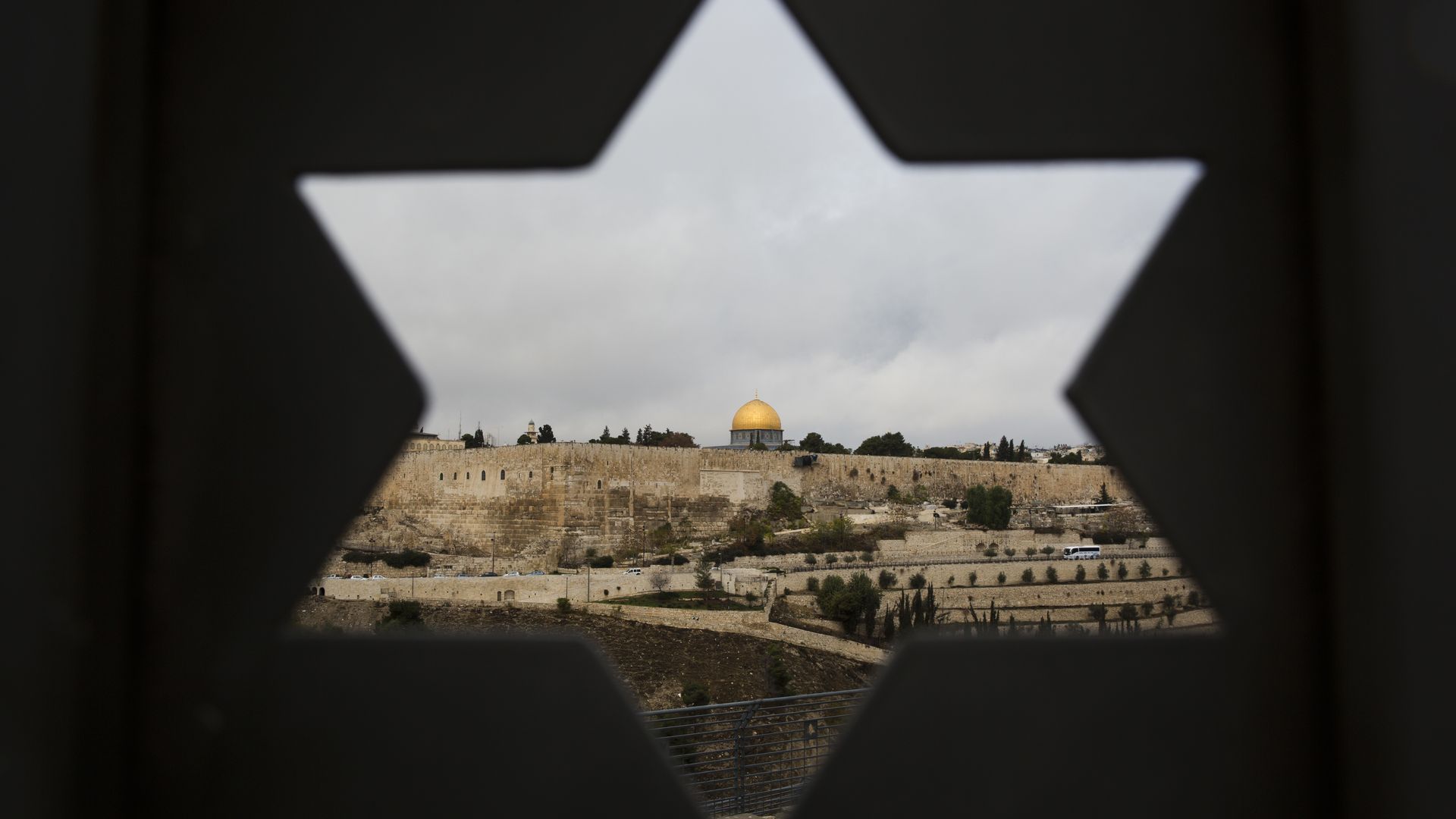
President Trump today officially recognized Jerusalem as the capital of Israel, arguing that doing so reflects reality and that decisions by his predecessors to hold back failed to advance the cause of Middle East peace. True as that is, expecting such restraint to do so was misguided. The reason peace talks have stalled is persistent divisions within the Israeli and Palestinian leaderships and between them.
American recognition of Jerusalem will not ripen diplomatic prospects; to the contrary, it is likely to diminish what little opportunity for progress exists, as this unilateral U.S. action demands nothing of the Israeli government and gives nothing to the Palestinians in Jerusalem or anywhere else.
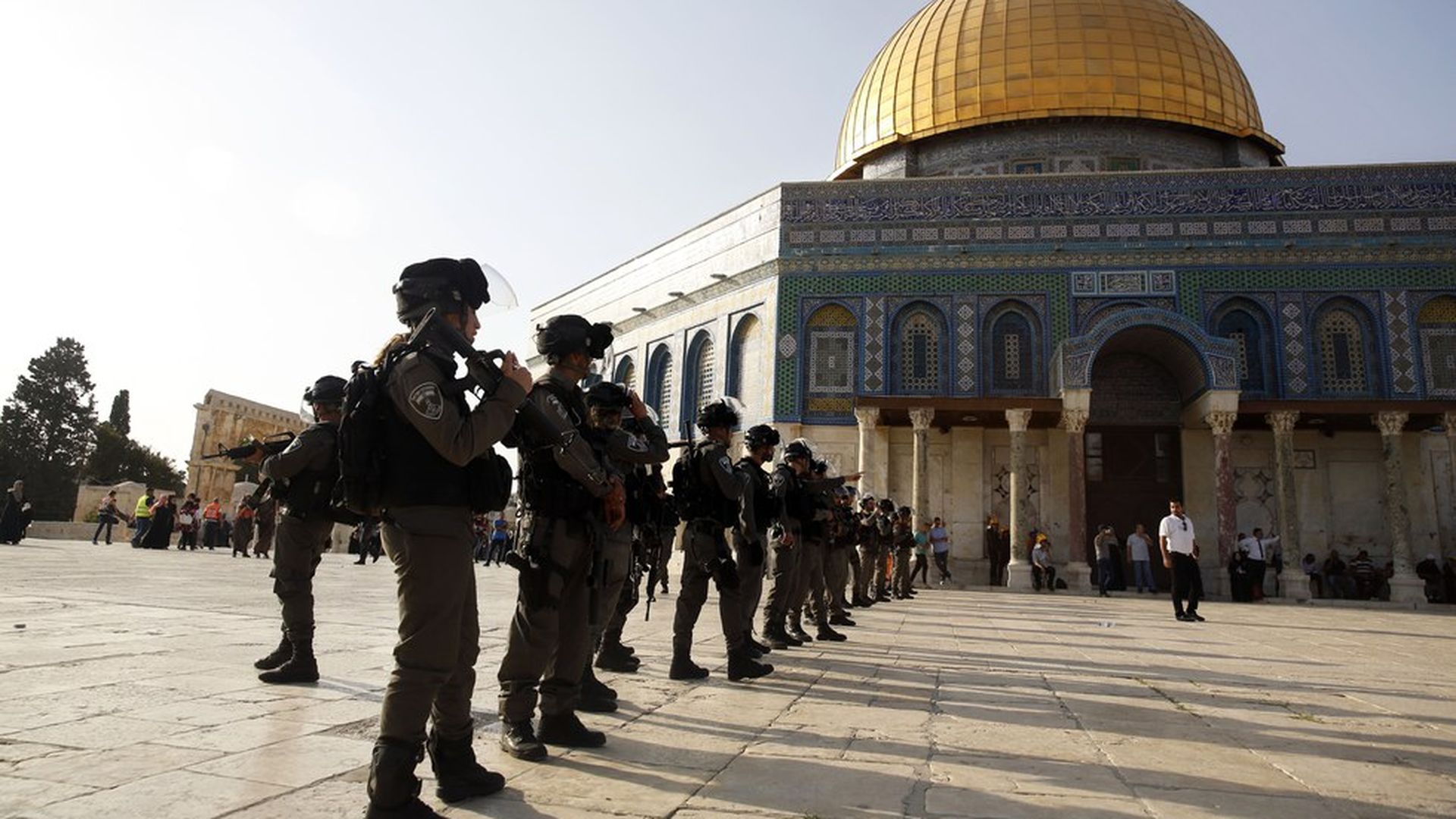
Why it matters: Jerusalem has been relatively calm amid an unraveling Middle East. The danger is that Trump's announcement could trigger violence in that city and beyond, further impeding cooperation between the United States and Arab and Muslim governments around the world.
Protests raged in Gaza City and West Bank early this week in response to President Trump's recognition of Jerusalem as Israel's capital. He officially made the announcement on Wednesday afternoon.
A protestor holds torn representations of American and Israeli flags during a protest at the Unknown Soldier Square in Gaza City. Photo: Adel Hana / AP
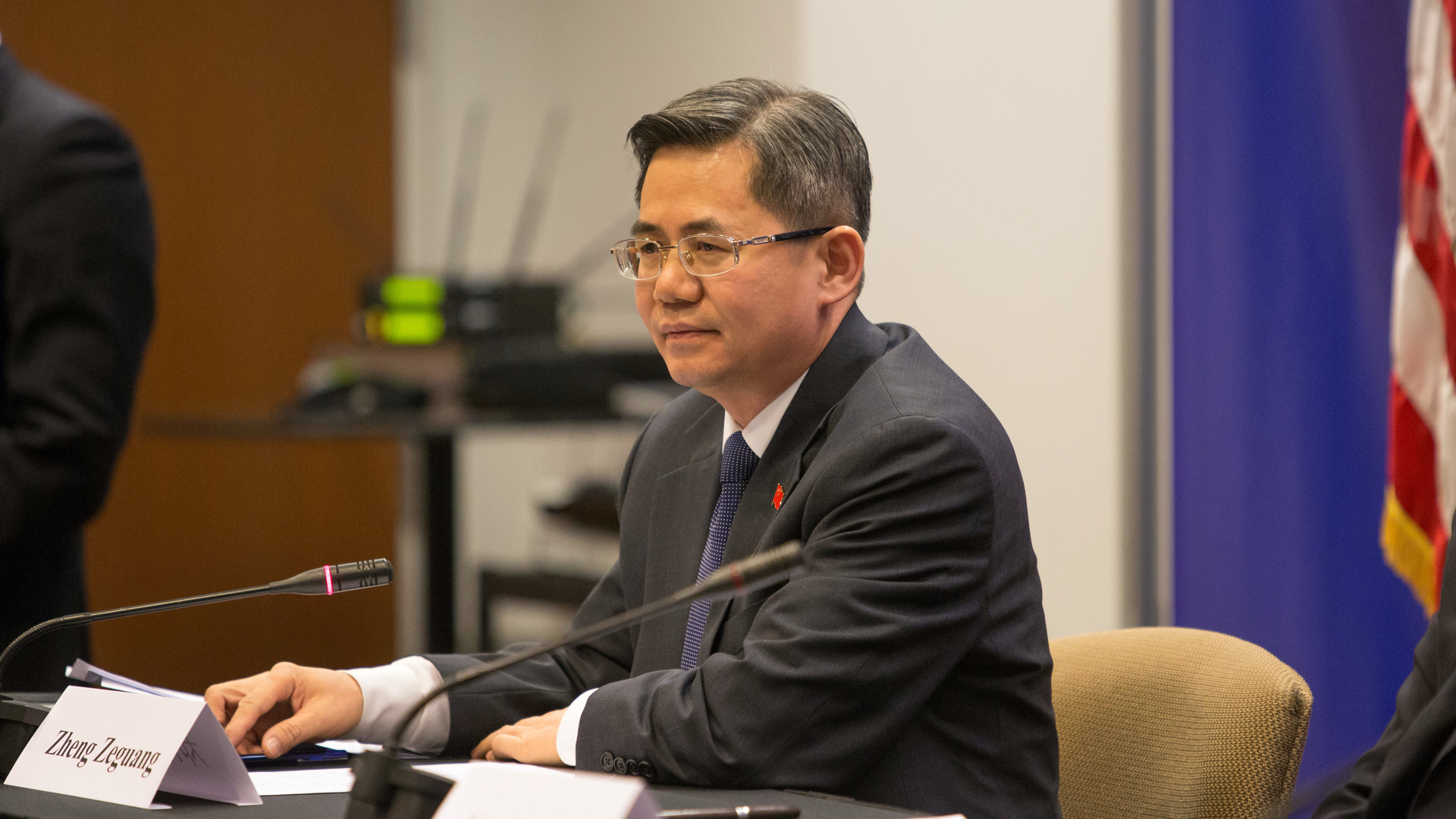
Beijing has dispatched Vice Minister of Foreign Affairs Zheng Zeguang 郑泽光 for a visit to D.C. starting today, on what a knowledgeable source describes as a “firefighting" mission with the apparent goal of preventing an escalation of tensions over North Korea.
What it means: Beijing is concerned enough about the trajectory of the relationship with the U.S., especially over North Korea and trade, to send the vice minister, who is expected to replace Cui Tiankai as Beijing's ambassador to the U.S.
Pope Francis added his voice this morning to Arab, Muslim and European objections to President Trump's plan today to recognize Jerusalem as Israel's capital, "a move that could trigger violence in the region, derail a developing U.S. Mideast peace plan, and infuriate key allies in the Arab world and the West."
The pope said he was "profoundly concerned," and asked "that everyone respects the status quo of the city." He called on the world for "wisdom and prudence" to avoid further conflict.
President Trump's decision to recognize Jerusalem as the capital of Israel and move the U.S. embassy from Tel Aviv to the city "affirm[s] a historic and current reality," senior administration officials said in a call with reporters Tuesday night. The president will announce both moves in a speech Wednesday.
The big picture: Axios first reported Trump's intent on Dec. 1. Since then, Middle Eastern and European leaders have voiced concerns that the move would interfere with peace talks in the Middle East. Administration officials said the president "understands the Palestinians' aspirations" and supports a two-state solution to the Israeli-Palestinian conflict if that's what both parties desire.
Go deeper with analysis from Axios contributor Barak Ravid.
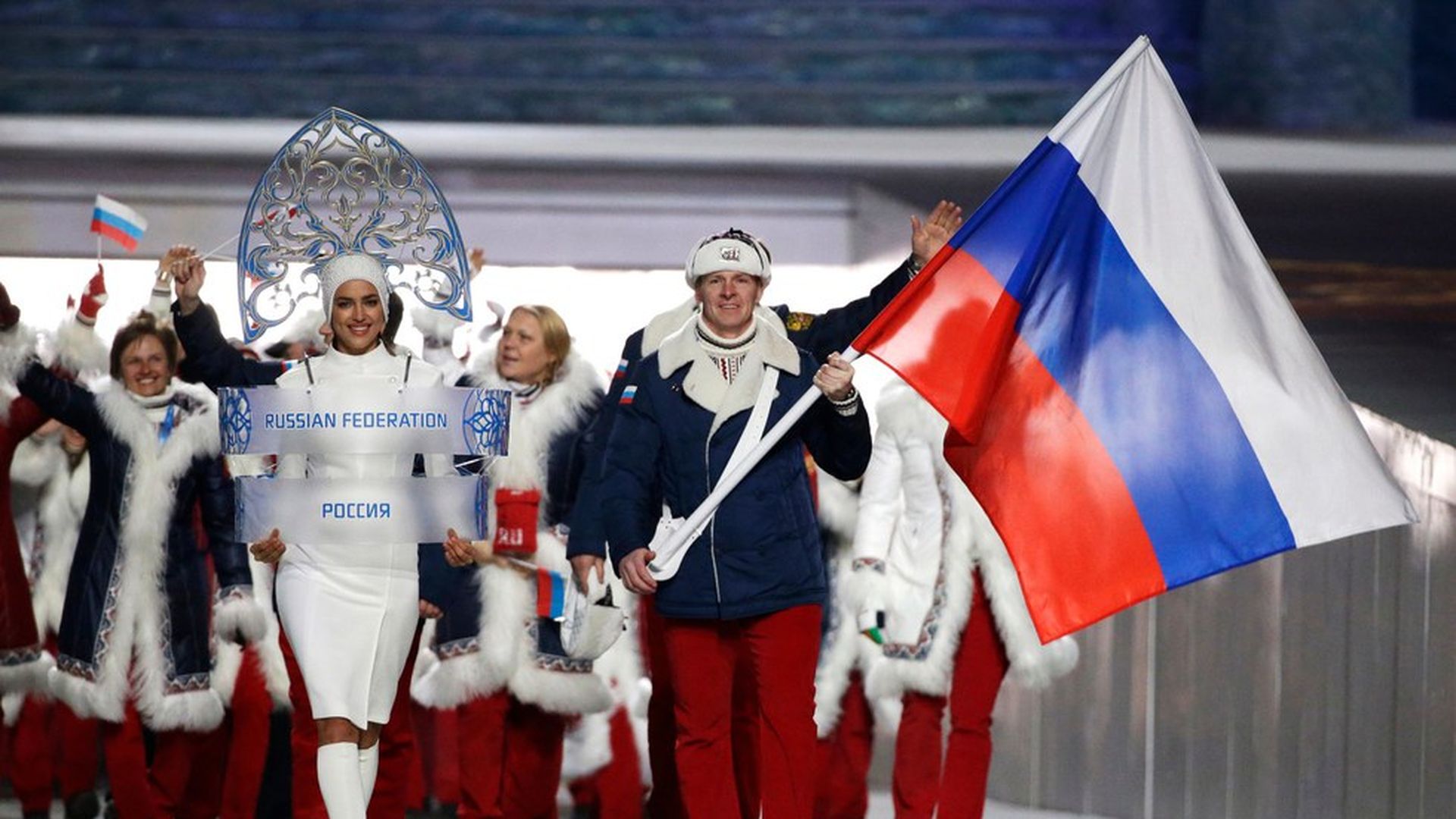
Russia has been banned from participating in next year's Winter Olympics in Pyeongchang, South Korea as a result of an extensive, systematic state-backed doping campaign uncovered during 2014's Sochi Winter Olympics, per The New York Times. The report branded the penalties against Russia as "so severe they were without precedent in Olympics history," though Russian athletes with impeccable drug-testing records might be allowed to compete under a neutral flag.
Why it matters: The decision will likely only serve to exacerbate tensions between Russia and the West as Russia routinely uses the Olympic Games to showcase its athletic prowess to the rest of the world. Case in point: Russia led the Sochi medal table — in both total medals and gold medals — before some of its medals were stripped under the investigation.
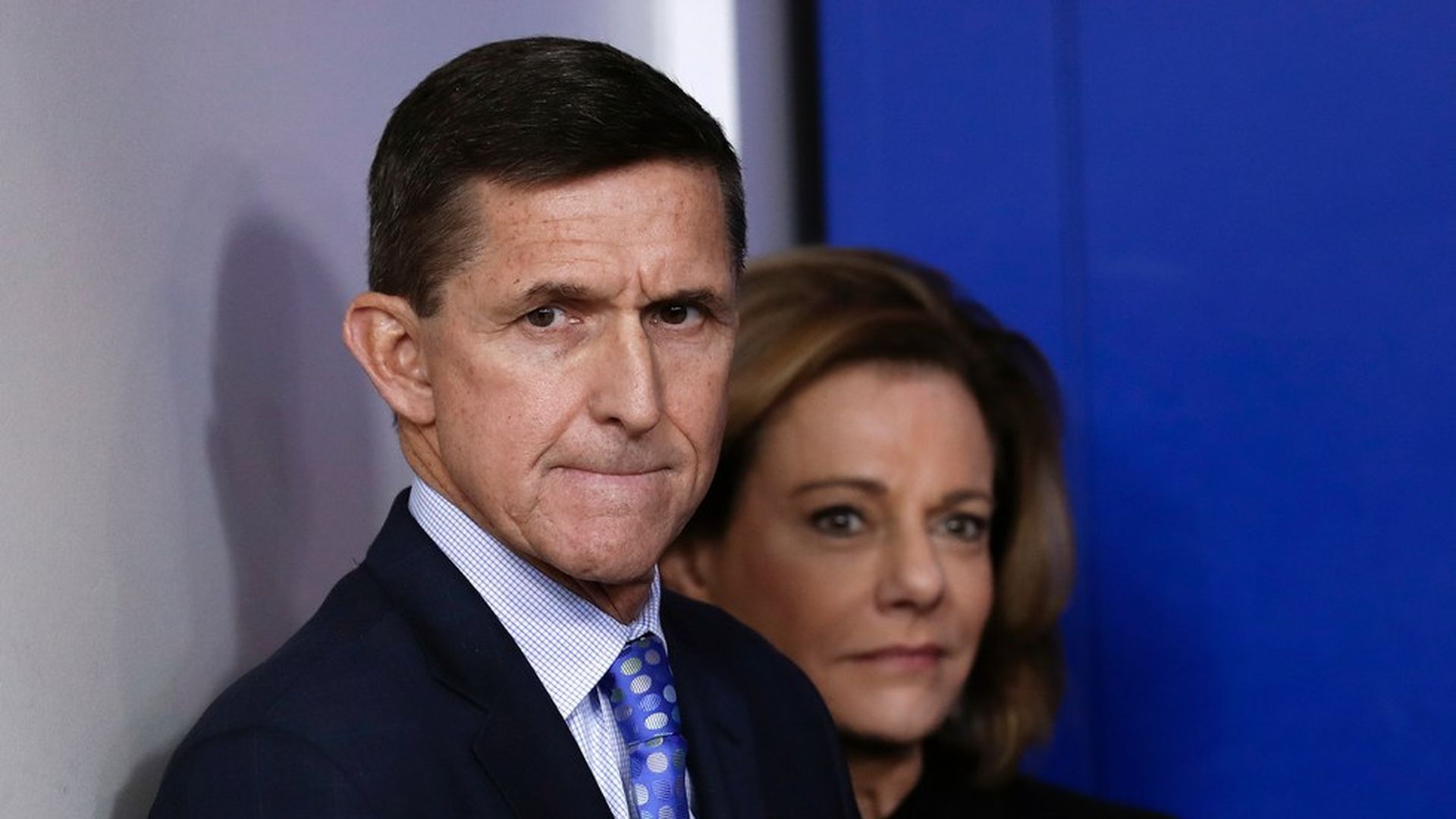
Trump's former Deputy National Security Advisor K.T. McFarland's nomination to be ambassador to Singapore is "frozen" due to inconsistencies in her testimony at a Senate hearing, Sen. Bob Corker told CNN reporter Manu Raju.
Background: McFarland testified that she knew nothing of Michael Flynn's contacts with Russians, but the New York Times obtained an email in which McFarland discusses Flynn's conversation with then-Russian ambassador Sergey Kislyak. McFarland was nominated in June, so the process was not exactly moving rapidly prior to the new revelations.