Saturday's technology stories

Exclusive: Army creates autonomy command amid Hegseth's robo-warfare push
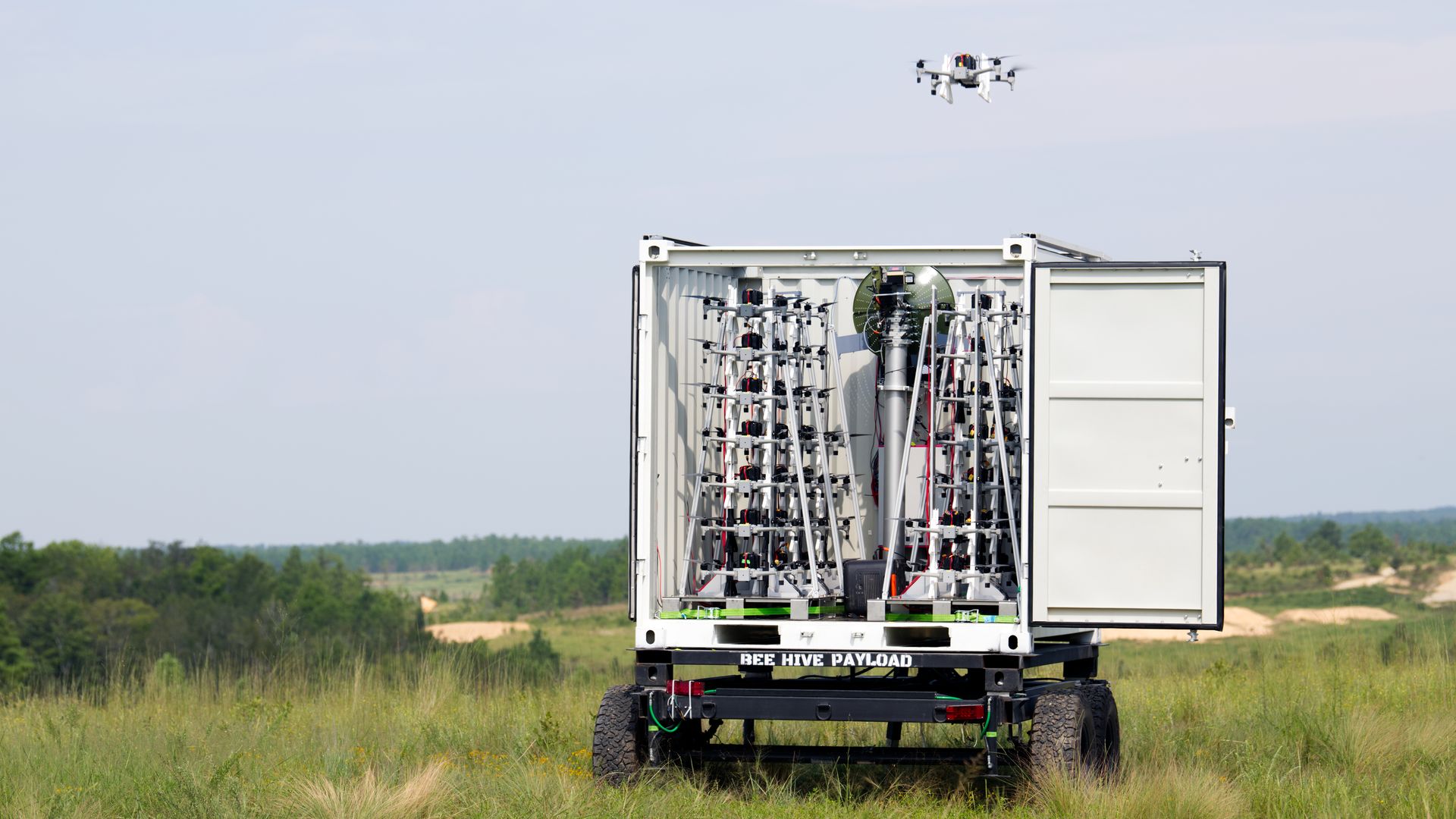
The U.S. Army is creating a new autonomous systems command and appointing an acquisition executive to prioritize buying and fielding smart machinery, according to a memo first seen by Axios.
Why it matters: Directions to do so come from acting service Secretary Adam Telle and were issued a day after Defense Secretary Pete Hegseth revealed the Meridian and Agincourt projects, both focused on the robotized future of warfare.
- Hegseth "made it clear: We are done with the bureaucratic inertia holding back modernization," Telle told Axios.
Zoom in: The Thursday memo, titled "Army Autonomous Initiatives," includes several directives:
- Establish Army Futures and Autonomous Systems Command, or FASCOM.
- Conduct "autonomous force development to create force structure aligning autonomous capability" in at least six service formations, including aviation, armor, sustainment and training.
- Designate a "portfolio acquisition executive for autonomy" and focus this fiscal year on autonomous fires, combat vehicles, watercraft resupply, breachers, surveillance and targeting, and more.
- Expand authorizations for 15X and 390A military occupational specialties to "all applicable Army units." (The service in August described 15X, tactical unmanned aircraft systems specialist, as its newest role.)
Zoom out: U.S. military leadership has for years advocated for manned-unmanned teaming. The incredible success of drones in Eastern Europe — whether on the ground, in the air or on the water — has raised the stakes.
The bottom line: "The Army is rapidly advancing to maintain our lethal edge," Telle said. "This is about combat readiness to destroy the enemy and ensure our Army never enters a fair fight."

The AI deepfake election is starting to get litigious
Rep. Derrick Van Orden (R-Wis.) was hit with a cease-and-desist letter this week over an AI deepfake he posted falsely depicting his Democratic opponent voicing positions her campaign says she rejects.
Why it matters: Van Orden is the latest in a growing number of candidates and elected officials facing legal complaints and threats over AI deepfakes in campaign ads.

EV sales rebound as Tesla and Rivian top expectations
Tesla and Rivian topped expectations on electric vehicle deliveries over the past three months, an early sign that elevated gas prices may be giving EV demand a lift.
Why it matters: EVs had been down in the dumps for an extended period, but with gas now far above $4 per gallon, some consumers appear to be giving them a second look.

Change.org leans into AI with $100 million investment
Change.org was founded as a venture-backed organization, before a 2021 restructuring that saw investors like Reid Hoffman and Sam Altman donate their shares to a nonprofit structure.
- Now the group tells Axios that it's investing around $100 million of its own money to rebuild its core petitions platform via AI.


Trump expected to tap DNI Jay Clayton for AI czar
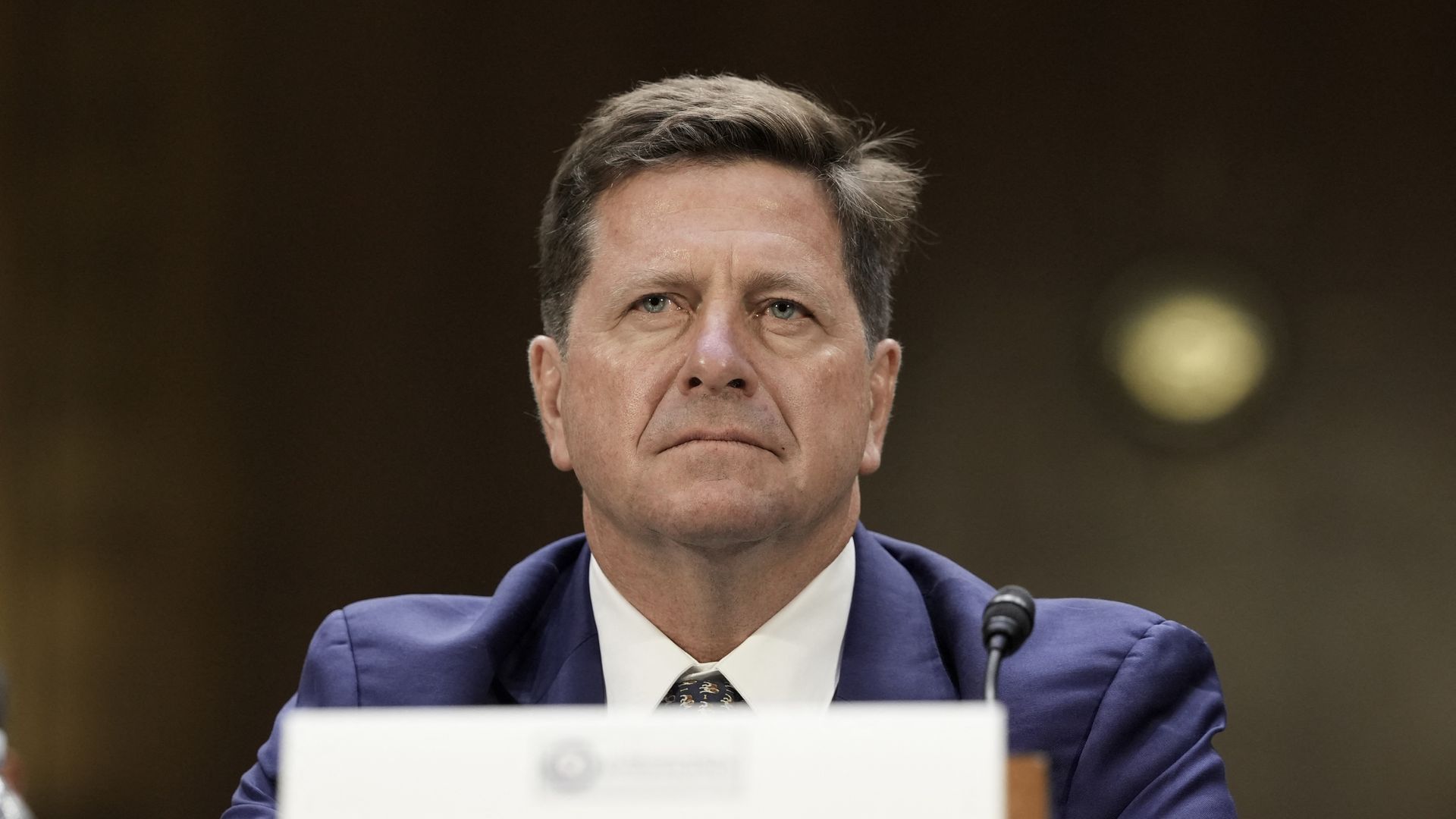
President Trump is expected to tap Jay Clayton, his director of national intelligence, for a new role as the White House's artificial intelligence — or in Trump's words, "super intelligence" — czar.
Why it matters: Clayton, who Trump previously told Axios would be a good idea for AI czar, is expected to take on the second title, sources told Axios.
- Calls for government intervention into AI's rapid development are growing, but the president has repeatedly said he favors a light regulatory touch and has called fears about the tech's threat to humanity a hoax.

"Algorithms lack the spark": Pope Leo XIV calls on church to ally with artists against AI

Pope Leo XIV called Friday for the church to form an alliance with artists to protect human creativity during an era of AI-generated content.
Why it matters: Though he has acknowledged the technology's potential benefits, the pope continues to warn that AI progress cannot come at the expense of human dignity.

Axios Live: Massachusetts lawmaker says AI growth and guardrails can coexist
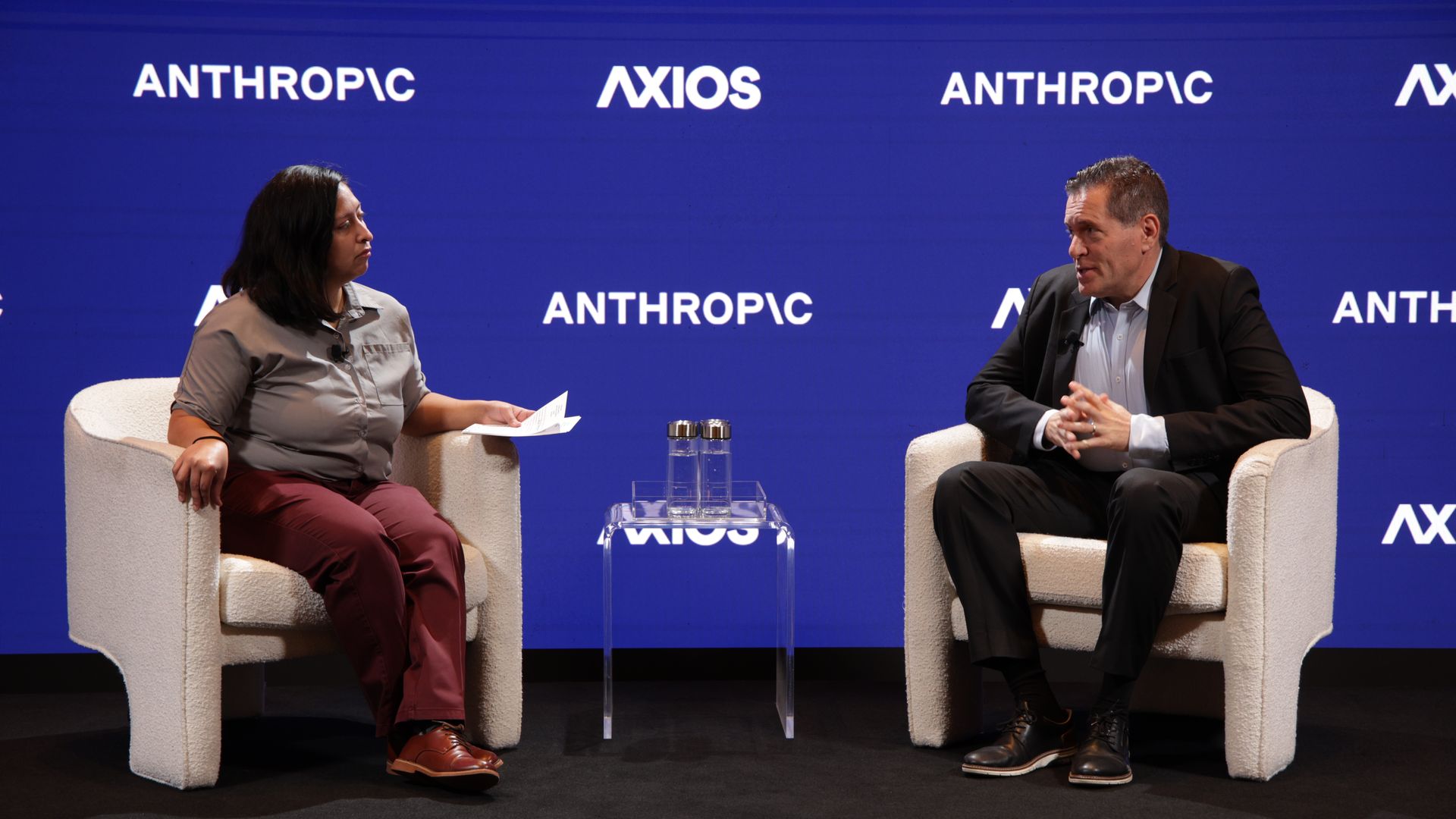
BOSTON — AI regulation should be a federal priority but states should step in to implement safeguards while supporting innovation, state Sen. Barry Finegold said.
Why it matters: With no formal federal framework for AI safeguards, policymakers and tech leaders are left to debate how AI is regulated, and who has a say.
Axios' Dan Primack and Steph Solis spoke with Bain Capital Ventures partner Ajay Agarwal, Recorded Future CEO Colin Mahony and Finegold. The Sept. 29 event was sponsored by Anthropic.
What they're saying: Finegold said states should not be pursuing AI legislation, "but the federal government is not doing anything, so states like ours … are stepping forward and we will continue to step forward until there's a federal law in place."
- Finegold said provisions in the Massachusetts Senate economic development bill would implement independent audits and safety checks of AI development, citing public prompting of some leading AI companies to put more unified safeguards in place.
- "We can have a robust AI economy and have adequate guardrails. We can do both," Finegold said.
- Mahony, whose cybersecurity company is headquartered in Boston, said the current AI landscape gives an advantage to "attackers," but added that "defenders" are also using the technology effectively.
- "There really are some incredible things that the broad defender community is doing with AI," he said.
- Mahony said AI-driven security incidents have sparked a wider AI safety debate: "When Mom starts asking questions about frontier models, you realize that there's something else going on."
What's next: Agarwal said Boston continues to lead in biotech and life sciences innovation but has work to do to compete with the growing robotics industry in Silicon Valley. He also pointed to current advancements in AI as progressing past previous frontier technologies.
- "The kind of things we're seeing in education, in health care, in physical AI and robotics, I think are truly more transformative than just another form of software that's being sold," Agarwal said.
Content from the sponsor's segment:
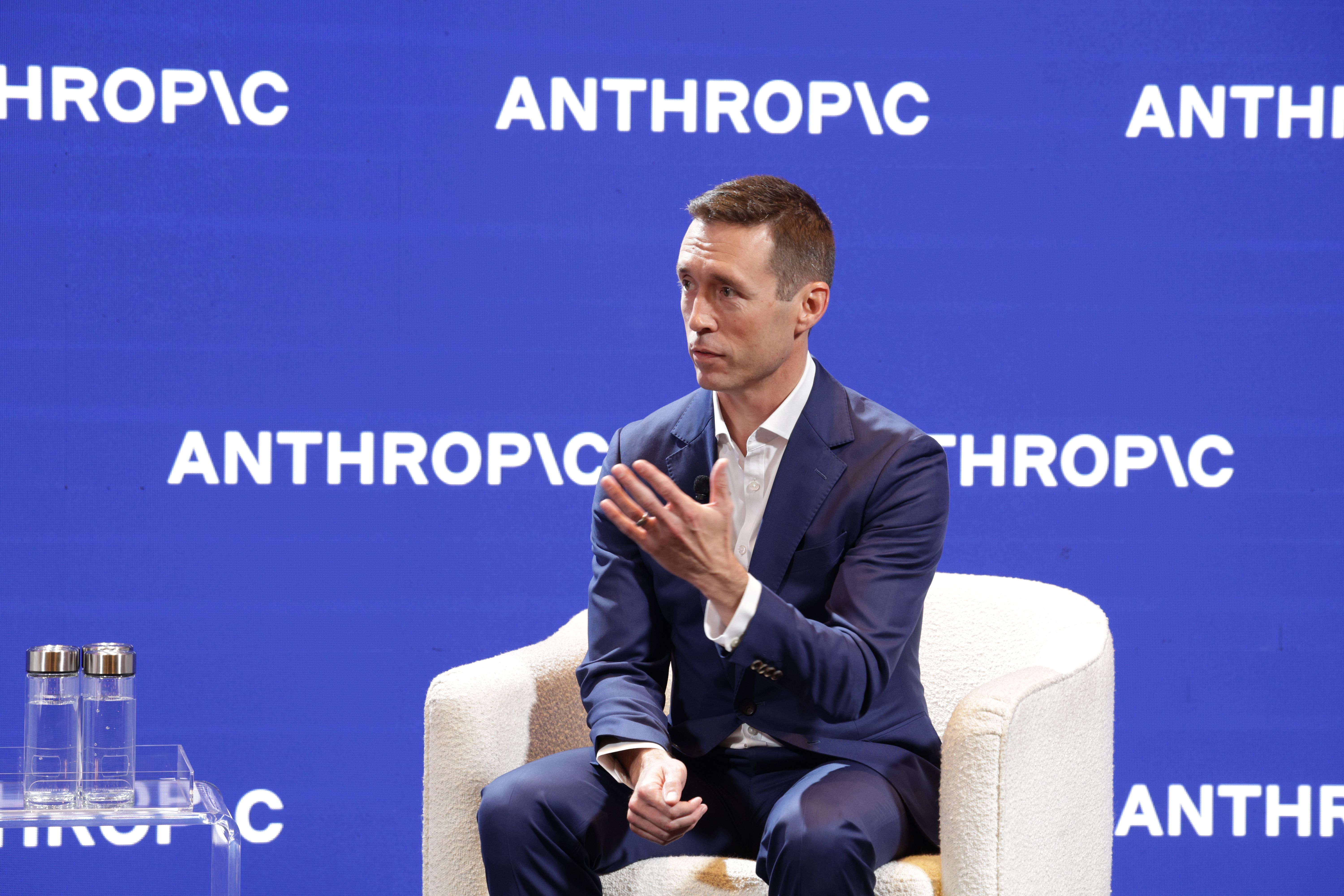
During a View From the Top conversation, Brian Peters, Anthropic's head of North America government affairs, explained the company's endorsement of the Massachusetts Senate's proposed AI regulations.
- "AI companies should not be grading their own homework," Peters said. "When an AI company says its technology is safe, there needs to be an independent evaluator to verify that that's true and the government needs to have the power to step in and do something about it."
Go deeper: Watch the full event.


Behind the Curtain: AI's existential legal crisis

No industry has ever documented its own foreseeable risks as loudly as AI.
- Imagine a plaintiff's lawyer reading the public warnings of Sam Altman and Dario Amodei: They told the world it was dangerous. They told the world it was moving too fast. Then they unleashed it and sold it to your kid.
No industry has ever taken so much copyrighted work and left behind so much proof.
- Imagine a plaintiff's lawyer reading OpenAI's own files to a jury: They trained on a pirated library. They renamed it to something blander. Then they deleted it when the headlines got hot.
Why it matters: AI's origins, use and future will be picked apart in countless epic court fights, with a historic paper and public statement trail to tap.

Inside the AI industry's grassroots rebellion
A small cadre of elite AI researchers is wielding extraordinary influence inside OpenAI and other leading companies, challenging executives, shaping policy and complicating negotiations with Washington.
Why it matters: As a safety crisis has unfolded across the industry, it's an open question who is doing more to shape the national AI debate — top researchers or the executives they report to.