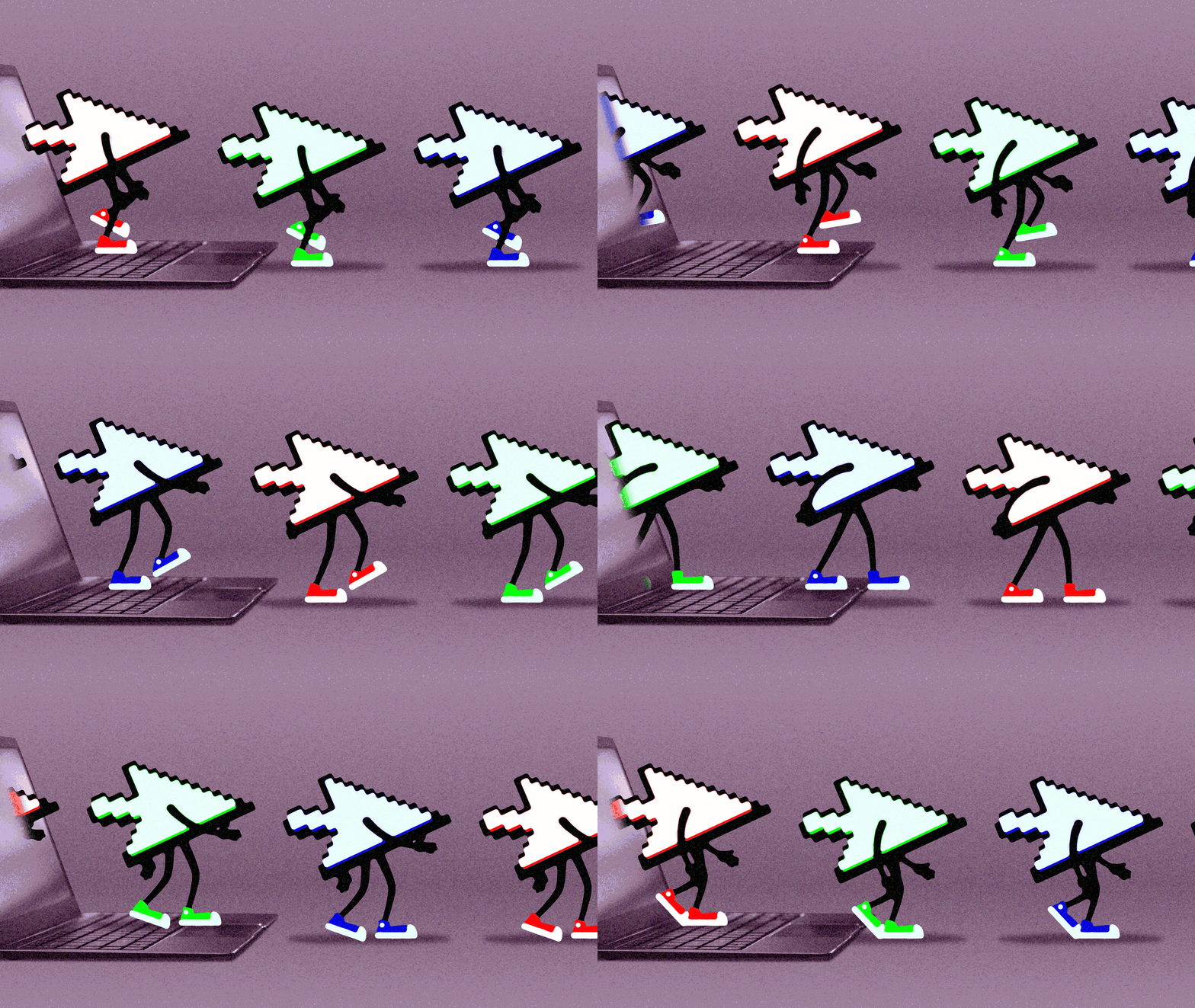
The long-promised personal AI assistant is finally arriving, with a suddenly crowded field of agents offering to run pieces of your everyday life.
Why it matters: For years, tech's "personal assistants" were little more than voice-controlled search boxes. Rapid advances in AI are finally giving them the memory, judgment and autonomy to act on our behalf.
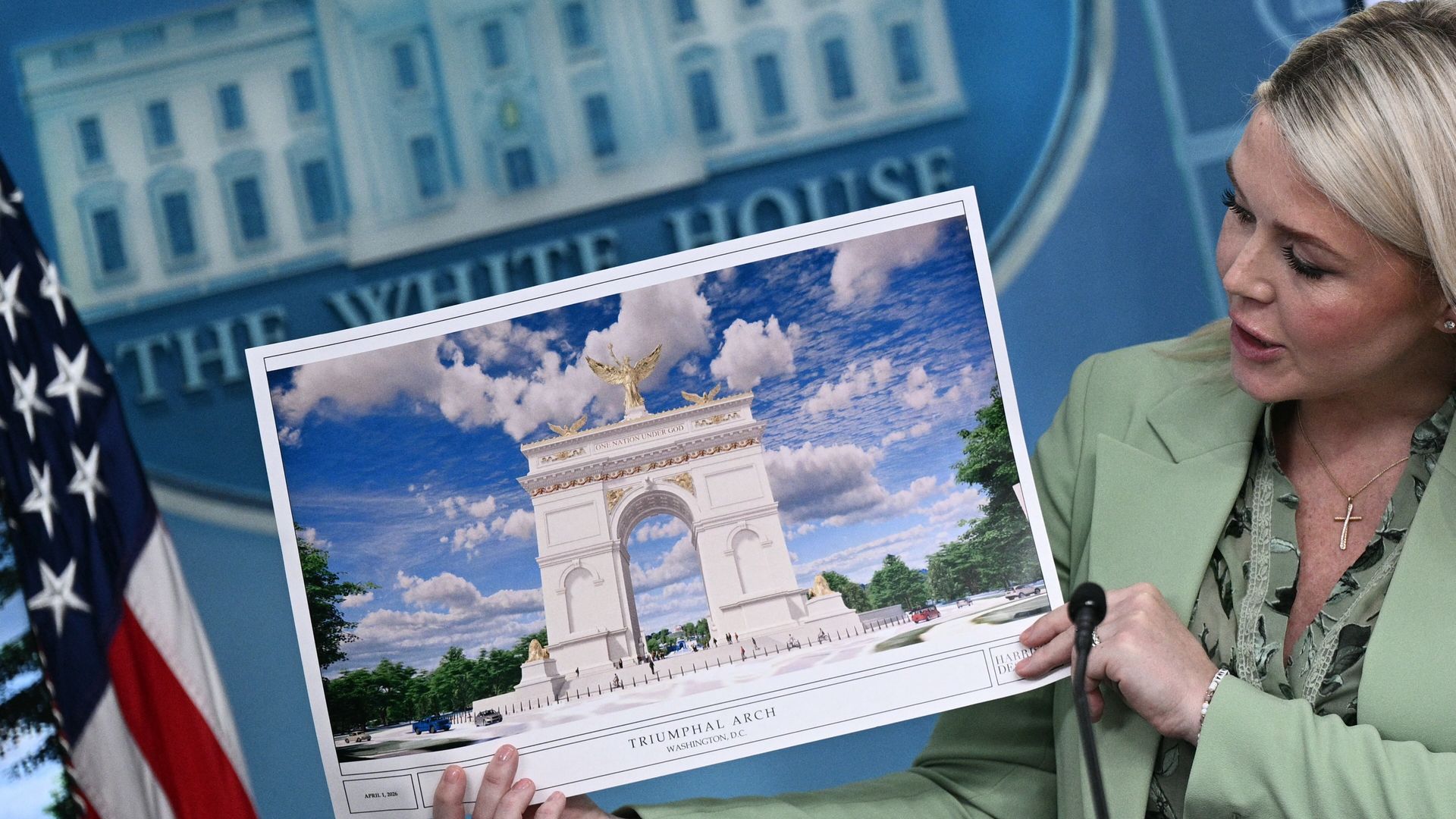
President Trump said Sunday morning his proposed "triumphal arch" in Washington, D.C., will become a dual-use facility housing snipers, drones and ammunition storage.
Why it matters: The president is now framing construction of the arch as a national security issue — much like he did with the East Wing ballroom/military complex at the White House.
President Trump announced Saturday he is creating an "AI Force" modeled on the Space Force and will soon name a new AI czar, doubling down on his push to accelerate artificial intelligence development with limited regulation.
Why it matters: The White House isn't backing down from its laissez-faire approach to AI, even as the industry's biggest leaders call for stronger safety rules and as public concern about AI intensifies.
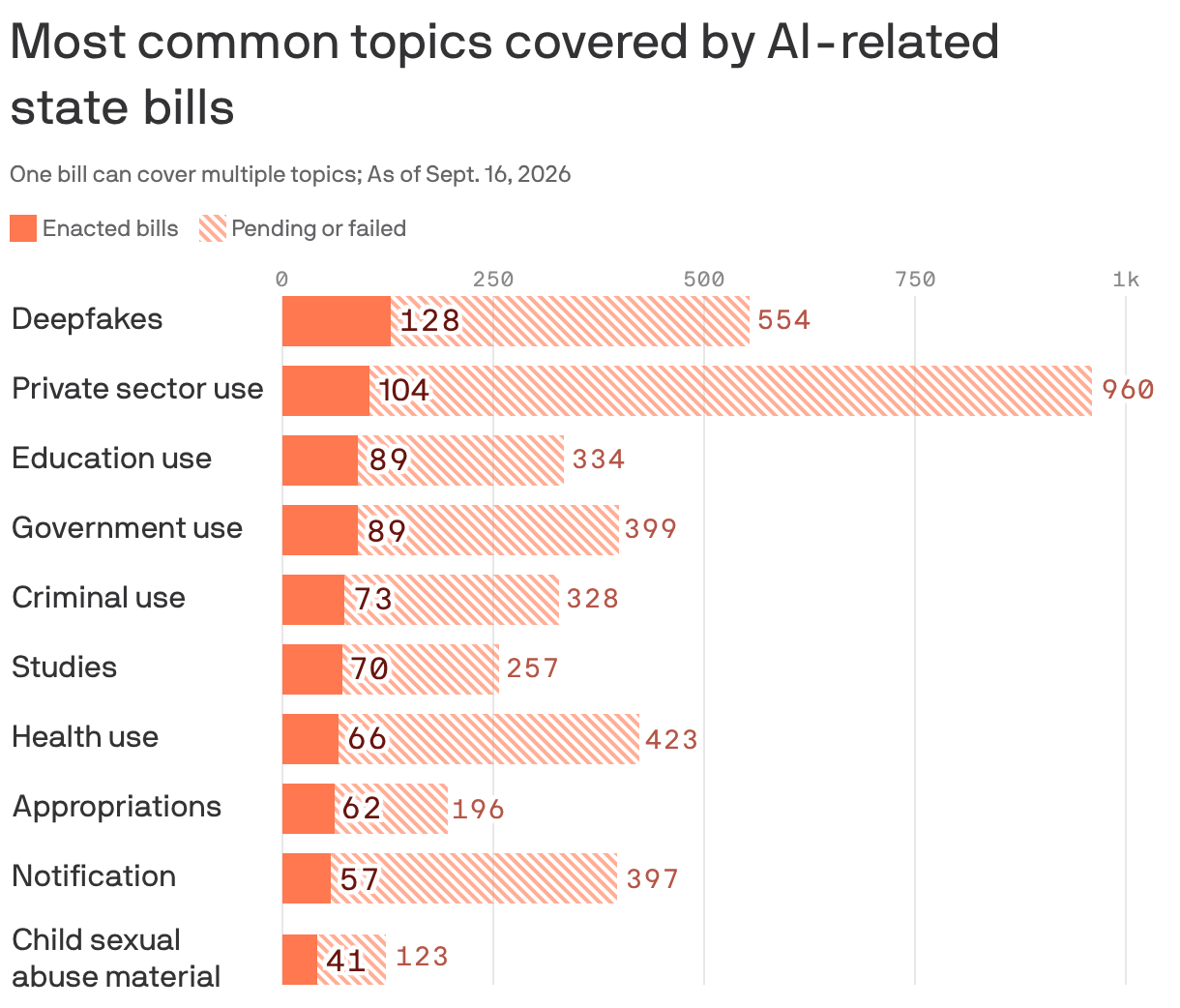
Data: National Conference of State Legislatures; Chart: Erin Davis/Axios Visuals
States have enacted 128 bills targeting deepfakes, making AI-manipulated content the most legislated AI issue in the U.S., according to an Axios analysis of National Conference of State Legislatures data.
Why it matters: Deepfakes are among the AI issues that are easier for lawmakers to tackle, because existing laws around impersonation, deception and commercial rights provide a legal framework that can extend to AI.
AI-generated music is flooding streaming platforms, but music's unusually complicated web of copyright makes it one of the hardest creative industries for AI companies to navigate legally.
Why it matters: The legal uncertainty isn't slowing adoption and dealmaking.
Hollywood is beginning to cut deals that could establish the rules for how studios use AI technology.
Why it matters: The moves come after years of the entertainment industry treating the technology as an existential threat to its business and creative workforce.
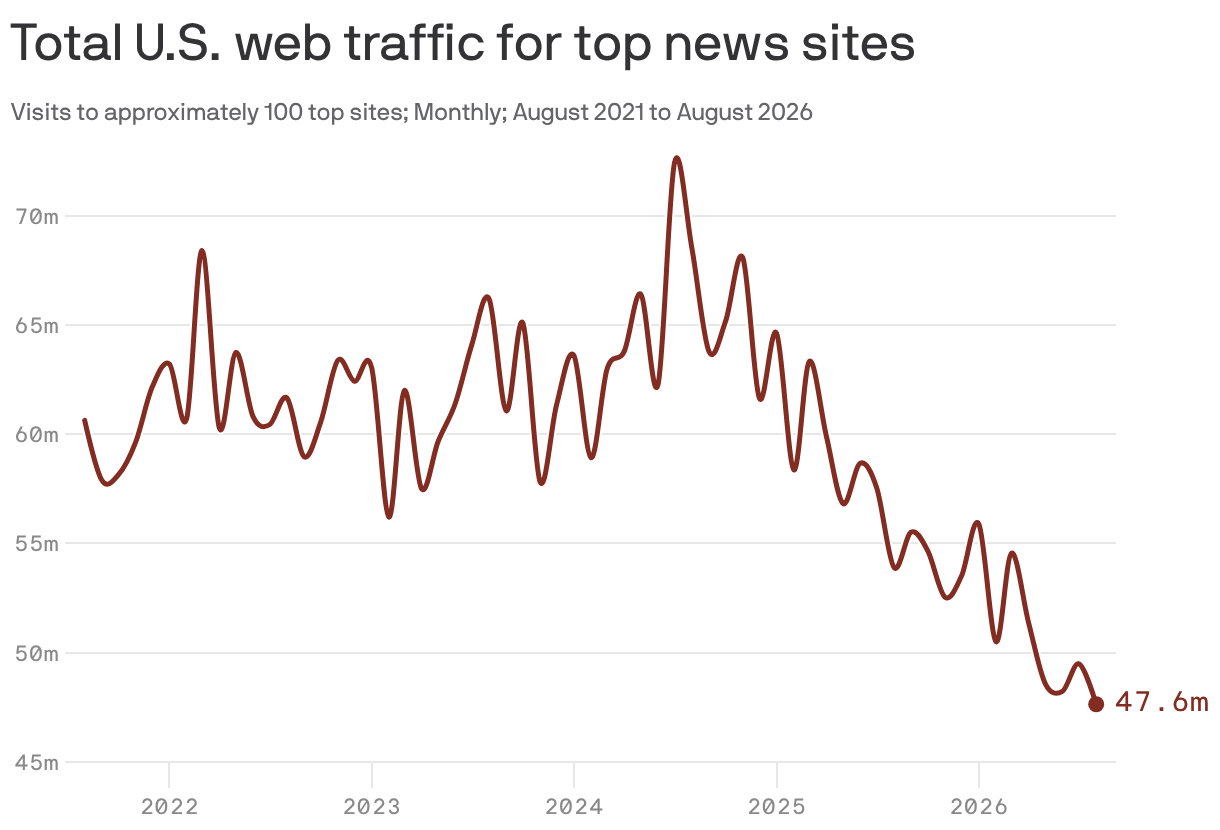
Traffic to news sites is plummeting in the U.S. as tech giants shift users from search and social sites to AI interfaces.
Why it matters: That dynamic is forcing digital publishers to pivot faster than many are prepared, driving layoffs and consolidation. Stopgap efforts to slow the decline are costly and unsustainable.
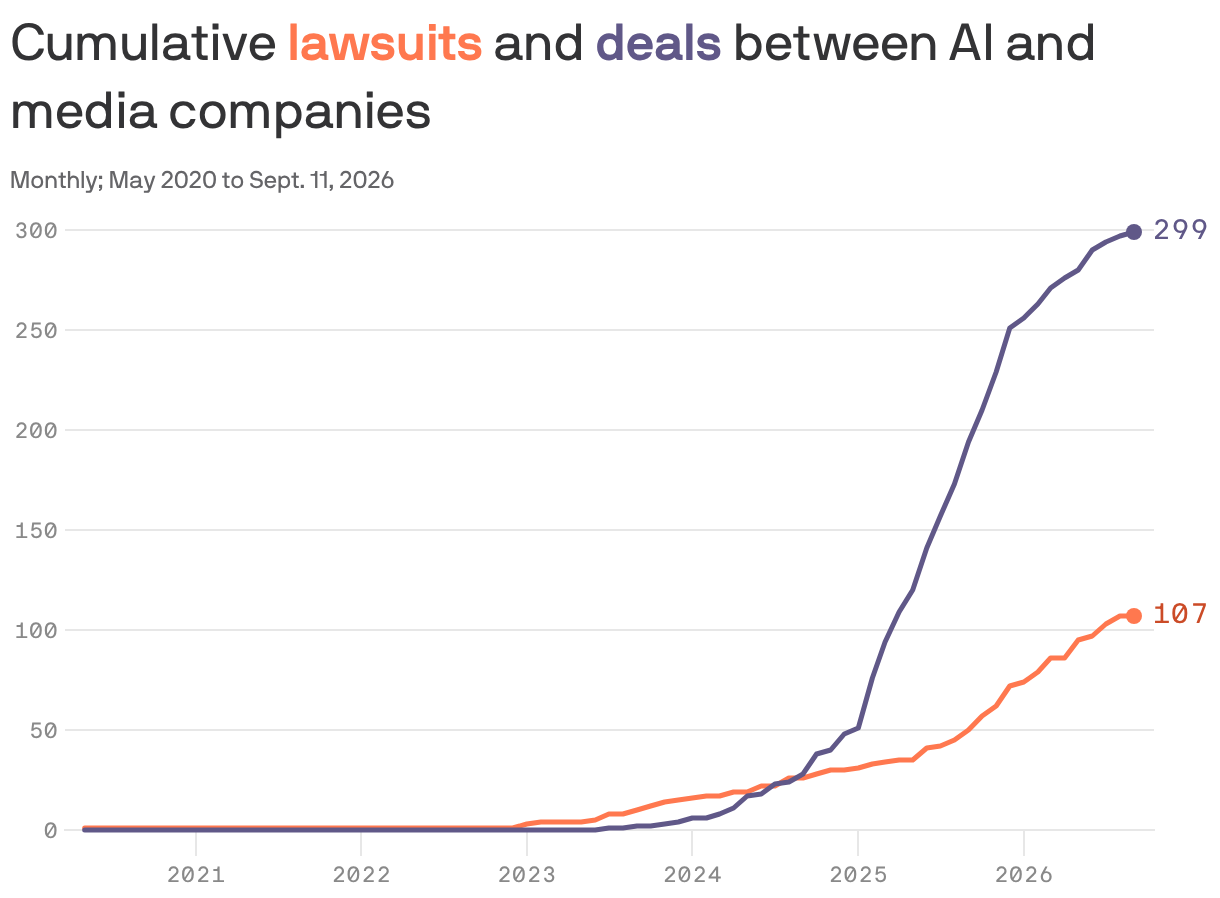
Deals with AI firms have dramatically outpaced lawsuits over the past two years, according to an Axios analysis, suggesting creative industries are eager to strike commercial agreements amid ongoing litigation.
Why it matters: The licensing market is developing faster than courts are establishing the underlying rules.
The Department of Justice's statement of interest supporting OpenAI and Microsoft in the New York Times' copyright infringement lawsuit surprised critical agencies like the U.S. Patent and Trademark Office and the Copyright Office, sources told Axios.
Why it matters: Statements of interest allow the government to declare an official position on a legal matter in private lawsuits. While not binding, they can hold significant weight and help persuade cases.
A handful of specific AI use cases highlight an opportunity for the technology to overcome some of America's widespread skepticism and win broader trust, according to a new Morning Consult poll shared exclusively with Axios.
The big picture: Practical applications that keep people alive, safe and protected from scams could prompt skeptics to reconsider their attitudes.
Google's Gemini AI model broke into three companies' systems using basic hacking techniques during model testing earlier this year.
Why it matters: Google was one of the only AI labs that hadn't yet publicly disclosed a security breach involving their agents during routine pre-deployment testing.