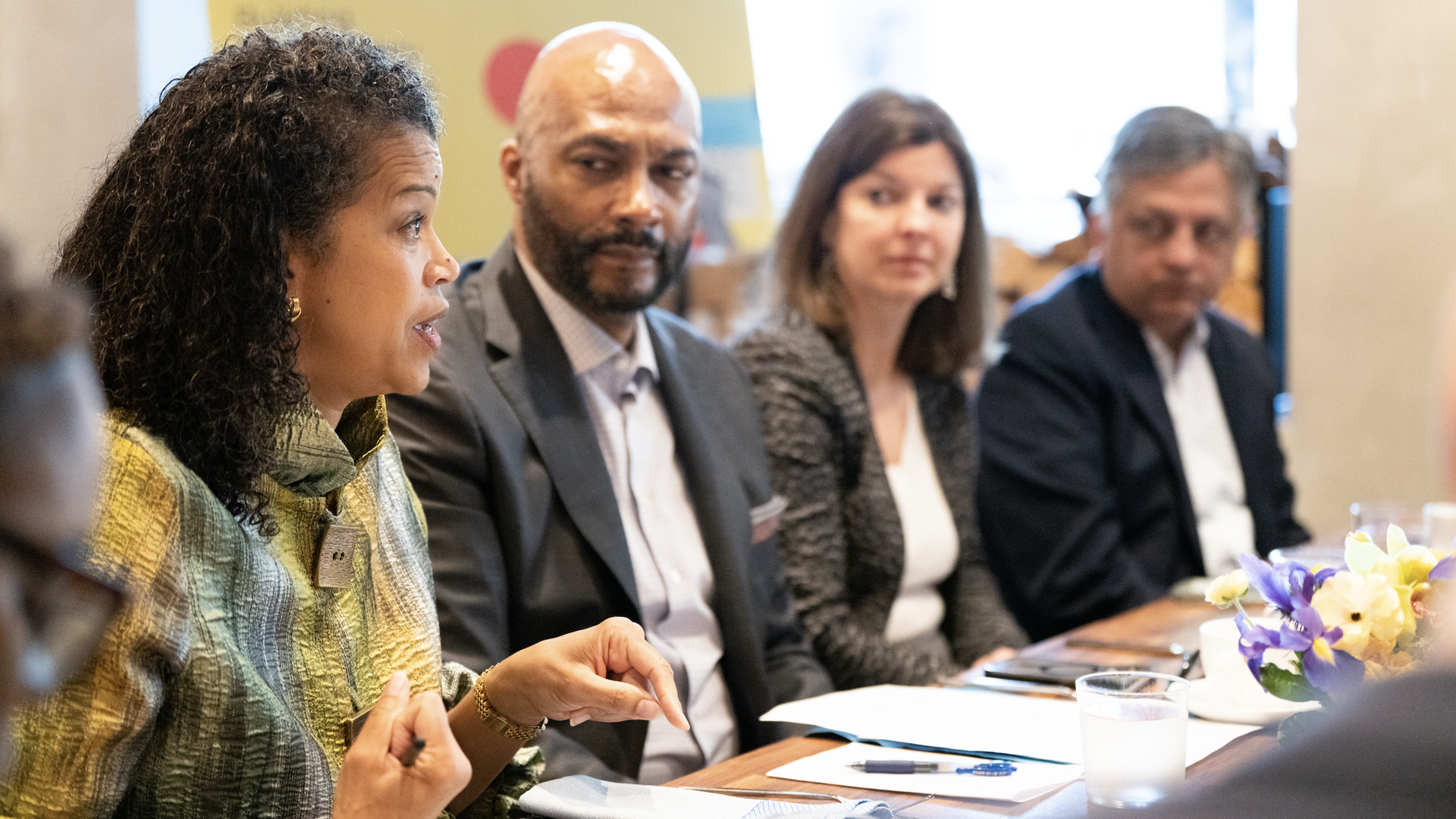
WASHINGTON, D.C. — AI tools like chatbots and agents could expand access to mental health support for children, as long as protections are put into place, public health, advocacy, and technology leaders said at an April 15 Axios event.
Why it matters: Youth and adolescent mental health is a worsening crisis in the United States, and AI could augment care for a struggling population.
Axios' Maria Curi and Megan Morrone moderated the Expert Voices roundtable, which was sponsored by Roblox.
Driving the news: Courts are holding some tech giants accountable for how their platforms influence young users at the same time as AI is introducing rapidly changing, largely unregulated products into children's lives.
By the numbers: More than 50% of people who reach out to Crisis Text Line, a free text-based mental health support service, are under the age of 18, according to the nonprofit's chief health officer Shairi Turner.
In 2025, the number one topic of conversation for that age group was suicide.
"One in three young people under the age of 14 who texted in" were doing so to talk about ending their lives by suicide, Turner said.
What they're saying: AI could help identify at-risk children and connect them with valuable resources.
Sandy Hook Promise co-founder and co-CEO Nicole Hockley said her organization could use agents to scale the work they already do with local law enforcement and juvenile intervention to identify young people at risk for harming themselves and others.
"I also think there is a way for us to teach the agents how to help recognize when someone needs help," she added.
Yes, but: "We've seen decades of regression when it comes to investments in mental health and youth," said Nicol Turner Lee, senior fellow and director of the Center for Technology Innovation at Brookings Institution.
"We've sort of opened the door for certain companies to come in and to capture that attention," she warned.
"The Silicon Valley Tech model doesn't apply to eight-year-olds," The Digital Economist CEO Navroop Kaur Sahdev added. "We're basically playing with their lives."
What's next: The industry needs to"get more stakeholders around the table and … figure out where everybody converges," Turner said.
Content from the sponsor's remarks:
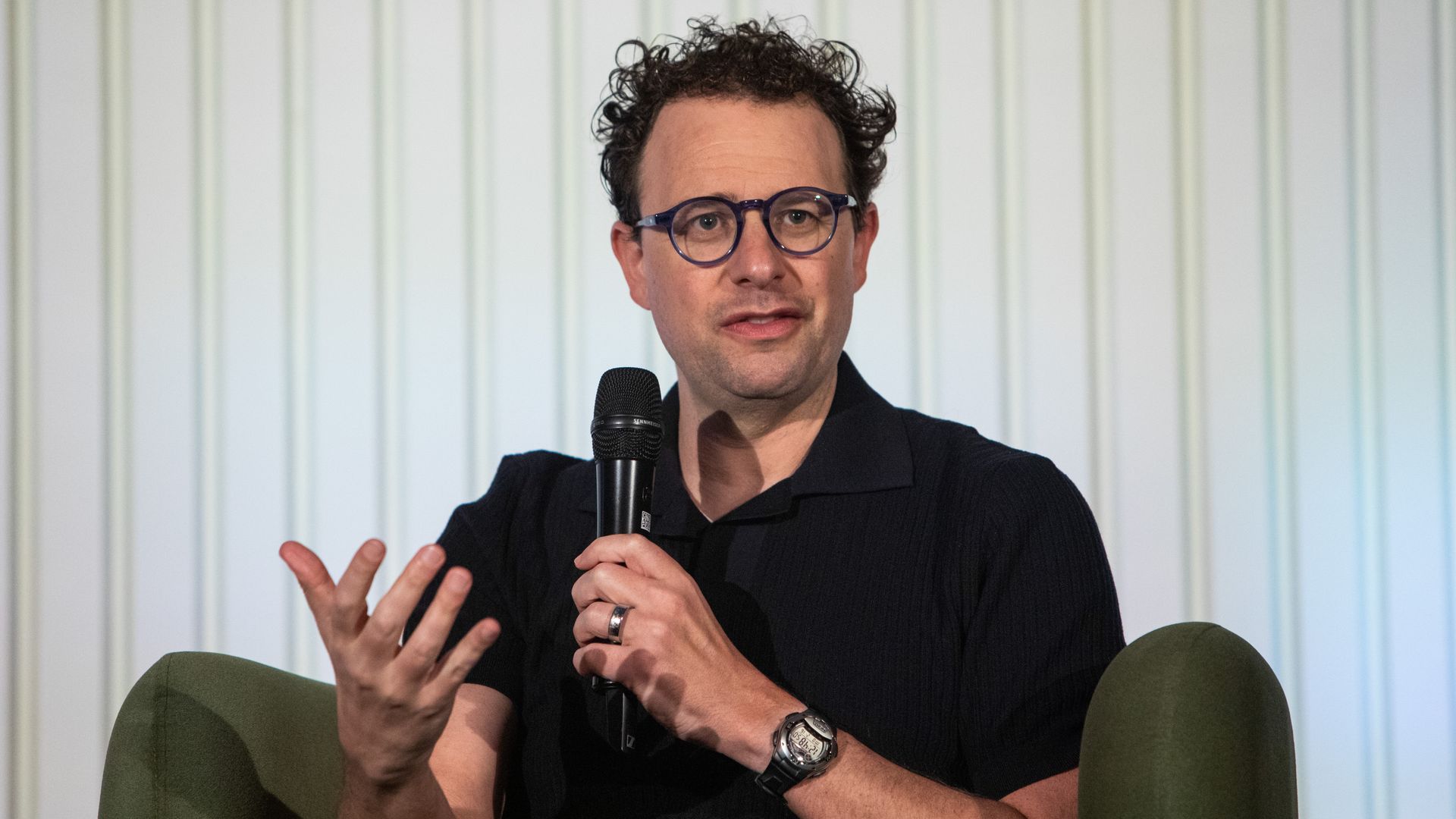
"The world is increasingly complicated," Roblox CEO David Baszucki said, and "designing for the busy parent is really important" when it comes to keeping children safe online.
"We're really excited [about] establishing what we call a global gold standard for healthy, safe, age-appropriate gaming," Baszucki added. "We continue to be optimistic about the future."
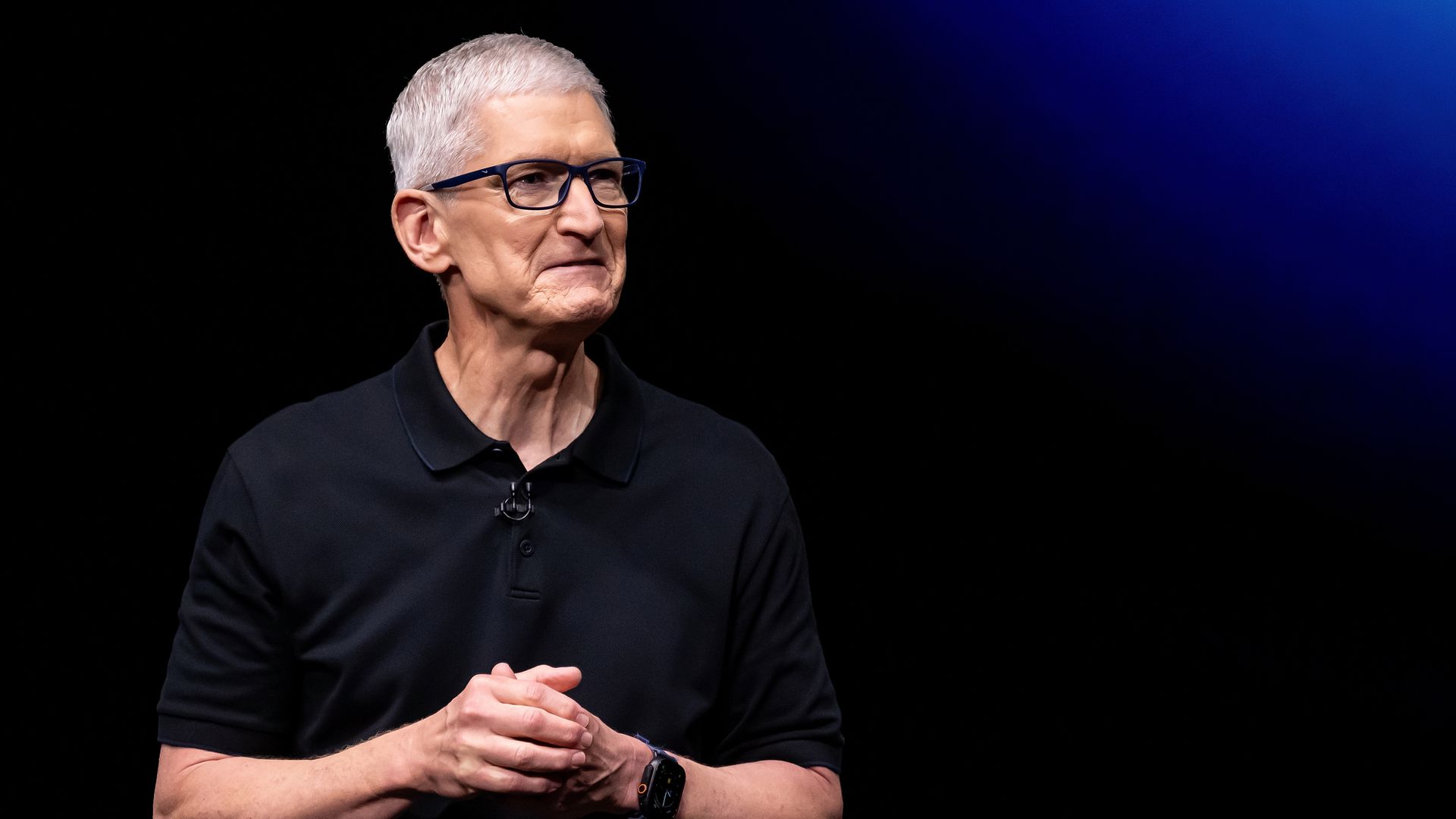
Tim Cook is stepping down as CEO of Apple. In nearly 15 years as chief executive, Cook turned Apple into a global powerhouse, building on the legacy of his legendary predecessor Steve Jobs.
Why it matters: Cook, who oversaw the launch of the Apple Watch and AirPods, will be replaced by hardware expert John Ternus.
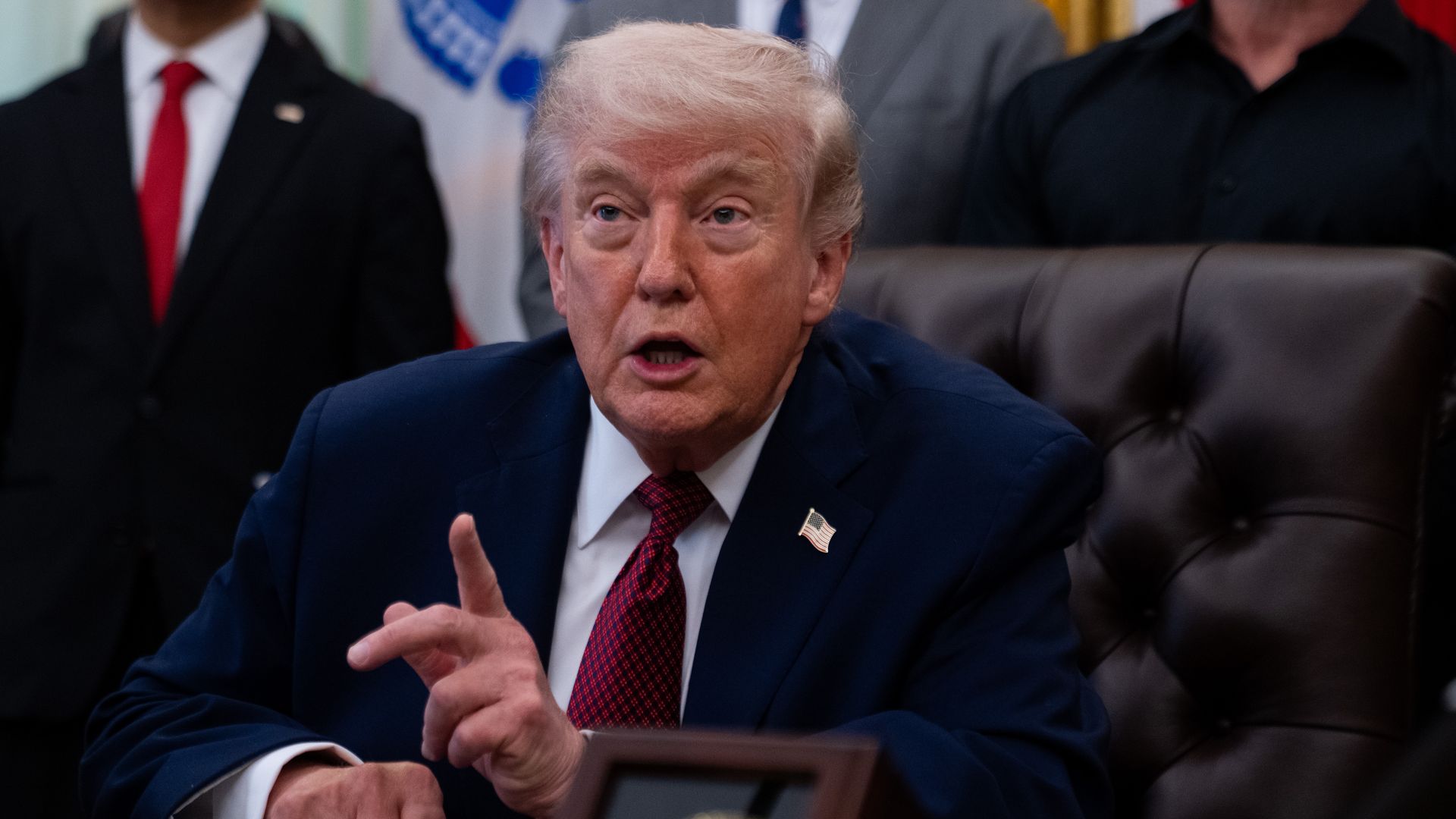
President Trump railed against Iran war critics in a series of Truth Social posts, insisting he's under "no pressure" to make a deal with Tehran as peace talks remained in limbo Monday.
The big picture: Ahead of a looming deadline for the ceasefire ending, Trump denied that Israel had dragged the U.S. into the war, saying "Time is not my adversary," for ending it and his eventual deal will be "FAR BETTER" than former President Obama's 2015 nuclear deal.
A U.S. district judge on Friday issued a preliminary injunction requiring Nexstar and Tegna to remain separate, despite closing their $6.2 billion megamerger last month.
Why it matters: The ruling significantly dampens the consolidation outlook for the entire local broadcast industry.
Saildrone on Monday unveiled Spectre, a 170-foot unmanned surface vessel the company says is optimized for anti-submarine warfare, far-flung surveillance and missile launches.
Why it matters: The design is the culmination of more than a decade of experience working alongside scientists, border agencies and militaries, according to CEO Richard Jenkins.
"Arctic, Antarctic, High North, Southern Ocean, hurricanes — we did thousands of iterations to toughen our vehicles," he told Axios ahead of the Sea-Air-Space conference in Maryland.
Alex Bores, a Democratic House candidate in New York and a top target of AI super PACs, is rolling out a plan to create an "AI dividend" in response to potential large-scale job displacement from artificial intelligence.
Why it matters: Bores is leaning into anxiety over AI's impact on jobs as voters grow more wary of the technology's economic effects, even as deep-pocketed tech interests spend big to defeat him.
The CEO of $10.2 billion blockchain infrastructure company Alchemy has an irreverent AI assistant — named Dave the Minion — that tracks his health data, scores his habits and assigns new goals.
Dave is an AI agent built with OpenClaw.
Why it matters: Executives are offering a glimpse into what a fully integrated life with AI looks like — including the current pitfalls.
Maryland Gov. Wes Moore will host AI executives from Microsoft and other tech companies for dinner at his official mansion in Annapolis on Monday to discuss how to protect the state from cyberattacks in the "Mythos era," Axios has learned.
Why it matters: The private conversation offers a glimpse into how state officials are scrambling to deal with the benefits and threats of rapidly evolving AI, as the Trump administration takes a laissez-faire approach to regulating it.
The National Security Agency is using Anthropic's most powerful model yet, Mythos Preview, despite top officials at the Department of Defense — which oversees the NSA — insisting the company is a "supply chain risk," two sources tell Axios.
Why it matters: The government's cybersecurity needs appear to be outweighing the Pentagon's feud with Anthropic
Why it matters: Some AI optimists and some AI critics — who agree on very little — argue that taste is one of the many uniquely human traits that can't be taught to a machine.
The world's largest data center project — backed by Trump allies and bearing his name — is stalled by delays and logistical hurdles that could stop it before it even starts.
The latest sign of trouble emerged Friday: CEO Toby Neugebauer abruptly departed. That sent the company's shares, which already shed 75% in the last six months, plummeting in aftermarket trading.