Trump's Greenland gambit thrusts Arctic security into mainstream politics

Add Axios as your preferred source to
see more of our stories on Google.
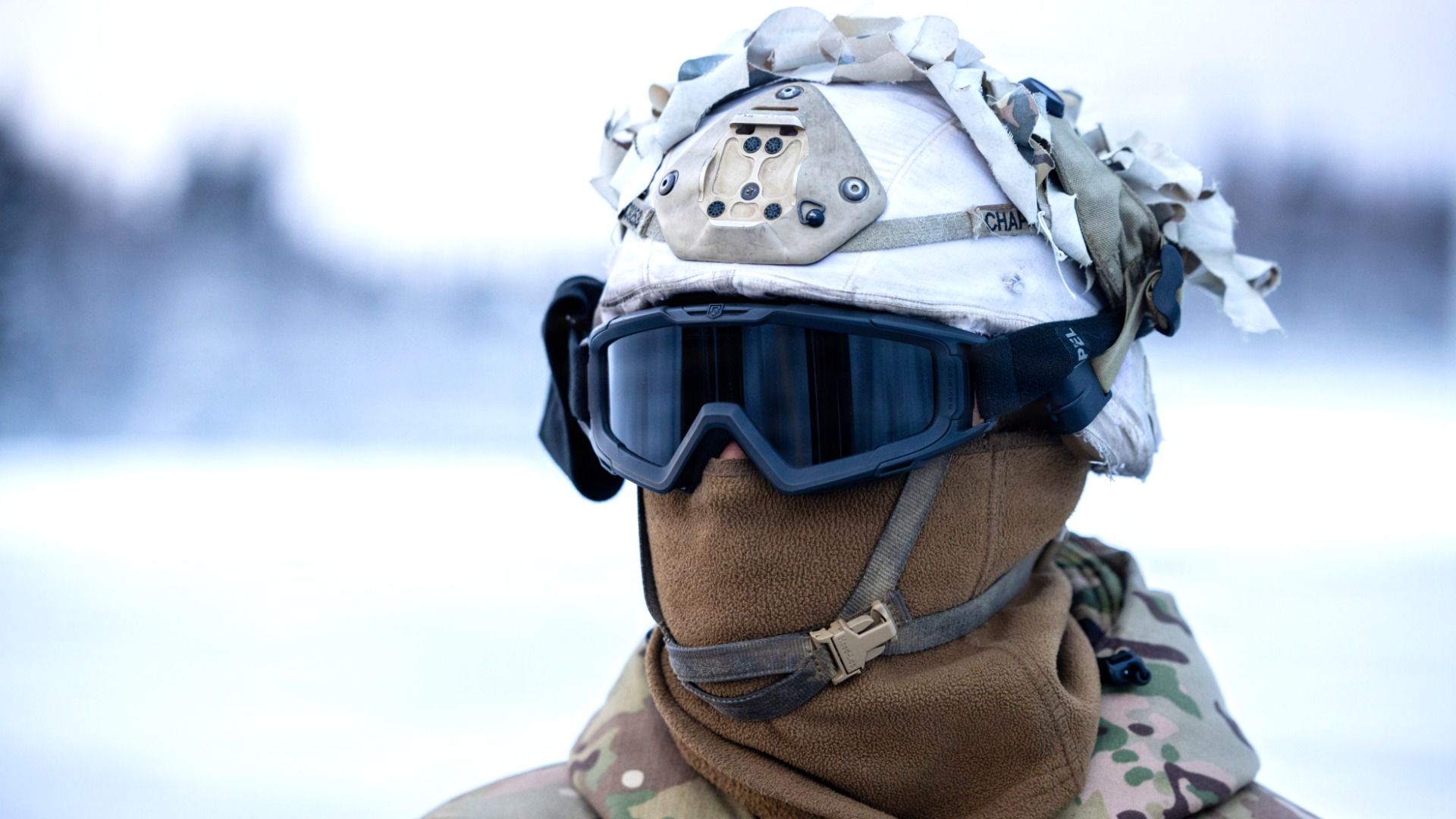
An 11th Airborne Division soldier, ahead of an exercise in Alaska. Photo: Justin P. Morelli/DVIDS
From Chrome Dome flights to Golden Dome missile protections, the U.S. has for decades staked a national-security interest in the Arctic. Today's conversation is quickly evolving, though, spurred by:
- The coziness of Russia and China;
- Global warming, ice melts and easing navigation;
- And the Trump administration's chaotic approach to foreign affairs, compounding already strained transatlantic relationships.
Why it matters: "The Arctic is affected by many different factors, many different narratives. There's the focus on natural resources, shipping routes, and then, of course, its strategic positioning between global powers," Pavel Devyatkin, a senior associate at the Arctic Institute, told Axios.
- "We are witnessing a dangerous action-reaction cycle, where each military exercise, whether from NATO or Russia, prompts a counter-exercise," he added.
- "But I would emphasize that the escalation that we're seeing isn't inevitable or irreversible."
Driving the news: President Trump's beef with Canada and attraction to Greenland has thrust the Arctic into mainstream political debate.
- NATO allies took Trump's threats to invade Greenland seriously enough that they sent a small detachment of troops to show solidarity with Denmark.
- Trump, in turn, was so enraged by that gesture that he threatened to slam them all with tariffs.
The threats of intra-NATO war (trade or kinetic) have since subsided.
- But experts are questioning why Trump's Arctic strategy seems to shove allies aside when this is an arena where some are arguably ahead — in producing icebreakers, say, or training for icy warfare.
What they're saying: "Every time I read an article that says, 'Well, actually, Arctic security is a real concern. It's good that Trump brought it up,' I feel like, yes, that's true," Jeremy Shapiro at the European Council on Foreign Relations told Axios.
- "But I think that's missing the point. That's not what is happening here," he said. "He's not going to improve Arctic security. He's going to make it worse."
- "If you were serious about Golden Dome, you'd be having an allied conversation about how to spread the burdens, about how to position the various elements of the system across the territories of the alliance members."
Zoom out: The U.S. has a significant military presence in Alaska. It also operates Pituffik Space Base, formerly Thule Air Base, by way of an agreement with Denmark. (The commander there was dismissed following perceived criticism of Vice President JD Vance.)
- Separately, seven of eight Arctic nations are NATO members. That includes the two most recent members, Finland and Sweden.
The bottom line: "We've been doing a lot ... in contested environments around the world and continue to do so. And the headline here is the Arctic is going to become one of the next contested environments," Striveworks CEO Jim Rebesco told Axios.
- "It's not all kinetic — tanks, planes, submarines. You've got cyber, you've got other information operations," he said.
- "All of this is coming to a head."
Go deeper: Eight takeaways from the Pentagon's Donroe-inspired defense strategy
