The space warfare president

Add Axios as your preferred source to
see more of our stories on Google.
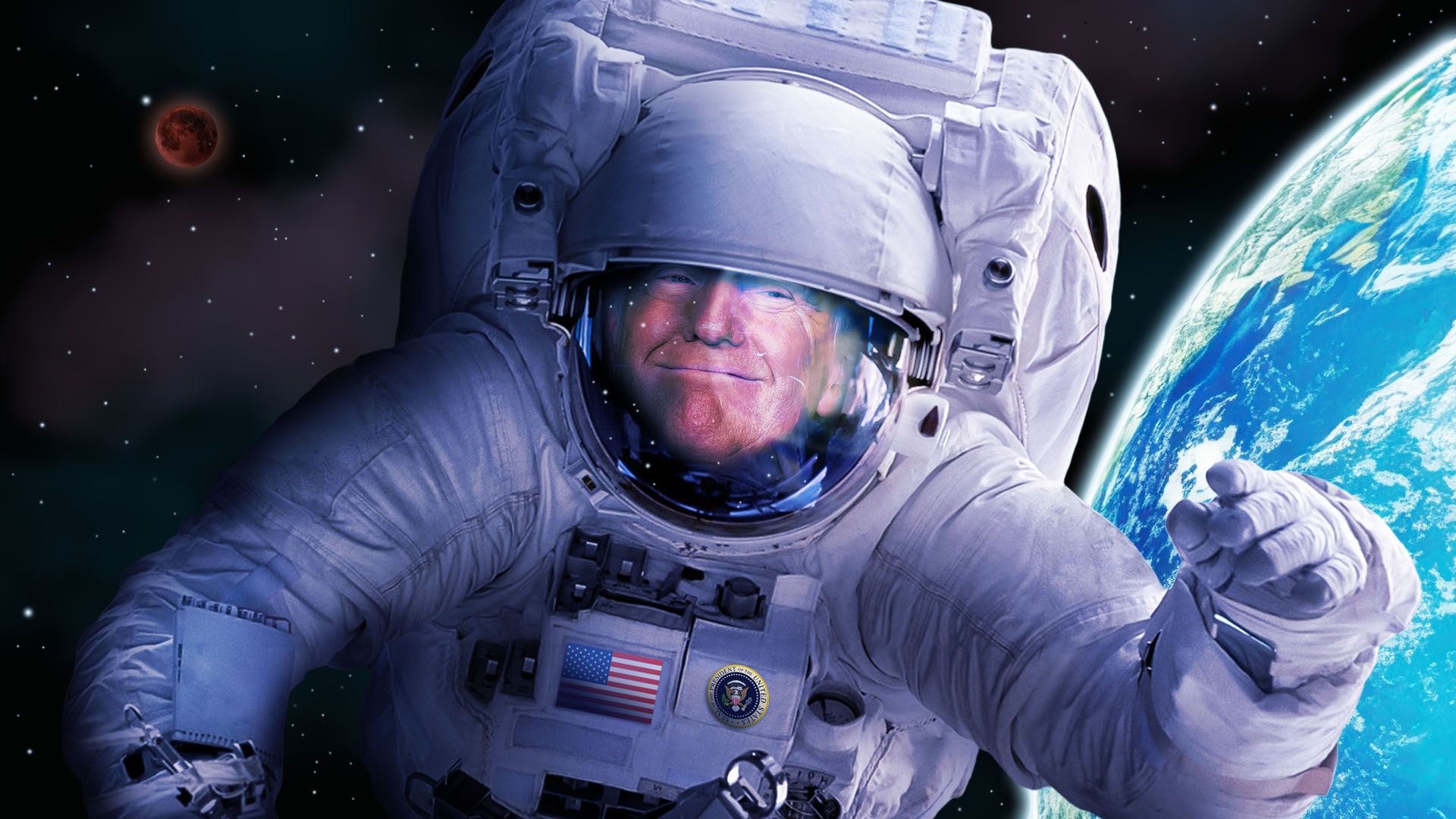
Illustration: Sarah Grillo/Axios. Photo: Ethan Miller/Getty Images
Donald Trump added a branch to the U.S. military in his first term and kick-started a $175 billion missile defense initiative in his second with the same impetus in mind: Future wars will be waged from space.
Why it matters: The U.S. is poised to pour hundreds of billions of dollars into a zone of warfare few Americans understand, but that the world's biggest powers are racing to dominate.
Driving the news: Trump announced Tuesday that he was moving Space Command to Huntsville, Alabama, long known as Rocket City.
- Moving SPACECOM to Redstone Arsenal, he said, "will help America defend and dominate the high frontier."
- "We were losing the race in space very badly to China and to Russia, and now we're far and away No. 1 in space," Trump claimed. "We're [reestablishing] SPACECOM with a mission to protect American space assets and detect any threat to our homeland."
The big picture: After green-lighting the Space Force in his first four years, Trump has returned to office with a renewed focus on space-based warfare, which Defense Secretary Pete Hegseth has called "the most important domain."
- This term, Trump launched the Golden Dome initiative, reminiscent of the Reagan-era Star Wars project with its space-based interceptors.
- The president has claimed the futuristic missile shield will "forever [end] the missile threat to the American homeland" and be completed in just three years. Some experts are less confident.
Threat level: Gen. Stephen Whiting, the head of SPACECOM, earlier this year advocated for weapons in space — a stark statement on a topic where officials often stick to vague talking points.
- "The trend from the first Trump administration to the second Trump administration is definitely a solid support of the military in space, in terms of making it a priority," Victoria Samson, the chief director of space security and stability at nonprofit Secure World Foundation, told Axios.
- "The Space Force has been much more vocal about space being a warfighting domain, that there's going to be a war in space and that we need to be able to handle it," Samson said.
- "They have found a ready and willing audience in the Trump administration to keep up that kind of rhetoric, to keep pushing for that."
Zoom out: Space has been a source of superpower competition since the Cold War — successful experiments and exploration translated to national bragging rights.
- Today, the American advantage is waning. Beijing and Moscow are hot on Washington's heels as they launch spacecraft and refine anti-satellite weapons.
The intrigue: Trump's partnership with SpaceX CEO Elon Musk helped put space high on the agenda. His interest has survived their breakup.
- Trump issued an executive order last month on commercial space competition, seeking, among other things, "cutting-edge defense systems" developed stateside.
The flipside: While pouring money into Golden Dome, Trump also proposed a steep cut to NASA's budget.
- The space agency lacks a permanent head. Plus, the National Space Council remains in limbo.
The bottom line: The weaponization of space may eclipse its exploration under Trump 2.0.
Go deeper: Colorado vows to challenge Space Command move to Alabama
