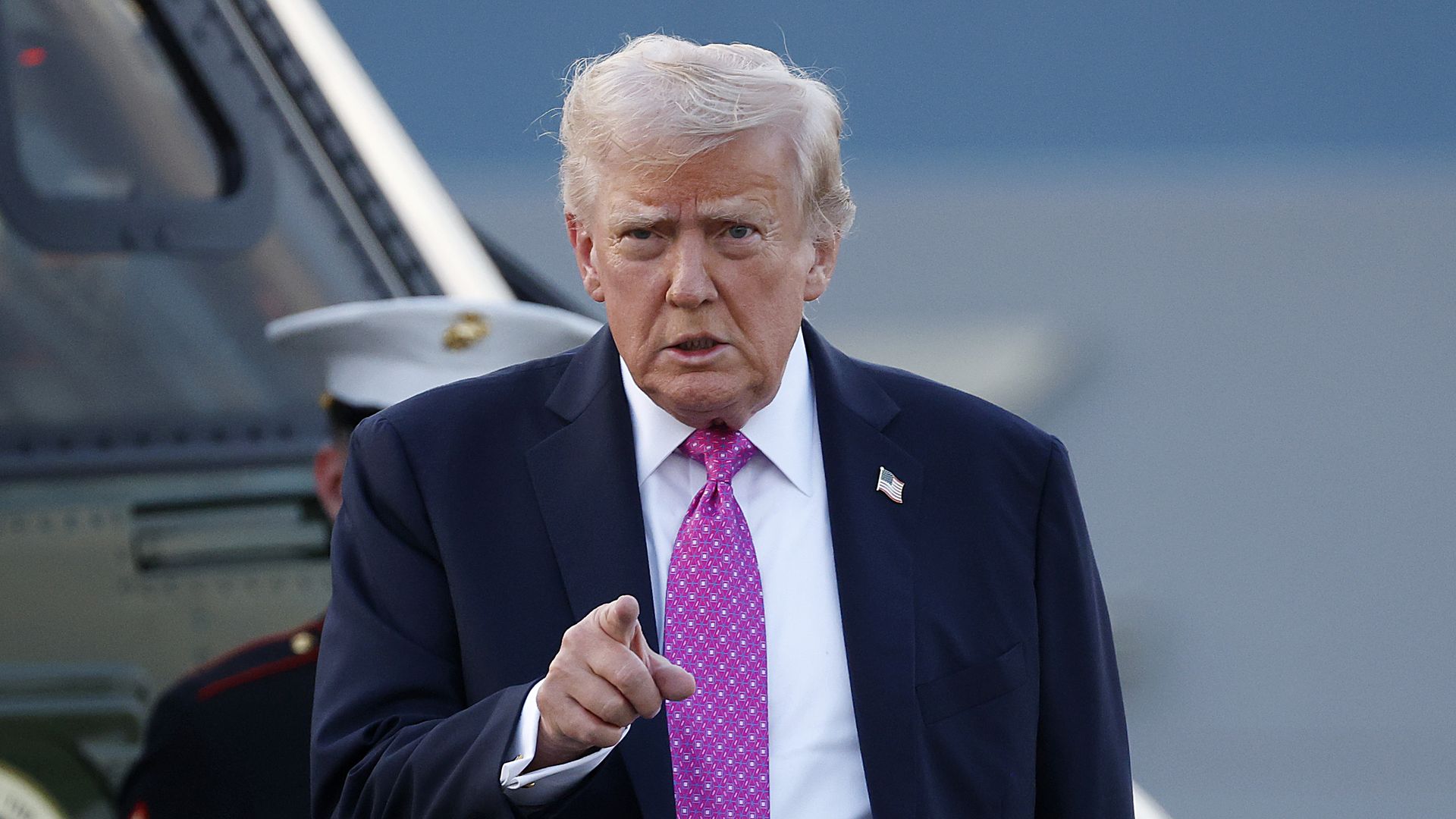
President Trump announced that highly-skilled workers hoping to work in America will now have to pay a $100,000 fee to receive an H-1B visa, multipleoutlets reported.
Why it matters: H-1B visas divide Trump's MAGA coalition, with some arguing foreign employees displace American workers while business leaders like Elon Musk view them as vital to America's tech dominance.
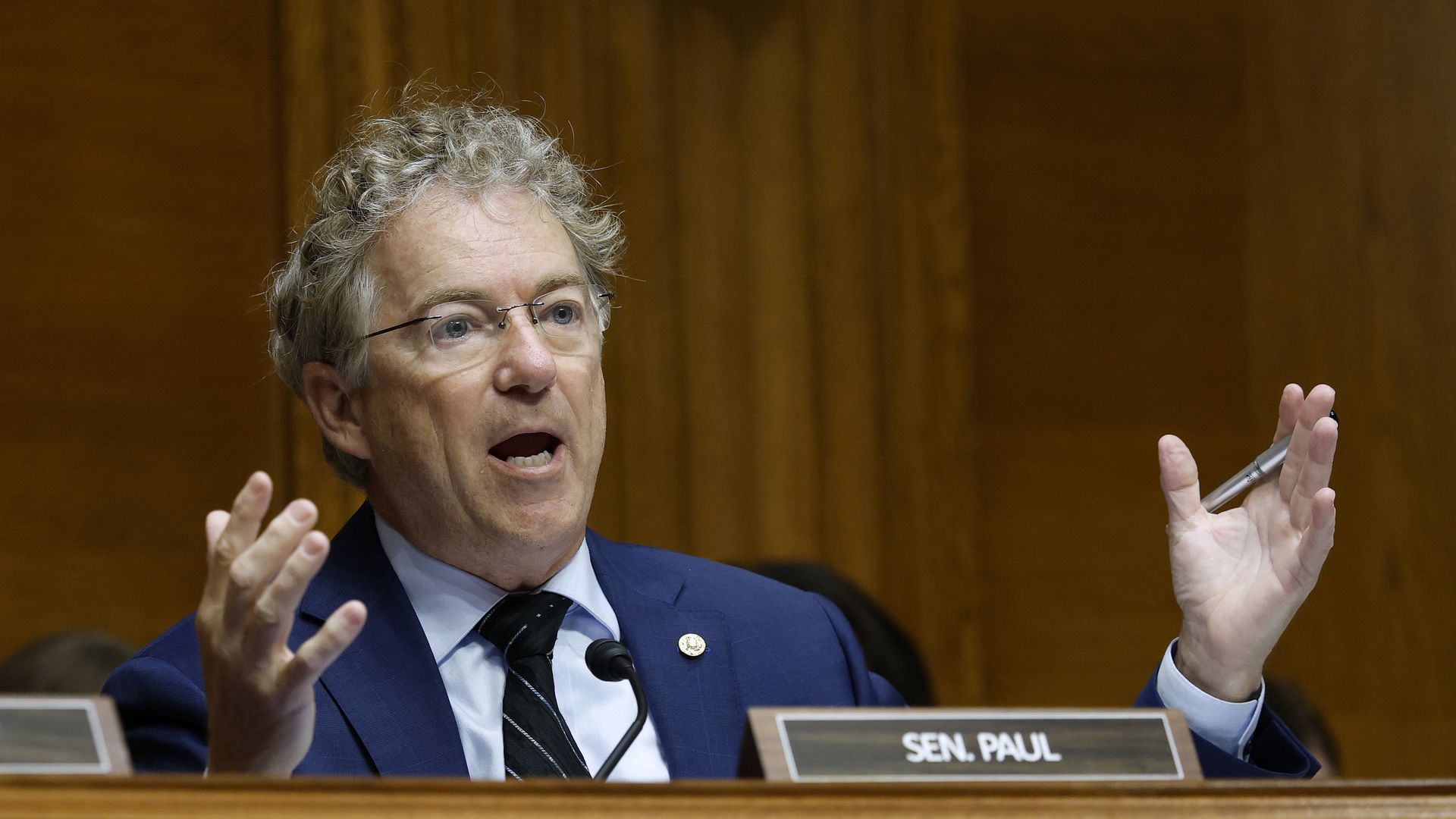
A key cybersecurity law with broad bipartisan backing is in danger of expiring because of last-minute demands from Sen. Rand Paul (R-Ky.), who seems reluctant to engage with the private sector or other committee members on the issue, congressional aides from both parties tell Axios.
Why it matters: The authorities that expire in late September underpin most information sharing on cyber threats between the private sector and the U.S. government. If they lapse, that trading of information could cease next month, lawmakers and private sector executives have warned.
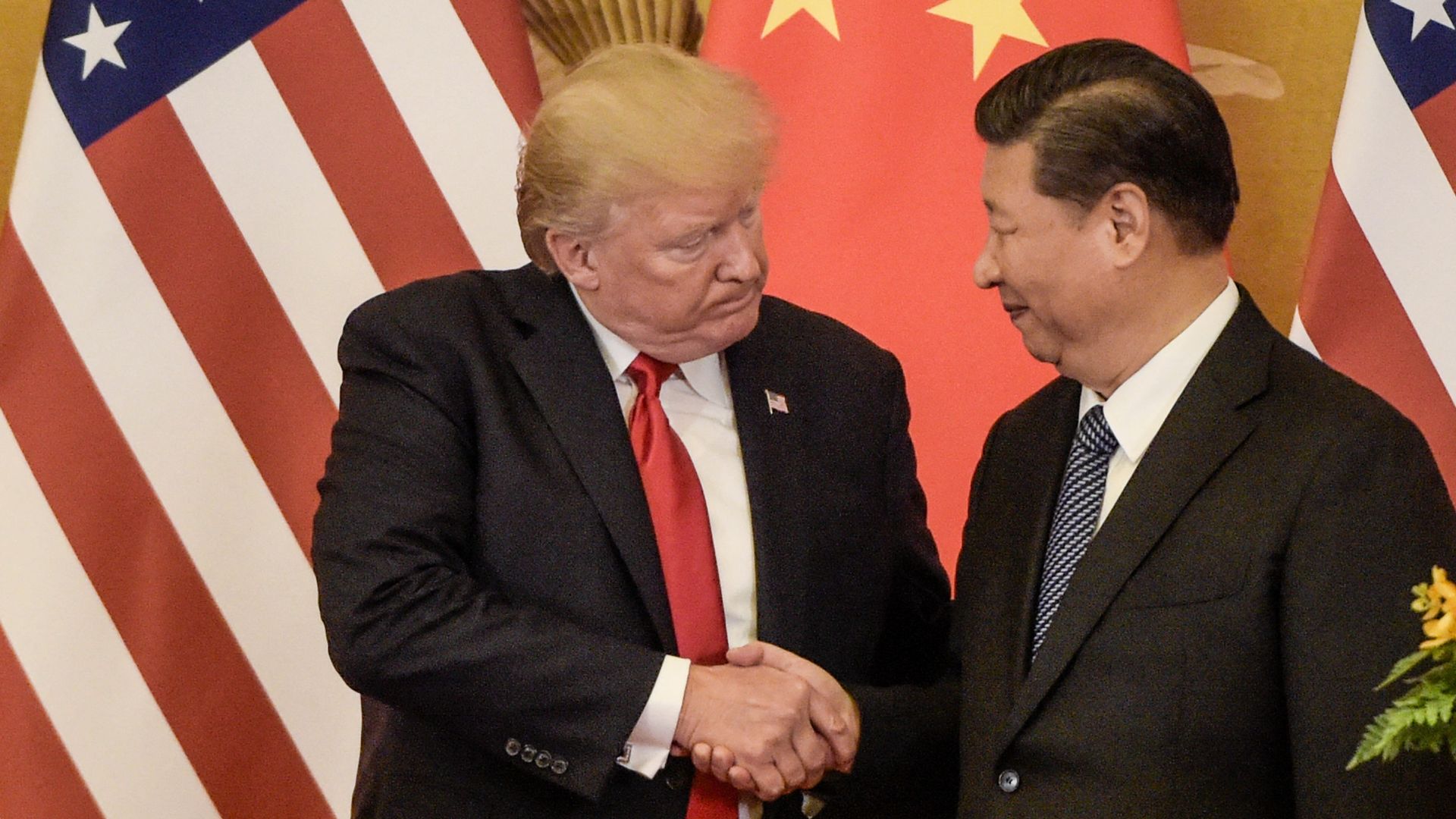
President Trump and Chinese leader Xi Jinping spoke about a TikTok deal Friday, but details on the social media platform's U.S. future remain unclear.
Why it matters: It's not 100% certain what the deal under discussion entails, though reports have suggested U.S. investors would control most of a new entity with a new app.
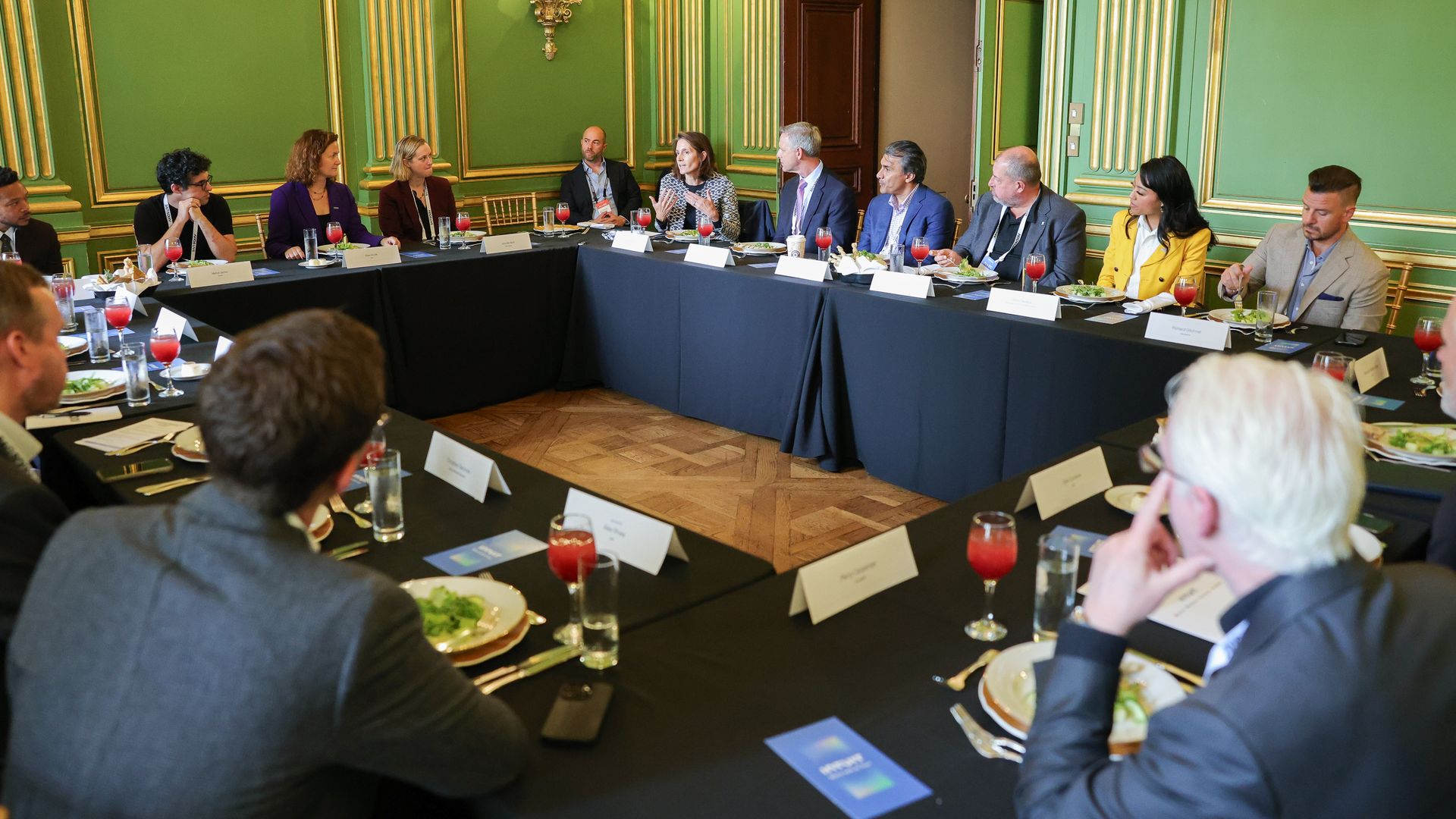
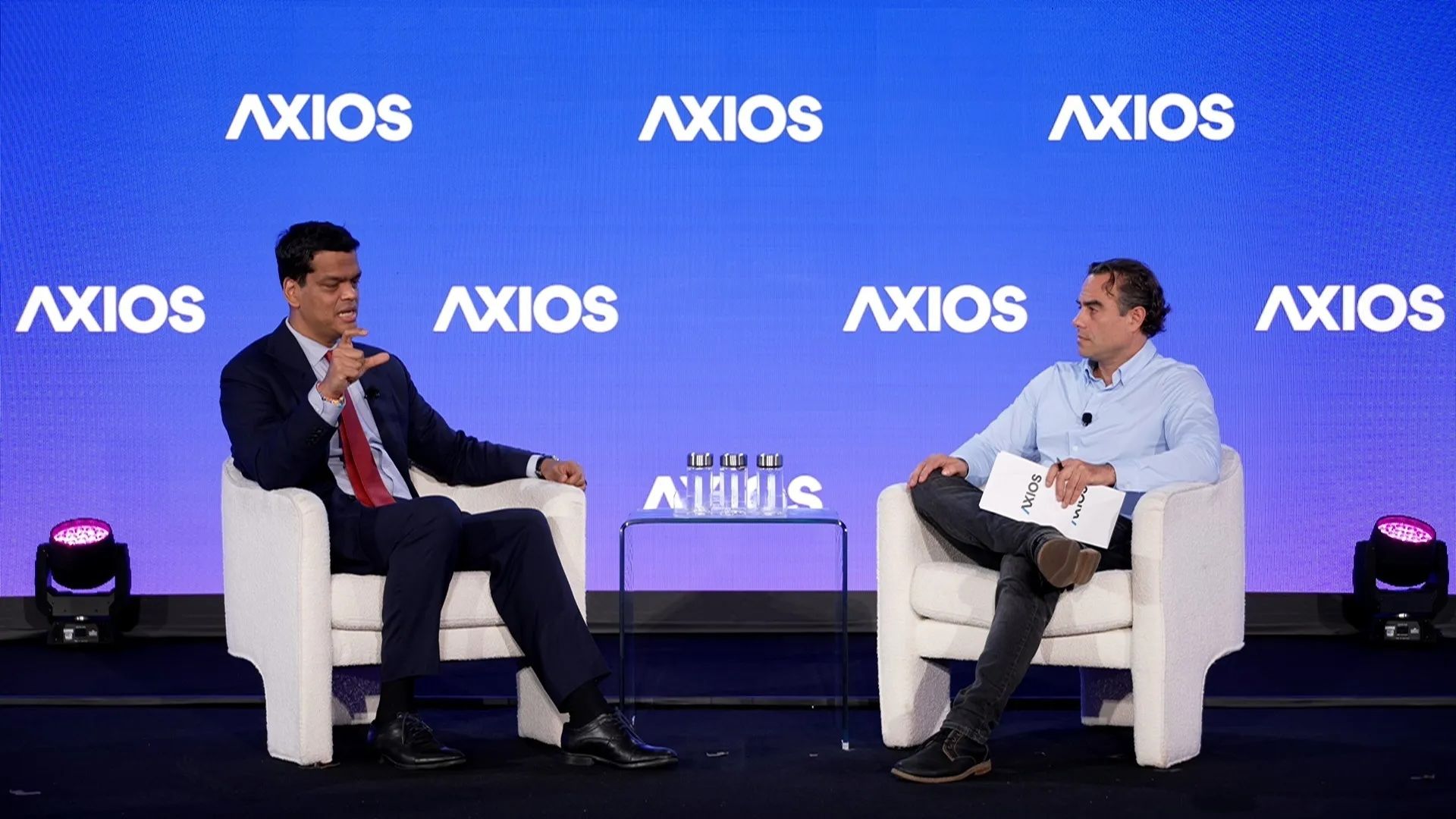
WASHINGTON, D.C. – Small businesses see big potential in AI, but getting the most return on investment depends on model quality, trust and safety, tech and business leaders said.
Axios' Scott Rosenberg and Nathan Bomey moderated the roundtable discussion in Washington, D.C., on Sept. 17. The event was sponsored by Intuit.
Why it matters: AI can be a force multiplier for small- and midsize businesses (SMBs), allowing them to automate processes and operate more effectively.
5 big takeaways from the conversation:
SMBs jumping straight to customer-facing, rather than testing AI on internal operations to iron out the kinks first, could see a lower rate of return, UCLA chief data and AI officer Chris Mattmann said.
Automation is the payback most businesses are interested in, but it's still in the early stages, Veris AI CEO Mehdi Jamei said. "There's exhaustion from trying different tools that promise but don't deliver. … We need another six to 12 months from the technology side to be sure enough for people to see the actual advantage right now."
People have FOMO, so they want to use AI models that are ready to go, AI Squared VP of federal technology Napoleon Paxton said. "Large language models, ChatGPT shows … we can actually get into production-like things and not think about all the complexity."
Large enterprise software companies will need to build a trust layer between data and AI agents to gain buy-in from SMBs, Salesforce global public sector EVP Paul Tatum said. "What's interesting with these large language models is…they're non-deterministic. … The more guardrails you give them, the more confused and frustrated they get."
A national privacy standard "can go a long way" in establishing a foundation for data management practices, said Ashley Berrang, the Information Technology Industry Council's EVP of public affairs. It could also help small businesses that lack the resources to manage the patchwork of state laws across the country.
Sponsored content:
Intuit chief privacy officer Elise Houlik highlighted that during this time of AI innovation, small businesses need to ensure they have "access to good, quality tools that can help them."
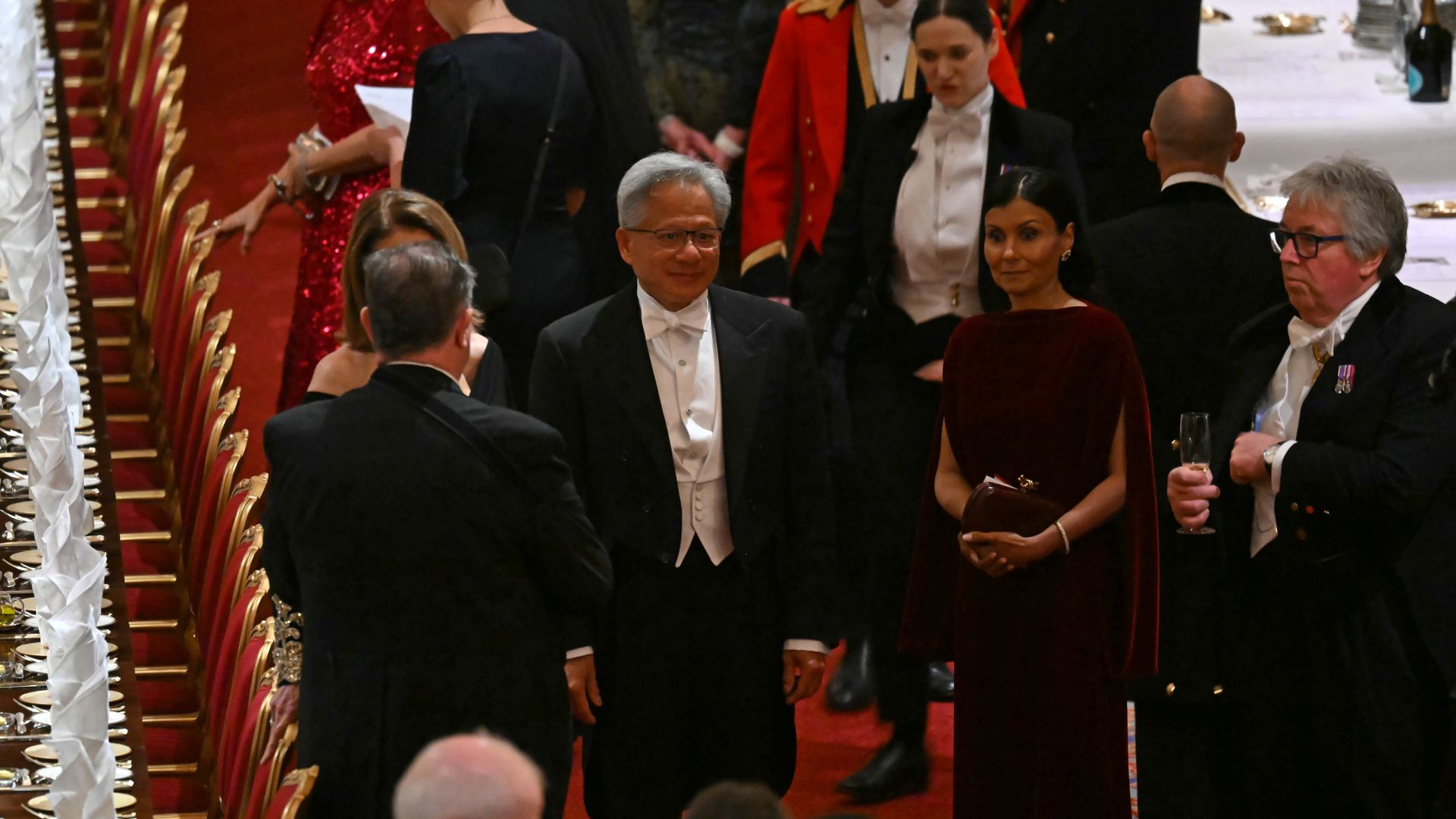
Betting on Nvidia's chosen partners has been a winning trade: Stocks like CoreWeave, Nebius Group and, now, Intel, have soared anywhere from 47% to 370% in the past year.
Why it matters: It pays to follow the money, in this case, Nvidia CEO Jensen Huang's money specifically.
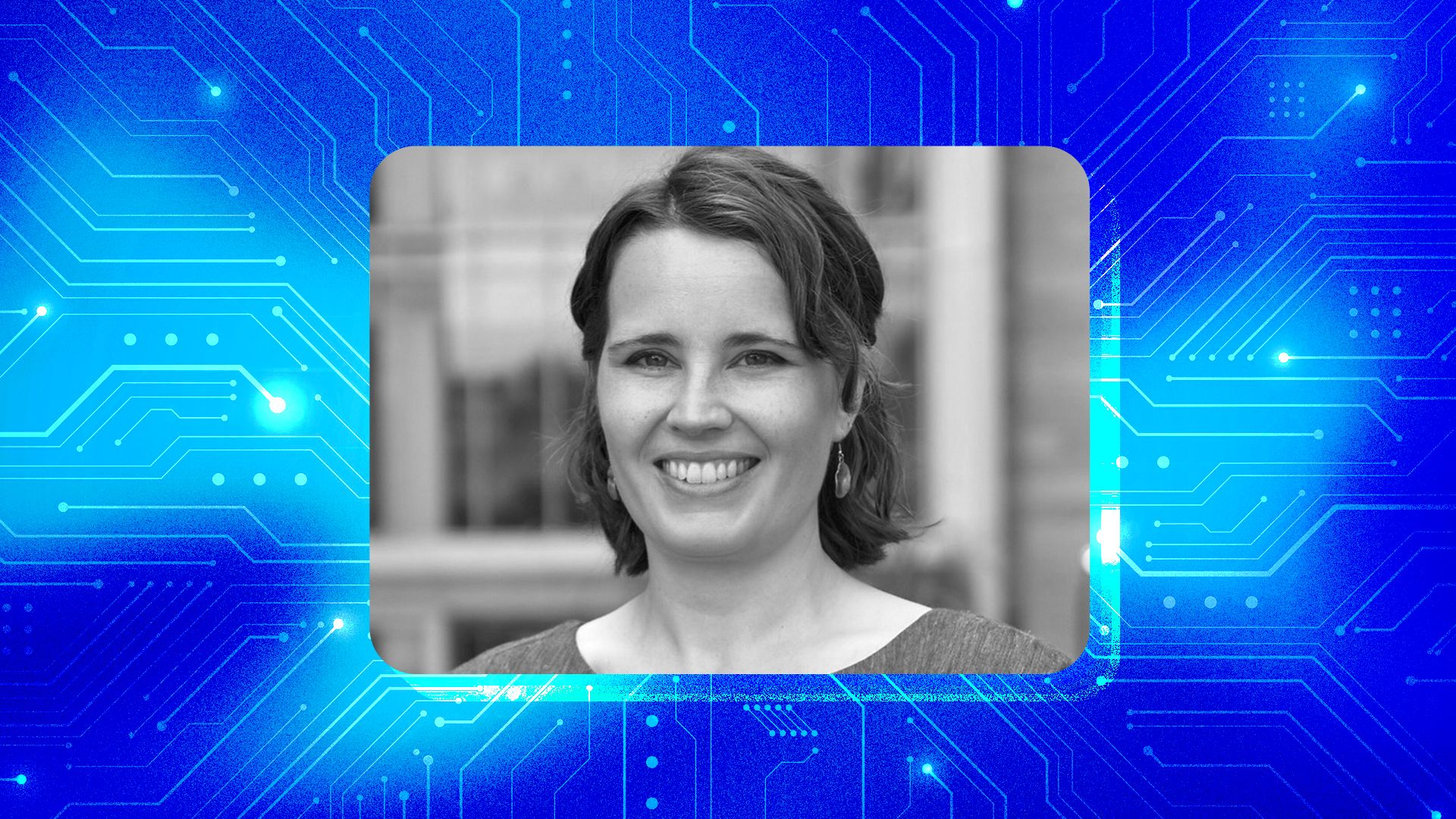
Helen Toner, who made waves in the AI world as one of the leaders of the failed effort to oust OpenAI's Sam Altman, is taking the helm of a major D.C. tank tank aimed at engaging policymakers on the "fierce debates" around AI.
The big picture: Toner was recently appointed as the interim executive director of Georgetown University's Center for Security and Emerging Technology, which she says is diving deep into what AI "means for society."
With the midterms just over a year away, Democrats are sharpening an AI message focused on how the technology could widen economic divides and harm workers.
Why it matters: Democrats did little to put guardrails on AI when they had control of Congress. They're now decrying Republicans' hands-off approach to regulation and coming up with messaging of their own.
Companies like Google should pay up front for their patent applications as AI supercharges the work of inventors, Google general counsel Halimah DeLaine Prado told Axios in an interview.
Why it matters: Google issending a signal to John Squires, the newly confirmed leader of the U.S. Patent and Trademark Office.
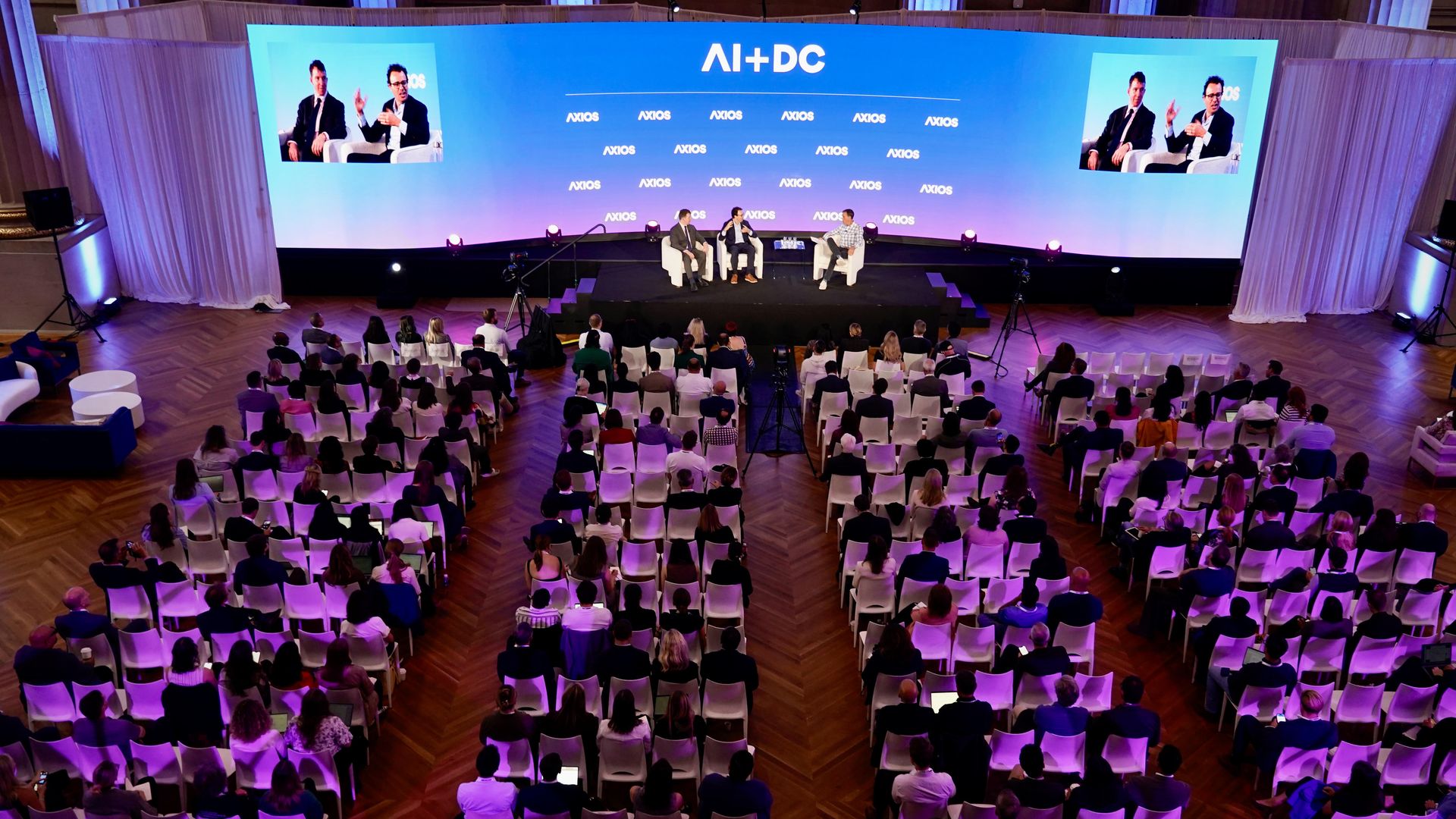
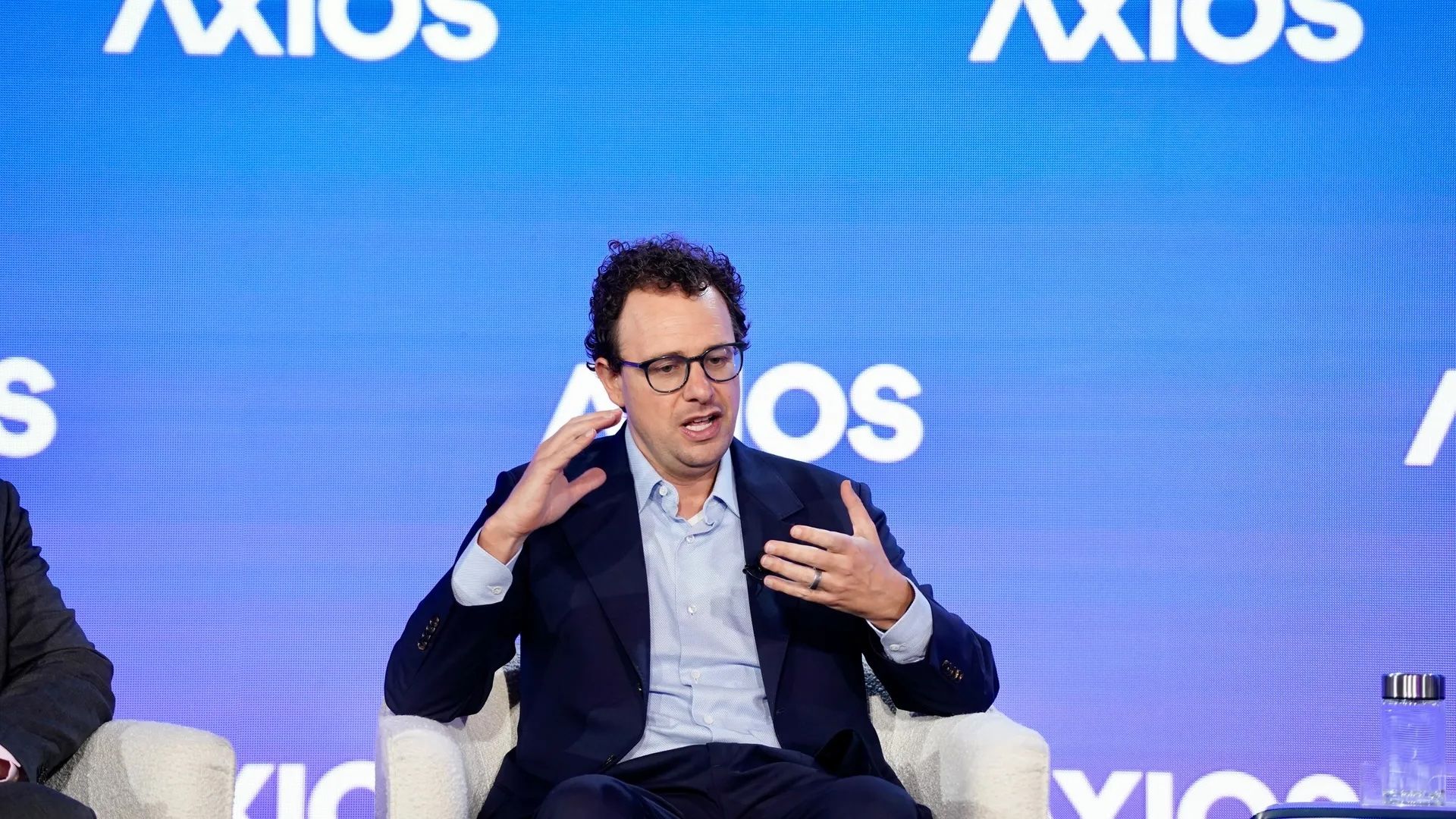
WASHINGTON, D.C. – The AI race, regulation, job displacement and safety were top of mind for government and tech leaders at the Axios' AI+ DC Summit on Wednesday.
Why it matters: The U.S.-China AI race and acceleration of innovation are major focuses of the Trump administration, but they raise concerns about guardrails and job layoffs.
The summit was sponsored by the Center for Audit Quality, Hewlett Packard Enterprise and Intuit.
Here are the key takeaways:
🤖 U.S. chips may be the only leg up the country has over China in the race for AI dominance, Anthropic CEO Dario Amodei said, while also warning that AI's ability to displace jobs is advancing quickly.
🌏 White House AI adviser Sriram Krishnan said he views the AI race against China as a "business strategy," with success measured by market share of U.S. chips and global AI model use.
📃 Sen. Ted Cruz (R-Texas) said a moratorium on state-level AI regulation is still on the table, despite being left out of the "one big, beautiful bill" that was signed into law. "I still think we'll get there, and I'm working closely with the White House," he said.
🕐 The AI tech arc is just at the beginning of a "massive 10-year cycle," AMD chair and CEO Lisa Su said.
💥 Rep. Ro Khanna (D-Calif.) blasted the Trump administration'sexecutive order on preventing "woke" AI. "That's like a 'Saturday Night' skit. Like how could AI be woke? I mean, who thinks of these things? Did Grok think of that? ... I'd respond if it wasn't so stupid."
🪖 Allen Control Systems co-founder and president Steve Simonisaid the U.S. lags behind other countries like China when it comes to the ways drones are reshaping warfare.
🏢 White House adviser Jacob Helberg said if massive job displacement occurs because of AI, the government doesn't need to step in because more jobs would emerge as they did after the internet boom. "The notion that the government necessarily has to hold the hands of every single person getting displaced actually underestimates the resourcefulness of people," Helberg said.
🦺 Credo AI CEO Navrina Singh said the AI industryneeds to implement tougher safety standards or risk losing the AI race with China.
🖼️The U.S. needs "the right framework in place to lead the world in AI," Sen. Mark Kelly (D-Ariz.) said. This comes just as he unveiled his AI policy roadmap.
Content from the sponsored View From the Top conversations:
Julie Bell Lindsay, CEO of the Center for Audit Quality, and Anchor Change founder Katie Harbath discussed the importance of AI trust and guardrails.
"One of the biggest hindrances to the adoption of AI is trust. If you don't have trust, people are not going to use the technology," Lindsay said.
Kirk Bresniker, chief architect at Hewlett Packard Labs and fellow and vice president at Hewlett Packard Enterprise, shared that confidence in AI should be a measurable tool to push forward its trust and deployment.
"'Here's a technology and here is why it is fit for use,' and that's so much about what we've developed in our principles – one half of them is actually the human rights focus lens, the second is engineering," Bresniker said. "And together those two teams have come together and created those to understand these new boundary conditions … intersect with really challenging societal problems."
Anoop Sreenivasan, Intuit VP of go-to-market technologies, said over 90% of the small businesses that Intuit surveyed use AI in some capacity.
"One of the key reasons behind that is that businesses and government agencies have leaned in to help small businesses with training and resources to help them use AI better," he said.
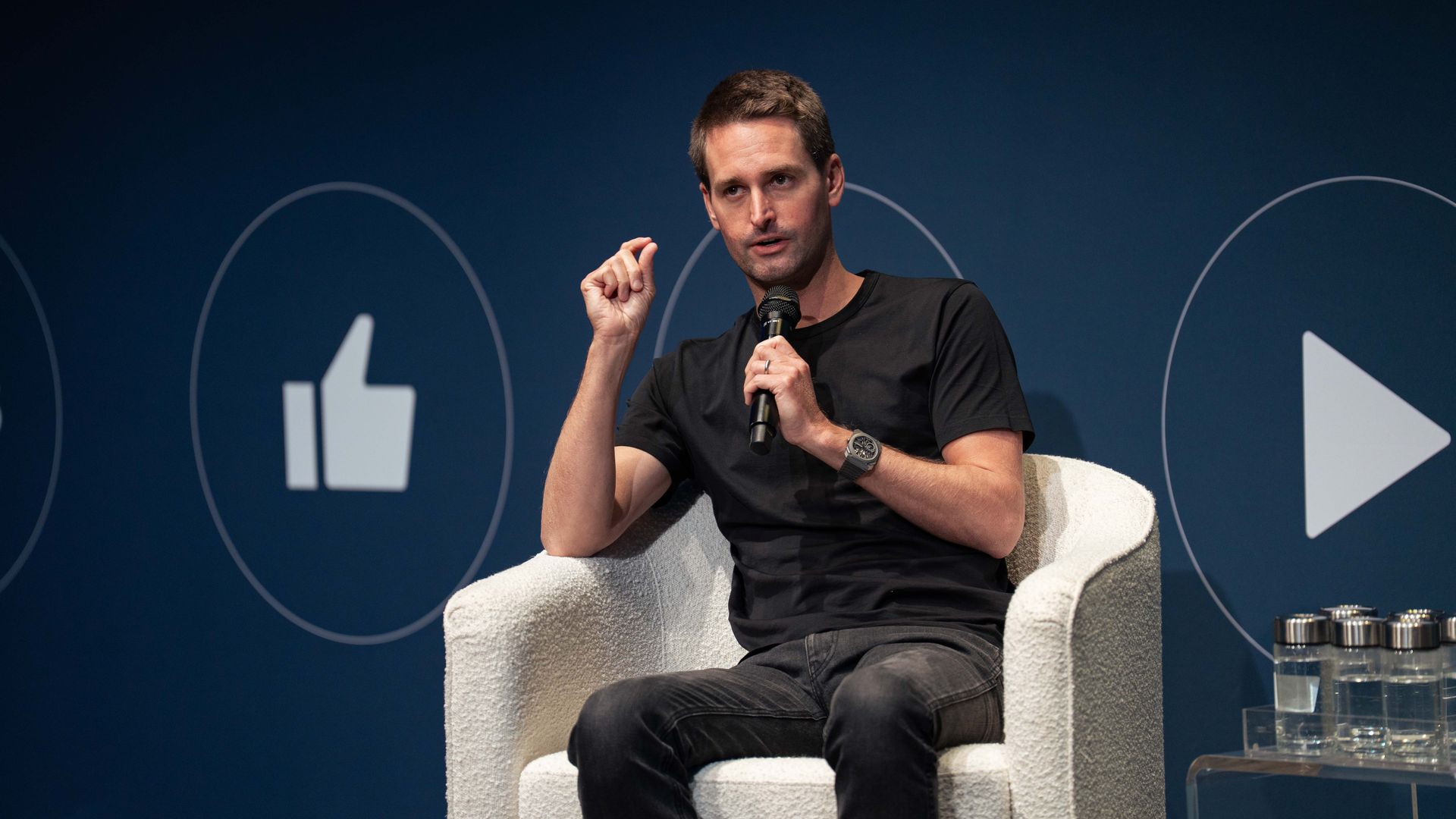
Snap doesn't need to raise funds to launch its new Specs augmented reality glasses next year, but could consider opportunities to accelerate its expansion, CEO Evan Spiegel said at the Axios Media Trends Live event on Thursday.
Why it matters: The company is running head-long into competition with Meta, which is leaning heavily into its own smart glasses platform.
AI chip maker Nvidia is coming to the aid of its struggling rival Intel, agreeing to invest $5 billion in the company and to collaborate on developing chips for data centers and PCs.
Why it matters: It's a huge vote of confidence in Intel, which last month agreed to allow the U.S. government to take a nearly 10% stake in the company for $8.9 billion.
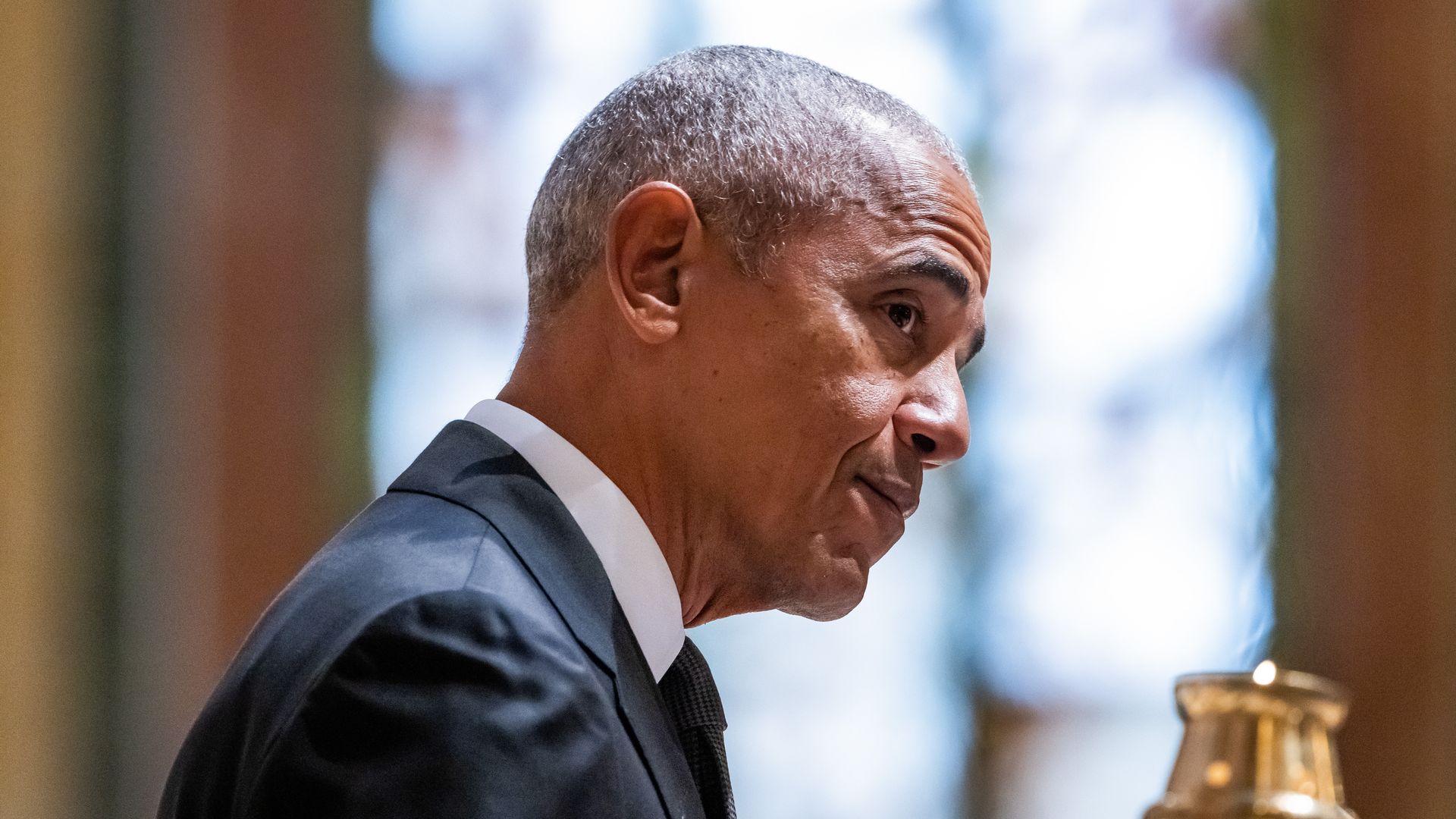
Former President Obama condemned ABC for pulling Jimmy Kimmel off the air Thursday, calling it "government coercion" by a Trump administration official.
Why it matters: Obama, who infrequently wades into political fights, joined other high-profile personalities in accusing the administration of hypocrisy for threatening broadcasters after the MAGA movement spent years railing against "cancel culture" and "censorship."
Anthropic — the AI research lab behind the large language model Claude — has launched its first brand campaign.
Why it matters: Anthropic has been a key player in enterprise AI, but hopes this campaign will raise awareness within the consumer market that's dominated by its competitor OpenAI.
More than 80% of corporate affairs work can be augmented and automated by AI, according to a new Boston Consulting Group (BCG) report.
Why it matters: AI presents so much opportunity for efficiencies and cost savings that it cannot be ignored, BCG chief communications officer Russell Dubner says.
In 2021, Spotify tapped music artists Billie Eilish and Finneas to help announce the rollout of a high-fidelity audio feature, called "lossless," which would be available later that year. Months passed, but the feature didn't launch.
Why it matters: The long-awaited rollout presented a tricky communication challenge, but instead of ignoring how much time had passed, the audio streamer leaned in.
AI policy proposals, and even many AI investments, often are rooted in the concept of a "race with China." Rarely is there follow-up about what the race course or finish line might look like.
Yesterday, however, we got into some of the particulars during an Axios AI+ Summit conversation with Sriram Krishnan, the longtime tech exec and venture capitalist who now serves as the White House's senior policy advisor for AI.
Trump-friendly billionaires are consolidating control over American media, steering legacy brands and social platforms in a new conservative direction.
Why it matters: The media landscape of 2016 is unrecognizable. Once dominated by critics of President Trump, today's fragmented ecosystem is increasingly controlled — or threatened — by forces aligned with the White House.
Axios' 2025 AI+ DC Summit mapped a stark divide in approaches to handling a predicted tidal wave of jobs disrupted or eliminated by AI.
Why it matters: Whether and how to help workers navigate a job market reshaped by AI will be one of the most consequential choices the U.S. government makes in the next few years.