Race with China divides AI leaders, policymakers

Add Axios as your preferred source to
see more of our stories on Google.
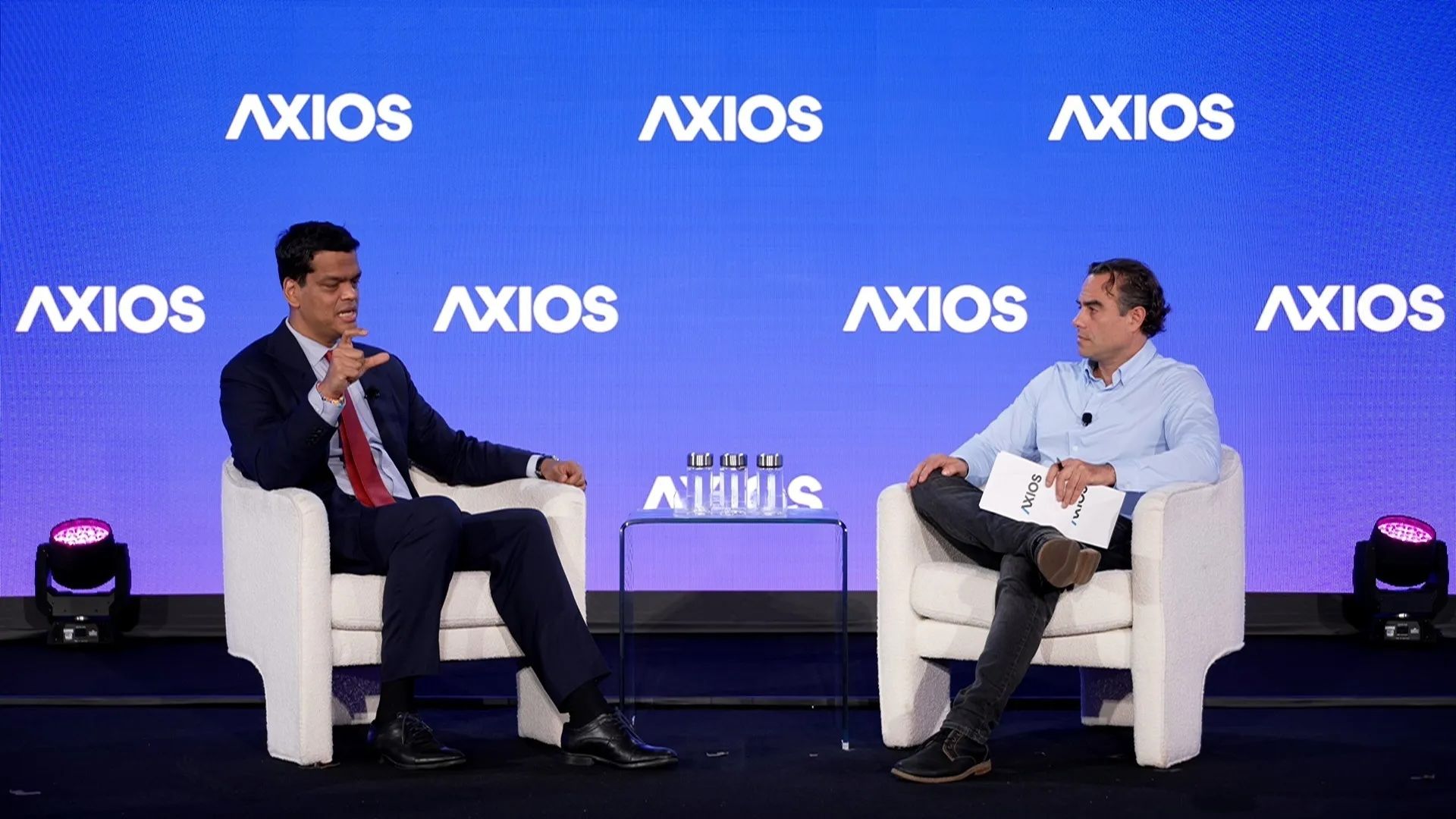
Photo: Axios
U.S. leaders in government and business agree that the U.S. must win an AI race with China — but that's where the consensus ends.
Why it matters: Choices the U.S. makes today about U.S.-China trade could shape the AI industry's global debate for decades.
Driving the news: Onstage talks with key legislators, policymakers and executives at the Axios AI+ DC Summit revealed deep rifts over how to handle the sale of advanced AI chips to China — and where U.S. policies on AI regulation and safety should land to best compete with Beijing.
The U.S. needs a "metric for winning" in the race with China, White House AI adviser Sriram Krishnan told Axios' Dan Primack.
- Krishnan said he measures American success via market share with its rival. That would put a premium on U.S. companies' global sales — including to China.
The other side: America's edge in AI chip development may be the only advantage the U.S. still has over China, Anthropic CEO Dario Amodei said at the summit — and the government should protect that advantage.
- "It is mortgaging our future as a country to sell these chips to China," Amodei said.
- The Trump administration has advanced plans to let American companies like Nvidia and AMD sell chips to China, with the government taking a 15% cut of revenue.
Yes, but: Lisa Su, CEO of U.S. chipmaker AMD, disagreed with Amodei.
- "Our most advanced chips are export controlled, and they should be export controlled, but there is also an opportunity for us to get an AI stack that is based on American technology out into the world, and I think that is a good thing," she said at the Axios event.
Zoom out: Industry and government leaders at the AI+ Summit also disagreed over how to think about AI regulation in the shadow of the race with China.
- Sen. Ted Cruz (R-Texas) argued that the U.S. must prioritize beating China over efforts to regulate AI safety.
- "Whichever nation wins the race for AI, the values of that nation will dominate AI," he said.
- Last week, Cruz introduced a bill to create a federal "sandbox" that would let AI companies seek temporarily relaxed regulations.
Navrina Singh, CEO of Credo AI, told Axios' Ina Fried that America's effort to win out over China would falter if businesses and consumers don't trust the U.S.' safety framework.
- "If there's a conversation about the best of ... AI innovations, and we are not talking about governance, we are not talking about trust, I think we should really count ourselves out then," Singh said.
- She also argued that stronger governance of AI isn't the same thing as increased regulation, arguing instead that governance is about understanding risk and aligning with a company's policies and standards.
Our thought bubble: The race with China has become an all-purpose card to play in debates about AI policy — you can use it to support almost any position.
Go deeper: AI's race in the dark with China
