Saturday's technology stories

Tinder taps TikTok influencers to lure Gen Z

Young people are finding dating apps more appealing after watching paid influencers on TikTok share their experiences, per Tinder's recent brand sentiment study shared exclusively with Axios.
Why it matters: The marketing strategy comes after reports that Gen Z and Millennials are not interested in swiping and are instead seeking in-person alternatives, negatively impacting Tinder parent Match Group's business.

Musk vs. Altman (and Trump): Anatomy of a feud
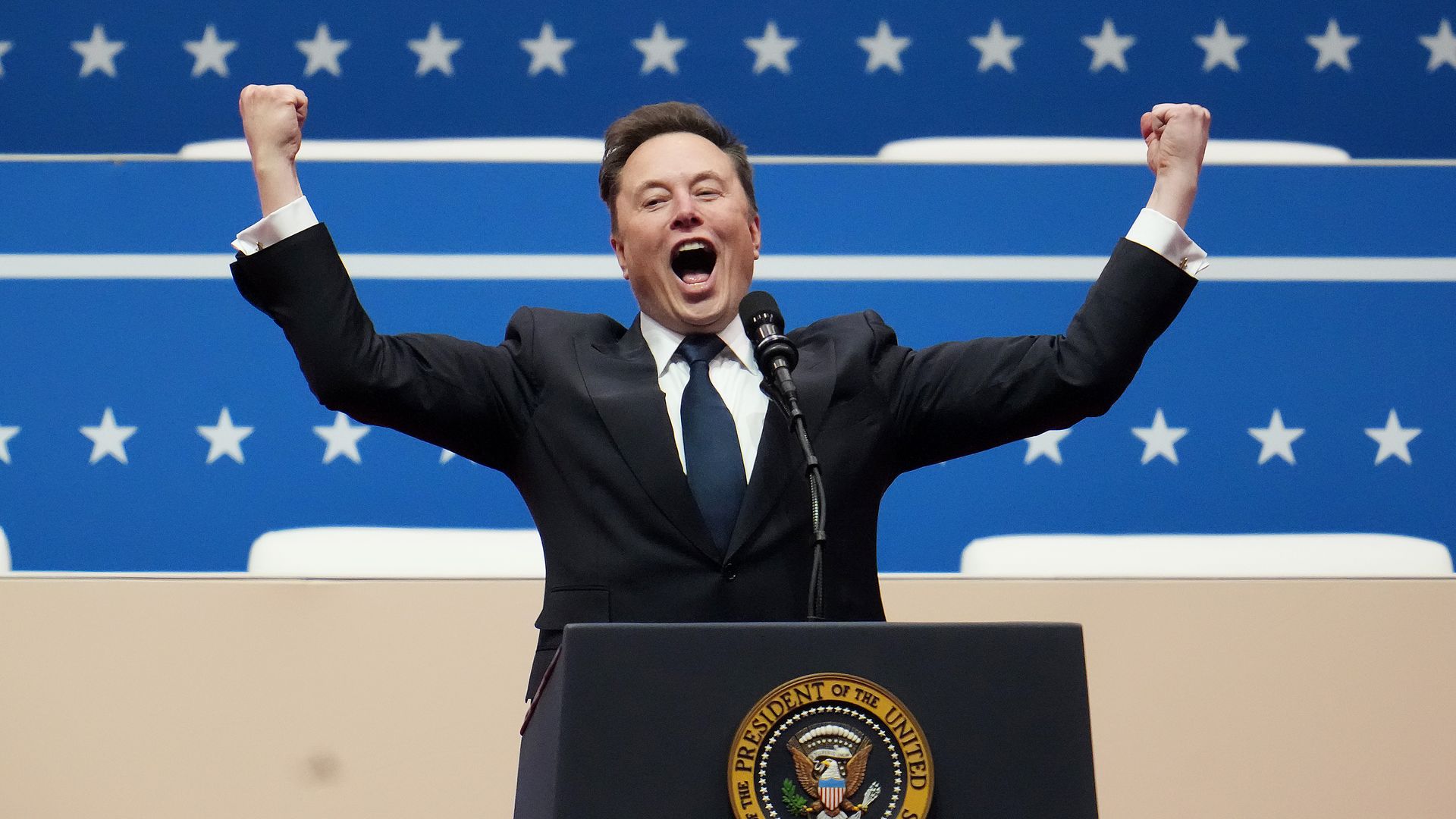
The Elon Musk-Sam Altman feud entered a new hot phase this week on X following President Trump's announcement of Stargate, a new $500 billion AI infrastructure joint venture funded in part by OpenAI, the AI giant Altman leads.
Why it matters: Musk's public questioning of the financial strength of a venture that Trump had just blessed from the White House marked the first public sign that the "First Buddy's" relationship with the president might be turning rocky.

ProRata AI plans to pay creators despite era of AI "shoplifting content," founder says
DAVOS, Switzerland – User protection is at the center of AI development for two AI company leaders who spoke with Axios in Davos.
Why it matters: Concerns about privacy and content ownership have fueled hesitations about AI for some potential users and many creators.
Axios' Ina Fried moderated conversations with Cohere co-founder and CEO Aidan Gomez and IdeaLab founder and ProRata AI founder Bill Gross. The Jan. 22 conversations were sponsored by Qualcomm.
Gross founded ProRata AI in an aim to ensure creators and artists are compensated for their work in an age of generative AI.
- "I feel that AI is unbelievable, unstoppable, incredible, but also shoplifting content. I feel that it's stealing human creativity and not compensating," Gross said.
- "[G]enerative AI should share revenue with the creators as well, so I'm on a mission to try and make that happen," he added.
How it works: ProRata AI has signed up over 400 publications to a 50/50 revenue share. The process looks at the output of the generative AI content, analyzes where the outputted content came from, and then shares half of the revenue with the creators.
- The process is similar to how other systems like Spotify or YouTube compensate artists on their platforms.
Privacy is another issue of concern with generative AI. "We're really focused purely on enterprise, in particular private deployments," Gomez said of his work at Cohere.
- "We're really here to unlock prod-level use cases that deliver value. A core piece of that is delivering on privacy," he said.
- "If these models, these systems, can't access the most sensitive and valuable data in an enterprise, it can't automate work on top of it, it can't actually do the valuable part of what these enterprises want the technology to do. So we deploy completely privately," Gomez added.
Sponsored content:
In a View From the Top sponsored segment, Qualcomm president of MEA & SVP of EMEA government affairs Wassim Chourbaji said that privacy is "a big challenge" when scaling AI.
- "The way we look at AI right now is how to scale it in a sustainable way in a way that ensures security and privacy," he said.
- "But the beauty about engineering is you find solutions for those, and that's what we are working very hard to address," Chourbaji added, saying that Qualcomm is working to address this challenge by "bringing the AI as close as possible to where the data is created."
The Justice Department indicts two Americans in North Korean IT worker fraud

The U.S. Justice Department released indictments against five people Thursday in connection with a years-long North Korean IT worker scheme.
Why it matters: The indictments are against a mix of people from North Korea, Mexico and the U.S. — highlighting just how global North Korea's operations have become.

Board firings, loyalty tests thin out U.S. government's cyber bench

President Trump and his team spent their first week back in office wiping nearly all of the government's cybersecurity and surveillance advisers from its roster.
Why it matters: The pool of experts left to help new Trump officials and remaining agency staffers respond to major cyber incidents is shrinking.

Government cyber expertise keeps getting thinner (for now)
President Trump and his team spent their first week back in office wiping nearly all of the government's cybersecurity and surveillance advisers from its roster.
Why it matters: The pool of experts left to help new Trump officials and remaining agency staffers respond to major cyber incidents is shrinking.
Driving the news: The Department of Homeland Security terminated all members of its advisory boards, including the Cyber Safety Review Board (CSRB) and the AI Safety and Security Board.
- The White House also asked all three Democratic members of the Privacy and Civil Liberties Board to hand in their resignations yesterday or face termination.
DOJ indicts 5 in North Korean IT worker fraud
The U.S. Justice Department released indictments against five people yesterday in connection with a years-long North Korean IT worker scheme.
Why it matters: The indictments are against a mix of people from North Korea, Mexico and the U.S. — highlighting just how global North Korea's operations have become.
Zoom in: The Justice Department accused the five people of running an operation from April 2018 to August 2024 to trick companies into hiring North Korean IT workers.
- In this one scheme, the organizers secured jobs at at least 64 U.S. companies, prosecutors said.
- Payments from 10 of those companies generated at least $866,255 in revenue. The FBI and its partners at the State and Treasury departments have said that these workers have been known to earn up to $300,000 each year from just one job.
Silk Road scammers start spreading malware
It didn't take long for scammers to start taking advantage of Trump's pardon of Silk Road creator Ross Ulbricht.
Why it matters: Critics have worried that setting Ulbricht free would further incentivize cybercriminals and online drug traffickers — showing there are few consequences for their actions.
Zoom in: Within hours of Trump signing the pardon Tuesday, researchers at online community vx-underground shared screenshots of scammers flooding the official "Free Ross" account on X with links to an "official" Telegram channel.
- However, once people clicked on that link, they were directed to a page that claimed to need to verify their identity.
Catch up quick
@ D.C.
☑️ The Senate confirmed John Ratcliffe as CIA director in a 74-25 vote. (Axios)
💰 Potential GOP-backed budget cuts at CISA weighed heavy at a House hearing on responding to global cyber threats. (Roll Call)
⚠️ Former CISA Director Jen Easterly said in her exit interview that moves to reverse the agency's progress "will be to the detriment of the safety and security of the American people." (Wired)
@ Industry
🤖 OpenAI released a "research preview" of a new AI agent called Operator that can do web-based tasks, like filling out forms or ordering products, for people. (Axios)
👔 Abnormal Security, a startup looking to challenge traditional email security vendors, has hired former ServiceNow executive Lisa Banks as its chief financial officer. (CNBC)
1 fun thing
👀 💰 OK, so what I'm hearing is that I could get some major eBay bucks for my TikTok burner phone? (This is a joke!)

Majority of Americans have unfavorable view of Musk, DOGE: AP-NORC poll

About half of U.S. adults have an unfavorable view of Elon Musk, and an even larger share disapprove of President Trump relying on advice from billionaires to shape government policy, per new AP-NORC poll data.
Why it matters: Musk is playing a central role in the Trump administration with the new Department of Government Efficiency (DOGE), which he has promised will revolutionize the U.S. government. But Americans are far from sold on the initiative and its leader.

DOGE's road to saving $2 trillion starts with an unexpected order
Whatever Elon Musk's Department of Government Efficiency (DOGE) was supposed to be, on Monday it apparently took a new form altogether — a federal office with deep influence over the government's digital infrastructure.
Why it matters: Once explicitly envisioned as an out-of-government vehicle to cut $2 trillion from the budget, slash federal jobs, reduce waste and streamline bureaucracy, DOGE is instead starting with an apparent pivot to Musk's bread-and-butter: software development.


Trump 2.0 softens on China
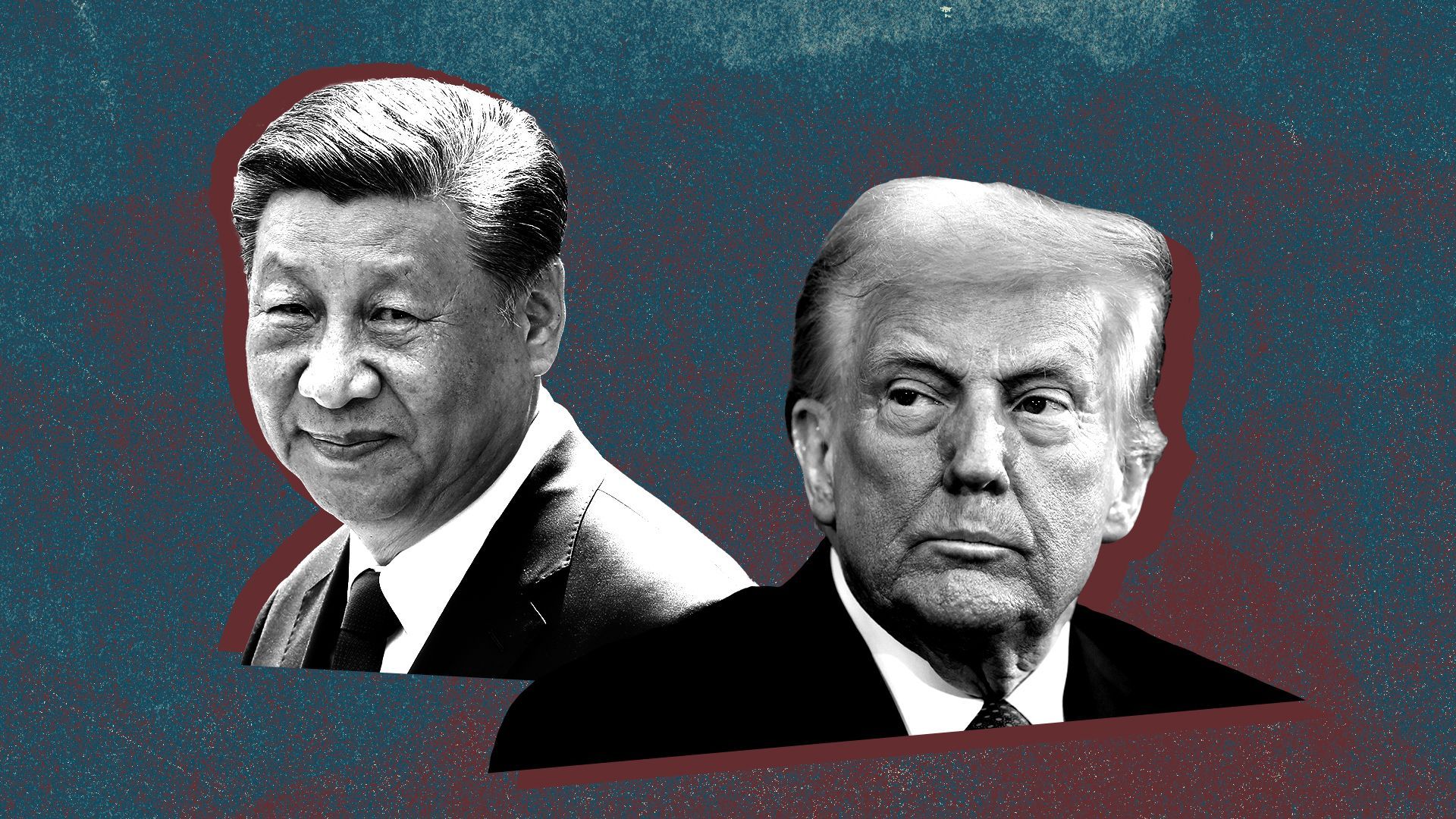
President Trump left Washington four years ago touting a revolutionary new consensus on the threat posed by China.
- He returned this week seeming to downplay that threat — signaling a potential thaw in relations between the world's two leading superpowers.
Why it matters: The stakes are enormous. How Trump deals with Chinese President Xi Jinping over the next four years will have sweeping implications for the global economy, AI, climate change, national security and more.

OpenAI's Operator agent clicks, types and buys for you
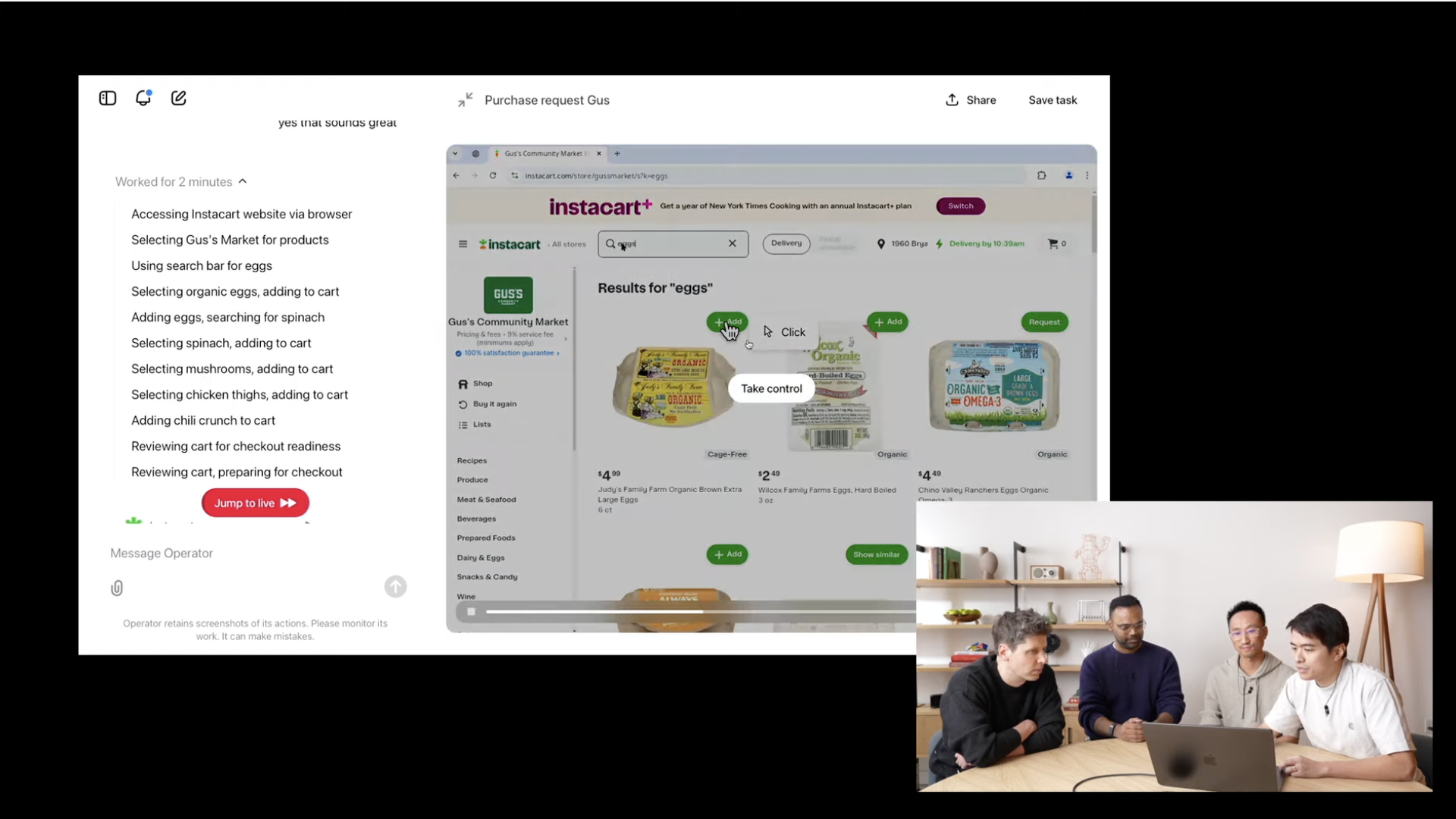
OpenAI released a "research preview" of its first agent Thursday — Operator, a tool that can do web tasks for you.
Why it matters: With 2025 shaping up to be the year of the AI agent, AI firms are racing to free AI from the chat box and set it loose in the world. For now, that world is going to be the web browser.