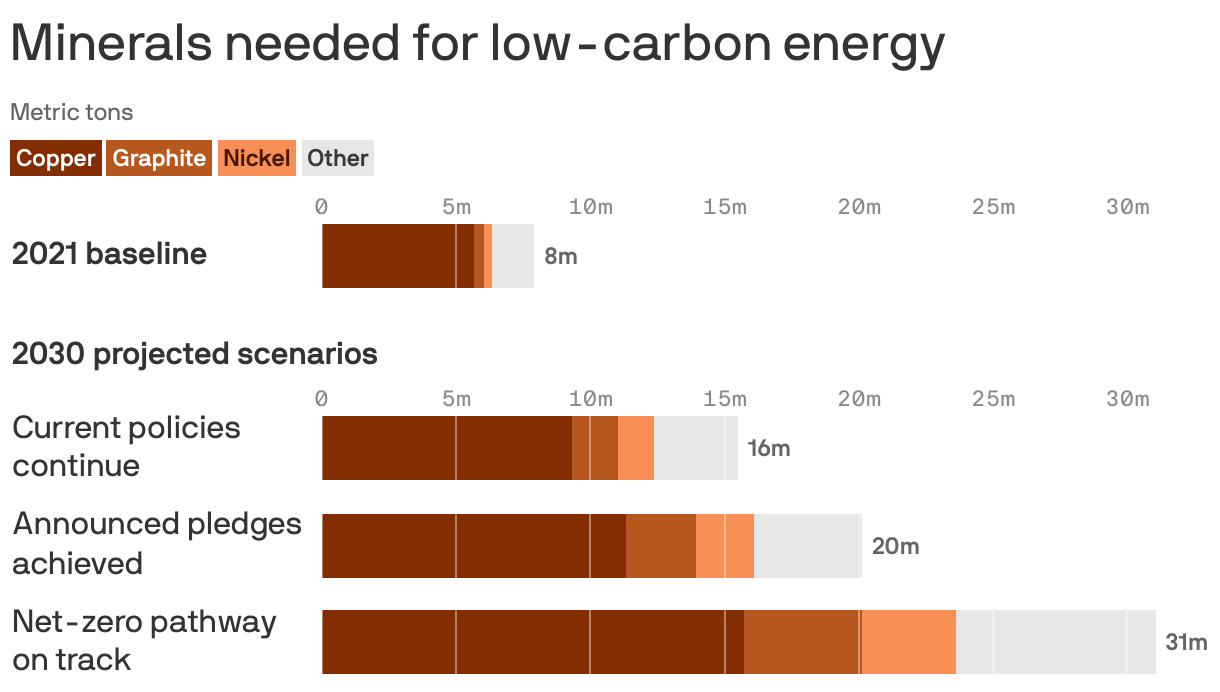
Data: IEA; Note: Analysis does not include steel or aluminum; Chart: Kavya Beheraj/Axios
Low-carbon energy products require huge volumes of resources from mining projects — meaning that slashing emissions will bring ecological and human rights perils of its own.
Why it matters: Technologies like electric car batteries, wind turbines, solar panels and hydrogen use unique minerals, including many that are in short supply.
The tech industry has produced ambitious pledges and tangible steps to limit climate change — but it's also responsible for emissions that make the problem worse.
Why it matters: Giants like Amazon, Microsoft, Apple and Google are important — but also controversial — corporate actors on climate change.
The rising demand for green tech is leading to a wave of new strategies to reduce the disproportionate impact of climate change on frontline communities across the U.S.
Driving the news: These tech solutions are being created bydiversely owned startups, despite racial and socioeconomic barriers to funding access in the venture capital ecosystem.
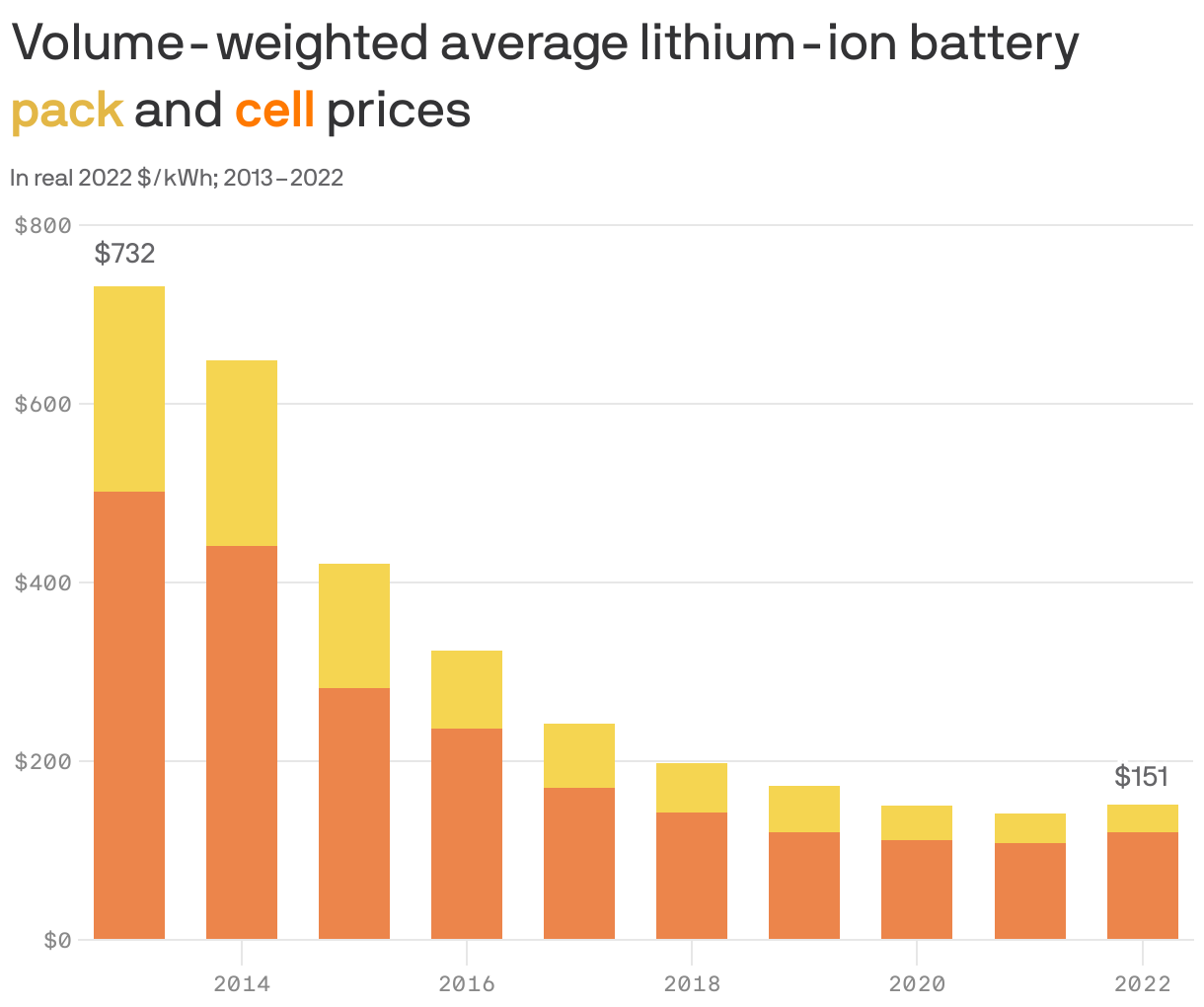
Re-created from BloombergNEF; Chart: Axios Visuals
Battery technologies in development could open the door to widespread adoption of electric vehicles by cramming more energy into a cheaper, smaller package.
Why it matters: Consumers won't embrace electric vehicles until they cost about the same as (or less than) gasoline cars and provide a comparable driving range — around 300 miles between charges.
A lot of mature technology already in use can reduce the impact of climate change — but to really hold global warming in check, experts say we need breakthroughs too.
Why it matters: The world is nowhere close to achieving — or even starting — the emissions cuts needed to keep the Paris Agreement's temperature targets within reach.
Good afternoon, and welcome to the final edition of our Climate Truths Deep Dive series. Today we're exploring tech's role in mitigating climate change.
Axios Local's first annual Power Players list contains 200 individuals and organizations in 24 Axios Local cities spanning from Miami to Seattle, from Philadelphia to Phoenix, who've made a difference in their community in 2022.
They made headlines, advanced major projects, or worked behind the scenes to shape their city.
There was an insurrection in the world of Pudgy Penguins in January, when owners of the popular NFTs revolted against its creators, pushing them to sell the collection to a new owner in April.
State of play After an initial surge in excitement, it took the new management a little bit of time to get the house in order, but recent upswings in price suggest the sale is working out.
The only cybersecurity company to go public in 2022 is already beating analysts' revenue expectations — and it's doing so at a weird time for public cyber markets.
Why it matters: Cybersecurity is typically seen as a recession-proof market since customers still need to keep their networks secured even in a downturn.
Today marks one year since the Apache Software Foundation unveiled a critical vulnerability in Log4j, its popular open-source logging tool, which left millions of devices open to hackers.
The big picture: A year after one of the most widespread security vulnerabilities in recent history was exposed, companies are still wrestling with how to patch the flaw — or with determining if they were affected at all.
When it comes to amusement park rides, cruise lines are playing a game of one-upsmanship.
Why it matters: The pandemic left the cruise industry for dead, but lately it has come roaring back, thanks in part to an aggressive PR campaign and new attractions.
The Federal Trade Commission's suit to block Microsoft's $69 billion acquisition of Activision Blizzard marks the U.S. government's biggest tech-antitrust move in years.
Yes, but: It's happening on a very different sector of the Big Tech power map than most observers expected when the techlash began five years ago.
The U.S. Department of Veterans Affairs is hoping that the recent wave of tech layoffs could help it fill around 1,000 open positions in areas ranging from cybersecurity to software development.
Why it matters: The VA serves over 9 million veterans in more than 2,000 locations, but its digital transformation efforts have been hampered by tech talent shortages.
Portable toilets with bluetooth stereo systems, hot and cold running water, LED lighting, hand sanitizer, air conditioning and plush rolls of paper are starting to pop up across the country, to the surprise (and relief) of outdoor bathroom-seekers.
Why it matters: The COVID-19 pandemic raised our hygiene standards and expectations — and highlighted the critical shortage of public restrooms in the U.S., particularly in cities.
Google must delete search results about people in Europe if they can prove that the information is clearly incorrect, the EU's highest court said on Thursday.
Driving the news: The Court of Justice of the European Union (CJEU) ruled that search engines must "dereference information found in the referenced content where the person requesting dereferencing proves that such information is manifestly inaccurate."
Outside journalists working with Twitter owner Elon Musk posted a new batch of internal communications from the company Thursday night with what they said was evidence the firm's employees "build blacklists, prevent disfavored tweets from trending, and actively limit the visibility of entire accounts."
Why it matters: Musk has framed the "Twitter Files" as an effort to show that his predecessors at Twitter engaged in censorship. Others, including experts in online platforms, say the documents just depict Twitter executives imperfectly but conscientiously struggling to apply complex policies in difficult cases.
The last-ever Boeing 747 airplane left the company's Washington state factory this week, ending production of the iconic jet after half a century soaring the skies.
Why it matters: The world's first twin-aisle aircraft transformed global travel after making its debut in 1970.
Sam Bankman-Fried missed a Thursday evening deadline for responding to a Senate Banking Committee request that he testify at an upcoming hearing, setting up the possibility of a subpoena.
Why it matters: Bankman-Fried has given a slew of media interviews since FTX collapsed, but hasn't yet spoken under penalty of perjury.











/2022/12/10/1670703282572.gif?w=3840)