More Uber drivers in the U.S. will start to see their fares and routes before accepting rides, Uber said today as part of a larger announcement.
Why it matters: The company has tried to improve driver support in face of increased competition for gig workers and criticism for not providing enough support to drivers.
Sony lowered its expectations for its 2022 PlayStation business this morning, trimming its annual sales forecast from $27.4 billion to $27.1 billion.
Why it matters: It's another downward indicator from a top gaming company this week. However, it's small enough that panic about the industry is probably premature.
I've driven a number of vehicles recently with Ford's BlueCruise hands-free highway driving assistant, and here's my takeaway: It's still a work in progress.
The big picture: Ford is only the second automaker to offer a true hands-free highway driving system. GM's Super Cruise was first in 2017.
Tech giants that have often sailed above the economy's turmoil can't escape the current downturn's pain, as this week's earnings reports from the sector's key companies illustrated.
Why it matters: Even as other industries struggled during the pandemic, tech prospered because so much of the economy shifted online. Now they are preparing to take a direct hit.
Regulators issued a stern order to bankrupt cryptocurrency lender Voyager Digital: stop telling customers their deposits are protected by the government, according to a letter sent to company executives on Thursday.
Why it matters: Voyager was one of the companies pushed into bankruptcy as turmoil swept the crypto market. The warning from regulators comes after a frenzy of customer confusion about whether their deposits would be reimbursed following a stretch of misleading claims from the company.
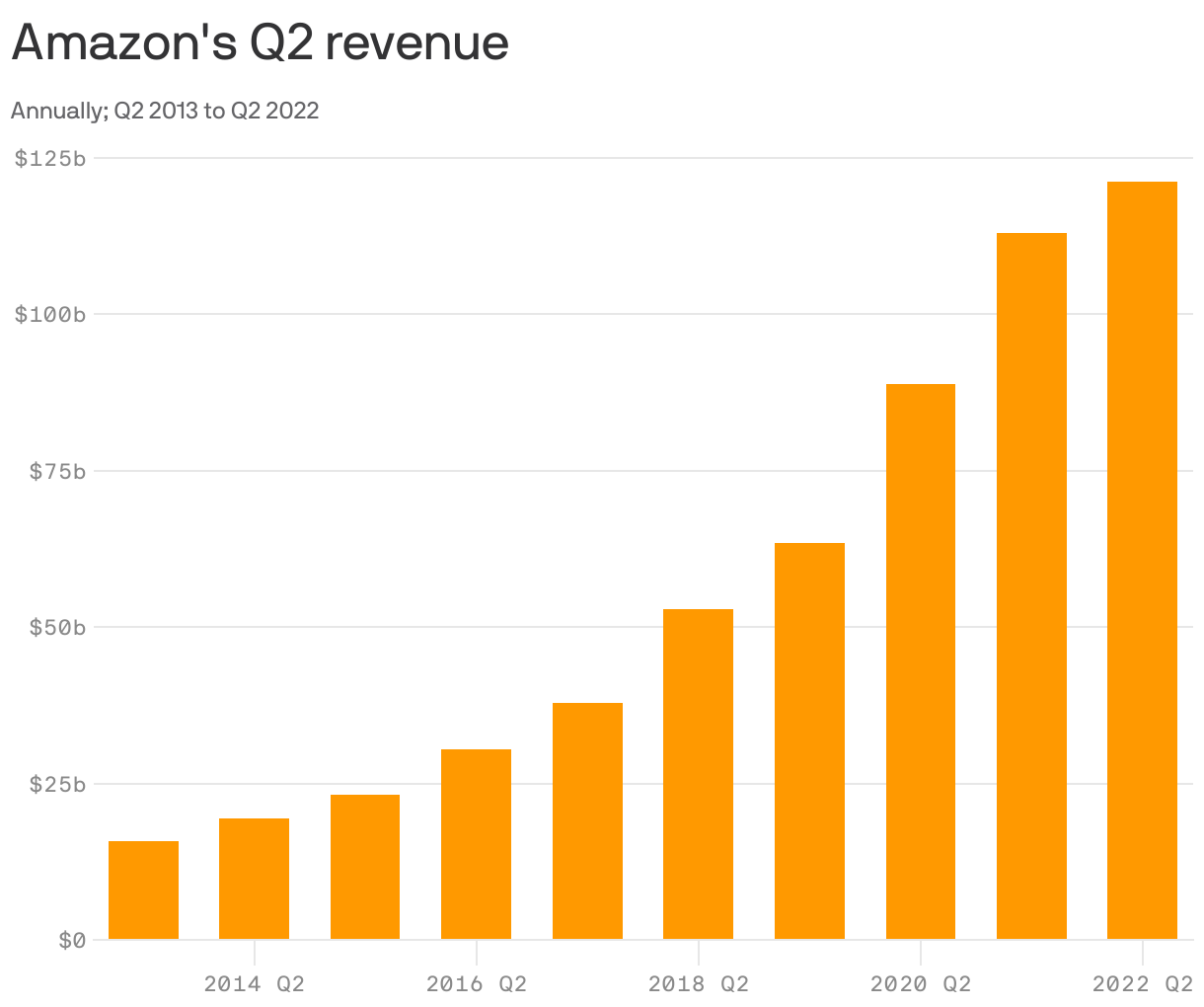
Data: FactSet and Amazon; Chart: Nicki Camberg/Axios
Amazon's growth is plateauing as the company adjusts to a new economic environment.
Catch up quick: Net sales rose to $121.2 billion in the second quarter, or by 7% — the same pace as the first three months of the year, the company reported on Thursday.
Apple on Thursday reported quarterly results that were slightly ahead of Wall Street expectations despite having to grapple with both supply chain and production challenges.
Why it matters: Apple's report comes as many of its tech peers reported weaker results, including semiconductor bellwether Intel, whose results and outlook disappointed analysts and investors.
The House of Representatives voted 243-187 Thursday to pass a $280 billion package for the domestic chip-making industry and scientific research, sending the long-awaited legislation to President Biden's desk.
Why it matters: The bill, approved by the Senate on Wednesday, is meant to boost the manufacturing of essential computer chips on U.S. soil to prevent future supply chain crises and bolster competition with China.
Snapchat's parent company Snap Inc. has added two ad tech execs to its staff and reshuffled its executive team to prioritize monetization and growth, according to a source familiar with the changes and an internal memo obtained by Axios.
Why it matters: Snap shares spiraled last week after the company said revenue growth would meaningfully slow in the months ahead.
Ashraf Ismail, former top developer on Assassin’s Creed games for Ubisoft before his dismissal from the company in mid-2020, was hired last year to help lead development on a game at Tencent, Axios has learned.
Why it matters: The new role amounts to a second chance for a developer whose fall from Ubisoft amid allegations of abusing his power was part of the MeToo reckoning in the game industry two years ago.
Meta on Tuesday began telling its news partners in the U.S. that the company no longer plans to pay publishers for their content to run on Facebook's News Tab, sources tell Axios.
Why it matters: As the company moves forward with sweeping changes to the Facebook experience, news has become less of a priority.
Facebook parent Meta plans to partner with an outside group to survey the race of Instagram customers in hopes of better understanding who is using its services, officials tell Axios.
Why it matters: The company says it wants to make sure that its products and AI systems operate fairly across racial lines, but feels it can't do that without better knowing its customers. By working with a third party it aims to both protect privacy and ensure customers are more comfortable sharing their information.
After a decade of unprecedented growth, Meta has finally hit a wall.
Driving the news: The tech giant told investors Wednesday that it's planning to cut costs, slow investments and reduce head count as it braces for what CEO Mark Zuckerberg called a "downturn" that has already begun to wreak havoc on its business.






/2022/07/29/1659066733949.gif?w=3840)