Sony says it takes recent misconduct allegations by eight current and former PlayStation workers “seriously” in a new legal filing, though it otherwise pushes back at a lawsuit claiming widespread gender discrimination at the gaming giant.
Why it matters: This was Sony’s first acknowledgment of the claims that were raised last week.
Shield Capital, a new VC firm focused on dual-use national security startups, raised $125 million for its debut fund.
Why it matters: Timing is everything. Tech's antipathy toward defense and military applications was waning even before the Russia-Ukraine war, in part thanks to the change in White House occupant, and that abatement should now move even quicker.
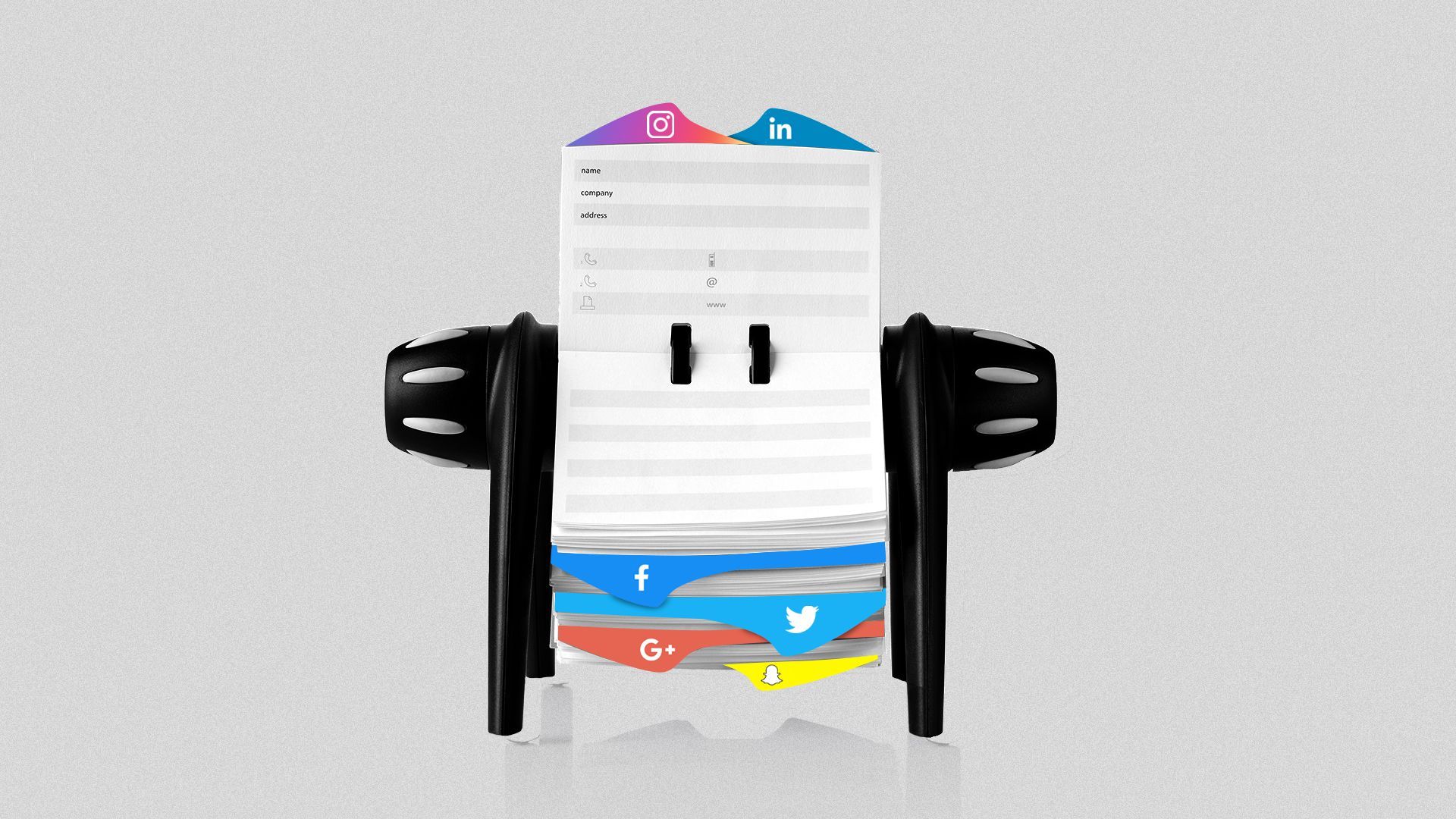
Linktree, the Australian startup best known for its popular "link-in-bio" tool, has raised $110 million at a $1.3 billion valuation, led by Index Ventures and Coatue Management, with AirTree Ventures, Insight Partners and Greenoaks also participating.
Why it matters: As more social media and online content apps appear, Linktree and its investors are betting that it can serve as a unifying "digital business card" amid an increasingly fragmented landscape.
Commerce Secretary Gina Raimondo, President Biden's most powerful appointee on tech, has largely been an ally to the sector, defending U.S. tech firms abroad and pushing for funding domestically.
Why it matters: With Big Tech critics in charge of the government's antitrust enforcement efforts, Raimondo has become the industry's key advocate within the Biden administration.
A Silicon Valley company called Tortoise has introduced a remote-controlled robot that can sell a varied inventory — chocolates, AirPods, knee socks — from tap-to-pay containers on its back.
Why it matters: Retailers can use the Tortoise Mobile Smart Store to generate incremental sales without having to pay someone to oversee the transaction.
Pedestrians can enjoy the novelty and convenience of buying food and accessories from a cute-looking droid, in what Tortoise calls a 15-second experience.
Slack has begun cutting off access to some customers in Russia as it looks to comply with both international sanctions and the policies of parent company Salesforce.
Why it matters: Slack is the lifeblood for internal communications at many businesses and organizations and often contains data and messages not stored in any other format.
If upstart video game publisherDeepWellhas its way, you’ll someday be able to buy a video game and see a label about what therapeutic benefits you’d get from playing it.
Driving the news: DeepWell is coming out of a yearlong incubation today, as its founders aim to rewire how games are used for health care, with a focus on mental health, in early 2023.
European Union antitrust regulators signed off on Amazon's $8.45 billion purchase of Hollywood studio MGM on Tuesday, imposing no conditions on the deal.
Why it matters: With Europe's clearance, Amazon's final regulatory hurdle is the Federal Trade Commission.
Rather than leap headfirst into the metaverse, Adobe has a more practical recommendation for companies: First make sure you've made 3D digital images of all your products.
Why it matters: Adobe's vision is less sexy than the one painted by Meta and others, but it is designed to allow investments to pay off long before the arrival of a fully 3D internet you can touch and feel.
A bipartisan group of lawmakers is pressing Meta on its policy toward paid advertisements from Chinese state-sponsored media as the war in Ukraine continues and false Russian narratives proliferate, per a letter sent to CEO Mark Zuckerberg Tuesday.
Driving the news: The letter comes after Axios reported last week that state-controlled China Global TV Network had placed at least 21 ads on Meta-owned Facebook, many featuring newscasts pushing pro-Russia talking points about the ongoing attacks on Ukraine.
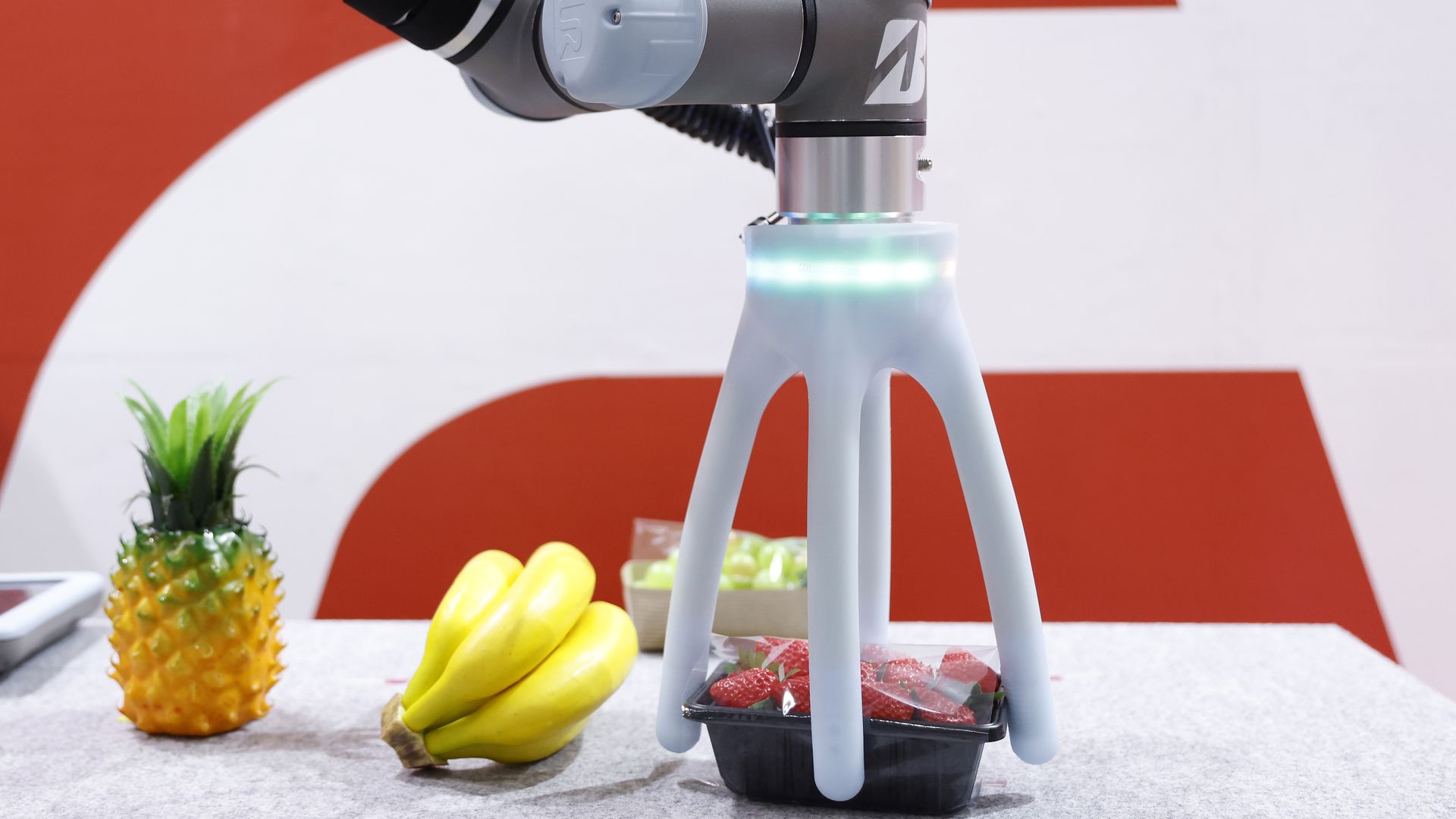
Soft robotic grippers were "a laboratory curiosity" until a few years ago, but now they're "breaking into the real world," according to the American Society of Mechanical Engineers (ASME).
Why it matters: These handlike grippers have manifold industrial uses that make them much better suited to delicate items than their hard-shelled equivalents.
Check out this video of Soft Robotics' mGrip gripper picking up marshmallow Peeps.
"It's very difficult to handle these soft, delicate Peeps," says Randall Copeland, SVP of operations for Just Born, the maker of the chicks. Before the mGrip, "the only thing we found that could do it successfully was the human hand."
The bottom line: Soft grippers are "an attractive option for warehouses, food distributors, and factories with a high mix of products," ASME says, as they can move fragile objects that hard grippers would crush — like glass and baked goods.
"Because many soft grippers conform to objects, they are breathtakingly fast when it comes to picking up unstructured items from a line or bin, since they don’t need to spend time calculating and managing a precise approach to each object," ASME says.
The tech world order that came together in the '90s at the Cold War's end is falling apart today as a new rift between Russia and the West opens and a great retrenchment begins.
Why it matters: The breakup of the USSR in the early '90s opened an era in which internet use rapidly spread around the globe and U.S. tech companies viewed the entire planet as both factory floor and market.
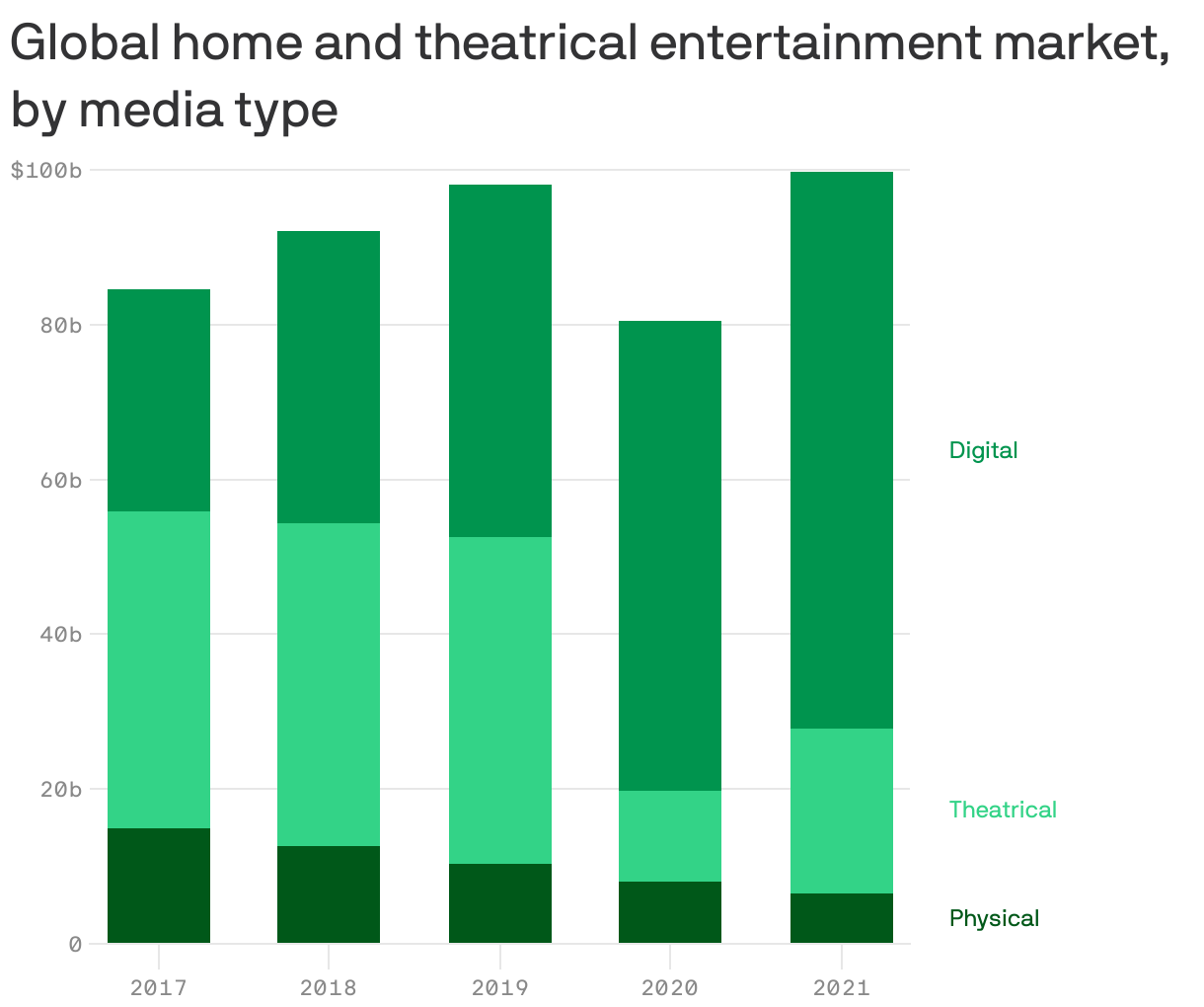
Reproduced from the 2021 THEME Report; Chart: Axios Visuals
A sharp uptick in paid online video subscriptions and original content production for streaming platforms has helped the movie industry recover from the coronavirus pandemic, according to a new report.
Why it matters: The global streaming and theatrical movie market raked in nearly a combined total of $99.7 billion in 2021, eclipsing pre-pandemic sales.
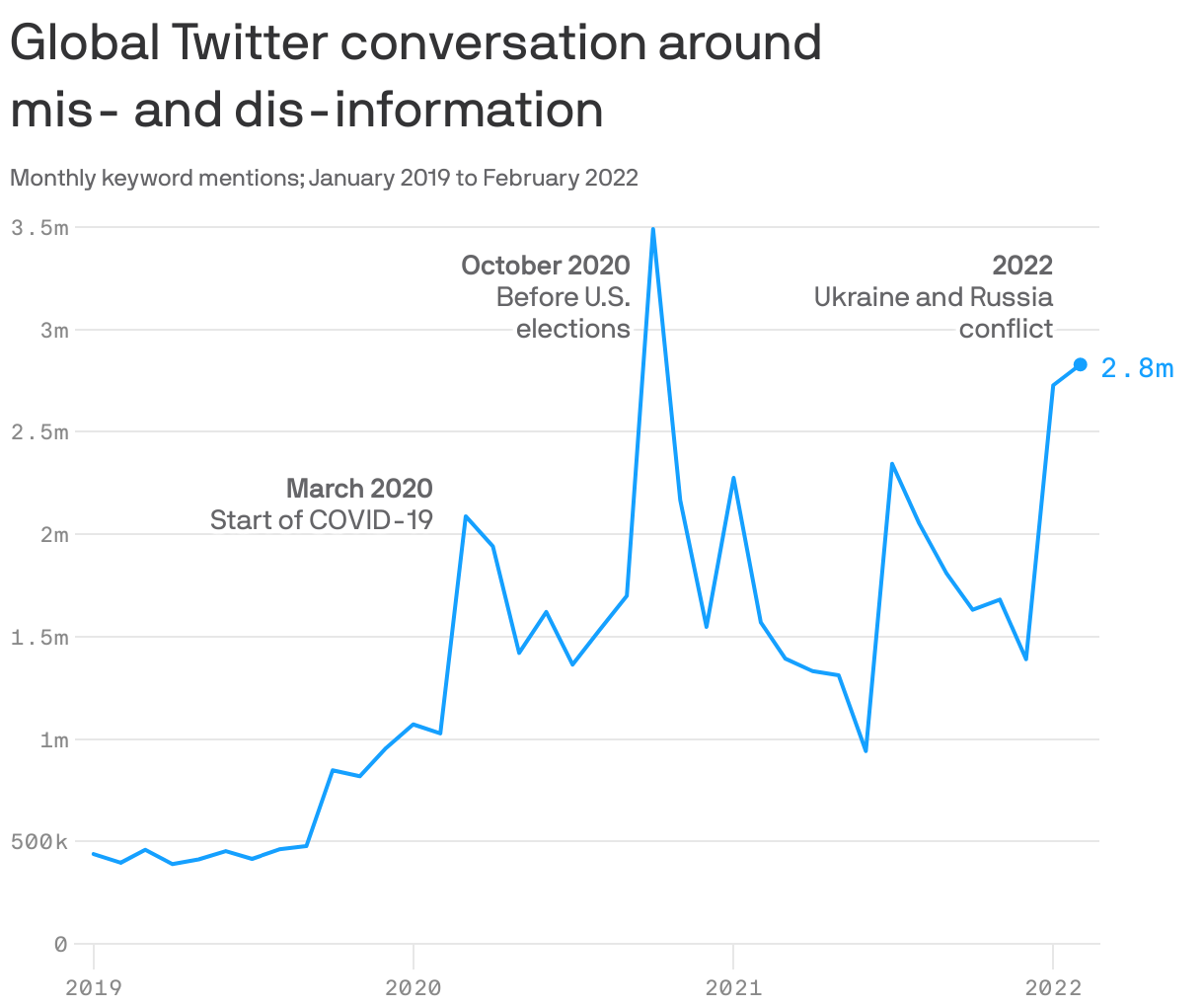
Public awareness around misinformation and disinformation has soared over the past two years, bringing information warfare and content moderation issues to the center of public conversation.
Why it matters: "Whether they like it or not," everyday people have become "co-creators of today’s infosphere, which comes with responsibilities," said Tami Kim, assistant professor at the University of Virginia's Darden School of Business.
An increasing number of journalists are being killed, attacked, or threatened covering the war in Ukraine. Independent journalists are also facing threats trying to cover the conflict factually from Russia.
Why it matters: Journalists covering the invasion are considered civilians under international humanitarian law. Targeting them can be considered a war crime.
A slew of packed parties and panels at Austin's annual SXSW (South by Southwest) festival this year demonstrated that the tech and entertainment industries still crave in-person events, even if they don't look the same as they used to.
Why it matters: The conference marked the first large-scale industry event to take place without big restrictions in the COVID era, and hardly anyone wore masks.