Instagram is no longer available in Russia, according to internet monitoring service GlobalCheck, after the country last week said it planned to ban the social network.
The big picture: Russia's media monitoring agency Roskomnadzor announced last week that it planned to ban Instagram after Meta, Facebook and Instagram's parent company, loosened hate speech restrictions to allow for users to call for an end to the violence in Ukraine and for the deaths of Russian leaders.
Yuga Labs, the NFT company behind the Bored Apes Yacht Club, acquired the rights to the CryptoPunks and Meebits collections, from Larva Labs.
Why it matters: Bored Apes and CryptoPunks are the world's most valuable NFT collections, with Meebits not too far behind. Yuga now controls NFTs with around $5.5 billion in market cap.
The tech industry is lobbying statehouses across the country to pass privacy bills that critics call weak.
Why it matters: Most tech firms would prefer a nationwide law, but since Congress hasn't budged on the issue, the industry now seeks to preempt states from approving tougher privacy rules like California's.
Pandemic restrictions in two of China's largest cities, Shenzhen and Shanghai, imposed Sunday have forced Apple suppliers including Foxconn to suspend production, per Nikkei Asia.
Why it matters: The seven-day lockdown of the key port city and southern tech powerhouse Shenzhen and the partial lockdown of financial hub Shanghai and other Chinese cities over COVID-19 spikes will exacerbate supply chain and inflation issues, per Axios' Dan Primack.
Republicans are upping their investments in GOP tech startups as operatives try to make the party more technologically self-sufficient, Axios has learned.
Why it matters: Political campaigning is a multibillion-dollar industry, and both parties are pouring money into products tailor-made to winning elections that can ween their campaigns off of legacy technology.
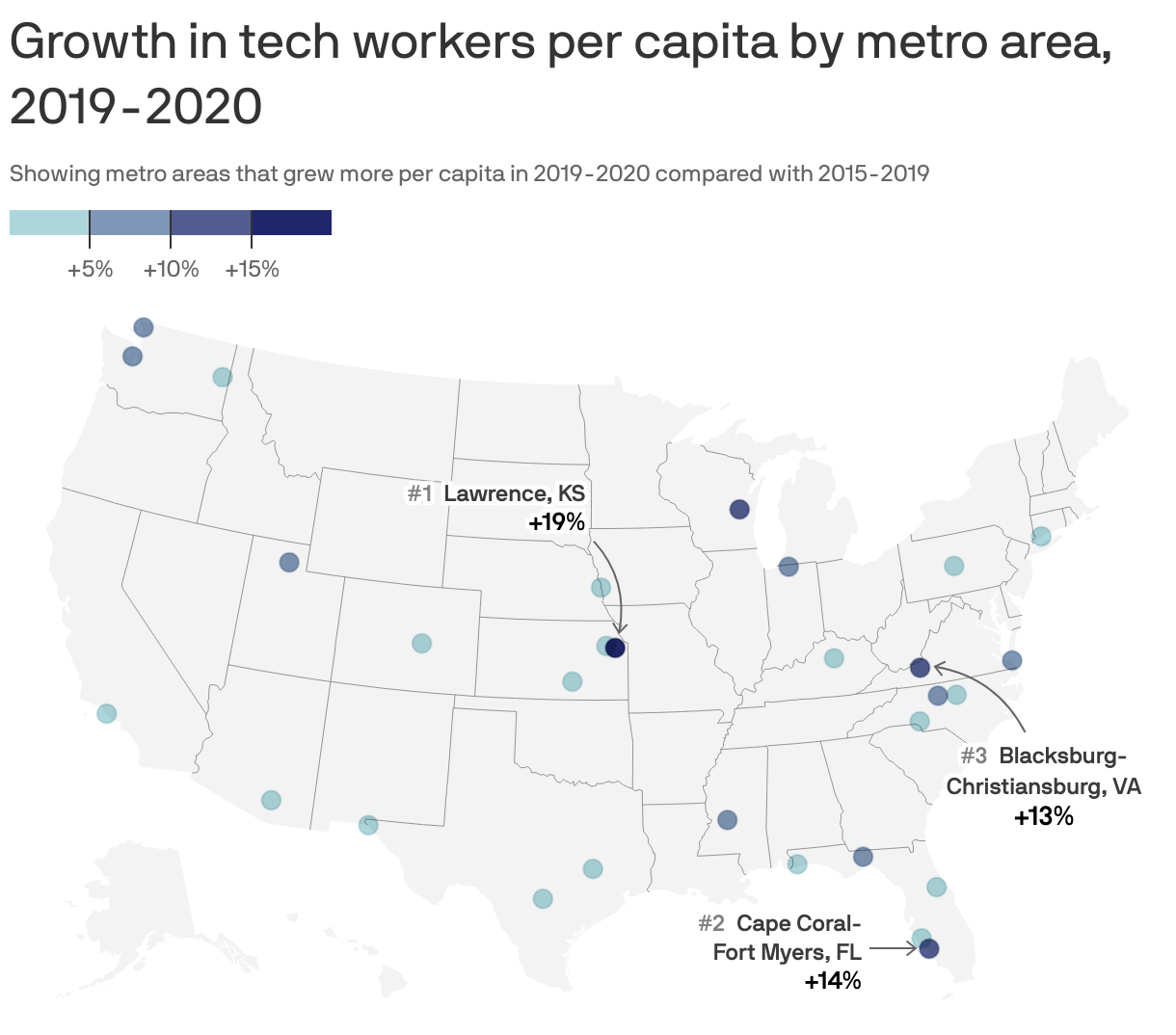
Data: Brookings Institution and U.S. Census; Note: Metro areas with fewer than 1,000 tech workers in 2020 were excluded; Map: Kavya Beheraj/Axios
A handful of fast-growing cities, including Miami, Orlando and San Diego, are claiming a bigger and bigger slice of America's tech workforce.
Why it matters: The rise of remote work has provided an opportunity for new cities to lure tech talent from coastal hubs, chipping away at established tech hubs' dominance.





/2022/03/11/1647029097188.gif?w=3840)




/2022/03/13/1647193510768.gif?w=3840)