Nearly 50,000 Facebook users in 100 countries may have been targeted by "surveillance-for-hire" companies, parent company Meta said Thursday.
Driving the news: Meta director of threat disruption David Agranovich and head of cyber espionage Mike Dyvilyanski shared a blog post detailing a months long investigation in "cyber mercenaries" engaging in "surveillance-for-hire."
Agranovich and Dyvilyanski wrote that Meta disabled seven entities, based in China, Israel, India and North Macedonia, which were found to have targeted people on the internet on behalf of governments or private clients. The entities were banned from Meta services entirely.
According to the blog post, targets of the surveillance efforts included "journalists, dissidents, critics of authoritarian regimes, families of opposition and human rights activists."
Meta says it shared findings about the attempted attacks with security researchers, alerted the potential victims and issued cease-and-desist warnings to the attackers.
A detailed report of the investigation says that about 1,500 Facebook and Instagram accounts were linked to the seven entities' surveillance efforts and removed.
Why it matters: Meta's actions follow the growing trend of tech companies having to disrupt cyber attack attempts on their platforms, as online surveillance gets more sophisticated.
Meta sued Israeli spyware firm NSO Group over WhatsApp malware in 2019. Thursday's report argues that NSO is just one part of a "much broader global cyber mercenary ecosystem."
What they're saying: "Cyber mercenaries" may argue their work is focused on criminals and terrorists, but their tactics are used on many types of people, the two authors wrote.
"In fact, for platforms like ours, there is no scalable way to discern the purpose or legitimacy of such targeting. This is why we focus on enforcing against this behavior, regardless of who’s behind it or who the target might be."
The Treasury Department has added eight Chinese companies — including DJI, the world's largest commercial drone manufacturer — to an investment blacklist for actively supporting the "surveillance and tracking" of Uyghurs and other ethnic minorities in China.
Why it matters: The U.S. is cracking down aggressively on virtually any company — American or Chinese — believed to be complicit in the Chinese government's genocide of Uyghur Muslims in the northwest region of Xinjiang. DJI is accused of providing surveillance drones to authorities that operate mass detention camps in Xinjiang.
Spotify on Thursday said it acquired Whooshkaa, a podcast technology platform that specializes in technology for radio broadcasters to turn existing content into podcasts.
Why it matters: The deal will help Whooshkaa expand and will help Spotify grow its ad inventory.
Ring, the Amazon-owned doorbell and security camera device, now works with 2,000 police departments across the country. But the footage downloaded by those agencies is less than one might expect, according to a new audit from New York University's Policing Project.
Why it matters: The company has come under fire for a number of practices including its privacy policies, economic relationships with police agencies and its role in helping create and grow the surveillance state.
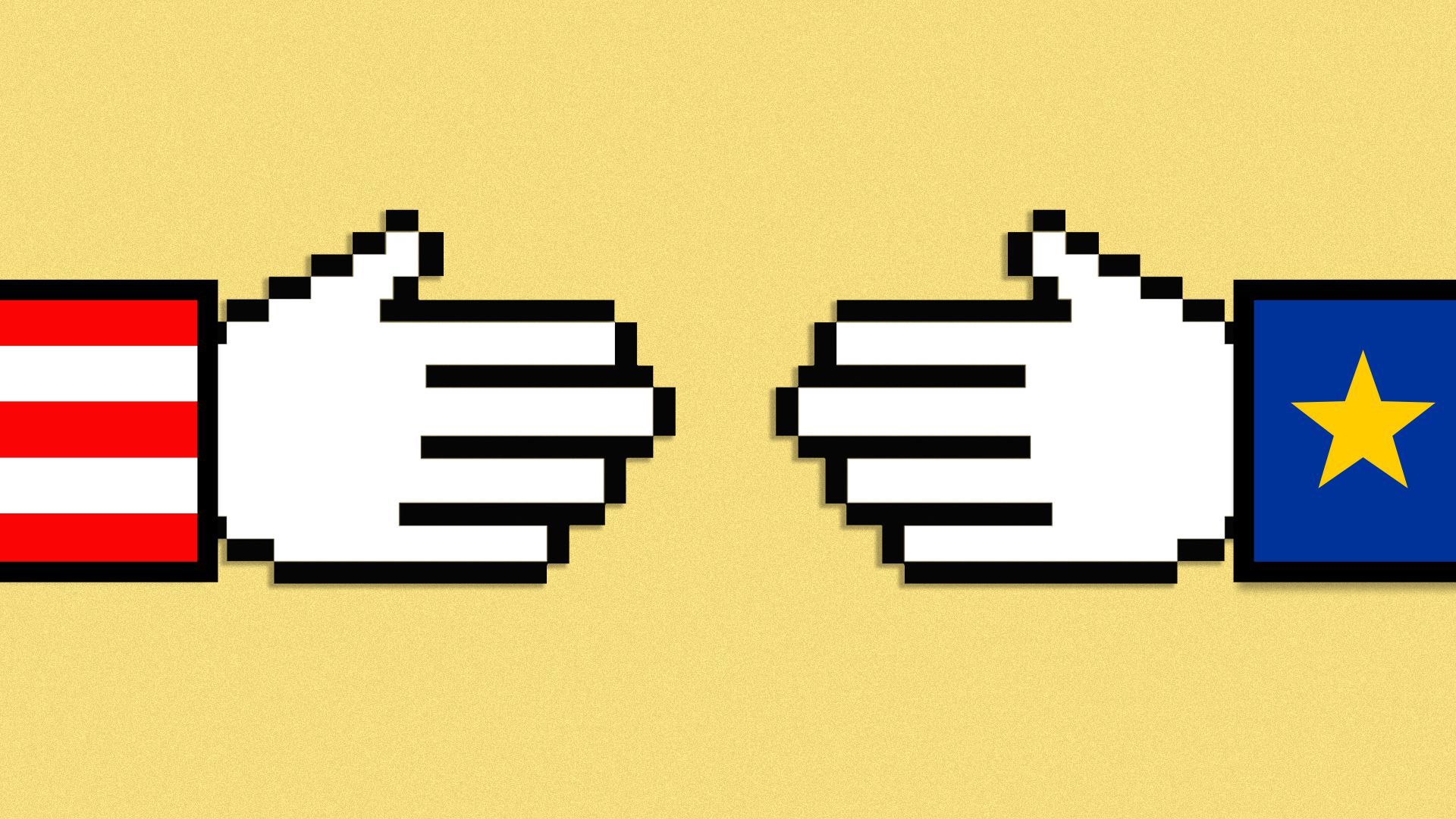
Europe is leading the way as Congress and U.S. regulators slowly figure out how America could regulate the digital economy.
Why it matters: Europe's tech regulation influence on the U.S. marks a notable shift in the setting of global standards as international lawmakers continue to scrutinize Big Tech.
TikTok is adjusting its algorithm to avoid showing users the same types of videos too frequently.
Why it matters: TikTok says the adjustments are being made to ensure it isn't inadvertently reinforcing viewpoints that could be bad for a person's wellbeing.
It's official: Reddit wants to go public, and has filed its IPO prospectus with the SEC.
Why it matters: The company was bought by publishing giant Condé Nast for $10 million in 2006. After well over $1 billion in subsequent new investment, it's hoping for a $15 billion valuation when it goes public, per Reuters.
The $65 billion federal boost to expand broadband access in the U.S. will be a boon to the women-run companies on platforms like Etsy and Airbnb, especially as they see an increase in rural businesses.
Why it matters: Expanding high-speed internet access across the country will enable more women to participate in the online economy at a time when women have dropped out of the labor force due to the pandemic.
The upcoming battle royale game Rumbleverse had its first playable public demo session last Friday rather than over the weekend — for the sake of the developers’ work-life balance, Iron Galaxy CEO Adam Boyes tells Axios.
Why it matters: Boyes’ studio is one of many trying to find more ethical ways to operate in an industry that often works its developers to the bone.
Plots of virtual land for veteran developer Peter Molyneux’s upcoming NFT-based game Legacy have sold for more than $15 million, based on a check of items marked “sold out” in the online marketplace for the forthcoming game.
Why it matters: A lot of the money in NFT gaming now is based on speculation.
Katie Haun, one of the world's most influential crypto venture capitalists, is leaving Andreessen Horowitz to form her own firm.
Why it matters: Haun has helped turn Andreessen Horowitz into the VC world's largest crypto investor, including a $2.2 billion fund raised earlier this year that's already been deployed.
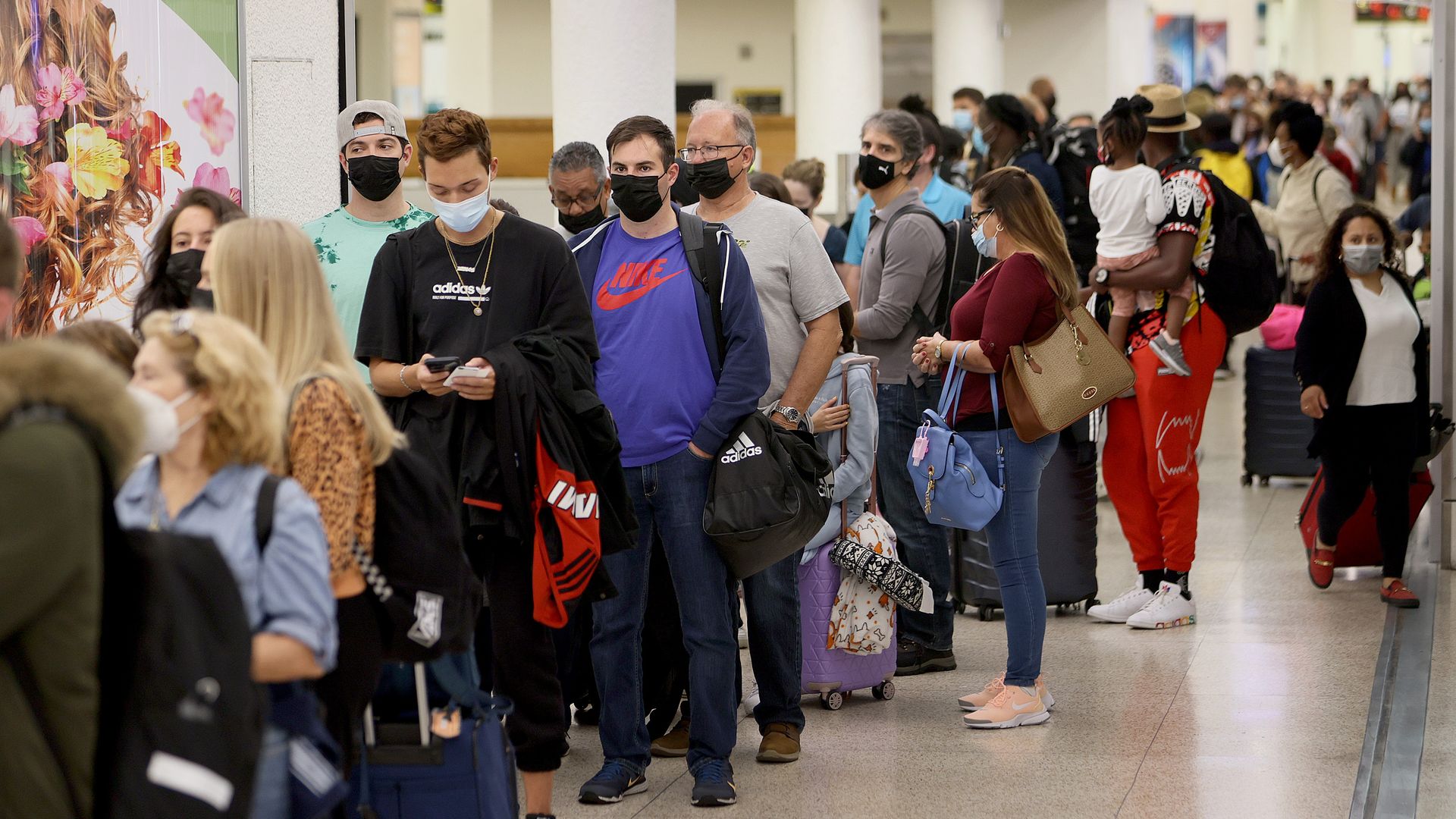
Clear, the ID security company that aims to speed passengers through airport security, will now book you an Uber to make sure you arrive at your gate on time.
Why it matters: Holiday travel is expected to approach pre-pandemic levels this year, which could lead to extra stress for passengers, many of whom haven't traveled in two years.
Driving the news: Clear is partnering with Uber to integrate its ride-hailing platform directly into the Clear app’s "Home to Gate" feature.
Home to Gate analyzes traffic data, security screening wait times, and walking distance in the terminal to advise when you should leave your home or hotel to arrive at your gate on time.
The integration with Uber means you can even reserve an Uber ride ahead of time on Clear's app for no extra charge.
How it works: You don't have to be a Clear Plus member to use the Home to Gate feature, but access to Clear's expedited security lines requires membership.
Open the Clear app and tap "Home to Gate."
Share your location and flight details, and the app will tell you the best time to leave for your flight.
Tap the "Get A Ride With Uber'' button, and the Uber app will reserve your ride, with all your trip details.
What they're saying: "Travel is surging back this holiday season, and together with Uber, we are helping travelers have a more predictable and stress-free travel experience," said Caryn Seidman-Becker, CEO of Clear.
The computing world is struggling this week to contain a significant vulnerability in Log4J, an extremely common piece of open-source code.
Why it matters: Experts say the flaw leaves hundreds of millions of systems vulnerable to attack, with the head of the U.S. government's cybersecurity agency calling it among the biggest threats she has seen in her career.
A new poll from Morning Consult finds 56% of U.S. adults support government regulation of social media companies, up 4 percentage points from an October survey. The poll also found that roughly three in five adults say social media platforms do not do enough to keep users safe.
Why it matters: Poll results like this could bolster legislative and regulatory efforts to make social media companies more accountable for the content on their services.
The Internet Association (IA), once the tech industry's top lobbying shop in Washington, representing companies such as Google, Facebook, Amazon and Microsoft, will close by the end of the year, its board announced Wednesday.
Driving the news: IA's board voted Wednesday morning to dissolve the organization. A source familiar with the situation, who alerted Axios to the pending vote on Tuesday, described it as a formality, with the decision already made.
Microsoft's departure, first reported by Axios, made the decision imminent, and put the other members in a precarious financial position. Uber recently left the organization as well.
Politico first reported the news that IA would dissolve
Why it matters: IA was once a highly influential group, fighting for policy to help internet companies grow with limited government regulation. It described itself as the "unified voice of the internet economy." That unified voice simply doesn't exist anymore.
While the IA has historically avoided working in the areas of antitrust and competition, many of its top members are now in the crosshairs of antitrust investigations and proposed bills around the world. All the while, its members constantly compete with one another.
The organization has long worked to promote the importance of Section 230 of the Communications Decency Act, the law that shields tech from most liability from third-party posts, but members were increasingly at odds over that policy and legislative paths forward.
Details: IA has seen steadily waning influence in D.C. in recent years, as Axios previously reported.
Former president Michael Beckerman is now at TikTok. Current CEO Dane Snowden came from a cable lobbying group.
What they're saying: The source familiar with the situation said Microsoft's departure made keeping the association going unviable, put it in a financial crisis, and that paralysis on big policy issues bogged the organization down.
"What was once a leading voice for tech companies is fading into obscurity with barely a whimper and hardly anything to show for itself," one former employee told Axios.
“Our industry has undergone tremendous growth and change since the Internet Association was formed almost 10 years ago, and in line with this evolution, the Board has made the difficult decision to close the organization at the end of this year," IA's board of directors said in a statement.
"As this chapter closes, member companies remain committed to advancing public policy in support of this mission and will continue to work with stakeholders in other capacities.”
Editor's note: This story has been updated to include a statement from the Internet Association's board and reflect that it voted to dissolve the organization.








/2021/12/16/1639614328548.gif?w=3840)











/2021/12/15/1639534416036.gif?w=3840)