Dispo, a retro photo-sharing app co-founded by YouTube star David Dobrik, recently raised $20 million in Series A funding led by Spark Capital at a valuation of about $200 million, Axios has learned. The company declined to comment.
Why it matters: After releasing a new test version of its disposable camera-inspired app earlier this month, it quickly racked up users and buzz.
Threat actors using the Sodinokibi ransomware made “at least” $123 million in 2020, stealing roughly 21.6 terabytes of data, according to a new report by IBM researchers.
The backdrop: Sodinokibi was the most-used ransomware observed by the researchers, accounting for 22% of all incidents in 2020. Cyber criminals using Sodinokibi demanded $42 million for a single ransom, writes IBM.
Last week’s stunning indictment of three North Korean hackers laid bare both the advantages and drawbacks of the U.S. government’s evolving strategy of using high-profile prosecutions to publicize hostile nation-state cyber activities.
Why it matters: Criminal charges can help the U.S. establish clear norms in a murky and rapidly changing environment, but they may not deter future bad behavior and could even invite retaliation against U.S. intelligence officials.
There was one key message from Tuesday's Senate Intelligence Committee hearing into the big SolarWinds hack: Too many are suffering being hacked in silence.
The big picture: Intelligence sharing on malicious actors is a key component of fighting the bad guys, with both Microsoft and FireEye calling for the government to consider mandatory disclosure of significant breaches.
The Justice Department and the Federal Trade Commission will brief the House Judiciary antitrust subcommittee today on the antitrust cases against Google and Facebook, according to a memo seen by Axios.
What's happening: Staff for members of the antitrust subcommittee will be briefed by phone by the DOJ and FTC on the suits Wednesday afternoon.
On Thursday, the subcommittee is holding an hearing on competition and the "gatekeeper power" of dominant tech firms.
TikTok said Wednesday that it removed under 1% of the videos uploaded on its platform during the latter half of last year amid the election and start of the COVID-19 vaccine rollout.
Why it matters: Most of the videos the company removed were attributed to child and adult nudity, a similar trend that occurs across most tech platforms. About 13% of the content it removed came from the U.S.
Congress' effort to squelch misinformation is broadening to target the cable companies that bring right-wing networks like Newsmax, OANN and Fox News to Americans' screens.
Why it matters: Conspiracy theories, false election claims, anti-vaccination propaganda and other kinds of misinformation spread through a complex ecosystem: Lies bubble up online, then get amplified when cable news channels repeat them, then spread further via social media. Breaking the cycle will require more than just stricter content moderation by online platforms.
Snap Inc.'s stock hit an all-time high Tuesday after the company told investors it anticipates 50% annual growth in top-line revenue for the next several years. Its market cap reached over $100 billion for the first time on the news.
The big picture: Since its founding a decade ago, Snapchat has quietly grown its product to build a loyal audience of people mostly under the age of 30. Now, it says it's ready to finally start making money off of those users.
A new pro-Trump think tank is leading a right-wing charge against Big Tech, urging Republican leaders to legislate to rein in the major platforms.
What's happening: Republicans typically are skeptical of intervening in markets. But these groups are pressuring Senate Minority Leader Mitch McConnell and House Minority Leader Kevin McCarthy to drop that reluctance when it comes to Big Tech.
2U, a major provider of remote college and professional training, is partnering with a company that works on education reimbursement to expand online schooling opportunities for U.S. workers, Axios has learned.
Why it matters: American workers need help affordably reskilling for the age of automation, but existing higher education opportunities often leave them unprepared and laden with debt. The new partnership aims to take advantage of remote education to meet workers where they are, with what they need.
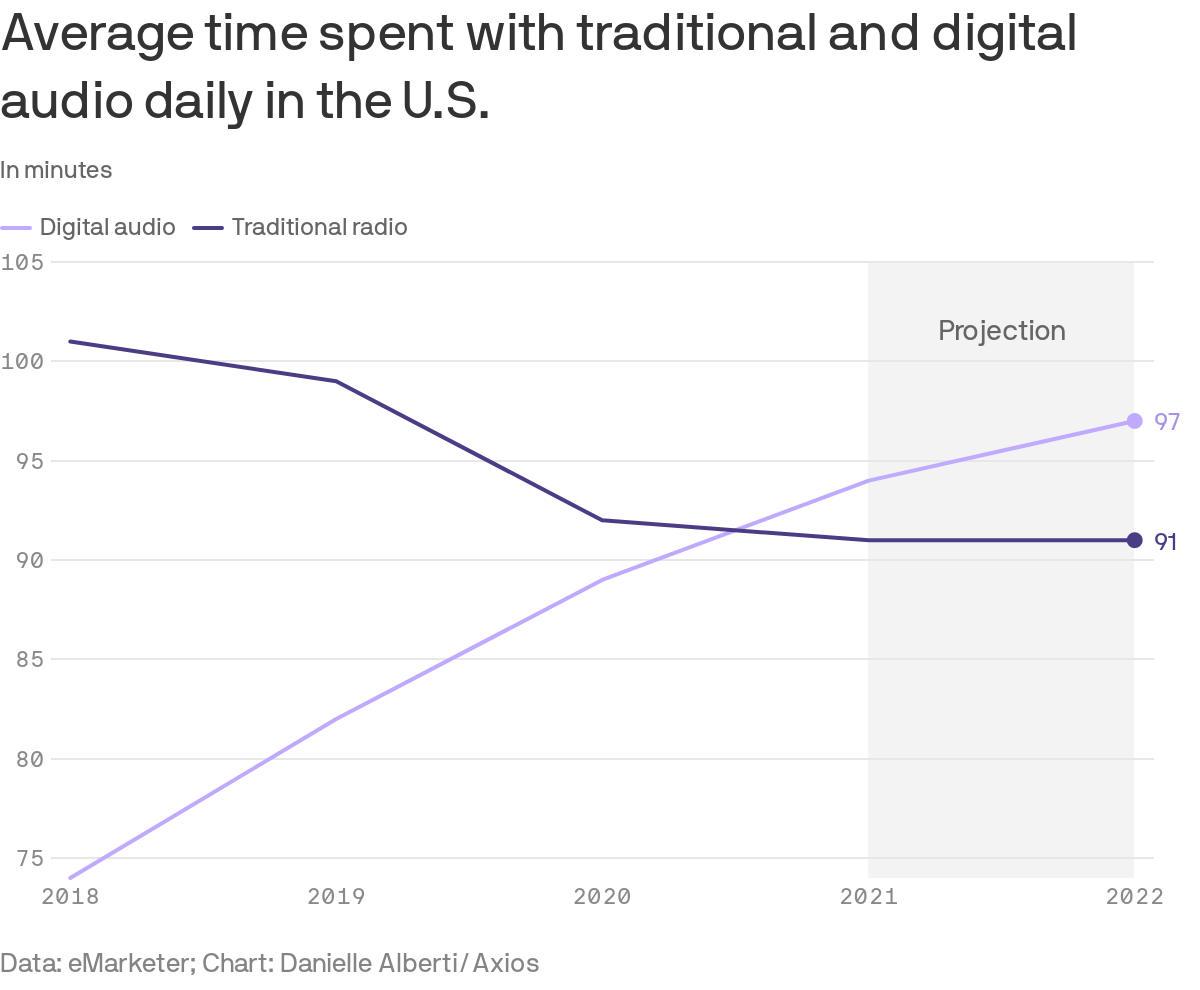
Spotify on Monday announced a new advertiser network called the Spotify Audience Network that will combine all of the audio streaming giant's music and podcast ad inventory in one place when it launches in coming months.
Why it matters: The first-of its kind digital audio network will make it possible for marketers to be able to run targeted digital audio ads at scale, similar to what they are able to do now with banner ads or search ads on Facebook and Google.
Wall Street's populist uprising, the Capitol siege and a strong U.S. anti-vaccination movement show the power of memes in spreading misinformation and influencing communities online.
Why it matters: For years, there's been growing concern that deepfakes (doctored pictures and videos) would become truth's greatest threat. Instead, memes have proven to be a more effective tool in spreading misinformation because they're easier to produce and harder to moderate using artificial intelligence.
Health officials are worried that misinformation about the COVID-19 vaccines and infertility will drive down vaccination rates among women, the Washington Post reports.
Why it matters: False claims about the vaccines are rampant, and threaten to prevent the U.S. from vaccinating enough people to put the pandemic safely behind us.
Facebook on Monday said it had struck a deal with Australian lawmakers to pay local publishers for their news content, after the government finally agreed to change some of the terms within its new media code.
Why it matters: The agreement ends Facebook's temporary ban on sharing news links on its platform in the country. Data showed that the link-sharing ban caused news traffic to plummet in the region.














/2021/02/22/1614014944590.gif?w=3840)