Kim Kardashian West announced that she will join two dozen celebrities in temporarily freezing their Instagram and Facebook accounts on Wednesday because the platforms "continue to allow the spreading of hate, propaganda and misinformation — created by groups to sow division and split America apart."
Why it matters: The announcement from such a high-profile user is likely to be a PR disaster for Instagram and Facebook, as well as a boost to the #StopHateForProfit campaign. Kardashian West is the seventh-most followed account on Instagram with 188 million followers. She currently has 30 million followers on Facebook.
By this time next week, we should all know if TikTok will be allowed to continue operating in the U.S., in partnership with Oracle, or if it will be in the process of being banned by President Trump.
Axios Re:Cap digs into the perspective from China, where TikTok's parent company is based. Our guest is CNBC Beijing bureau chief Eunice Yoon.
Apple on Tuesday unveiled new iPad and Apple Watch models, as well as a new fitness service and Apple One, which bundles the company's main services for one monthly price.
Context: Apple has launched new iPhones in September in the past, but production issues have flipped the script this year and the new smartphones are expected to be unveiled at a second event, likely next month.
A group of researchers from Europe, the U.S. and Japan are proposing a "tech alliance" of democratic countries in response to the Chinese government's use of technology standards and its tech sector as instruments of state power abroad, according to a version of the proposal viewed by Axios.
Why it matters: Technological rivalry may dominate the 21st century world. But so far, democratic nations have not yet acted in concert to shape standards and secure their infrastructure in the face of a strong authoritarian challenge.
A number of media companies, especially with audiences that skew female, are replacing top white editors with people of color.
Why it matters: A slew of top editors were forced to step down from their positions this summer after the #BlackLivesMatter movement and protests sweeping the nation forced media companies to reckon with their own shortcomings on diversity.
Facebook is investing $5 million in programs for newsrooms of color and entrepreneurial journalism, executives tell Axios.
Why it matters: The investment comes amid tensions between Facebook and civil rights leaders over the prevalence of hate speech and misinformation on its platform.
A new ad fraud scheme targeting premium publishers on connected TVs (CTV) and mobile has been uncovered by DoubleVerify, an ad fraud analytics company. The botnet, called MultiTerra, was stealing roughly $1 million per month from publishers by spoofing their ad inventory.
Why it matters: Premium publishers were particularly vulnerable to this particular attack because their ad rates (CPMs) are so high, making them an efficient target. CTV is any TV set that streams video over the internet.
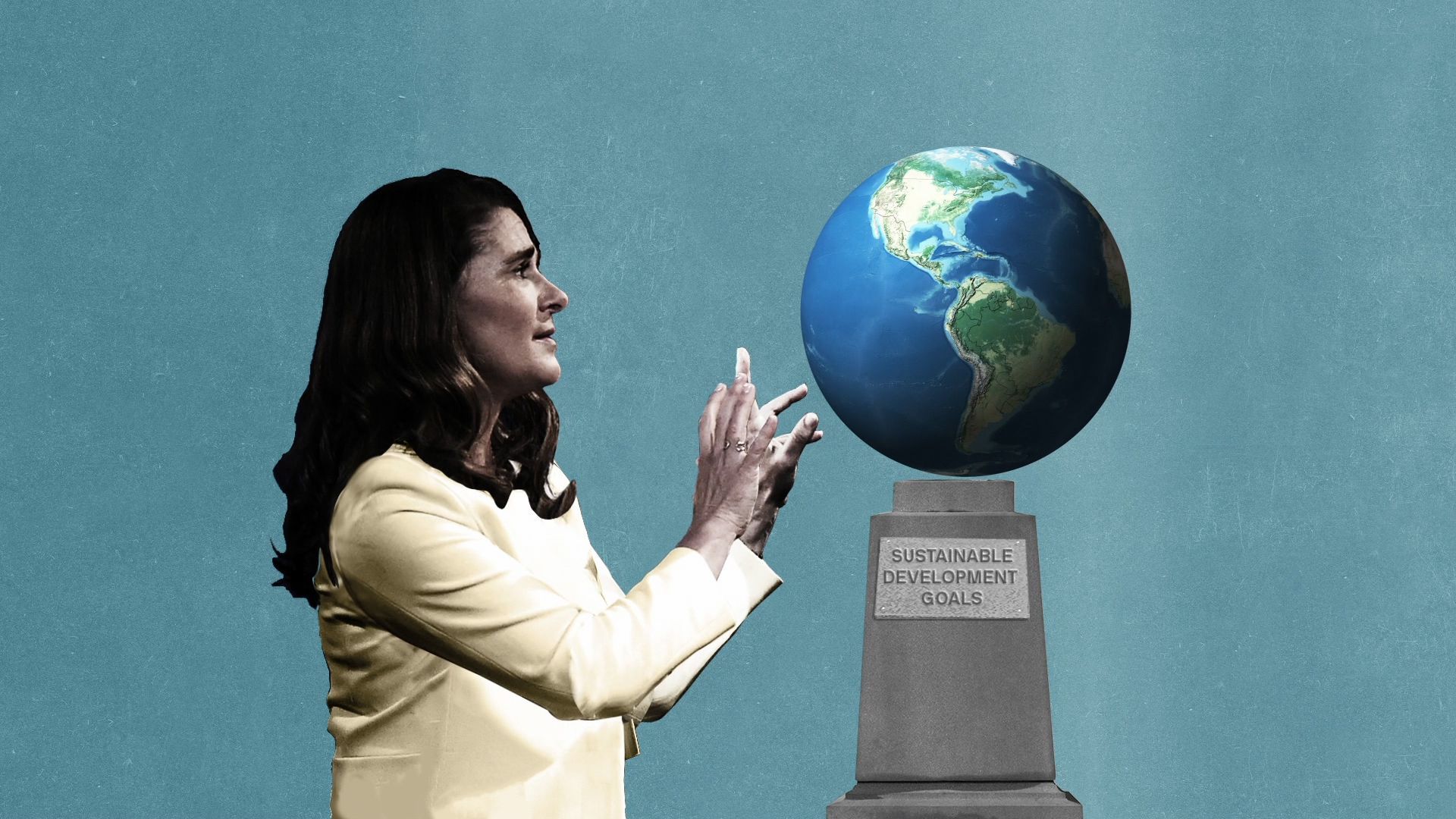
"It may be time for a reckoning" with social media's role in spreading disinformation, Melinda Gates told "Axios on HBO" Monday — but she doesn't see that happening until after the pandemic ends.
Between the lines: Bill and Melinda Gates are clearly big believers in technology. But they've also seen firsthand the impact of disinformation, as they've become targets of conspiracy theories amplified and spread via social media.
IBM thinks it can deliver a quantum computer that would marry enormous computing power with a tough-to-achieve low rate of errors by 2023, per a technical timeline the company published today.
Why it matters: Companies, most notablyIBM and Google, are investing heavily in a race to commercialize quantum computers that ultimately may be able to solve some problems much faster than a classical computer. IBM's stake in the ground represents what the firm says is an "inflection point" after which the rate of progress in the field will rapidly increase.
Match Group CEO Shar Dubey stepped up her criticism of Apple's App Store policies in an interview with "Axios on HBO" that aired Monday, saying the way that the company applies its policies is "inconsistent and unfair" and takes choices away from consumers.
What happened: In the interview, Dubey said the App Store relationship, wherein the company controls billing and subscriptions, had been "a great source of dissatisfaction."
Gen Z may be more immune to the lure of misinformation because younger people apply more context, nuance and skepticism to their online information consumption, experts and new polling suggests.
Why it matters: An innate understanding of social media influence, virality and algorithms among Gen Z — defined by Pew as the cohort born between 1997 and 2012 — could disarm the misinformation and disinformation racking the U.S.
Facebook is vowing new steps to provide users with accurate climate change information and cut emissions, but activists say it's doing too little to confront the spread of false claims on its platform.
Driving the news: The social media giant on Tuesday announced launch of the "Climate Science Information Center."