In the not-too-distant future, motorists won't have to worry about finding a parking space. They'll leave their car at a drop-off location and the vehicle will park itself in a parking garage.
What's happening: Ford is working with a tech supplier, Bosch, and Bedrock, a Detroit real estate developer, to perfect the system as part of a pilot at a retrofitted garage in Detroit. The companies said it is the first infrastructure-based solution for automated valet parking in the U.S.
A new government initiative will direct hundreds of millions of dollars to support new centers for quantum computing research.
Why it matters: Quantum information science represents the next leap forward for computing, opening the door to powerful machines that can help provide answers to some of our most pressing questions. The nation that takes the lead in quantum will stake a pole position for the future.
The Senate Intelligence Committee detailed shocking new revelations about the 2016 Trump campaign's dealings with Russia in the landmark final volume of its report on the matter, but it missed an opportunity to recommend cybersecurity fixes for today’s campaigns and parties — perhaps by design.
Why it matters: The DNC and RNC could be considered a type of “critical infrastructure,” because without them and the presidential and congressional fundraising they facilitate, U.S. politics as we know it wouldn’t exist. But because they fall outside the government’s protective cybersecurity remit, they are also uniquely vulnerable to outside threats.
Facebook is warning advertisers that they can expect weaker ad performance from iPhone users once iOS 14 comes out next month and is telling them to create second advertiser accounts to contain the disruption.
Why it matters: Many of Facebook's advertising partners rely on Apple's "Identifier for Advertisers" (IDFA) user tracking feature to, for instance, target would-be users by interest and see if they actually clicked on a mobile ad directing them to install a particular app. Changes to IDFA coming with iOS 14 will have a big impact on the marketing strategies for many businesses, and on Facebook's bottom line.
As 2020 began, Scrum Ventures was already considering a new startup program focusing on tech for cities and the urban environment. Then the spring brought the coronavirus pandemic and a wave of protests following the killing of George Floyd, sealing the deal.
Driving the news: Scrum Ventures, in partnership with former NBA all-star player and investor Baron Davis, is debuting SmartCityX, a program aimed at helping startups connect with potential advisers and business partners.
Finix, a San Francisco-based payments infrastructure startup, raised an additional $30 million in Series B funding from Lightspeed Venture Partners and American Express Ventures.
Why it matters: Finix, which sells its software to B2B companies like Kabbage, has benefited from the pandemic-induced online retail boom.
Palantir CEO Alex Karp, who recently announced plans to move his company to Denver from Palo Alto, took aim at Silicon Valley in a letter to the software maker's investors, reports CNBC.
Why it matters: Karp's veiled broadsides at Facebook and Google belie a frustration with their business practices while Palantir has faced scrutiny for its secretive government contracts, often focused on intelligence and counterterrorism work.
Apple's longstanding rule for calculating its cut of transactions enabled through its iOS App Store depends on an apparently simple principle: If a good or service is digital, Apple takes 30%. If the good or service is physical, Apple doesn't.
The catch: Life doesn't divide neatly that way any more.
The White House this morning announced over $1 billion to establish 12 new federal research centers dedicated to AI and quantum sciences.
Why it matters: The two fields are among the most important in emerging technology, and the new initiative will help the U.S. assert its international leadership in an increasingly competitive field that will impact everything from national security to climate change.
Palantir, the secretive data analysis software company known for working with governments, has filed to go public via a direct listing on the New York Stock Exchange.
The big picture: Palantir long eschewed going public until changing its tune recently. The company is also confirming recent rumors that it's choosing a rare alternative to the traditional IPO. Direct listings skip the underwriting process of an IPO, typically letting investors cash out shares without raising fresh capital for the company.
YouTube said on Tuesday that it removed 11.4 million videos last quarter, largely by relying more heavily on automated content moderation. The company said 95% of the problematic videos removed at first detection were found by its software.
The big picture: With fewer human reviewers, thanks to COVID-19 forcing people to work remotely, YouTube had to choose between relying more on automated systems and over-removing content or relying on fewer humans and allowing more rule-violating videos to remain online. It says it chose the former to protect its community, but removal appeals doubled as a result.
Google has named Halimah DeLaine Prado its new general counsel, taking over day-to-day oversight of the company's legal team from Kent Walker, who had essentially retained the GC role since being promoted to a broader position in 2018.
The big picture: Tech giants' legal teams are in a busy season as policymaker scrutiny rises and potential antitrust cases loom.
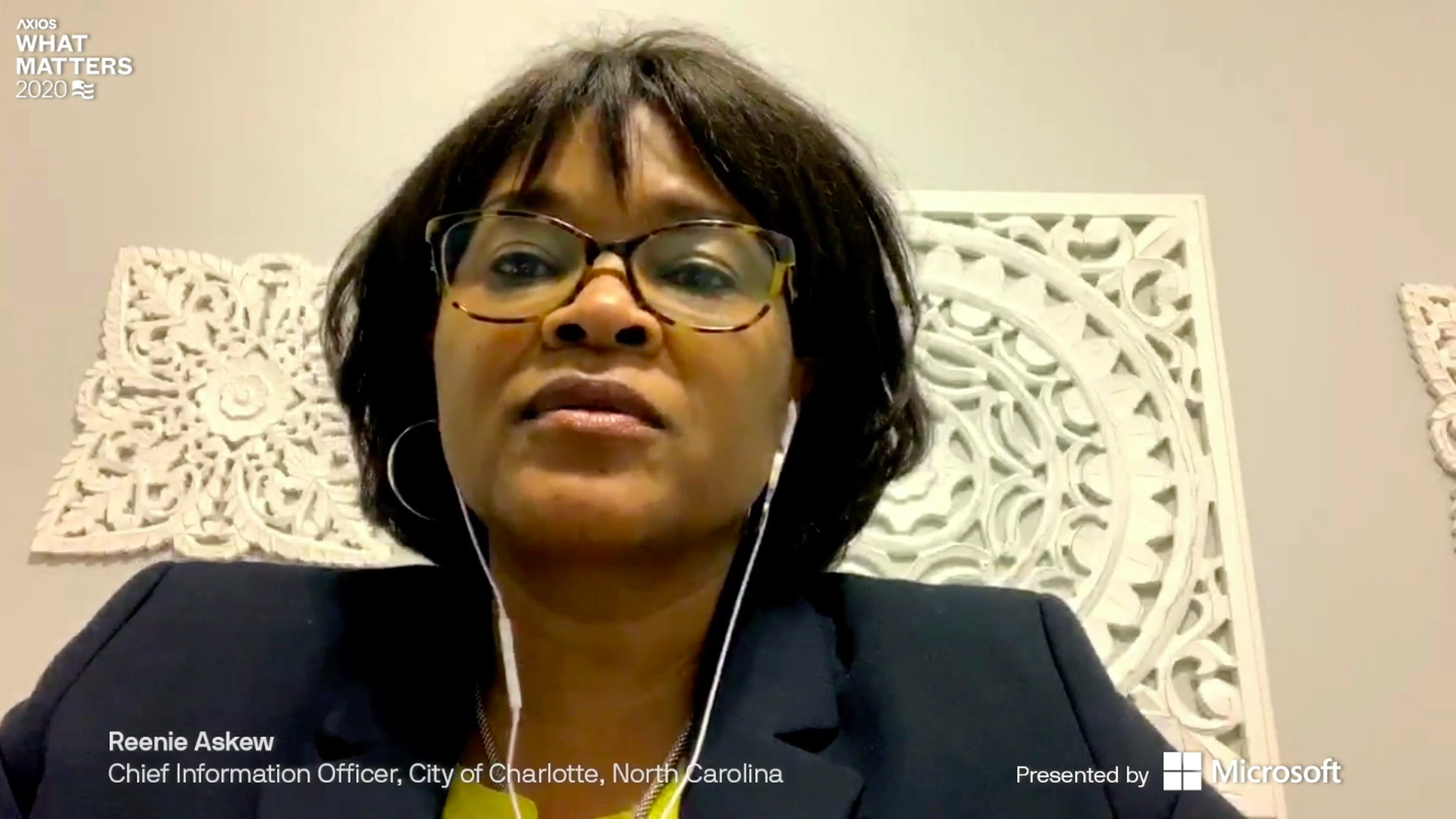
The coronavirus pandemic has emphasized the need for connecting underserved communities to the digital world, Thomas Parrish, the acting chief information officer of North Carolina's Information Technology Department, said on Tuesday at an Axios virtual event on the Future of Employability.
Why it matters: Countries around the world have been investing in connectivity, Parrish said, and the U.S. is now starting to realize that broadening internet access is "now something we can no longer afford to miss."
Taiwan has recently issued a series of restrictions on Chinese tech companies, from streaming apps to e-commerce.
Why it matters: Critics say that recent U.S. restrictions on Chinese tech companies stem from Trumpism rather than legitimate concerns. But Taiwan is spooked by Chinese tech as well.
Sales of PCs, webcams and other tech products that help people work, learn and play at home are up, while products designed for the highly mobile are losing ground.
The big picture: The pandemic has shifted where Americans spend their time — and, consequently, where they are spending their tech dollars.
Facebook is expediting the launch of its Facebook News tab in countries beyond the U.S., the company will announce Tuesday. Sources tell Axios that Facebook is working out deals to pay publishers in several countries to include their content in the News tab, just as the firm does in the U.S.
Yes, but: One notable absence from the list of countries is Australia. A source confirms that the company likely won't be launching Facebook News there for the foreseeable future, because of a battle Facebook is fighting with Australian regulators who intend to require the platform to pay news companies on the regulators' terms.
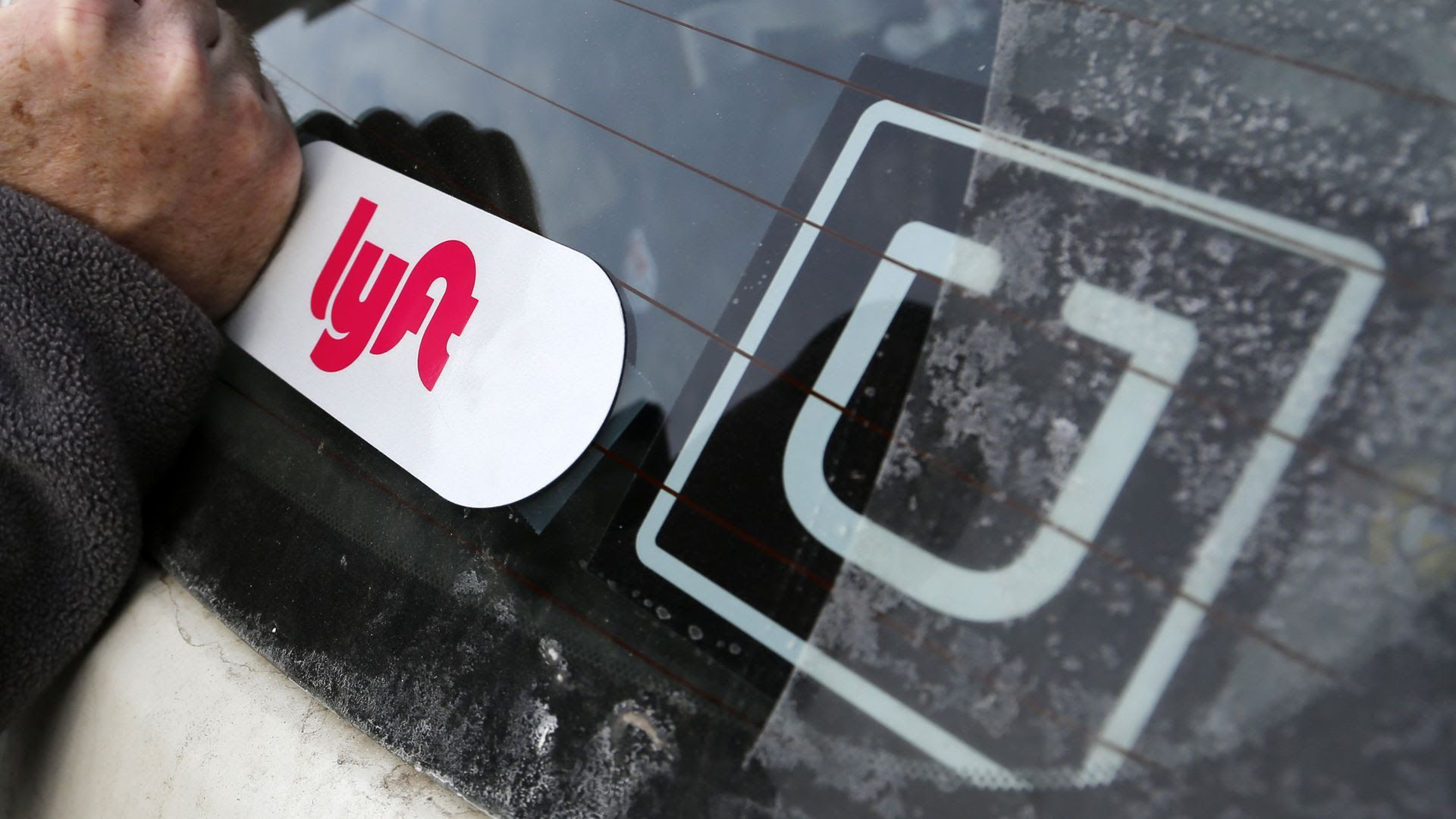
Uber, in a fierce fight in California to continue treating drivers as independent contractors, on Tuesday will release a Benenson Strategy Group poll finding support for a new benefits approach outlined in a New York Times op-ed by CEO Dara Khosrowshahi.
What it says: "Drivers and Voters overwhelmingly support Uber’s new Independent Contractor (IC) plan ... that allows Drivers to continue to work as Independent Contractors, maintaining the flexibility and freedom of working independently, but gives them access to benefits that today are only available to employees under existing labor laws."
The latest startups from Silicon Valley accelerator Y Combinator that showed off their products at its demo day Monday are the first group to experience the entire three-month program under COVID-19's shadow.
What's new: The pandemic not only pushed the whole Y Combinator process fully online but in many cases also shaped the startups' choice of market and product, with many tackling suddenly booming areas like online education, e-commerce, and remote communications.
A federal judge temporarily ruled late Monday that while Apple doesn't have to reinstate Epic Games' Fortnite app, it cannot cut off the company's Apple developer account or restrict the use of its Unreal gaming engine by third-party developers as it had threatened to do on Aug. 28.
Why it matters: Epic Games picked a fight earlier this month with Apple over some of its strict App Store rules. The dispute has drawn other app makers critical of the iPhone maker's stronghold on how iOS apps are distributed and taxed by Apple just as the company faces increased antitrust scrutiny.
Apple is acquiring Spaces, a virtual reality firm that recently pivoted from creating theme park attractions to bringing traditional video conferencing software to VR headsets.
Why it matters: Apple has shown continued interest in both virtual and augmented reality and has been reportedly testing headsets internally, but it has yet to release such a product publicly.