T-Mobile Thursday said it has overtaken AT&T to become the number two wireless carrier in the U.S., ending the second quarter with 98.3 million total subscribers. Shares in T-Mobile surged 7% in after-hours trading.
The big picture: T-Mobile's merger with Sprint, which a federal judge allowed to go forward in February, gave the company a boost, and left the U.S. with only three major national wireless carriers. Verizon is in the lead.
The travails of TikTok are the most visible example of how the rapidly deteriorating relationship between the U.S. and China can evaporate tens of billions of dollars of corporate value.
Why it matters: When corporations find themselves at the mercy of politicians flexing their geopolitical muscles, they generally end up ruing the encounter.
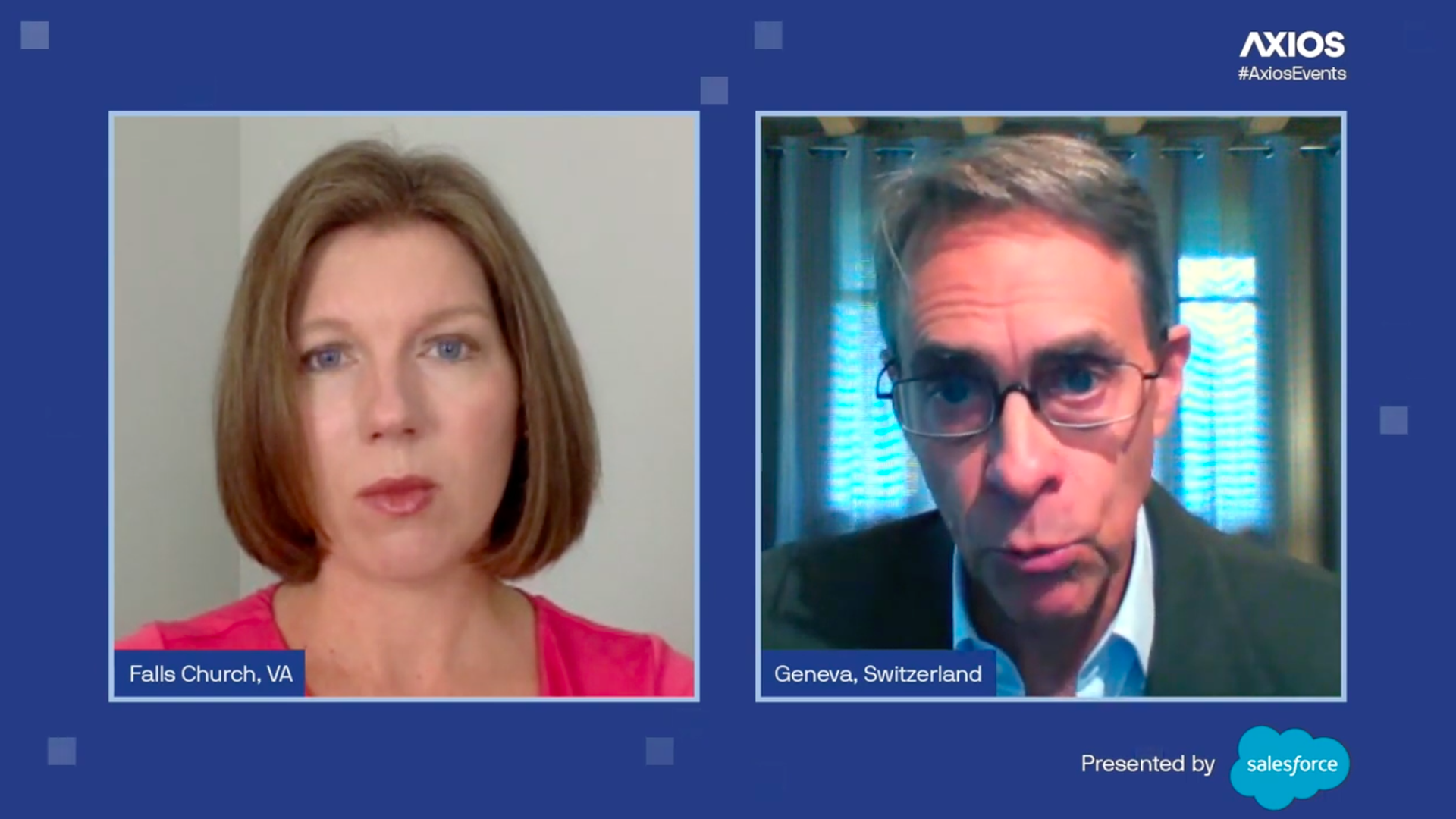
The Bluetooth-based contact tracing system designed by Apple and Google is a current "gold standard" for prioritizing privacy when tracking the spread of the virus, Human Rights Watch executive director Kenneth Roth told Axios' Kim Hart at a virtual event Thursday.
Why it matters: Without a vaccine, promptly notifying those who have possibly been exposed to the coronavirus and encouraging self-quarantine is one of the best mitigation tools available.
Former U.S. Chief Data Scientist DJ Patil warned at an Axios virtual event Thursday that the "tremendous amount" of misinformation on social media platforms "creates public distrust at a time when we need it the most," stressing: "It's no small statement to say this is life or death."
What he's saying: "One of the areas that will likely, even if we get a vaccine, cause an issue is will people trust a vaccine? And if we don't address those misinformation issues right now, we are going to have a far extended impact of COVID," Patil, who is now head of technology at Devoted Health, told Axios' Kim Hart.
Facebook must do better to protect women in politics, who face a barrage of sexism, hate and harassment on the platform, members of the Democratic Women Caucus including House Speaker Nancy Pelosi wrote to the social network Thursday.
Context: Facebook, under heavy scrutiny for misinformation, privacy and antitrust concerns, recently kept a doctored video of Pelosi up, though fact checkers labeled it as "partly false." The platform came under fire for not removing a doctored video of Pelosi in 2019 as well.
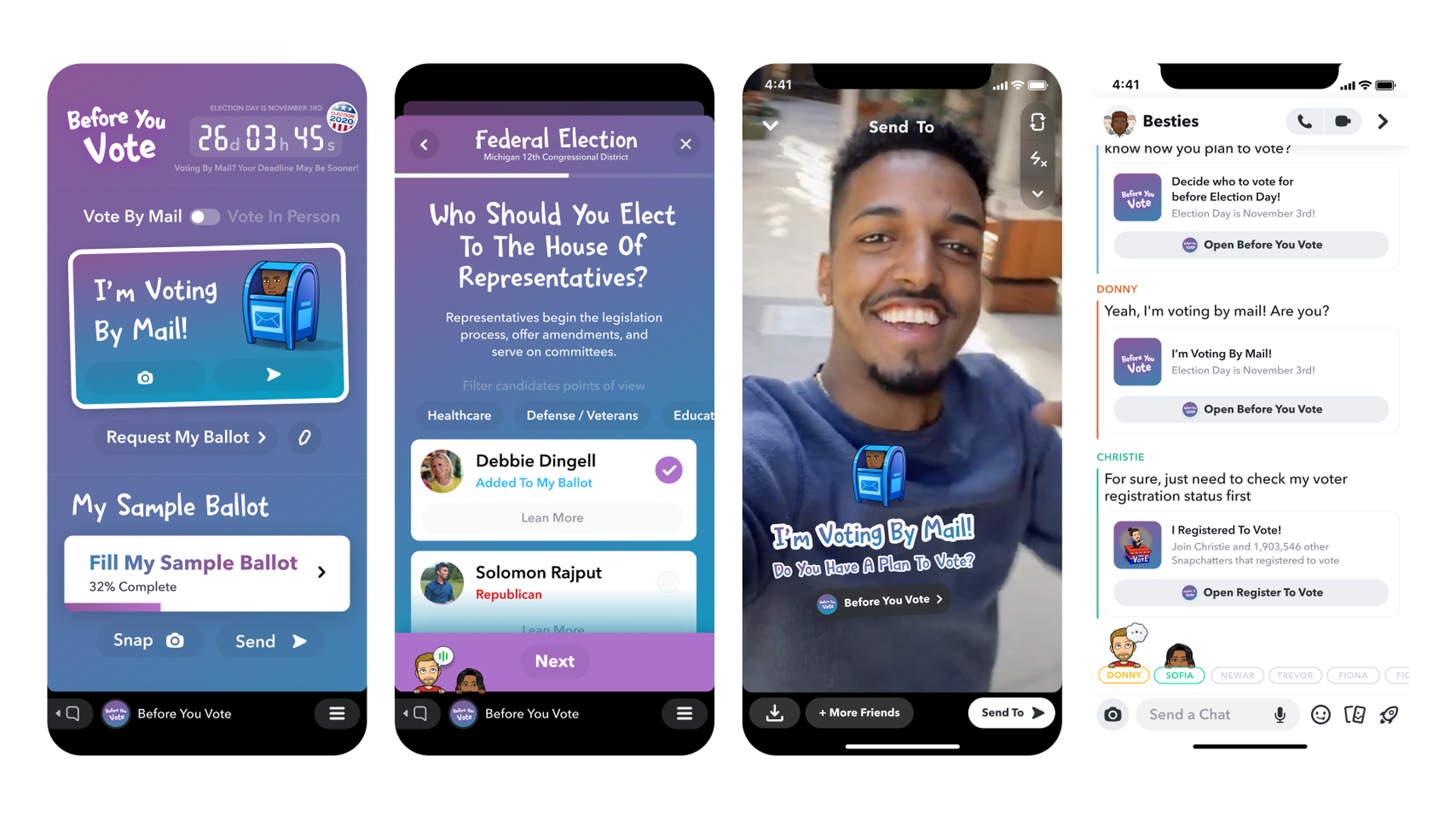
Snapchat is rolling out a slew of new tools and features to help prepare young people to vote in the November election.
Why it matters: Snapchat has unparalleled reach into Gen Z and Millennial demographics. The tools it's building are meant to guide those specific populations to more resources to help them register to vote and form a voting plan. Other platforms focusing on voter registration are doing so with a much wider user population in mind.
TikTok, already threatened with a U.S. ban by President Trump, is also facing the prospect that its stunning 2020 growth could be ended by multiple bans around the world.
The state of play: TikTok is already banned in India, where it was downloaded more than 118 million times in 2020. A U.S. ban would cut into a significant amount of the user growth it has seen this year.
The U.S. must invest in research and development in artificial intelligence to stay ahead of China and other adversaries, argues a new paper penned by Reps. Will Hurd (R-Texas) and Robin Kelly (D-Ill.) and two research groups, shared early with Axios.
Why it matters: Reps. Hurd and Kelly, along with the Bipartisan Policy Center and the Center for a New American Security, are pushing forward a bipartisan plan at a time of high tension with China. The U.S. and China compete on 5G development, artificial intelligence and other advanced technologies.
Apple's market cap is screeching toward $2 trillion, less than a year after rising above the $1 trillion mark again in September 2019.
What happened: The company first gained 13-figure status in early August 2018 but saw its valuation sink to a mere $709 billion following the market downturn of late 2018.
After grilling the CEOs of Amazon, Facebook, Google and Apple last week, members of Congress are grappling with whether to accuse any of the firms of illegal anticompetitive behavior, to propose updating federal antitrust laws — or both.
The big picture: Congress is just one arm of government making the case against these companies. Google is expected to be the first of the firms to face possible antitrust litigation from the Justice Department before summer's end, but all four face a full-court press of investigations by DOJ, the Federal Trade Commission and state attorneys general.
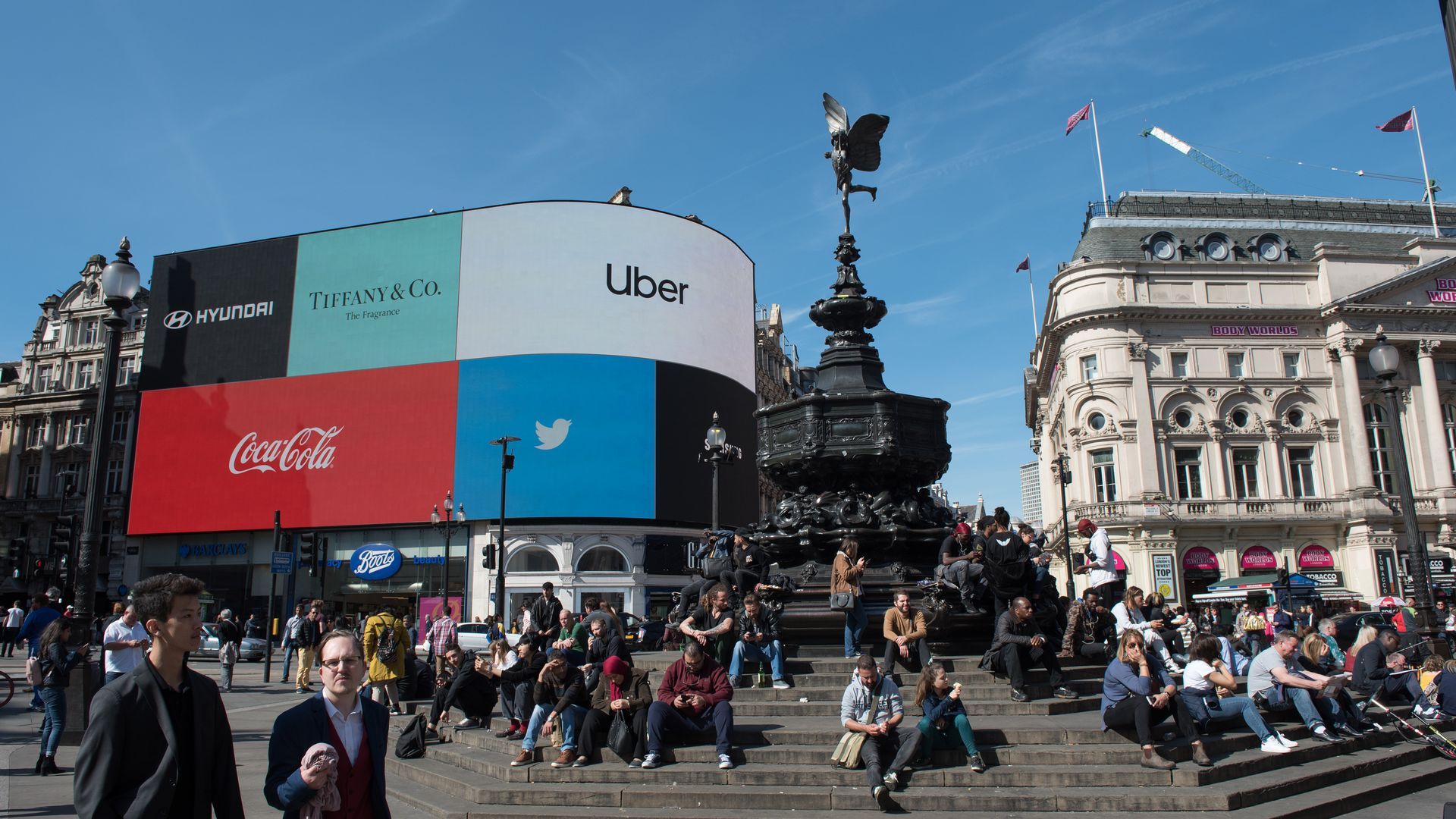
Uber has agreed to acquire U.K.-based taxi and private for-hire car technology company Autocab, the two said Thursday.
Why it matters: The acquisition should help Uber expand to U.K. markets where it doesn't currently operate by enabling its customers to book cars available through Autocab, though the latter will remain largely independent.
Facebook removed a video post from President Trump Wednesday in which he claimed in an interview with Fox News that children are "almost immune" to COVID-19.
Why it matters: It’s the first time that Facebook has removed content from Trump's account for violating policies on coronavirus-related misinformation.