InfoWars host and conspiracy theorist Alex Jones was arrested early Tuesday and charged with driving while intoxicated in Travis County, Texas, the Austin-American Statesman reports.
Details: The 46-year-old radio host, who has been banned from most major Big Tech platforms, was released on bail almost four hours after his arrest. In December, a judge ordered him to pay $100,000 in court costs and legal fees in a case brought by a Sandy Hook family after his unsubstantiated conspiracy theories about the mass shooting.
Online dating company Match Group will tomorrow publicly support the EARN IT Act, a bipartisan Senate bill to combat online child sexual exploitation, Axios has learned.
Why it matters: Match, the parent company of major dating platforms such as Tinder, is breaking with the internet industry's leading trade group, which worries the bill could open a wedge for law enforcement to crack into encrypted systems, threatening user privacy.
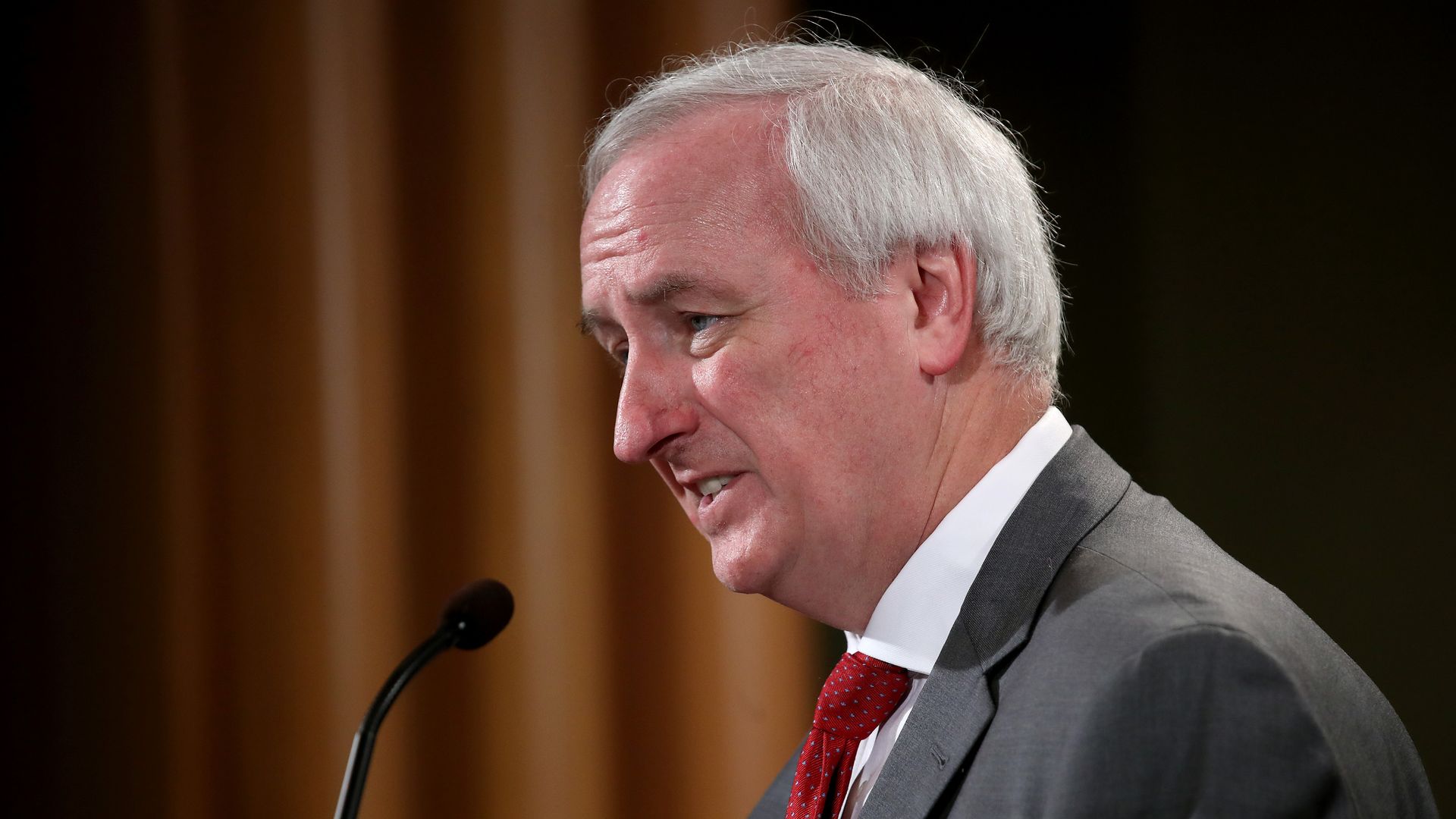
A top Justice Department official suggested Tuesday that tech's prized liability shield could be changed to limit online platforms' ability to censor content.
The big picture: DOJ officials including Attorney General Bill Barr have expressed concerns about the reach of Section 230. His deputy now contends tech companies may be using the law as a “blank check” to remove lawful speech, echoing GOP claims that platforms disproportionately target conservative content for deletion.
The 202o election will be "the most secure, most protected election in the history of the United States of America," Christopher Krebs, the director of the Department of Homeland Security's Cybersecurity and Infrastructure Security Agency, said at an Axios event on Tuesday.
Why it matters: State and local officials, even before the start of party primaries, have voiced concerns that outside interference could disrupt elections in 2020. The recent outbreak of coronavirus has also impacted some state primaries.
Tech companies like Twitter and Facebook have struggled with ways label misinformation without appearing biased or without baiting users to game the system.
Why it matters: It may seem obvious that tech companies should let users know when something is false, but sometimes, calling out false content can have unintended consequences.
The remote work plan many companies are launching in response to concerns about the spread of the coronavirus doesn't work for everyone — even in the tech industry, and even for people whose jobs involve sitting in front of a screen all day.
Why it matters: While remote work can be an important tool for helping slow the spread of the disease, it's not a panacea.
The Washington Post is tripling investment in Zeus, its revenue technology arm, sources tell Axios. The Post licenses Zeus products to other media companies to help them drive more ad revenue and create better user experiences.
Why it matters: The ad tech ecosystem for publishers for so long has been dominated by tech companies that don't know a lot about journalism or media. Now, media companies are creating their own tech solutions to become less reliant on them.
An upcoming report on cybersecurity will propose "a very ambitious reorganizing of the federal government, perhaps the most ambitious since the 9/11 Commission," to combat cybersecurity threats, Rep. Mike Gallagher (R- Wis.) said at an Axios event on Tuesday.
Why it matters: Gallagher co-chairs the Cyberspace Solarium Commission with Sen. Angus King (I-Maine). The commission will release a report on March 11 that includes sweeping recommendations on how the Executive Branch and Congress can develop a national defense strategy for cyberspace.
A bipartisan pair of senators, in a letter Tuesday, are urging the Justice Department to investigate Google's search operations as well as its advertising business.
The big picture: The letter from Sens. Josh Hawley (R-Mo.) and Richard Blumenthal (D-Conn.) comes as the Senate Judiciary antitrust subcommittee holds a Tuesday hearing on ways that digital platforms favor themselves over their competitors.
The Trump administration finalized a rule Monday that would make it easier for patients to share their health data with apps, hospitals and doctors, the Wall Street Journal reports.
Between the lines: The rule is likely to benefit the growing health data industry, which uses the information to develop health care services. But opponents of the rule argue that it could also create data privacy issues.
Singer Ariana Grande was the most tweeted about woman in the past year, topping politicians like Hillary Clinton and Alexandria Ocasio-Cortez, according to data reported by Twitter.
The big picture: In the past three years, of 125 million tweets about feminism and equality, 3 million specifically mentioned "intersectionality," where race, gender and ethnicity meet. Last year's International Women's Day was among the top topics.








/2020/03/10/1583846921590.gif?w=3840)